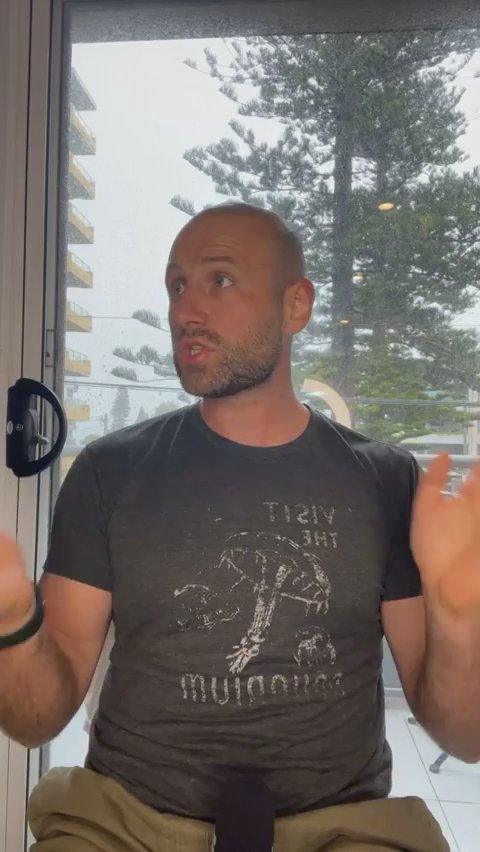
In this Livestream, I am excited to share some of the logical fallacies I have noticed in all of my time on social media trying to disseminate what types of health information are true. I will give you a list of some of the fallacies I made up and why I believe they are associated with incorrect or misleading information. Don't worry, I will keep this as A-Politcal as possible...
Evan: Now more than ever, people are consuming content on social media, and a lot of that is educational. When it comes to science medical, there is some idea of objective truth. Hopefully there's not any freezing up.
Some of the examples I give may brush up on the line of political, and I don't like talking about any of that on this app. I'm gonna talk about the different logical fallacies and how to avoid them. A lot of times, health information is now politicized.
The Shaq fallacy: You can either live in a shack or in a house. Sometimes there are just two major options that you have to choose from. In my case, it was for a spinal fusion surgery. The outcomes could really vary.
It's really important to look at both sides, weigh the pros and cons, and look out for people who take too hard of an opinion on one thing and they won't acknowledge the other. As healthcare providers, we have to give the benefits and risks to both.
Sometimes doing the wrong thing, you can make the right decision. I call this fallacy, the half court shot. What this talks about is you could be right for the wrong reasons or be wrong for the right reasons. This fits under a subcategory called the string theory phenomenon.
There were certain beliefs that contradicted what we believed at the time. On both sides of the issue, there was some fallacies and misinformation. So you got to be careful with that and say, okay, so you made the right decision, but why did you make that decision?
New research study comes out, and it shows that we were wrong about everything. One recent example was antidepressants. Whenever they say everything you know about this is wrong based on one study, it's almost always misinterpreted. And the scientific method is continuing to disprove something.
Whenever there's a profit motive, that means that somebody is being disingenuous. One way people play on this is like conspiracy theorists. Almost always conspiracy theories are bogus. All these are based on a preconceived bias.
Hanlon's razor states that don't attribute malice to what is most likely incompetence. Occam's razor says that usually the most simple explanation is the correct one. The next one is called rock, paper, scissors rank. Rank always wins.
The next fallacy is defending extreme positions. To have a more nuanced view on anything becomes like, you're an extreme on the other side. The punishment fallacy is where having a dissenting opinion would cause a ton of consequences.
Alright, what's up, Cadre fam? Evan here, your resident mental health and addiction therapist. We have a fun live today, so let's wait a little bit. Let's see if we can get some people coming in, make sure everything is looking good here, and maybe get a little more interaction. But just I'll give you a little bit of background about the topic and why I'm doing it. So now more than ever, people are consuming content on social media, and a lot of that is educational. You have influencers, other types of professional educators, and there's a lot of information out there and there's a lot of contradictory information out there.
And that is natural because not everyone's going to have the same opinion on everything. However, when it comes to science medical, there is some idea of objective truth, or at least the best truth we have now based on the evidence. Alright, so it sounds like the sound is good. Hopefully there's not any freezing up. So we'll do a little more background until I get even more assurance that nothing is going down. So anyway, I wanted to share about some of the logical fallacies that I've noticed because I consume a lot of this content, I create this content content.
So I think it's important to have some of these things in mind, and some of it is in regards to my area of health information. But, hey, Katie. But some of it is just, I don't know, things in general, right, when you're trying to disseminate any information or you get into a debate with somebody. But these are just things that I've noticed over the course of my life. And many of you all probably know you've like, heard of different logical fallacies. I just, like, wrote them all down just to have.
But, you know, you have like ad hominem attacks, so attacking the person instead of the argument, the straw man, which is distorting or exaggerating someone's argument to make it easier, a false dilemma, presenting two options. Right. So I have like 20 of these that are pretty common, but there's some that don't make the list of ones that, like, I noticed that happen quite a lot, so I kind of gave them my own name or I like, borrowed it. So I'm sure a lot of these, like, already have a name or they like, relate with some of these, but I just thought it would be fun.
Like, whenever I would notice one of these things, I'd like, write it down. So this is the first time I'm talking about this topic. So if I'm not, if it's not amazing. It's my first time talking about it, so give me a little break. So, the other thing to notice here is, like, some of the examples I give may brush up on the line of political, and I don't like talking about any of that on this app. And so if I do insert any opinion on a topic that may sound that way, just know that I'm not trying to, like, push anything onto anybody, and that I may just, in a way, explain why I believe a certain thing.
But I'm gonna try to use as many examples as I can that aren't political in nature, because right now, it's so hard to separate, let's say politics. It's inserted into everything, right? So a lot of this stuff is just health information. Thanks, Katie. Glad, you know, we're good. It's like health information, but a lot of times, health information is now politicized, right? Whether it's like the pandemic or maybe stuff around weight loss or dieting, you know, there's different sides that, you know, take on a politics of its own.
So I know this is just something that's interesting to me. So I'm gonna go through. I'm gonna talk about the different logical fallacies and how to avoid them, how to watch out for them, and we'll see what you think. Okay? So the first fallacy that I'm going to go over, I call the Shaq fallacy. Now, not Shaquille O'Neal, the basketball player and commenter. S h a c K. Right. The shack fallacy. Now, imagine in this thought experiment that we have that you have two options. I say you could either live in a shack or in a house, right?
So now, let's say there's one person that thinks, you know what? I'm a big proponent of living in a shack, not a house, right? So what they do in this thought experiment is they go to a house. Now, I want you to think of your house that you live in now, and let's think about, like, when you bought the house now, right? Maybe you have, like, a brand new house. So if that's the case, this may not be the right one. But, like, for me, I live in houses, like, over 100 years old. You know, when you live in a city, it's often older, but even in the burbs, right, from 1950s, whatever, even a house that's like, like 15 years old, you get the inspection on the house, and there's just a list, right?
And it's, like, scary when you get the inspection, because there's like just 100 things or whatever, you know, all the electrical here. And you're like, oh my God. Like, this is alarming, right? But you start to look into it and maybe not as bad. So now imagine the shack proponent who wants us to live in a shack. He comes to the house and he's like that inspector. And he goes around and says, this place is a dump. Look at this. Look at, there's chips. I'll just do this here, right? It's like, look at this carpet.
It's got, you know, frills on the end here. It's dirty. There's a stain on that. I notice, you know, some paint chipping over here. Oh, you know, look at the AC unit. There's rust under. I see a little bit of mold, right? I'm like, this place is a disaster, right? You should not live in this house, right? But then you're like, okay, well, what's my other option? Oh, you could live in this dingy shack in the backyard. But it's like, well, I'd much rather live in this house, right? But the person arguing for the shack just keeps going around and pointing out all the bad things about the house, right?
And they keep harping on that, right? So you see this a lot in dichotomies, right? So usually things are not black and white, they're a shade of gray. But sometimes there are just two major options that you have to choose from. And there's maybe sub options within the options, right? Those are the shade of gray. But at some point you sometimes have to do two things. And so one example I could use is like when I had to choose whether or not to get a surgery. And so within that, I essentially had two basic options.
Get the surgery or not. Now, I had a bunch of sub options as far as the type of surgery, like whatever, but it was pretty black and white in a lot of ways. And there are pros and cons to each. Now, within those, based on the information provided by my healthcare providers and a lot of other people who I consulted, it was for a spinal fusion. And it's like a pretty. It's a little bit controversial in some ways. It's just because the outcomes could really vary. And for some people, it makes them even worse.
A small percentage. And there's a percentage of people that it's about the same. But then for most people, they tend to feel better, right? But there's downsides. Like it could wear out the discs above and below, and sometimes it will for sure do it. And you need to do another one. Like, in my case, you know, the recovery is like a year and a half. Like, you go through it, it's like, really invasive. I mean, they're like fusing discs in your spine, right. So a lot of people avoid it. And so the surgeon told me, like, look, I don't even want you to do the surgery until you feel like it's necessary, until you just can't live like you are anymore.
And, I mean, I've been at that point for quite a while, but anyway, so it's easy to go and have people who are, like, naysayers about the fusion and say, you know what? And they list all those different things. Well, you shouldn't do it because of this, this, this and this. I'm a firm believer that spinal fusion is a bad thing. It's not the best option. You should do these other things. But then when you really look at it and you look at the other options, like, okay, I could keep living miserably.
Yeah, maybe there's a risk here, right? So eventually, I chose to do the surgery, and luckily, it was a good outcome for me, and it was, and it was in the moment, and we'll bring this into other fallacies, but it was a good. Yeah, you're right, Katie. It was really tough, but again, it was worth it in the end, and it was the right decision. So even if the outcome was bad, it was still the right decision. And that's like a huge logical fallacy. So that was like, a very big logical fallacy that we're going to talk about.
And maybe I'll just, like, go into that one because it may be a good transition. But anyway, so it's really important to look at both sides, weigh the pros and cons, and look out for people who take too hard of an opinion on one thing and they won't acknowledge the other because a lot of people live in the extremes, and let's say they're like, and I'll probably pick on this one guy who's on social media, right, but, like, he, like, advocates for, like, a carnivore diet where you only eat meat, and he points out all the things like, bad about vegetables and some of these other foods and, you know, all these things.
But. But then again, he never talks about the disadvantages of his position of eating literally just meat. Right. So there's a lot of logical fallacies that this guy does. Okay, so the other one I use for this is the thought experiment of, actually, I don't need to do too many more examples. But imagine someone says to you, like they have you captive or something, and they say you have two options. One of them is you have to go, and we're going to lock you in this room with a rabid raccoon or a tiger.
Maybe not rabid, because that's, like, really bad, but like this crazy raccoon or a tiger, right? And then someone just says, oh, I don't want to go in the room with that raccoon. It's like, well, yeah, that's not a good idea. You don't want to do that. But the only other option is the tiger. Well, yeah, but the raccoon, it's got these things and it's angry, it's got these nails, and it's like wilds all over. But, yeah, your odds are much better going with the raccoon. Now, maybe you go in with the tiger, and the tiger's pretty chill, but that's a pretty big risk, right?
So we could use that as well. So, again, sometimes we just have two options. And if someone is too extreme and they are really biased, and they are huge proponents of one thing, and they don't give you the risks, that's something to look out for. Just like my doctor. If you just pushed one thing, another doctor pushed another. No, as healthcare providers, we have to give the benefits and risks to both, because usually there are upsides and downsides in a disease. You saw this a lot, too, with the pandemic and people criticizing certain things.
Right. So anyway, so I talked about how sometimes doing the wrong thing, you can make the right decision. So I call this fallacy, the half court shot. And what this talks about is you could be right for the wrong reasons or be wrong for the right reasons. So here's an example of the half court shot, which is the half court shot. So now imagine there's a basketball game and a team is down by two points, and the clock's ticking. There's like two minutes left, and the team is down by two points. So in that moment, there's enough time for the team to go ahead and try their best to get a two point shot, because that's your best bet.
You have some time where if they score, you could do it again so you don't have to. Thanks, Katie. So you don't have to take a crazy shot because you have enough time on the clock. Now imagine, okay, we got two minutes, 1 minute left. You pass the ball to one of the players. He's at half court, and he just takes the ball he throws it up there, and everyone's like, what is this guy doing? Like, we have plenty of time. This guy. It's like a horrible idea to just throw up a half court shot because it's maybe like a 10%, 5% chance it's going to go in, and there's plenty of time on the clock.
So before that happens, everyone would say, this is a bad idea. So he throws the shot up, but what happens? He makes it, he nails it, and that is the difference. And they win the game. They win the championship. Everyone's going crazy, right? So everyone could then say, this guy's a genius. He just threw up this half court shot. He won us the game. He made the right choice. But the thing is, he didn't make the right choice. That was actually the wrong choice to make in that moment. And the guy should not even be celebrated for that decision.
Even though they won. The coach should probably go back and say, what are you doing? That was like the dumbest possible thing you could do. But then he could say, well, what are you talking about? I just won the game for us. How can you criticize what I'm doing? So that person did the right thing for the wrong reasons. So, yeah, it was the right thing because it worked, but it was really the wrong thing. He did it for the wrong reasons. Now, the opposite of that, let's talk about football. And this is an actual situation that happened.
So I got this from a book called thinking in Bets, where basically it was from a poker player, and she talked about how no matter what decision you are, if you know the odds, you want to pick the decision that has the best odds. That has the odds of the best outcome. So, for example, Bill Belichick was in a situation similar. They're on the 20 yard line, and the odds have it, if he were to go for this play, that they could win the game. And so it was the same thing. So he made the correct decision to throw a pass, and it didn't work.
So he made the decision to throw a pass. They ended up losing the game because they could have, let's say, ran the ball or kicked a field goal or something like that. But he got super criticized because he made that decision to lose the game. However, it was actually the right decision. So. But it could seem like he made the wrong decision because it didn't work, but for the right reasons. So he made the right decision in that choice. So let's give. So that would be like an example. So the other one I like to give here, and I think this falls under the half court shot.
And you see this a lot, and you've seen this a lot lately, especially with, like, COVID stuff, is, I call it the string theory. So I think this fits under here. I'll call a subcategory, but I call it the string theory phenomenon. Now, some people may know what string theory is. Like, I don't. Like, I've heard about it. Like, I've read into it, but it's just like, it's above my head, right? I'm, like, not a physicist or, like, mathematician, right? Like, not my area of competency. But let's say we have this thing called string theory, and it is a theory, right, by physicists, and there's, like, a decent amount of evidence to support this theory.
Now, let's say, I'm going to come to you right now, and I'm going to say that string theory does not exist or it doesn't exist, it's wrong, right? So I'm going to say, and I'm really confident about it, too, string theory is wrong. And believe me, we're going to find out soon enough that there's going to be a theory that contradicts it. I'll be like, wow, this guy must be a real genius, right? He's so confident that string theory is wrong. Now, here's the thing. I don't know. There's probably a 50 50 chance that there's going to be something that comes along and replaces it and says, oh, actually it's wrong, because that's what science is.
This is all about. Science is all about finding the best possible answer. And the thing is, science gets it wrong all the time. However, if it's done properly in the scientific method, it's going to get things right more than wrong. That if it is proper science, because there is bad science and people acting in bad faith or bad research methods or people doing a lot of these logical fallacies within science that make it so that it wouldn't be good to follow. Right now, I'm making this prediction.
I'm going to say that string theory is incorrect, that it's going to be replaced. But all these physicists, these smarty pants, say, no, this is the best theory we have. I got like a 50 50, maybe like a 40% chance that I'm right. Now, let's say that happens. Let's say, 15 years from now, some physicists come and say, actually, what we knew about string theory was wrong. Here's why it's wrong. We have this new theory called bubble theory. I don't know. And this bubble theory actually fits better with the science.
Now I'm going to go back and see I told you. So none of you believe me. I told you that string theory was incorrect. And look, here it was. Now I look like a genius, right? But I don't know what the f I was talking about. I have no idea. So you're seeing that a lot, let's say, like, with something like COVID, where, you know, these things are coming out and we're learning more about a disease, let's say. And, you know, so some of the things, like, contradicted what we believed at the time. However, certain.
There were certain beliefs. And I'm saying maybe on both sides of the issue, there was some fallacies, there was some misinformation, no matter what side you're on, but we're finding this out later. And so it's easy for me to say, yeah, I told you vaccines didn't prevent spread the way they were before. However, let's say I said that it would be based on not having enough information. It would be based on a lucky guess. And that doesn't mean that you're super smart or super insightful, because, again, it could have been a flip of the coin.
It could have been a 25% chance, but that's still a one in four. So you got to be careful with that and say, okay, so you made the right decision, but why did you make that decision? Did you just throw up a half court shot? Or was this actually based on some information that was maybe missed? Because maybe you are a genius, and you went and looked at all the research studies and say, actually, this was false methodology and this, this and this, and this is why the data was misinterpreted. And then maybe you are the genius who likes said the right thing for the right reasons, like the financial crash or the people that actually predicted it correctly?
Because you see that a lot, too, where some of these financial people are like, we're going to crash. The sky's falling, there's going to be a market crash. Well, there's a chance that certain things are going to crash, and then they do. Then you look like a genius. But why did you say that? So I can just make all these predictions right now and a lot of them will be true, and then I'll look really smart. But I'm not. I'm an idiot. All right, so that is the half court shot fallacy. And I'm getting, like, really deep into this.
We got the shack fallacy. So then this is one of my favorite ones. And I think this is this one you see all the time. And I hate this. I hate it, hate it, hate it. And that is that everything you know is wrong. Fallacy. And this one is so attractive, right? So how many times do you read, like, some kind of publication, you see something on someone, paste something on Facebook, post something on Facebook, and it's like, everything you knew about fill in the blank is wrong. New research study comes out, and it shows that we were wrong about everything.
Right? And that is so attractive, right? That is like, oh, my God, I knew it. I knew that. Everything about this, like. And it's appealing, too, because it's like, look at this. This is the latest science, and it's disproving all of these things. And often, sometimes it confirms, like, maybe something you believed or something that was in your gut. Now, one recent example was antidepressants. I don't know if you remember that article that came out that said, yes, absolutely. Marketing ploy, you know, because this is all sensationalism, right?
This is these titles, these catchy titles, whether it's a YouTube video, and I'm, like, guilty sometimes, too, because, like, you got. It's, like, all about capturing people's attention. So, like, it's a sensationalized thing. So. But then when you look into it more like, that's not true. It's almost never true. Whenever they said, everything you know about this is wrong based on this one study, because it's always based on one study, and that study is almost always misinterpreted. Right. They take one thing out of it, and they, like, blow it up, and then all of a sudden, it goes around, everyone thinks something, and it's, like, dangerous.
Like, for example, this happened with antidepressants. So, like, recently, there was some article that came out where they found that there maybe wasn't a link with the serotonin hypothesis, where, you know, these things were the serotonin. Oh, here's what it was. So they found maybe there wasn't a correlation with people's natural serotonin levels and depression, which we thought, because we have the main antidepressant, SSrI, or SNRI, it's all about increasing levels of serotonin. But they found that actually, people with depression don't necessarily have lower levels of serotonin.
So everything we knew about antidepressants was wrong. So therefore, what conclusion do you jump to? That antidepressants are not effective, that you shouldn't take them? However, let's just say that study was true, and maybe it was. I think a lot of people were like, yeah, that's actually interesting. And the methadone methodology was good, and maybe there is some evidence in the column that it's not necessarily about a serotonin deficiency. However, what they failed to say is that antidepressants still work.
Right? So for whatever reason, you know, and there's a bajillion studies that show that they have a positive impact, you know, and that's people like, everything, you know is wrong about antidepressants. They don't work. No, it didn't say they don't work. It just says that the reasons why we thought it may be an issue or one of the reasons may not be as true as we thought. However, the solution, one of the solutions, is still just as effective as it was before, that raising serotonin levels is actually effective for treating depression.
But maybe that doesn't mean that the person had naturally low levels. Who knows? That was one example recently that p***** me off. There was another one, and this is an area I don't know as much about, but there's some credible people who spoke on it. Where's another example where it's like everything we knew about Alzheimer's was wrong? That it's actually not this one deficiency in a protein. I don't remember exactly what it was, but it was something like that, where it was like, we're doing this research and we use these medications.
It was kind of the same thing. But then the experts are like, yeah, even though that's not true, it doesn't mean everything was wrong. It just means that it was a little bit. I wish this was a little bit of a while ago, and I probably could have spoken on it better at the time of what the justification was, but basically it was like taking this one thing and saying everything you know is wrong. But maybe it was just like one thing we thought was wrong. But that doesn't disprove the whole theory.
It's just one part of this theory. Right. And that's the scientific method, is continuing to disprove something until you find something that holds up to the evidence. And that's why it's important to have those healthy debates. But when you're doing it with these logical fallacies, even if you are right in the end, that doesn't mean you're right for the right reasons. So that's the everything you know is wrong. Yeah. Here's another fun one. This is one to look out for, and this one maybe this one is maybe less about health.
Maybe it does fit. Actually, I see this one in that too. So I call this one you're a sucker fantasy. Now, here's the thing is, we don't, as people, humans, we don't like to look stupid, obviously, right? I don't want to look like a sucker. We don't like being tricked. And that's like one of the worst things is to, like, fall for a trick and be looked at as a sucker or stupid. Now, one way people play on this is like conspiracy theorists. And I find that, like, almost always conspiracy theories are bullshit.
Almost always. Sometimes there's some truth every once in a while, but it's usually overblown. And so basically, I see this one a lot with, whenever there's a profit motive, that means that somebody is being disingenuous, right? So, for example, it's like saying that doctors have a profit incentive for people to be sick. Therefore they don't treat people properly because then they'd be out of a job, right? And you see this too. And again, I'm not like someone to back the pharmaceutical companies because there's a lot of sketchy and, like, actual stuff that goes on where they gouge prices and da da da da.
Right? So I'm not defending them, but a lot of times, like I say, with the vaccines and stuff, people would say, well, yeah, of course they're lying. And these things don't work because they have a profit motive to do so. Now, again, just because someone has a profit motive, right? But what they discount is the other motive to say, like, if I create a product that is valuable, I have an incentive to do that because that'll lead to more business and blah, blah, blah. So just because something has a profit motive doesn't mean that there's a conspiracy underlying it or that that person is wrong.
So that's like one example and. Right, so it's like. So if I were to say, let's say I were to push back a little bit on like, vaccines or certain types of medication that a pharmaceutical company creates. And I said, well, look, no, in this situation, actually, the data is pretty good. They created, they have used research and development to create some of these good drugs. And someone could say, yeah, all these drugs are b's, just like antidepressants. That was another one they did. It's just a conspiracy for us, for the pharmaceutical companies to make money, and these things aren't effective.
And we just need to do these other things like diet and exercise and other things like, okay, well, maybe diet and exercise is effective for depression, but so are antidepressants. And if you do the two together, these things are. It's creating, like, a false dichotomy in that case. Right, so just because there is that profit mode doesn't mean there's a big conspiracy under it. Right, so then I'm a sucker, then, right? So that's what I'm trying to avoid. Right. So if it's like saying, Evan, you're f f idiot if you believe that the pharmaceutical companies have your best interests in mind.
Right, so I actually look stupid if I say, well, yeah, they do, but, like, that's not 100% what I think, right? I think they have incentive to actually create good things as a company that are actually helpful, but they also can do. Right, so it's, like, a more nuanced view, but if I start defending a pharmaceutical company, I look like an idiot, right? Just, like, let's say with, like, JFK or something like that. It's like, if the evidence points to. Actually, no, it wasn't a conspiracy. It was everything that we thought it was.
You're really a sucker if you believe that. If you believe the government isn't doing these, like, sketchy, da da da da da. It's like, yeah, maybe. But, you know, it doesn't make me an idiot to, you know, have a different belief that, you know, again. So it's just like, I may feel pressure to believe a certain thing, because if this thing is correct, then I'm a sucker, and I'm an idiot. Right? And then that person could just jump around. Even if that is proven not true. Well, then there's just another thing.
Oh, well, maybe that's not true, but the government is also doing this. Right? So, again, these are all things that just dodge finding the truth. And most all these are based on having a preconceived notion, and there's that confirmation bias. So this is one I didn't really make up in any way, right, but it's just finding reasons to support whatever it is you believe. Is it raining? Oh, man, it's really raining here. It's not boding well for me. Playing volleyball later, I really, really want to do.
So that's the you're a sucker fallacy. Oh, a couple other things within that. Right? So there's something called Hanlon's razor and Occam's razor. Now, Occam's razor says that usually the most simple explanation is the correct one, and it's usually not a conspiracy theory. Like, for example, like, 911 conspiracy or something, that the government did this whole ploy so that they could go to Iraq and take oil or something like that, right? Where it's like, maybe the most simple explanation is just like, it was a terrorist attack and we maybe were dumb to go to Iraq because we just got punched in the nose and we didn't think we made a decision to invade a country hastily, right?
Probably the most probable outcome. It wasn't this grand conspiracy. Maybe there was some hidden motives under there, but it wasn't probably this, like, grand conspiracy. And then you have Hanlon's razor, which is like, one of my favorite things. And Hanlon's razor states that don't attribute malice to what is most likely incompetence, right? So basically we do stupid s*** more than evil s*** as people, right? So, like, invading a country is more like, probably just more of us, like, being dumb.
An incompetent versus malice. So it's like, instead of going to malice, first take a look at stupidity, because that's more often correct. Just like the simple answer is more correct. Humans being stupid is probably. You want to rule that out before you go. Just like with somebody's motives. Again, people do manipulative, evil stuff, but you first want to look at stupidity. The next one is called rock, paper, scissors rank. Now, here's the thing. So rock beats scissors, scissors beats paper, paper beats rock.
But then you have rank, right? So how high up you are in your ranking of whatever, let's say, in a company, right? But rank beats all of them. So if you have a higher rank, it doesn't matter if you have rock, paper or scissors, rank always wins. Now, the problem with this, for example, let's say me as a therapist, I'm on a treatment team with a psychiatrist who is ranked higher. Now, let's say that psychiatrist, which sometimes they often do, just like anyone in any job will say something stupid, they make some comment, or they have a theory about the client that just makes no sense.
Now, I go and I say, look, you know, I don't this think that at makes sense. They don't meet the criteria for bipolar. You made that diagnosis when they were in the middle of meth use, which causes that. So even if they are bipolar, maybe we should wait. And they say, no, I'm going to diagnose them with bipolar. I'm the psychiatrist. I know more than you. Okay, well, they do rank higher. And, you know, there is something to that. You know, hopefully in, like, a good system where there's, like, merit means something, you know, it's something to take into consideration.
Okay, this person is a psychiatrist versus someone who's, like, a master's level therapist, right? I'll admit whatever. But that takes away from the argument itself, right? So that person then doesn't have to explain the rationale for making decisions. They just say, I'm the psychiatrist. You have to listen to me. Someone is like, I'm a parent, so maybe a parent could say something stupid to their kid, and the kid is right, but it's like, well, you hear this a lot where it's just like, well, I just don't feel comfortable with this.
Well, it's like, well, okay, again, maybe that's not the best example, but it would be like, hey, maybe you should take this medication because you have the best. Remember statistics. You have the best outcome of a good result. Well, I just don't feel comfortable taking the med. Okay, tell me, why do you feel not comfortable taking the meds? The side effects? Yeah. I mean, there's that. That. And it's like, well, you know, you could die if you don't take the medication. There's actually a better chance of dying, and, like, that'd be worse than the side effects.
Yeah. I just don't feel comfortable. Okay. It's, like, not a great argument. You know, usually, like, sometimes we'll, like, use that as a trump card to be like, well, I just. It's my body. I don't want it. Okay, well, it's, like, still objectively a bad decision anyways. So that is the rock, paper, scissors rank. So there's, like, another one where it's like, you have, like, Harvard doctor says, blah, blah, blah. Okay, so, like, let's say I probably, like, don't want to argue with, like, a Harvard doctor about maybe something that's not in my field.
So let's say, like, a Harvard doctor comes out and says, vaccines do not work at all. They're horrible, and they kill everybody. Right? And then I say, like, as a layman, like, I don't think that's true. It's like, well, I'm a Harvard doctor. And then, like, you find out it was like, some, like, Harvard online class, or they're, like, a doctor and, like, philosophy or something like that, right? So. But, like, even maybe they are a legit Harvard doctor or something, but they just said something so moronic, so they pull their rank.
But that's not based on their merit. Now imagine, you know? So then I could say, okay, well, you say that, but there's 50 other credible doctors over here that have more of a scientific consensus. And there's, like, the opposite could be true, though, too, of, like, you know, sometimes here's, like, an element of groupthink. And that's actually another fallacy, too, that I could add at some point. I don't know. It's like this whole thing could be, like, so boring and, like, nobody has, like, gotten to this point of the livestream.
I find this stuff to be fascinating, but maybe there's, like, one, like, if one person is, like, still with me right now and, like, finds this interesting, I'd be, like, maybe surprised. But anyway, there's probably some nerds like me, hopefully, that are here. And this is, like, way longer than I thought I'd be talking about this. I just love this s***. All right, the next one is with us or against us. Now, this one is, like, for defending extreme positions, right? Because for anything you have, like, extremists, you know, who maybe take on more of the stereotypical views of one side or the other.
I'm someone who, like, falls in the center of a lot of things, right? Again, I try to see the. But let's say there's, like, black and the white and so, like, let's see that, right? I'm trying to find, like, an example here that's, like, not political, which is, like, kind of hard. But it's kind of like that you can't be neutral on a moving train. Well, it's like, sometimes maybe you can, like, why not? Maybe the train's going the wrong direction. And, like, I don't know. Like, maybe I want to stay neutral for a bit until I figure something out.
And I just don't, like, hop on one side or the other. Or I try to find the nuance in something. So basically that would be like, okay, let's look at both ends. Let's say. Let's take a issue like, God, I don't want to say abortion because I don't want to talk about that. Okay, let's say, like, okay, here's a good one. Right? Let's just say, like, capitalism versus communism, right? So it doesn't matter what side you are on this. I have my opinion, but I'll try not to insert it. So let's say the person, people who are capitalists say, you know what?
I don't believe that privately held companies or anyone has the best interests. You have inflation, so they give all the reasons why communism is better. So let's say I argue against that and say, well, it didn't work in a lot of places, and a lot of people died of famine, and it just doesn't seem to work. And da da da da da. And they say, oh, well, that means, you know, or, okay, so let's say I say that. Say, okay, but there is some truth to that where maybe certain systems should be socialized, and having a profit motive is not the best for that specific institution or system.
They say, well, you know what? Like, because you believe that you're not with us and you are a capitalist. I'm like, well, maybe I'm not like a capitalist. I don't really identify as that. But I do think that, you know, certain institutions or blah, blah, blah, right? But then I go to the other side and I make the same argument, say, well, maybe some systems should be socialized. And they say, oh, you're just like a communist. Like, if you believe in that, you don't believe fully in the free market.
Well, no, like, I'm not a communist. Right. So it's like you paint someone into a corner, and again, you see that. I see that so much now, and it drives me crazy, because to have a more nuanced view on anything becomes like, you're an extreme on the other side. If you don't believe me, if you. If you're not on our team and you don't believe every single thing that we do, that means you're with them and nobody wants it. No one wants to be on the out group. So then you feel this pressure to conform, and then, you know, the right answer usually gets lost because there's a disincentive right.
That would be another fallacy, which is, like, let's call it, like, the punishment fallacy, where, like, if having a dissenting opinion would cause a ton of consequences, then people won't dissent, and that shuts down debate. So I'm always very careful of any opinion where if you have the opposing opinion, you will be punished. You'll be ostracized, you'll be, you know, kicked out of your job, like, whatever. It may still be true, but I always take it with more of, like, a grain of salt to say, like, maybe I will take that opinion a little more seriously, not discount it.
And even though, like, thousands of people say that's not true, while a lot of those people have incentive to say it's true because they would be ostracized or punished either way. So I'll add that one to my list. All right, am I almost done here? People are like, again, maybe there's one person that's still with me. I don't know. No one's commenting. So is that it? With us against us? Rock, paper, scissors, rank, you're a sucker. Everything you know is wrong. The shack fallacy. Yeah, and then I just added the punishment fallacy.
So those are it. So again, those are just the ones that I've seen, I've noticed on social media or anywhere else. Again, it just doesn't matter what side you're on. It's like, can you defend your arguments? Can a debate be healthy? Because at the end of the day, I just see a huge attack on science, and I think that's really dangerous. And science doesn't always get it right. And just like that half court shot, again, we got to make decisions based on the information we have and be critical, but at the same time, always being critical, but using critical thinking to be critical and not just be critical for the sake of being critical and out of pure emotion, because these things have real consequences.
Because there's a lot of people out there who get on these trains, like the Carnivore diet or something like eating the person who says eating vegetables will kill you, the stuff is dangerous. I don't want any of my people on here to fall for some of that crap, to always have a critical eye, you know, especially with, like, health, mental health, diet, nutrition, all that stuff. So, anyway, I hope at least, like, one person got something out of that. And again, this is the first time I've talked about this.
But anyway, love you people. Take care.
Reactions and comments are for members. Joining is free and takes a minute.