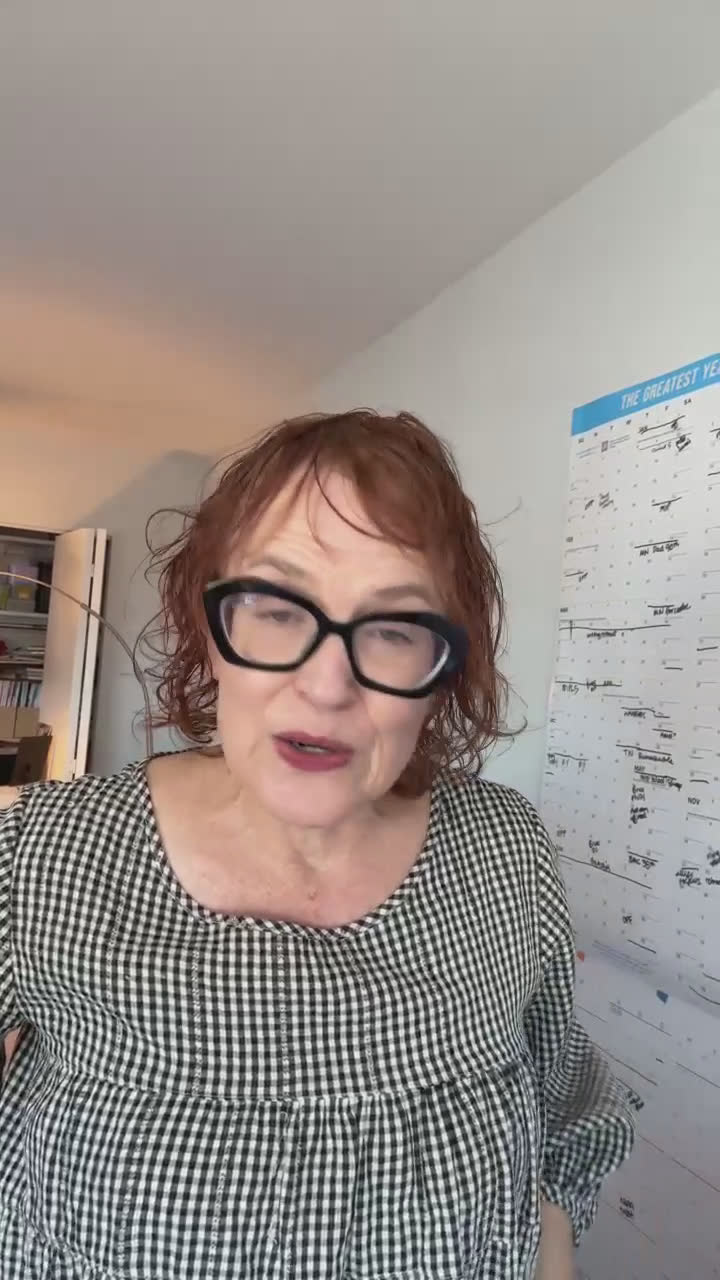
Thoughts about creating a life you want to live in, from someone who has had to do it herself.
The host opens with greetings, shares a brief morning routine experiment, and introduces guideline number 12 learned from a longtime coach, Milo. This chapter sets context and explains where the core idea originates.
The speaker presents the central idea that problems with no solution are not problems but rules of the game, and explains what that means in practice. Personal examples about alcoholism and anxiety show how some conditions must be managed rather than fixed.
Through a Lambeau Field snow analogy the host explains that some situations are immutable and we must learn to play within them. The chapter also outlines practical coping strategies like recovery meetings and anxiety-reduction tools to navigate flare-ups.
The speaker balances the first idea with an optimistic guideline that for many problems there is a solution better than the one that failed, and recounts using this approach in government and while publishing a book. This chapter emphasizes trial, resilience, and moving to the next option when something doesn’t work.
This section gives practical decision-making tools — e.g., ask whether something is your business or controllable — and uses a nosy anecdote to show how obsessing over others’ opinions creates unsolvable problems. It recommends shifting focus to behavior, feedback, and emotional maturity.
The closing explains that sometimes opting not to seek a solution becomes an acceptable condition of play and encourages self-acceptance. The host then gives final well wishes and a brief sign-off for the week.
Hello, Cadre. Hello, hello, hello. Happy November. Happy November. What's up? What is up? Let me get my glasses. Sometimes I forget that I have computer glasses, which makes it easier to see close up. Here we go. Wet hair. Hello, Rise with Melody. It's so nice to have you here. I've been trying something new, cadre, in that I have been working out later. So I get up, I do my breakfast and my spiritual time, and then I write. I get on Focusmate, that app that some, that's a little top heavy, the app that some people use for body doubling for, there's somebody else on Zoom.
And we just work silently together for 25 minutes or 50 minutes or 75. And the first thing I do is I write my book. I work on my book as opposed to working out because it's the most important thing. And then once I've done at least that 30 minute session writing this book, then I go work out. And then I took a shower and here I am with all of you. I had more breakfast and did some tasks. So here I am with all of you feeling a little more rushed than usual, but very pleased with this experiment I've been doing.
of writing first and working out second. And I have a topic today. I have my guidelines. And guideline number 12 I got from a coach, hello Milo, Milo Raza, if anybody needs a great coach, you can look him up online, Even Braver Coaching. I got this from Milo Raza. Now Milo and I went to college together. I have known Milo a very long time. And it was dicey. I remember when I was left office, I was like, I need a coach coaching. I wish I had, I just wish I had somebody like Milo. But I mean, I know Milo.
So would he, I can't work with Milo. And then I realized, let Milo set Milo's own boundaries. And I approached him and he said, here's how we can make it work. And I said, great. And it worked really well. And he's fantastic. So if you need a coach, even braver, Milo Raza. I keep fixing my hair because it's so wet. But I got this, which is currently guideline 12, I got this from Milo. A problem without a solution is not a problem, it's a rule of the game. It's a rule of the game. Now I have a cousin, I have one that sort of goes next door to this, which is for every problem there is a solution better than the one that didn't work.
Those things seem to be at odds with one another, but I don't think that they are. So here's what I would say about that. First, a problem without a solution is not a problem, it is a rule of the game. I would say it is the condition of play. That if there is a problem and there's absolutely no solution for it, then my job is to learn how to live with that as opposed to changing that. Because changing that is like banging my head against a wall. Now, in my life, and I talked about this some last week, being an alcoholic is not a problem without a solution.
Drinking has a solution. Me being an alcoholic does not. Whether I'm drinking or not, I'm still an alcoholic. In my estimation, your mileage may vary. You may have a different take on what addiction means to you, but for me in my life, I'm not going to ever not be an alcoholic. So all those years that some of us spend as addicts trying to drink like normal people, at some point, very early in my life, but other people, your mileage may vary. Whenever you get to it, you're right on time. At some point in my life, I had to understand that is a fruitless endeavor.
Me drinking like a normal person is impossible, right? It's a problem without a solution if I approach it that way. So I'm gonna, it's a condition. It is a condition of play. It is a rule of my personal life game that if I drink, I will drink alcoholically and die. That one is too many and a hundred is not enough. That's just how it is. And I think that way about my anxiety as well. I'm starting to think that way about my anxiety. There are things I can do to ameliorate my anxiety. There are things I can do to make my anxiety less impactful on my daily life, but I think it's just always going to be there until it's not.
It may go away someday. That would be great. I have had long periods where it was just humming along at a very low level, where it was just humming along at a low level, but the more I take on in my life, that is often spur for my anxiety to rear its head once again. So a problem without a solution is not a problem, it's a rule of the game. And so it's not a problem, it's just a condition of play. It's just a condition of play, right? It's like if you're a football player and you're an NFL, I'm an NFL fan, like if you're a football player in the NFL, and you're going to play at Lambeau and it's snowing, that is a problem without a solution.
There's not a roof to put over Lambeau Field. It's just going to snow and be cold in Green Bay, Wisconsin in November or December whenever you're playing. Sitting around trying to figure out how to make it not snow is not worth your time. That is a problem without a solution, which means it's not actually a problem. It's just a condition of play. It's just a rule of the game. All right, today we play in the snow. How do we build up skills to play in the snow? All right, I can't drink like a normal person and I can't stop myself from taking that first drink.
What do I do? There is a solution for that personally for me. I go to recovery meetings. Your mileage may vary. I have anxiety and I'm having a flare up today. I can't stop the flare-up from having happened, but I can use the tools that we talked about last week. I can use those tools to bring down the heat from a rolling boil to a simmer, you know, on the good days. I can bring it down to a simmer. On the bad days, I just roll with it, tell people what's going on, do my best to get company and not make it worse by being hard on myself.
So that's an important one for me, right? This idea that a problem without a solution, it's not a problem. I don't have to think of it even as a problem in my life. It's just a condition of play. It is a rule of the game. It is something to get skills, to navigate, to manage, I get to learn new skills and move on. And as I was talking about last week and the lesson I learned from Stephen Hawking, maybe these are the conditions of my brilliance, right? Whatever these things that I think are problems that are unsolvable are now just the conditions of my brilliance if I learn how to work with them and within them.
And I think that's a profound truth. And with any profound truth, the opposite is also true, which is for every problem there is a solution better than the one that didn't work. And with my anxiety, the solution that was better than the one that didn't work was going with the current rather than against it. Trying to swim upstream was not getting me anywhere I was just tiring me out. So going with the flow and navigating that well, let that river of my life take me to much better places. That's what it's done for me.
But what this idea for every problem there is a solution better than the one that didn't work is I am kind of an optimist in this way of that I do believe There are, I tend to believe that for most problems there are solutions and that I can keep seeking those solutions. They may not always be the one that I think. I have to be very open and very open-minded for some of the things I faced in my life. Letting go, has been the solution, which has been the better alternative than the solution that did not work, has been letting go, letting the world be as it is, letting the world be how it's going to be.
Oh, I forget, I should not touch my screen. I think some things are happening on the screen, but if I touch it, I fear bad things will happen. Pardon me. For every problem, there is a solution better than one that didn't work. When I was governing, I had that printed out and framed in a frame that I could see from where I would sit in my office. So that, especially in the mayor's office, but also in my city council office, I could just see it. And as a reminder, it was just part of my daily environment was this idea that if I'm sitting here, I'm in government, we're facing a lot of problems.
I refuse to think that some of these don't have solutions. There's got to be a, for every problem there is a solution better than the one that didn't work. This one didn't work. Next, next, next. That was my job day after day, month after month, year after year until I left office was let's find out something that can work. If there is a problem in my life that feels really challenging and I get, you know, I have people in my life that I can check this out with. Is this, am I trying to control the uncontrollable?
Is this any of my business? That's the first question. Sometimes the solution to the problem is that, oh, that situation is none of my business and I am a very nosy person, I am very curious nosy person. If I'm at a restaurant, I will be scanning the people around me, trying to figure out, for example, who's on first dates or who's early in their relationship. I was at the Minneapolis, not Minneapolis, I was at the Logan. I was at the Boston airport and having lunch with a colleague who we had just been at a gathering together.
And I look over and there's this man and this woman, neither with wedding rings on. Um, both of them with the kinds of suitcases that indicate maybe they've been on a business trip together. It was a Friday afternoon. This was right before the FAA shut down. As a matter of fact, I was on one of the last flights before that whole mess happened. Thank you. And I look over and they are just gazing into each other's eyes, you know, but they're talking like they don't know each other very well. But like the leaning in, the vibes were immaculate in terms of romance novel.
So I was just so curious, but of course I couldn't ask them. It was very sad. But I'm a very nosy person. But sometimes I put my nose into business that isn't mine. Like, for example, other people's opinions of me. None of my business, really. Managing, navigating, what you think about me, I have no control over. The only thing I have control over is how I behave and how I put myself out in the world and how I respond to feedback. Those are things that I can control, but how you respond to me, my sponsor over and over, that is none of your business.
That is none of your business. And the more time I spend trying to make it my business, the more I am creating a problem without a solution. And I should understand that what other people think of me is a rule of the game, but it's not one I have any control over. All I have control over, all I can do is change my relationship to how I feel about how people, about my fear of what others may or may not think, and change my relationship to my own behavior, who am I being in the world, and change how I seek feedback to ask people what they think, whether they tell me the truth or not, I have no control over that, and take feedback from what they think.
My emotional maturity my capacity to do that. That's one way of, that's a solution that's better than the solution that didn't work before, which was me obsessing about it and trying to twist myself into a pretzel to be the way somebody I cared about wanted me to be. And that was making my anxiety worse. It was making my life worse. It was wasting a lot of time. which is sometimes the point. Sometimes my brain just wants me to waste time on things I can't control so that I don't take big risks on things I can because my brain is scared for me a lot.
There's part of my brain that is just pumping out, wanting to be safe in a certain kind of way, which means not putting myself out there, but that also means not making my dreams come true, which is a non-negotiable for me. So For example, this book, I kept repeating to myself, for every problem there is a solution better than the one that didn't work. , for every problem there's a solution better than the one that didn't work. What was I doing? Let's do something else. And then when I got the agent and it was her job to sell this book, but it wasn't going very well, it took four years, All right, that way forward didn't work.
What do I do next? For every problem there is a solution better than the one that didn't work is how I persist. Thank you, next. Isn't that a pop song? Maybe Ariana Grande. Thank you, next. All right. For every problem there is a solution that didn't work better than the one that didn't work. But A problem without a solution is not a problem. It is a rule of the game. The last thing I'll say about problems that aren't problems is this. Sometimes it's not worth it to me to spend the time to find the solution, meaning there may be a solution, but I don't have the time, energy, bandwidth, desire to find that solution, and that too just then becomes a condition or a rule of the game.
it just becomes a rule of the game. And that's where self-acceptance sometimes comes in. That's where life acceptance sometimes comes in. You know, we're living in this apartment, it would be really great to have some color on the walls, but I'm not gonna do that. So having white walls in this apartment that we rent is the condition of play in this apartment. So how else do I want to decorate, etc, etc. If I'm unwilling to find a solution or I know there's a solution and I don't have the capacity to pursue it or desire to pursue it for any reason, that too just becomes a rule of the game.
And how am I going to work with it? You know, what end outcome am I looking for and what are the conditions I'm in order to get to that outcome? And I think we'll leave it at that today. When problems, problems without solutions are not problems. They are conditions of play. They are rules of the game. So I hope you have a great week. I'll be here next week. We are so quickly approaching Thanksgiving, which is so hard to believe. If you're watching this live, if you're watching this later, I hope you had a great one.
and I'll see you I'll see you in the up cadre I hope you have
Reactions and comments are for members. Joining is free and takes a minute.