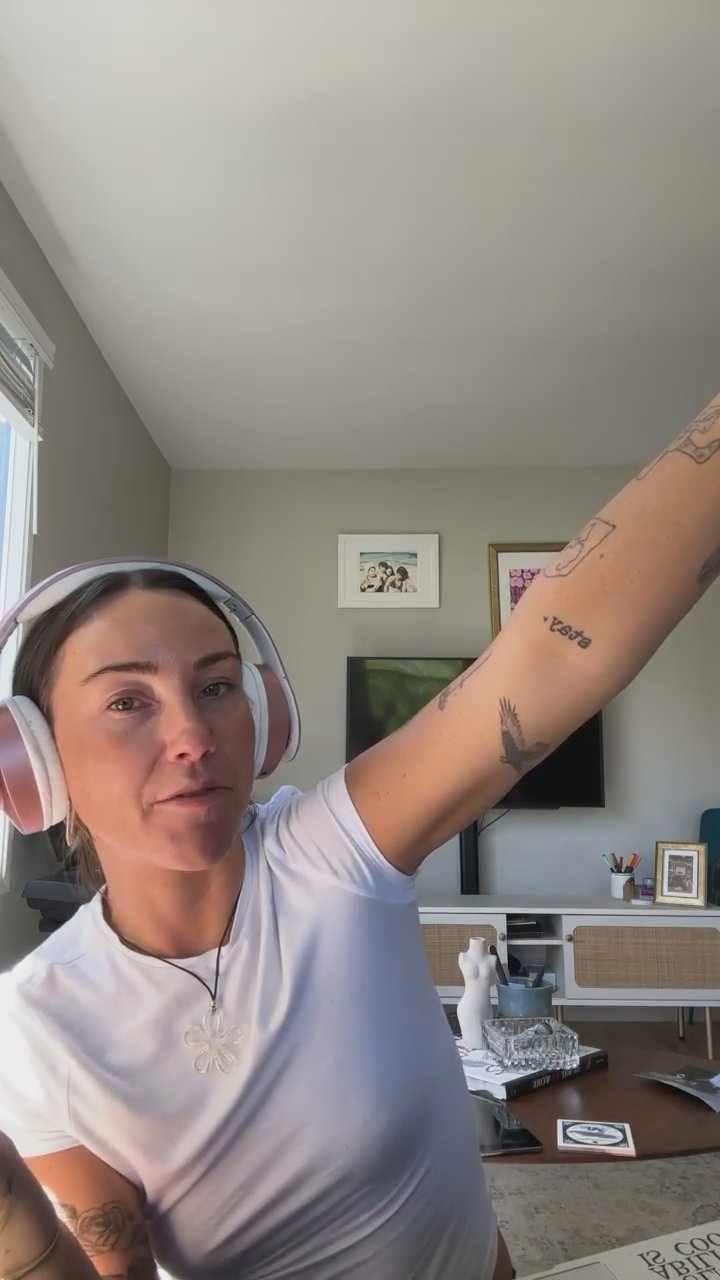
I’ve been in therapy for 19 years for my mental health and have a master’s in psychology. Ask me anything about eating disorders , suicidal depression, divorce, grief, anxiety, or whatever is on your chest!
Lukewarm Wednesday. May is mental health awareness month. Allow folks to ask whatever questions they might have about mental health, about life, about whatever feels topical for you.
Luke: I like to have things that are really, really plain, and then I can mix and match them with sauces to make a different sort of cuisine. He says for his recovery, having less choices and less helps. Brayden: I have to prioritize having my meals over experimenting in the kitchen right now.
Most therapists will typically specialize in one type of therapy. If you're going to therapy for a specific mental health diagnosis, there are certain types of therapy that might be more effective than others. Rachel says it's always good to ask about their experience if you need help with something specific.
Okay. I am going to sign off, but if you have further questions, don't hesitate to leave them in the comments. And I have some new videos that should be on my page I believe now. Have a great rest of your Wednesday Cadre crew.
Happy Wednesday. Hello, hello, hello, everyone. I'm just gonna give folks a few minutes to come into the room, and while you do, I'm just gonna pull up some questions here. So today I'm going to do a q and A and just allow folks to ask whatever questions they might have about mental health, about life, about whatever feels topical for you. Hi, Rachel. If nobody has questions, that's okay. I have some. Some questions that I can answer. If you're not. If you're not feeling like there's something specific you want answered, I cannot talk today.
Hi, Luke. Happy Wednesday. Hello, hello. So I'm just gonna give folks a few more minutes to join. What's up, Luke? I am sitting and getting the only sun that's coming into my apartment right now. The weather has been beautiful this week in Seattle, and it's not. It's not how it's been predicted. Like, every time I check my weather app, it says it's gonna be really rainy and s*****, and every day it's been incredibly sunny and beautiful, so. Hi, Colleen. Okay, Rachel says tattoos. Okay, what do you do?
Questions about my tattoos. I love talking about tattoos, and a lot of them are mental health related. I'm still pulling up these questions here. So for anyone just joining, doing. I'm just doing a q and a today. So if you have any general questions about mental health, about life, about being a human, about the weather, like, you know, whatever you want to ask, I will just answer any questions you might have. And if no one has questions, that's okay. I have a few questions that I can pull up myself.
Yes, Luke, it is mental health awareness month. And happy, maybe happy, happy may. So, yes, lots of mental health awareness as we come into May. I find that every month for me is mental health. But, yeah, so, okay, Rachel wants to know what my tattoos mean. I can't go through all of them because I literally have, like, maybe more than 50, but I'll talk about some of my favorite ones. So I know that it's gonna be a mirror view, but this one says stay. I got this when I was in Bali probably three years ago after a very, very, very bad suicidal depression.
I was feeling incredibly hopeless, and I did not want to stay. I did not want to stay alive. I did not want to stay on earth. I did not want to stay in my body. And that word became a mantra for me, so it became a mantra for me to stay. Stay one more day, stay for one more breath, stay for one more sunrise. And so I got that tattooed on me. So I can see it. And I remember when I got this tattoo, he wanted it to be the opposite way so that if I'm walking, somebody could read it. And I said, no, I want it facing me.
And when I said that to him, he said, oh, I see. This is for you. And that was just such a powerful moment for me, because here was a stranger across the globe giving me this tattoo, and he understood, and that was kind of a pretty wild moment. So I got this one for that. Oh, gosh, a lot of these mean so many things. This one says, don't be afraid to begin again. So I got that after I got divorced as a reminder that even when life feels like it has completely fallen apart, there's always, always, always a way to move forward.
There's like, we just never, ever know where life is going to take us. I could not possibly have imagined. I could not possibly have imagined that my life would be the way it is right now. When I got divorced, I just couldn't fathom what future the future would look like for me, because the whole future I imagined for myself just disappeared. And so reminding myself, like, starting over does not have to be a bad thing. And if anything, it's like I get to be the artist of my own life. Like, my life is a canvas, and I get to paint it however I desire, and it's okay to begin again.
So, yeah, that's that one. Let's see what else? This is a little. Well, it's not really a dandelion. It's kind of like a daisy esque flower. But I got this in memoriam, actually, this one and this one I got in memoriam for my high school sweetheart who was killed in a boating accident in my sophomore year of college. And his death was really, really difficult for me to process. It was the first. It was the first time I've ever had to grieve anything or grieve anyone to that degree. I had lost a grandparent before, and an aunt, but I was not incredibly close to either one of them.
And the love I felt for them was very different than the love I felt for him. And I really, really struggled to grieve that death and that loss. So this actually represents my very first spiritual experience. So after he died, I went for. I used to run a lot more, and I was listening to. I don't know if it was Spotify. I think it was. This was at the times when, like, the old, original ipods existed. And so it was just whatever songs I had on my ipod, and it was shuffling through, and he was a singer, and so I had some of songs on my ipod that he used to sing, and one of them came up, and right when it came up, I saw a hawk start flying in the sky right next to me.
And I just burst into tears because for some reason, I knew that it was him. So as the hawk is flying next to me, I'm running and crying, and the hawk flew with me for the whole song. And then once the song ended, the hawk disappeared. And in that moment, I just felt like it was him letting me know I could move on and that it was okay to let go and that he was going to be okay. And if I ever needed him, I knew how to find him. So I got this in his honor, and then this one I got because his favorite flowers were sunflowers.
And so anytime I think of sunflowers, I'm always reminded of him. I don't know why I got this one. This is clearly not a sunflower, but it was sort of in honor of him as well. So Rachel says, oh, I sent one to you on Instagram last week. Suggestions? Oh, suggestions for pre prepared foods. Okay, that's a really good question. Yeah. So I I like to have things that are really, really plain, and then I can mix and match them with sauces to make a different sort of cuisine. So I'll pre cook rice, potatoes, some kind of protein.
So it's usually chicken for me and a vegetable. So, like, a brussels sprout or, like, a mixed stir fry kind of veggies. And I make everything plain. No sauce, no seasoning. And then I just make bowls. So, like, if I'm in the mood for, like, indian, I'll put a curry sauce and some seasoning with my rice, my veg, and my protein. And then maybe, like, slice up some avocado, microwave that, and then I'm good to go. Or if I'm, like, in the mood for mexican again, rice, veg, chicken. And then I might add some salsa and some cilantro and some lime.
And then I add, like, a mexican bowl. Um, or if I'm in the mood for, uh, like, burger y kind of thing, then I'll reheat the potatoes, like, in some oil on a pan and put some salt and pepper. And maybe use, like, a steak sort of seasoning on my chicken to make it sort of, like, seasoned, as if. I don't know. Um, it's pretty boring. But I find that for me and my recovery, like, having less choices and less. Less choices helps. And things that are already made. So that I'm not in that state of anxiety when I'm hungry is really, really helpful.
Rachel says protein is the hardest. Wait, will you explain that? What do you mean? Like, do, do, do you mean like, protein is the hardest in terms of, like, making it or figuring out what you want protein wise? Mmm. Just to get in. You don't touch raw meat? I actually don't cook the chicken myself. I go to Trader Joe's and they have these, like, pre cooked chicken breasts. So I just buy those. That makes things really simple. Or I buy, like, frozen chicken burgers or frozen burgers mostly. Mostly because I'm just not very good at cooking.
And I just know that I'm not in a phase of my recovery where I have the bandwidth to try new recipes and fail, because that's part of learning a new skill, is that I will fail. And that's okay. And I know that I'm not at a place in my recovery where I think failing around my food is an option for me because I need to eat. So I have to prioritize making sure that I'm having my meals over experimenting in the kitchen right now, I hope one day I get to a point where experimenting in the kitchen is something I get to do and I fully believe that it will be, and I need to just be mindful of that.
So, yeah, Luke says, great narrative. Got that right. Thank you. Okay, I'm just gonna pull up my. Let's see if I got a little question here. Brayden, my questions, girl, my computer is going very slow. I think I have to finally take my computer and this is tragic. Okay. This is a question that people ask me a lot when looking for a therapist, what kind of therapy style is the best? So therapists will typically specialize in one type of therapy, and most therapists are trained in all of them. So if you're looking for a therapist, you might see next to their name.
Like, I specialize in CBT, DBT, and attachment theory or something like that. And for the most part, it really does depend on why you're going to therapy. So if you're going to therapy for a specific mental health diagnosis, there are certain types of therapy that might be more effective than others. So typically, anxiety based disorders are really well treated with CBT or cognitive behavioral therapy, because that's really all about sort of focusing on our thoughts and changing our thoughts to change our feelings.
Depression as well is very respondent to CBT. Personality disorders or disorders that are based more on challenges with mood and emotion regulation so personality disorders, eating disorders, any kind of affective disorder where there's a lot of emotional ability, sometimes, like, sometimes possibly bipolar as well, or really respond really well to dialectical behavior therapy. So DBT. And then if you're, you know, if you're going to therapy to work on certain things, like maybe relationship issues or attachment, then it's good to work with someone who specializes in attachment or childhood psychology and development and understanding.
You maybe how our childhood might have impact our adulthood. If we're working through trauma or PTSD, that's when we can start to ask ourselves, do I want to work with someone who does EMDR? Which is oftentimes used for folks with PTSD or for trauma? I personally did not like EMDR, but a lot of people really swear by it and love it and found it to be incredibly helpful for processing trauma, you know? But I think also it's really. It can be really overwhelming to look at all the different things that a therapist offers and ask yourself, like, is this what I need?
Is this the right thing? And I also just love to remind people, like, you don't have to stick with one therapist. Like, if you go see a therapist a couple times and it doesn't feel like a good fit, it's okay to try it at somebody else again. I know that's incredibly overwhelming to the idea of swapping a therapist or, like, months going by before finding a good fit. And this is someone who's supposed to help you with your life, so you get to find someone that feels like a good fit for you and ask those questions around.
What do you specialize in, and what's your experience? Yeah. Rachel says it's always good to ask about their experience if you need help with something specific. Yeah, absolutely. Tip on therapists, a lot will say they specialize with. Yeah. Mm hmm. Certain things just because they treated one person with it. Wait, they. They specialize with certain things. Oh, interesting. I tried EMDR and hated it, but I didn't like the therapy. Yeah, that's fair. I also felt, like, with my therapist, I didn't trust her yet, and so she was asking me.
So, with EMdR, like, you have to kind of reprocess some of the traumas or the experiences, and I don't. I didn't feel like I trusted her enough yet to. To process those with her. And so I don't think that I really was able to actually lean into the process because I didn't feel safe enough to. So that definitely. That makes a lot of sense, for sure. Okay. My loves. I am going to sign off, but if you have further questions, don't hesitate to leave them in the comments. And I have some new videos that should be on my page I believe now, so feel free to check those out and I will see you again same time next week.
Have a great rest of your Wednesday Cadre crew.
Reactions and comments are for members. Joining is free and takes a minute.