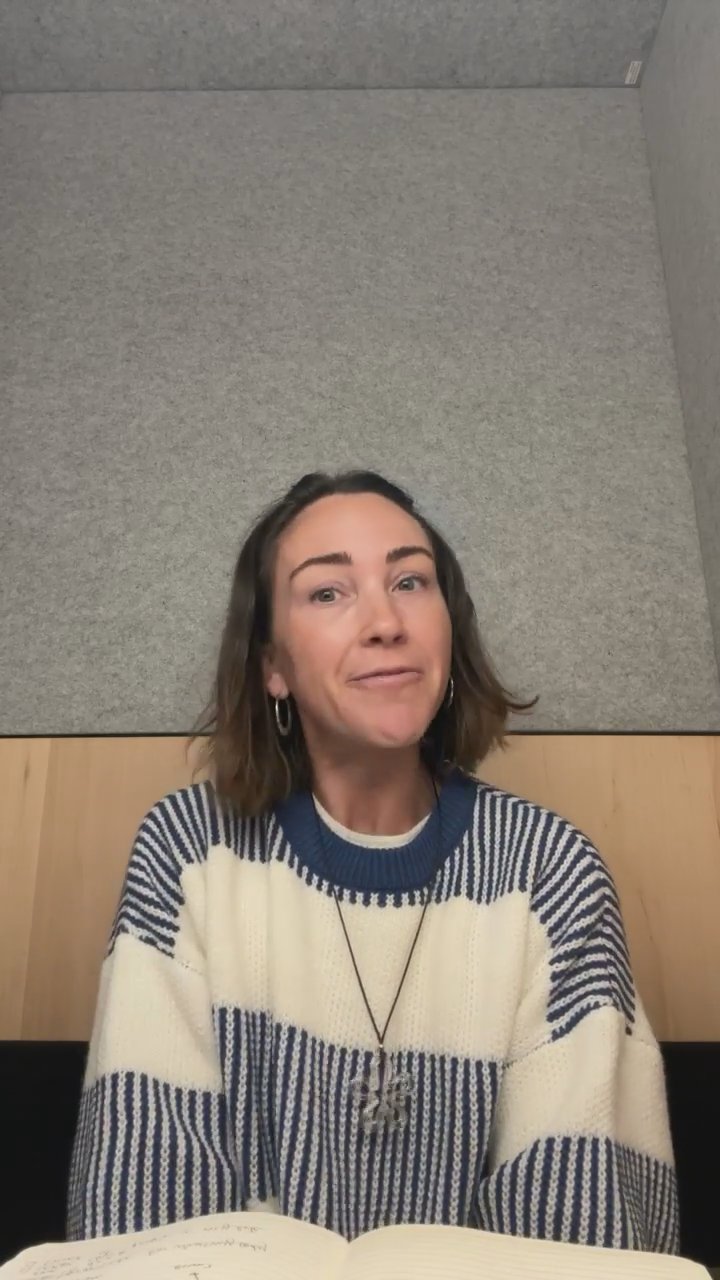
Rachel shares three practical tools she uses on bad body image days, drawing on her long recovery and therapy experience; includes tips like inner-child work, listing what she loves about others, and ways to cope with body dysmorphia triggers.
Rachel: I am a mental health advocate and writer. She has been through therapy and recovery for her own mental health since she was 15. She hopes to help at least one person feel less alone. Would love to know your name in the comments and where you're from.
LZ Granderson has struggled with an eating disorder for 20 years. On bad body days, he says he tries to connect with his inner child. Granderson: Inner child work is a way for us to generate a lot of self compassion.
A physical injury can trigger some of that body dysmorphia. Make a list of all the things you love about people. Remember that the people you love don't love you because of what you look like. If you have any thoughts or questions, feel free to drop them in the comments.
Thank you for showing up in the comments and being courageous and sharing yourself with us. I would love to see the journals and ideas. I will see you all next Wednesday. Same time maybe, same place, maybe.
Happy Wednesday, Cadre. Hello? Hi. It's me, Rachel, which hopefully is obvious based on the title, Rachel's room. I am going to give folks a few minutes to trickle in. And while I do, in the meantime, if you're watching this as a replay, I would love to know your name in the comments and where you're from. And if this is your first time here, I'm really glad that you're here. My name is Rachel. I am a mental health advocate and writer. I have been through therapy and recovery for my own mental health since I was 15.
I'm 35 now, so the last 20 years, and I am just here to help at least one person feel less alone and share my experiences and things I've worked through, things I'm working on, and also things I learned while in school. I studied mental health counseling as a graduate student. And so, hopefully, I can offer you you some wisdom and tools and just a little comfort knowing you're not alone. Hi, Russell. Hi, Leslie. Hi, Lynn. Hi. Hi. Hi. Hi, Joe pay. I'm so happy to see you all. Happy Wednesday. So today.
Hey, boo. Oh, my gosh. I miss you from Pennsylvania. Thanks. Speak, wonder. I love knowing where you all are. It's so fun. I'm in Seattle. I don't know if I mentioned that, but, um. So today I wanted to chat about body image and, um, negative body image and how to cope with having what I call bad body days. And, um, I. So, as someone who has struggled with an eating disorder for 20 years, I've been in recovery twice. And I still see my therapist every other week, and I still have symptoms all the time.
I still experience, um, immense amount of negative thinking about my body. I still have a lot of, um. I think a lot about food and what I'm eating or not eating. And, you know, a lot of sort of like those rituals that were part of my eating disorder are still. Are still present. So I daily am working. I daily have to work through and against a lot of those thought processes and patterns and behaviors. And I. And I'm so much healthier than I've ever been in my life when it comes to my relationship with food and body and my eating disorder.
So I just wanted to share with you what I do on days when I am experiencing a lot of bad body image or negative body image or body dysmorphia. And these are three tools that I like to use. Maybe not all of them. Sometimes I will use one because the other ones aren't working, or maybe I need all three. But these are some things I try and practice when I'm having days where I don't recognize myself in the mirror or my clothes, feel bad against my body, and I don't want to be. I don't want, you know, the skin sensation is bothering me, or I'm having maybe physical, like, stomach discomfort, which can be triggering for my eating disorder.
All the like, lots of different kinds of things. So on bad body days, days when I'm having bad body image, these are three things I do. So the first one is I try and be as like, one thing I've learned in therapy is I am never going to get to play. And I don't even like to use the words never and always. And I fully believe that there is not gonna be a day when I am 100% symptom free, because that would mean I just would not have thoughts. I think all humans on a spectrum have some level of negative thinking, and it's very difficult in this culture and society to not, at some point throughout the day, think about how we look.
It is just so in our face all the time that I would have to be living on an alternate universe for there not to be something to cause me to think about how I look. So I know that I'm gonna be navigating these things for a long time. So when I have thoughts about my body that are negative, the first thing I do is I try and be kind to myself, because if I beat myself up for having those thoughts, I am adding pain on pain, and that creates suffering. So to be really gentle on myself, I try and connect with my inner child.
So if you've ever heard of inner child work or inner child healing, it can kind of be thrown around in a way that feels a little bit trite, I guess, or, like, overused. And it used to be something that I talked about a lot, and then I kind of, like, pulled back because it started to feel like people were getting to a place of, at least on social media, being so afraid that their inner child was wounded, they had to heal their inner child, or, like the world was going to end. And I didn't want to.
I didn't want to perpetuate this idea that, you know, if your inner child is wounded, then something is really wrong. More so, I believe that connecting with a younger version of ourselves is a way for us to generate a lot of self compassion and be really gentle with ourselves. And it's also a way for us to start to observe maybe times in our life in childhood when we started to learn that we weren't good or worthy. We started to get information from the outside world that it wasn't okay for us to be delightful and curious and experiment and play.
And so during childhood, a lot of these, you know, a lot of these external experiences start to kind of shut down this delight and wonder for living. And we start to think about the world in a little bit of a different way. And so inner child work is a way for us to kind of start to learn a little bit more about when, you know, when did I first start to think about my body negatively? What happened? Who was there? What were the words that were said? And it can kind of give us some insights, and then we can kind of target that specific moment as a way to do a little bit of healing work.
And it's a really great way when we're in these moments of, you know, self degradation or self beratement, to go, wait a minute. If I was a four year old girl, if I was four year old Rachie, how would I talk to myself if four year old Rachie was looking in the mirror and saying, I feel so ugly, I hate the way I look? How would that make me feel? What would I say to that little girl? And then I use that information, and I reflect that back to myself, because I am still just as worthy and deserving of that kindness and compassion.
And also, it makes me so sad to think about a four year old girl looking in the mirror and feeling that way. And if it can make me feel that sad thinking about her, it should make me that sad thinking about me. So that's the first thing I try and do. And Rachel says, that's why I always have a picture of myself when I was little. If the thoughts get really bad, I pull it out and ask myself if I'd say those things to that little girl. And it's always a no. Yes. That is such a good idea, carrying around a picture of yourself in your wallet or your purse.
I have a photo of younger me on my fridge. When I travel, I keep one in my journal, and I pull that out, and I look at that little photo of me, and I remind myself, like, would I talk to her that way? The second thing is finding gratitude for what my body can do. So rather than focusing on what my body looks like, I try and focus on what my body is capable of. So I might make a gratitude list of ten things that I'm grateful for around what my body can do. So this might be, I'm grateful that. That I can get myself out of bed in the morning and walk into my kitchen and make myself coffee.
That I'm physically capable of doing that, that's a blessing to me. I'm grateful that I can hike, that I can climb a mountain, and I can see beautiful views and that my legs are strong enough and that I have a good enough heart with endurance to get me up a mountain and see some beautiful nature. I'm grateful that my. That my skin is healthy and it protects me and my organs and that because it's healthy, like, I can, you know, I can keep everything inside or, you know, whatever. Whatever that might be, thinking about what my body is capable of doing while also being really gentle, too, because sometimes for me, a physical injury can trigger some of that body dysmorphia.
So if both of those things are happening, right, so, like, for example, I injured my leg in October, and I couldn't. I really couldn't walk very well for almost a month. And that was really difficult because that then also triggered a lot of body image issues. And I didn't feel like I was able to really have gratitude because my body was also not physically able to do a lot of things. So I had to kind of work on, like, both of those at the same time because I was angry at my leg for not working.
And so to cope with that, I also had to ask myself, like, okay, well, what is working in my body and what can I be grateful for? And without, like, silver lining anything and being like, oh, this is, you know, this was supposed to happen, or, like, it's not a big deal because everything else is working, or it could be worse. Like, I think it's so important to honor our pain and say, like, hey, this sucks. And, you know, it was. It also kind of had put me in a position where I had to also ask myself, like, okay, well, what else is still working?
What can I still do? So finding gratitude for the parts of our bodies that have nothing to do with what, like, they look like. And then the third one is thinking about people in my life, thinking about people I know, whether they're friends I have now or friends I've had in the past or family members or teachers or mentors, and think about all the things I love about them. Make a list. I pick one person, and I write down everything I love about them. Chances are their body or how they look is not going to be on that list.
Even if they're absolutely, stunningly, in my mind, gorgeous. There's probably not going to be anything on that list that has to do with how they look. So I try to remind myself that the people in my life who love me don't love me because of what I look like. They don't love me because of my body shape or size. They don't love me because of. Of what my skin or my hair looks like. And, in fact, if those were things on their list of reasons why they love me, I would think that there was something wrong with that.
That would be a red flag to me. Right. So that, for me, is also a really good wake up call, because I get so in my head about what other people are thinking, too. Like, when I'm having a bad body day, a lot of it is like, I don't want to leave the house because I don't want anyone to see me in this condition. I don't want people who know me to see me and go, oh, she let herself go, or, oh, did she really leave the house like that? I start to really tell stories about what other people are thinking, and the truth is, none of the people that love me in my life are thinking about what I look like.
Maybe they're thinking about what I look like. If it looks like I'm going through a mental breakdown, and maybe I need some support and love, and that is fine, right? That's a totally different thing. But when I think about the reasons I love the people that I love, how they look is not on that list. So those are my three suggestions, and I am definitely gonna do all of those today because I need them. And I don't know if anyone else needed them to, but hopefully this was helpful. So I'm gonna read through some comments, but if you have any thoughts or questions, feel free to drop them in the comments, and I will respond.
So Lynn says, yes. Speak wonder Rachel. That's a good idea. I think that was in response to the. To Rachel in the chat about having a photo with you. Now, I also have photos on my phone. No excuses, dude. Sometimes I'll make my, like, if I'm. If I'm real strugglesville, I'll make my phone background a photo of me, like, when I'm younger with a quote over it. That's like, you're doing enough. And that is powerful. Rachel says, I survived living in my car. That would never have been possible, physically or mentally before.
Yes. So true. Yeah. Yeah. Jopa Joy thinks I needed this today. Okay, good. I'm really glad that it was helpful. Lynn says, well, a super idea, Leslie. That's a great perspective. I needed to shift that truth let herself go, has to go. I agree, Lynn. I do not like that at all. So perfect. Great help. Preach. Okay, awesome. I love that this was helpful. Yeah. Speak wonder. There's yeah. Good journaling prompts for sure. And if anyone and if you need more journaling prompts, I have so many guided journals on my website.
I have a couple free ones. I also have some paperback ones that are more in depth. But if you're a big journaler, I'm your gal. com and you can find lots of journals there for all different kinds of things. I also have a specific inner child journal, so if that was something that resonated, that could be a good option for you. I have other inner child healing tools on my website too. And so yeah, if that's something you're interested in, always happy to help navigate and help you find some prompts that would help help you on your journey.
So okay my loves, thank you for joining me today. I'm always really happy to see you all here. It's very, very heartwarming to have you in this little corner of the Internet and I appreciate you all. Thank you for showing up in the comments and being courageous and sharing yourself with us. It's a big deal and it really, really means a lot. So I will see you next Wednesday. Speak wonder. I would love to see the journals and ideas. Yay. com essentially. And I will see you all next Wednesday. Same time maybe, same place, maybe.
We'll be back in my actual.
Reactions and comments are for members. Joining is free and takes a minute.