Betsy Hodges discusses how elections and government shape communal identity and mental health, reframing civic engagement as community-building and urging action beyond passive news consumption, including healthy participation and advocacy.
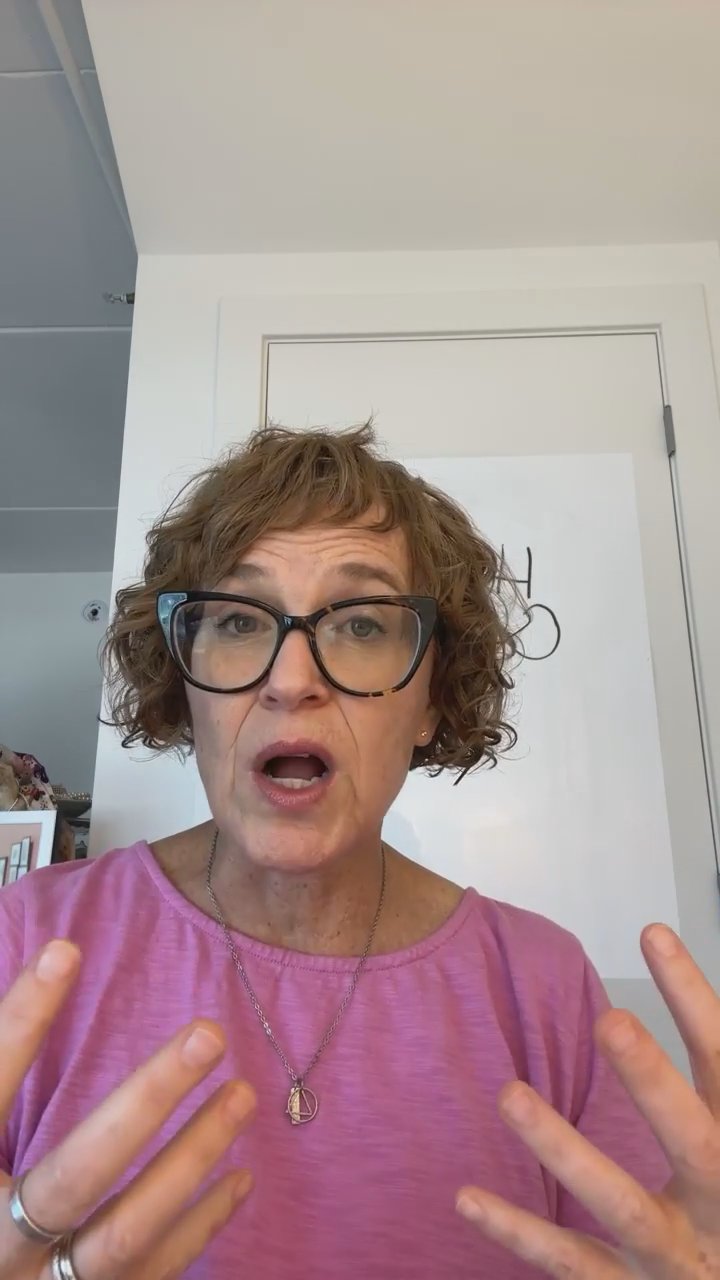
Betsy Hodges is back for her second live stream. She was a woman elected official. She talks about the impact of elections on our mental health and community. If you're here, say hello.
I am thinking about the impact that government and elections have on our mental health. Elections are one of the two key places linked together, where we come together as people and decide who we are. The fact that we struggle to connect well to elections is something that has a huge impact on how we feel as human beings.
LZ Granderson: Action is an antidote to anxiety. He says voting and paying attention to government can foster community sense. If there's something you care about, you can take action, he says.
This week, thinking about community and thinking about mental health, I'm inviting you to switch the frame on elections. One of my rules of engagement is to participate in civic life in healthy ways. That includes disagreeing, organizing, advocating, activism.
Hello there, Cadre. Good morning. It is Betsy Hodges back for my second live stream. It's so good to be back and it was so fun to be with everybody last week. And I'll give a couple minutes for folks to come in. Hello. Hello. If you're here, say hello. Tell me where you're coming from. And the world has been thinking a lot about elected officials these last few months and these last few weeks. And I am not here to talk politics per se, but I am here to talk community. And I was an elected official.
I was a woman elected official. There's a woman running for president. We might talk about that at some point. But what I notice is that we understand instinctively how important elections are and how important our government is. But we don't always have a grasp on the impact that it has on our mental health, on our feeling of community to one another. Good morning, Jules. Welcome. Thank you so much for being here. I am thinking about elections and I am thinking about the impact that government and elections have on our mental health, but the impact that it has on our sense of community.
And one of the things I said last week on the livestream was a belief that I have that government is one of the key places. And elections, government. Elections are one of the two key places linked together, where we come together as people and decide who we are. We decide what our values are as a community. We don't agree about values as a community. And elections are one of the ways we have to sort of approximate with each other, okay, who do we want to be? Right? The election process means we have to talk to each other about what we want.
We have to decide together who we're going to put in charge of this structure. We've put in place to carry the boundaries of our communal life together. There are other places that do that. Spiritual and religious institutions do that. The education system, for sure, the policies we put in place in our businesses and our nonprofits. There are places we come together and decide who we are as a people and how we function. Good morning. Speak, wonder. I'm so glad you're back. Nice to see you again.
And so the fact that we struggle to connect well to elections in a way that honors that communal spirit, as opposed two, divides us from one another, is something, I think, that has a huge impact on how we feel as human beings as we walk around in the world. So the first thing I invite people to do, just thinking about community, as someone who has run for office multiple times, I have campaigned for myself and other people. I have been a volunteer? Have I been paid staff? No, I've never been paid staff on a campaign.
But action is an antidote to anxiety. And I will note that endlessly consuming news is not action. That for many of us, we get frozen and we get frozen in place, just scrolling and reading and trying to figure out what's going on. It plays to the parts of us that are hurt to sit there and stare and listen to all the news all the time, unless it's your job, your job to look at the news about the election, that's one thing. But acting like it's your job when you have other things to do in the world, that is not.
And it doesn't foster the community sense that you can get from participating in an election and from paying attention to government and really caring, because the opportunity is there actually to connect with neighbors and other community members, to think deeply about your own values and listen deeply to other people about their values and find the points of connection and learn from the points of difference. That's one of the gifts that elections give us. It's one of the gifts that government gives us is the capacity to really come together in a meaningful way as human beings.
But if the only way we participate in elections and government is complaining, feeling victimized by the decisions being made by other people, or just freaking out, endlessly scrolling and freaking out, if that's how we're interacting with this process we've put together as a community, then we're losing sight of the potential that's there. So I guess what I'm saying is action's an antidote to anxiety. Complaining and worrying aren't actions taking action on the things you disagree with? That is, what can you do to take action?
And this is not me being partisan. Whoever you're supporting, whatever you think is important to do, taking action is important in ways that are healthy and in ways that remind you that other people are human and that we're all in this thing together, even when we disagree or agree. And so what that means is, for sure, vote and talk to other people about voting. If there's something you believe in deeply or a candidate you support deeply, volunteer for that campaign, or volunteer for organizations who are working on issues that you care about.
And this isn't just for president, right? There are 100,000 elections taking place across this country this year. You know, there's senate, Congress, gubernatorial elections, congressional elections, mayor, city council, school board. Heck, in Minneapolis, we have the board of estimated taxation now. That's not up this year. Minneapolis does off year. Elections. But you get my point. There's a ton of local elections. If there's something you care about, you can take action. It doesn't have to be huge.
Maybe once a month between now and the election, do a door knocking shift or a phone banking shift, or bring cookies to the campaign headquarters. All those campaign workers are always hungry. But that's a healthy way to remind yourself that elections in government aren't something that's happening to us, right. That there are places where we can interact with them. And for me, in my journey with anxiety and mental health, one of the commonalities I notice the biggest dangers for me is when I feel like something's being done to me and I cannot advocate on my own behalf.
And that's when feeling victimized comes in and resentment comes in. And there were times in my life where things were being done to me and I could not advocate safely on my own behalf. Those were real moments. I drew conclusions from those moments 45 years ago that are still driving the decisions I'm making today. I have not re evaluated those decisions. I have not reflected on to say, does that still serve me? Is that really still what's working? And when I do, I can make different, fresher decisions that feel better inside and that support my mental health.
And running for office was definitely one of those things. I had to. Ooh, I had to confront everything I knew or thought I knew about myself, and I had to confront everything that maybe was possible for me in this world. And I had to pull it to me. I had to pull what was possible to me, and I had to shove away what no longer served me. And that process was gratifying and exhilarating and a little terrifying and very difficult at times, but also really joyful almost all the time. So this week, thinking about community and thinking about mental health, I'm inviting you to switch the frame on elections and switch the frame on government and not get lost in the negativity.
There's plenty of opportunity for that, right. I can tell you, as someone who is an elected official, that being in governance is a constant invitation to lose your integrity. And I was grateful. I am in recovery because I had something bigger than just whatever position I was holding to care about. I had to care about my sobriety. And if I lose my integrity too many days in a row, if I can't look myself in the eye in the morning too many days in a row, then I have bigger things to worry about than losing a position.
I have to worry about my recovery at that point. Point and so that was a North star that kept guiding me. So I guess one of my rules of engagement is to participate in healthy ways in my government and elections and to learn what I can from the places I'm tempted to participate for myself in unhealthy ways. The negativity, the being frozen in place, the endless scrolling, that's the invitation of government. It is a place we come together and decide who we are as a people. And are we as a people, people who are just going to passively accept things we don't agree with or violently disagree with things that we don't agree with?
I don't think we're either. As a people, that's not my choice for myself, and that's not what I'm encouraging for other people, that democracy actually gives us the opportunity to be together in community in fresh ways. Democracy, well done. So, that's my little pitch. If there are, oh, I don't know how to pronounce your name. I'm gonna guess Deontay, maybe welcome. If people want to give me a number between one and 26 in the chat, feel free, because then I'll just look at that rule of engagement, and we can talk a little bit about it before we're done.
But one of my rules of engagement is to participate in civic life in healthy ways, and that includes disagreeing, organizing, advocating, activism. All kinds of things matter for the future. So I'm not seeing any numbers pop up. So I will just point my list. 13. Do not accept criticism from someone whose advice you would not seek. That one kind of speaks for itself. If I don't value your thinking enough, or I don't know you well enough to know whether I value your thinking enough to seek your advice, then I certainly don't value your thinking enough to take your unsolicited criticism, or I don't know you well enough to know whether or not your criticism would be of value to me.
So that's rule of engagement. I literally have a list here. That's my rule of engagement. Number 13, do not accept criticism from someone whose advice you would not seek. So, so delighted to be with you again, Cadre. If there are things that you want to know about, you can find me on social media, you can find me through, Cadre. Let me know. Let me know if there's any questions you have, things you want to know about, stories you want, tea you want spilled, whatever it is, let me know. And I look forward to talking to you again next week.
It.
Reactions and comments are for members. Joining is free and takes a minute.