With the election around the corner, a lot uncertain. Here is why it’s so hard for our brains to handle the unknown, and how to cope with it!
Rachel Havocost wants to talk about coping with uncertainty. Our brains love familiarity, biologically speaking. So anytime I'm dealing with a lot of unknown or uncertainty, I focus on my nervous system health. When things are uncertain, especially at such a great level, it can be really difficult to manage.
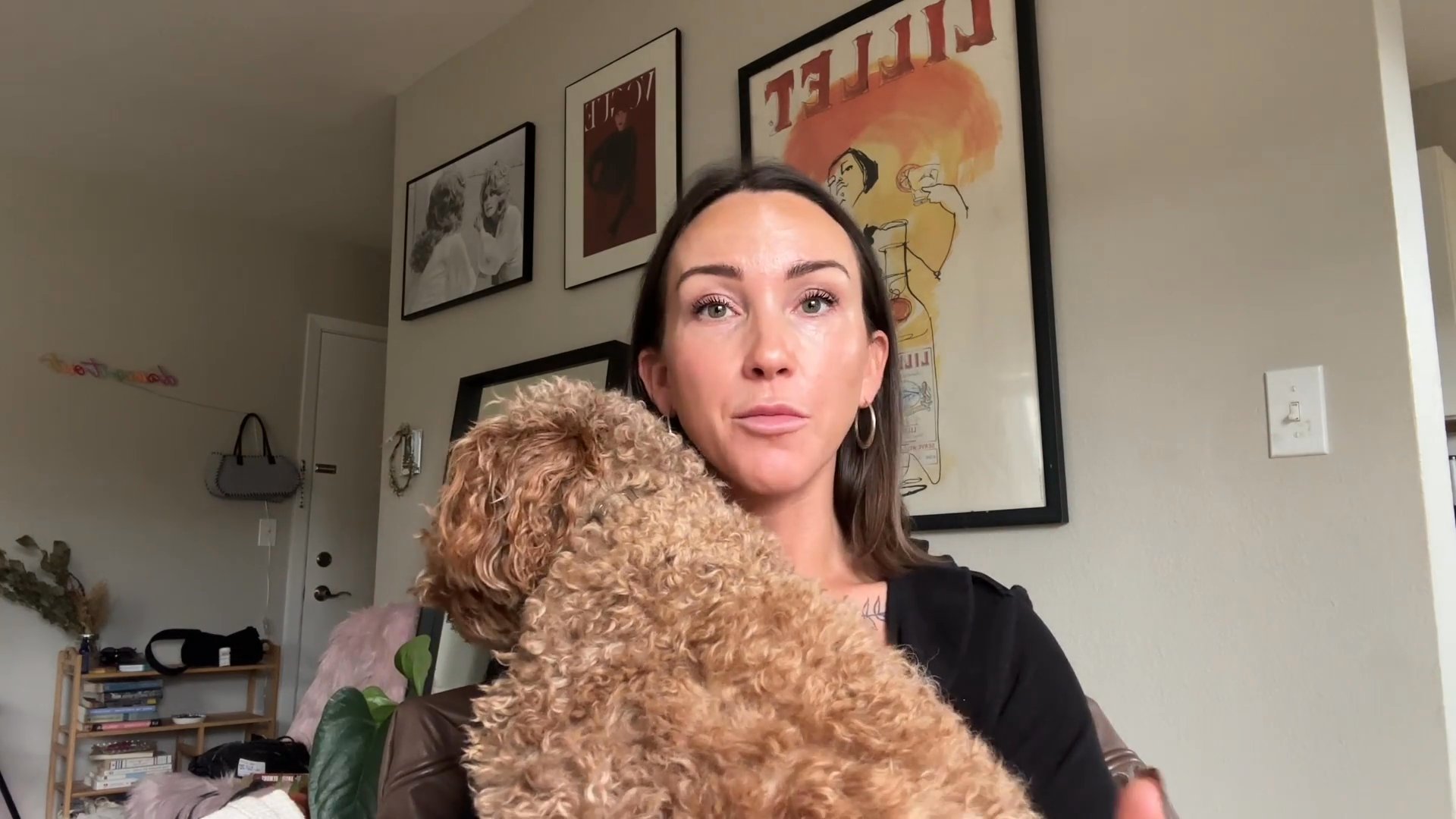
I want to talk about dealing with uncertainty. Hi, my name is Rachel Havocost. I'm a writer and mental health advocate, and I've been sharing my experiences with mental health online in hopes of helping one person feel less alone. So today I want to talk about coping with uncertainty. A lot of stuff is up in the air right now, especially with the election, and that can create a lot of overwhelm and stress for a lot of folks. I know that I'm particularly anxious right now. My dog wants to say hi, and it's a lot to cope with.
So I want to first talk about why it is that dealing with the unknown is so difficult, and then some things that I do to help with that. So our, our brains love familiarity, biologically speaking. We, our nervous systems and brains like to know what to expect because that means that we know that we can plan for whatever's coming and we're going to survive. So things that are familiar, like routines, knowing, knowing what's coming, predictability, that is really comforting for our brains and it keeps us in a state of calm.
But when things are really uncertain, our brain can interpret that as, I don't know what's happening, which means I'm in danger. So that's oftentimes when we're dealing with a lot of uncertainty in our life, we experience high levels of what feels like being in survival mode. So we might experience anxiety, hypervigilance, racing heart, poor digestion. And those are things that are normal and happen when we're not, when we're not safe and when we actually are physically safe. And what we're dealing with is simply just not knowing what's going to happen in the future.
It can be really difficult to manage life if we're in a constant state of survival. So anytime I'm dealing with a lot of unknown or uncertainty, I focus on my nervous system health. That's what I try and do first. So doing things like breath work, meditation, mindfulness, grounding exercises, anything I can do to bring my parasympathetic back into a state of calm so that my body knows that I'm safe and there's not danger. A really simple breath work tool that I've been using like every single day for the last couple weeks is simply focusing on exhaling longer than you inhale.
So when you exhale, you're activating your parasympathetic nervous system, which is the part of the nervous system that tells us to calm down. So by exhaling with a longer breath than your inhale, you're activating the part of your body that is calm. So I do this throughout my day. If I notice myself starting to move too quickly or it's starting to multitask or just feeling overwhelmed, I just stop for five full breaths and count my inhales and exhales and make sure my exhales are longer. No matter what happens, just know that you are not the only person feeling overwhelmed or anxious right now.
When things are uncertain, especially at such a great level, it can be really difficult to manage. So please take care of yourself and hopefully this helped.
Reactions and comments are for members. Joining is free and takes a minute.