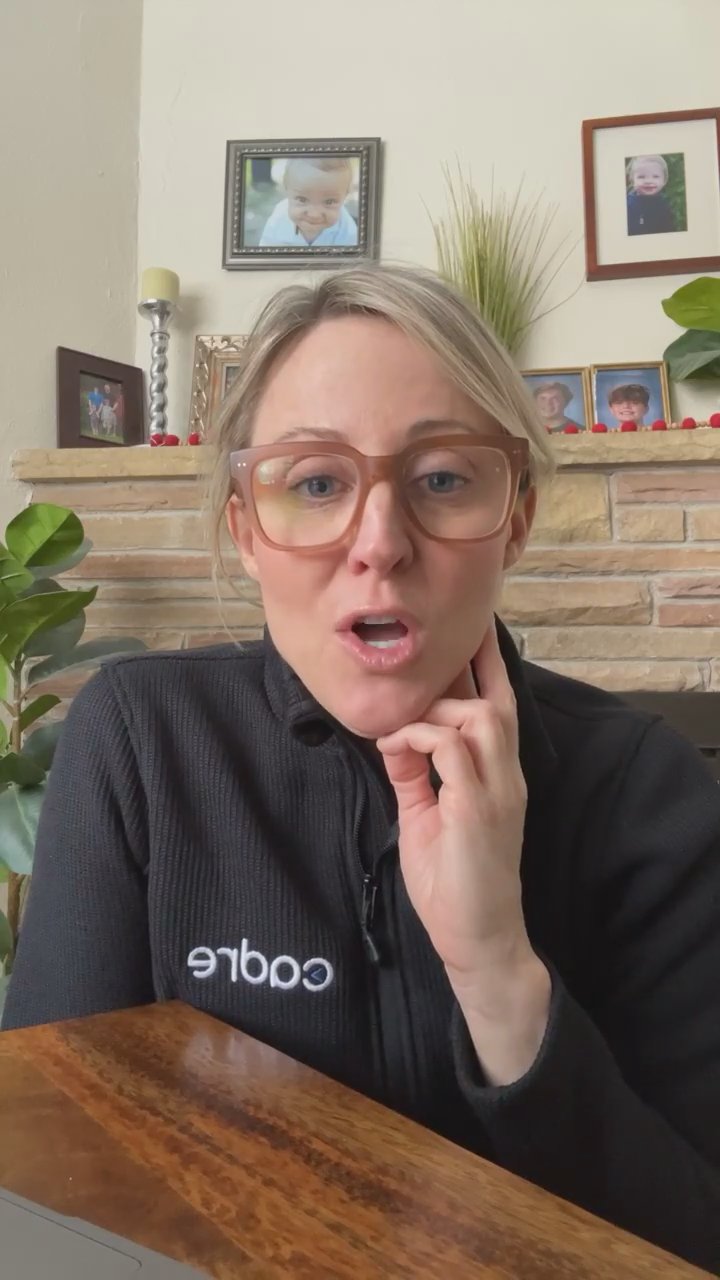
Shannon, Cadre's COO, introduces a series on learning to care for oneself, shares personal therapy and caregiving experiences, and outlines five steps she found helpful for moving out of chronic survival mode.
Hi, Cadre. It is 1231. Thank you for your patience as I attempted round two of this new session of my live stream. Happy Friday.
Shannon is the COO of Cadre. This new series is for people who don't know how to love and care for themselves yet. Welcome, friends, to the world of not knowing how to care for yourself.
LZ: Today's live stream is called how to Stop Living in Survival Mode. LZ: I wanted to create this series because after nine years of therapy, I realized that I learned some things. My goal with this is to say to you, are you someone who doesn't know how to give yourself care?
At 45, my therapist introduced me to the concept of giving myself care. In the years that followed, I met myself. Through therapy, books, podcasts, music, and authentic friendships, I know now that I am worthy of care. Here are five steps that worked for me.
Hi, Cadre. Happy Friday. It is Shannon from Cadre. It is 1231. Thank you for your patience as I attempted round two of this new session of my live stream. All right, so for those of you who don't know me, my name is Shannon. I am part of the Cadre team. I'm the COO of Cadre, and I'm starting this new live stream today. And so some of you may have seen me or know me as someone who talks a lot about autism. So I've done a lot of caregiver days. I've been, you know, talking about autism and caregiving for a long time.
And there's a huge part of me. There's a whole other part of me, just like all you other caregivers and humans out there. Good morning, Colleen. Good morning, Steph Irwin. We contain multitudes, right? And so I want to share that part of me with you today. And so I think I put in the chat that this. This new series is for people who don't know how to love and care for themselves yet. And if that is you, hello, that is me as well. Welcome, friends, to the world of not knowing how to love yourself and care for yourself.
C. so that's a huge part of my life, and I have not talked about that consistently on Cadre, and it's a big deal to me. Hi, Steph. Good morning. Good morning. So today I'm just going to set the stage for what's to come in this new live stream. It's called how to Stop Living in Survival Mode. Because I think that I did not know who I was and know how to take care of myself in the way that I needed to be taken care of until the last decade. And I'm 49. And so I wanted to create this series because after nine years of therapy, I realized that I learned some things.
Shocker. That can be put into action. And so for again, for those of you who don't know me or if you watch this later, so I'm a person who has a son with autism. I'm 49 years old. I'm a caregiver. I'm someone who's had anxiety since I was. I think it's been, you know, diagnosed since I was a teenager. I had panic attacks when I was a teenager, and in my early 40s, I was diagnosed with CPTSD, which is essentially trauma that was ongoing from my childhood. So I had a ton of stuff. And the truth is, until I was 40 and started looking at myself, I didn't know I kind of just pretended that stuff didn't exist.
And so I'm going to frame it in the. In the terms of giving ourselves care, because I think that's such just the perfect language. And I'll give credit to Tracy, my therapist, for that language. And I'm going to read something in a minute here that I wrote a couple years ago that really just represents what I'm talking about. So my goal with this is to say to you, are you someone who doesn't know how to give yourself care? Are you someone who is maybe living a life that feels like it's really hard to hang on?
Are you someone who hasn't ever looked at yourself and said, what do I want? Not what does someone else want from me? Not what does my partner want from me? Not does. Not what does my employer or my children or the world expect from me, but do I want from me? I don't think it's an exercise we're taught to do. And so I learned in the last nine years some skills. And so for me, when someone would say to me, you know, love yourself more, I didn't know what to do with that. I'm like, yeah, that's great.
I don't know how to do that. What does that mean? And so I sought practical skills to how to learn how to love myself, to learn how to ask myself the questions of like, who am I? How do I stop living for other people? And how do I start living for myself and learning how to give myself. Careful. So that is the function, friends, of this time that we're going to spend together. So I'm going to just talk. I have some little notes over here. So that's why I'm looking over here. So that is who this for.
If you are a person who wants to change how you're feeling about yourself, if there's a part of you that feels unaligned, misaligned, that you're living one way, and maybe that's not who you are on the inside. Maybe there's like this teenage part of you that's like, wait a second, I'm still here. This might be for you, right? And if you take one thing from this, that's a win. What I'm going to share with you, just so you know, contextually, I've been in different types of therapy for nine years, the one that really worked for me.
Now, of course, I'm not going to remember what it's called, because that is what happens when you're 49 and your brain is full of things. It's really specific for cptsd. And so I'm going to find it, I'm going to put it in the chat, but I just want to give you that context so that if you want to research it, you can. Again, this is only my lived experience, so I'm going to read something that I wrote like four, three or four years ago. Four years ago, five years ago, when I started to do this journey or go down this line of asking myself, like, who am I?
And so for me, I was an English major, so I like to write. I thought I was going to be a writer. I thought I was going to be professor. I'm not. I'm this. So just bear with me as I read it. And then we're just going to wrap up with what you can expect in the future. All right, friends. So this is sort of the ethos of this series. Okay. We are little when lessons on how to treat others begin. Starting with the impositions we take on in service of others. Be polite, give the hug, watch your manners.
Energy devoted to ensuring those around us feel seen and valued. But for many of us, there's never been a lesson in extending those same courtesies to ourselves, honoring the space that we take up, trusting ourselves, what our gut knows about who we are, what we want, and what we love. And this missed lesson for me changed my life. So at 45, chasing peace, my therapist Tracy introduced me to the concept of giving myself care. I couldn't even make eye contact or with her when she said it. It felt suffocating.
Care was for others, for aunts and uncles, teachers, and even strangers at the grocery store. Not for me. But Tracy said it was for me too. And she said, science said so. In the years that followed, I met myself. The cliche calls it finding yourself, but for me, it was a first time meeting. Through therapy, books, podcasts, music, and authentic friendships, I know now that I am worthy of care. How I stopped living in survival mode is what I learned in the process. And I turned it into five steps that worked for me.
It might not work for you, but if it does, if there's one thing that you take away from this time together, or if there's one thing you take away from what I have learned over time that can help you in any moment, then I feel like this has been a success. So that is what is to come. The why for this is because I just figured out that I deserved love and care in my 40s. And I just figured out that I'm the Only one that can really give it to myself. And I don't want anyone else to go through that.
And so I will give you a little preview into what's to come and let you know that the first thing that I learned was called to. To know, to notice, right? Knowing that something. Knowing that something was wrong. And by that, I mean paying attention to your gut, paying attention to your body, and starting to say to yourself, is there something in me that is not aligned with my outward behavior and my internal self are not aligned. Is there anything? And it's just starting to pay attention. And that could be a good step for you today, right?
If this is you, if this is something that's resonant with you and you're like, ugh, I have this thing inside me and I don't feel like I am me or I don't know what I am or any of those things. This was the first practical step that I was taught is just to pay attention and start to know what you feel to be true in your body. If you write it down, huge win. If you don't even write it down and you don't say it, huge win. If it's a thought that passes through your mind, huge win. But I just want to give you that.
So if you're sitting at a desk today and you're feeling scared, sad, unsatisfied, whatever that is, you have power right now, wherever you are, think about that, right? You have power. No matter what part of your life you're in, no matter what restraints you have, physically, economically, any of the things you do have, power to think about yourself and what you know to be true about you. So that is it, friends for today. I will see you next week. I will see you next Friday. I'll be here again. I'm super excited about this topic because I believe and know through my own lived experience that every single one of you people here on this live stream today, TDOTs, DOT, Colleen, JC, Steph, Irwin, and anyone else who's watching the replay, you deserve to be loved, you deserve to be known, and you deserve care.
So I'm grateful you're here, and I'm so glad you're part of the Cadre sphere, and I hope you remember that as you go throughout the weekend that you are worthy of care.
Reactions and comments are for members. Joining is free and takes a minute.