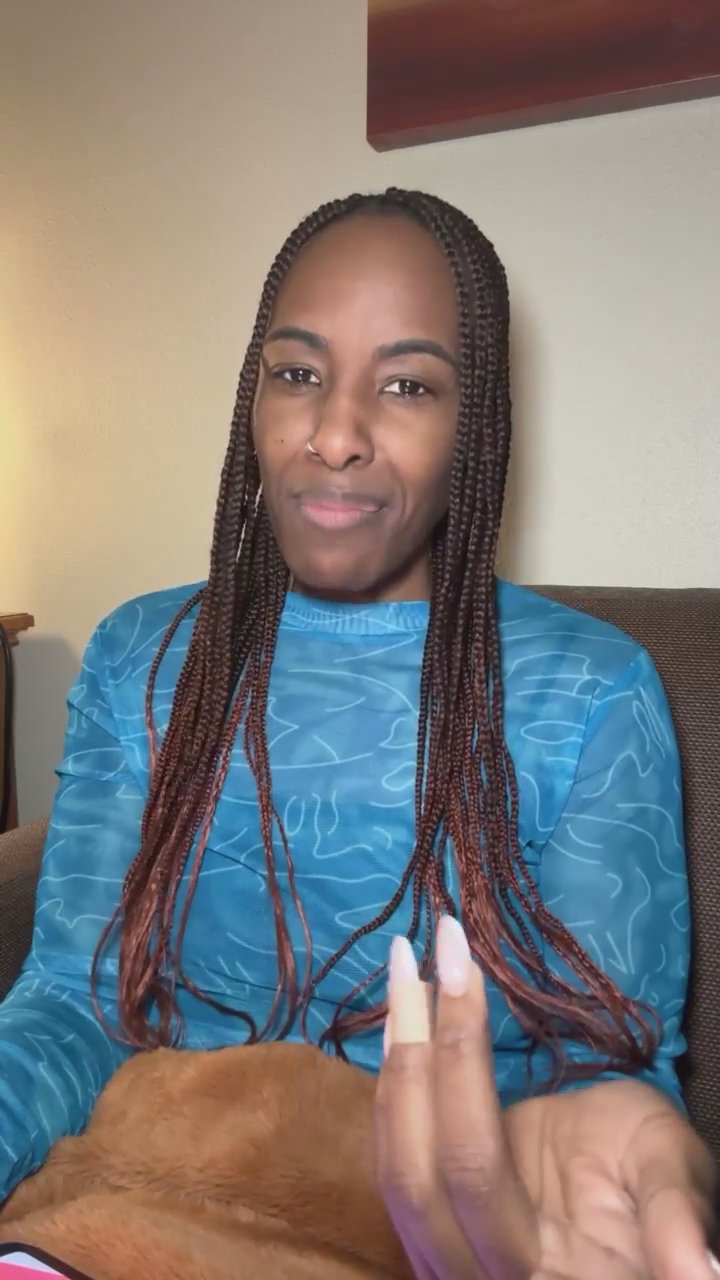
Casa Sphere leads a live check-in focused on naming emotions, explains why labeling specific feelings matters for the brain and healing, and shares practical tools like a feelings wheel, the How We Feel app, and teen book picks.
Casa Sphere takes a moment to check in with all of you. rating your week, one meaning it's been really bad and 10 meaning it've been phenomenal. My thoughts are with you as you're navigating a tough week. I keep my check ins on Wednesdays and Sundays when I'm with you.
One of the things that I actually want to focus on today is centered around your emotions. We typically do a really great job of feeling our emotions. There are signs and symptoms that something is going on. And then we decide what we're going to do with them.
It is significantly important for you to be able to name the specific emotion that you're navigating. Some amazing things happen in the brain when we can name our emotions and it's part of how we heal.
Audrey: How well are you able to name your emotions? Audrey: We often feel our emotions in our gut, all of them. A couple tools that are going to be helpful to you are a feelings wheel and an app called How We Feel.
It is extremely easy to not share with people what's going on with us. Labeling the emotions brings it to conscious awareness and allows you to be responsible. When we can name it, to work on taming it and communicate allows our interpersonal relationships to be better.
Beek: What have you noticed about the emotions that you're feeling lately? Beek: As you move forward throughout the rest of the week, I want you to really work on identifying what you are feeling. It's not about not feeling the unwanted emotion, it's all about how you respond.
Rachel: Someone asked for books about emotions specifically for teens. Here are three recommendations. Emotional Resilience for Teens by Brittany Eliason, Level up by Jamie Jones and Teen Mental Health by Emily Grace. Have a phenomenal rest of the week.
What's up, Casa Sphere? Welcome to another moment together. Another moment to check in, to hopefully do a little self regulation, making sure that we're okay, to kind of see where are we with all things life and what do we need? What are we feeling? What are we experiencing? And don't get me wrong, that's not always a fun thing to do, especially if it's a rough season. But it's one of the most important things to do. Give everybody a moment to come in as you come in. Two of our traditional things that we do is we acknowledge where you are in the world.
Just a reminder that you're not alone and that we are sharing space collectively. Even breathing in the same air just in different parts of the stratosphere. And rating your week, one meaning hello, Beth Schofield. One meaning it's been really bad and 10 meaning it's been phenomenal. Hello, Jules from northern Minnesota. I would say that my week, it's been all over the place. Hello. From South Carolina. I would say it started, I know it's only midweek low and then it's, it's rising. I can't even give it a number yet.
Hello, Statesboro. But it's a wonderful way truly to check in and I encourage you as well. Hello, pa. Write it down. Hello, Serena. Good to see you. Write it down somewhere. Speak, wonder. My thoughts are with you as you're navigating a tough week. I keep my check ins on Wednesdays and Sundays when I'm with you. Sorry to hear about your mom On a little calendar so that even I am looking at, you know, am I noticing a big long trend for where things are? What am I doing to continue to help myself improve?
Hello, Dr. Teresa from Jersey. And what does it look like? Hello, Audrey. One of the things that I actually want to focus on today is centered around your emotions. So we typically do a really great job of feeling our emotions. Oh, your favorite color. That's good. I always try to like, well, it's mood, what's available. But sometimes I'm like, oh, I need to add a little color because I have way too many clothes that are black. Hello, Charleston, South Carolina. Typically, we do a pretty good job feeling emotions, right?
We don't have a choice. They're there. We know they're there. We might try to blunt them a little bit. But ultimately the dynamic becomes we feel something we can't ignore. There are signs and symptoms that something is going on. Hello, Kelly. And then we decide what we're going to do with them. I want to focus today on it is significantly important for you to be able to name the specific emotion that you're navigating. Some amazing things happen in the brain when we can name our emotions and it's part of how we heal.
So there's a big difference between going, I just feel off and I don't know what to do and I'm going to ignore it until it goes away. I'm going to stuff it and eat it, I'm going to work out and pretend it's not there versus saying I feel frustrated, I feel angry, I feel happy, I feel joyful. Whatever the case, it is, but specifically we're talking about those negative emotions that you typically don't like. So every time you name your emotions, it does powerful things in the brain. And MRI scans were taken.
I did a little research because I love that. And show that when we accurately identify our emotions, especially when we use precise words instead of broad general ones, things actually shift in the brain. There's a neuroscientist by the name of Dan Siegel. S, I E G E L. If you're into emotions and neuroscience, I would say he's a great person to look up. He has this phenomenon called name it to tame it. Now let's be real. Naming it does not mean that it completely goes away. But there is truth to being able to name it helps us better address it, helps us better acknowledge it, and then helps us figure out which skills help which emotions.
And so what happens through the results of that MRI is profound. So when we label emotion in the prefrontal cortex, the part of the brain that's responsive for reasoning, self awareness and emotion regulation becomes more active. Yes, Dr. Teresa, his love is his love. His work is great. I love it. So what you think about that broad emotions makes it very difficult to identify what's going on. And we typically end up using automatic coping skills that aren't helpful because we don't even know what we're addressing.
But when we can be very specific, the prefrontal cortex fires off. That's the part of the brain that's responsible for reasoning, self awareness and emotional regulation. It becomes more active when you are honest and clear and precise about what you feel. At the same time, the amygdala, the part of the brain that's responsible for stress, fear and emotional reactivity, quiets down. Who knew, right? I did. But I'm letting you know now. Naming your emotion quiets the part of the brain that would respond through fear.
And it's super interesting because when I Think about working with people or with organizations. Most people think that not clearly naming an emotion is more self protective. I think it's easier because a lot of times the emotion that we need to name, we don't want to, but it's truly not the most beneficial thing that we can do. Here's what I'm curious about. Take a moment and place in the chat. How well are you able to name your emotions? And I want you to think about how well you're able to name good emotions versus emotions that you find more difficult.
Oh, I love that. Audrey. Yeah. In times of anxiety, if we can literally say, I am feeling anxious, our heart rate will slow down. But if we kind of walk around and act like, you know, we don't know what's going on. And sometimes we don't, but sometimes we do and we don't want to be honest. I almost today talked about the gut anxiety barrier and how that shows up. I'll do that another time. But what's making me think about that while you guys are telling me how well you're able to identify your emotions, good ones and challenging ones, is we often feel our emotions in our gut, all of them.
Right. That's kind of like our second brain. But when we're there, it's just really easy to try to mute them. And that's why food becomes really easy. That's why drinking, you know, is easy. Substance uses. It's a way of going, I don't know what to do with these emotions. I don't want to name them. I think naming them isn't helpful. It is if you don't remember anything else that I say, I really want you to know it is now, Jocelyn. And if I'm pronouncing your name wrong, let me know. Here's one thing that's interesting.
So Jocelyn is saying, hey, a lot of times I don't name the right emotion. I have a tendency to believe in terms of like clinical practice and, you know, working with patients. There's actually no wrong. Right. When we have an emotional experience, we feel multiple layers of emotions, primary and secondary emotions. I will talk about that some next week. So you might not name that one, but you'll get there. So the encouragement is even if you feel like you're unsure and you don't know where to start, just practice by going, this feels close to this feels close to this emotion.
And then eventually you'll get better. A couple tools that are going to be helpful to you and then I'll continue is a feelings wheel. You can find them online. Snap a picture. I encourage to even print one off. Keep it with you is a really great way. An app that I have really loved recommending over years is an app called How We Feel. It gives you an opportunity to check in one to three times a day. Check in, of course, as many times as you want to. But that's kind of the automated process that it sets up.
And it asks you to start, are you feeling high energy and pleasant? High energy and unpleasant. Low energy and pleasant. Low energy and unpleasant. So you choose out of those four categories. And then from there, it takes you to a whole word bank that allows you to go, okay, based on where you said you started, which one of these words or more tells you or gives you more insight around how you feel? It's a phenomenal tool to use. Takes one to two minutes max. And it says, like, is that enough? Or do you need more support around this emotion?
But it would be a great way of helping you name your emotions. And yeah, it does take conversation, someone saying, in order for you to identify your emotions. Yes, we move emotions with food, and it's something that we want to work on. So instead of being flooded by our emotions when we just are broad. I don't feel good. I'm off. I'm in a bad mood. And let me call myself out because this was me last night. I didn't take the time to name what I was feeling. I just was not in a great mood. Lot going on.
And then, you know, I kind of spoke to myself as I was prepping, like, oh, you could have used that as an opportunity to name exactly what you were feeling. And it's pretty interesting because last night when I was feeling flooded, it was a little bit harder to move through things. And I just end up going, I'm going to sleep. I don't suggest always doing that, but I was down on sleep. But then this morning, when I was able to go, what was going on with me, like, exactly. And specifically name those things, I could feel myself settle in.
And I could also put a better plan in place. That's the other benefit of being able to name your specific emotion so that, you know, I'm feeling grief, I'm feeling apprehensive, I'm anxious. Then what are the things that I can do that I know? Help me with this specific thing. So when we name to tame our emotions, it creates just enough space to observe them, to hold them, and begin to understand them. Because even when you identify your emotion, the goal isn't to Beat yourself up for feeling that way.
The goal is to then incorporate mindfulness and look at whatever emotion you're feeling through the lens of non judgment. Right. Let me be curious about why I feel this way. What specific part of my life, what specific incident happened that is creating that emotion in me, and what can I do to tend to my emotion and who do I need to tell? Because sometimes it's also important to go, I need to let somebody else know how I'm feeling because they're going to experience me in a completely different way.
And that way they don't take it personal. I'm feeling blank today. So if my interaction with you seems different, know that it's not you. Can you imagine getting that information from people and how incredible that would be? Because it is extremely easy to not share with people what's going on with us. And don't get me wrong, everyone may not be able to handle what you're feeling, but it's still a really great practice for you to be able to communicate. I am in a very difficult place today. I'm in a very pensive place today.
You can find how you want to coin it. So if you experience something from me that's different than what you're used to, please know that it's not you. Because who's ever felt this way before? How many times have you been in a situation with another person and you left that moment thinking, are they mad at me? What did I do wrong? I don't understand. Because what they were giving off felt so targeted towards you. So when we can name it, to work on taming it and communicate allows our interpersonal relationships to be better.
Or sometimes it allows us to say, you know what, I need to pass. I need to reschedule this meeting. I need to find another time and place to do X, Y and Z. Because I'm just simply not in the head space to do it. Let me also say this. When we don't specifically name the feelings and emotions that we have, it allows what we're feeling to bubble beneath the surface and that piles up and it typically implodes. Labeling the emotions brings it to conscious awareness and allows you to be responsible. It allows you to be less overwhelmed and understanding.
And it keeps us out of a loop of stress and tension and confusion. When we don't know what's going on with us because we're choosing not to acknowledge it or we're trying to tough it out, that's not helpful. You get more relief and more clarity when you are willing to Name and identify it. So let's try. We still have a few minutes. If you're comfortable. I want you to think of an emotion that you have noticed lately in your life. Put in the chat. Nobody's gonna know if it's right or wrong. But what have you noticed about the emotions that you're feeling lately?
Yes. Beek. Wonder bubbling beneath the surface is not a good idea. I've experienced it way too many times. And that's what makes us impulsive. That's what makes us irritable. That's what makes us angry. That's what makes us anxious and depressed. Specifically, it destroys our mood. It takes it away. For myself, if I think about emotions that I have been experiencing lately because I always want to participate in this process with you, I would say overwhelm is one. I would say uncertainty is another.
And I would say anger. Right. There have been some really strong emotions, but I can honestly say that the little smile that you see on my face right now is still honest and accurate because difficult emotions can coexist with good ones at the same time. It's a new day. It's a fresh start. I'm choosing to smile. I'm choosing my mood while I manage the emotions that are coming my way. As you move forward throughout the rest of the week, I want you to really work on identifying what you are feeling.
What you do with it is up to you. We'll get there. But I at least want you to work on being honest and naming and identifying your emotion without guilt. And then remind yourself that it's not about not feeling the unwanted emotion. It's all about how you respond. And you always choose how you respond. Have a phenomenal. Oh no, no, no. I almost forgot. A few weeks ago I was talking about emotions and someone asked for books about emotions specifically for teens. So I have three recommendations. The first one is Emotional Resilience for Teens by Britney B R I T N E Y eleison E L I A S O N the second one, this is abbreviated for the second one is called Level up by Jamie Jones.
J A M I E J O N E S oh, wonderful, Rachel. And then the last one is called Teen Mental Health by Emily Grace. So I just needed to go back to my vault and look at kind of what, as I've worked with teens, they really enjoyed and what they liked and get the authors for you. So. So Emotional Resilience for Teens by Brittany Eliason. Level up. And then it has a lot more words after that, but you'll find it if you put Level up by Jamie Jones and then Teen Mental Health by Emily Grace. All right, now I'm so glad that I remembered.
Take care of yourself. Remember that you are not the only person feeling the emotions you feel, because emotions also like to deceive us, and we think we're the only person that feels that way. And how can you be compassionate to yourself based on what you're feeling instead of trying to power through? Think about it. Quick reminder. I will not be here on Sunday. I will be in Belize. And as much as I love you, I will not see you while I'm there. But I will be back next week, and we'll continue with our regular scheduled programming.
Have a phenomenal rest of the week.
Reactions and comments are for members. Joining is free and takes a minute.