What’s familiar isn’t always what’s safe. If chaos or conflict was your “normal,” calm and stability might feel uncomfortable at first. Here’s why you may find it difficult to feel safe, even if you are.
Rachel opens with a provocative question about safety versus familiarity, introduces the video series on psychological safety, and states the topic she'll cover in this clip.
The speaker explains that our brains are wired to seek familiarity as a survival mechanism, which makes predictable situations feel safe and creates ease.
Using the example of growing up with yelling or unpredictability, Rachel shows how an adapted nervous system can mistake unhealthy patterns for safety and why calm can feel unfamiliar or unsettling.
She cautions that trauma can blur the line between intuition and fear responses, so safety and calm may initially feel strange, empty, or suspicious even when they are healthy.
Rachel invites viewers to give themselves permission to remain in safe, calm environments so their nervous system can slowly relearn that peace and stability are not dangerous.
She closes by previewing more videos on creating safety in the body, asks viewers to follow, and expresses gratitude for their presence.
Is it safe or is it just familiar? Here's something that trips up a lot of people. Sometimes what's familiar feels safer than what's actually safe. If this resonates, stick around for the next minute or two. Hi, my name is Rachel Havacost. I am a mental health writer and advocate. And this month on Cadre, we are talking all about safety. So I put together a series about how to create psychological safety and talk about what safety actually means. So in this video, I want to talk to you about something that I struggled with for a really long time, which was discerning the difference between familiarity and safety.
As a survival mechanism, our brains are wired to seek familiarity. This is so that we can predict it's going to happen. It helps us prepare better for the future. If we know what to expect, we can plan for it and that creates a sense of ease. It creates a sense of safety. The problem is, if what's familiar to us is actually unsafe, we start to mistake things that are not safe for safe. Let me explain. If you grew up in a home where yelling or unpredictability or walking on eggshells was normal, your nervous system learned to adapt to that.
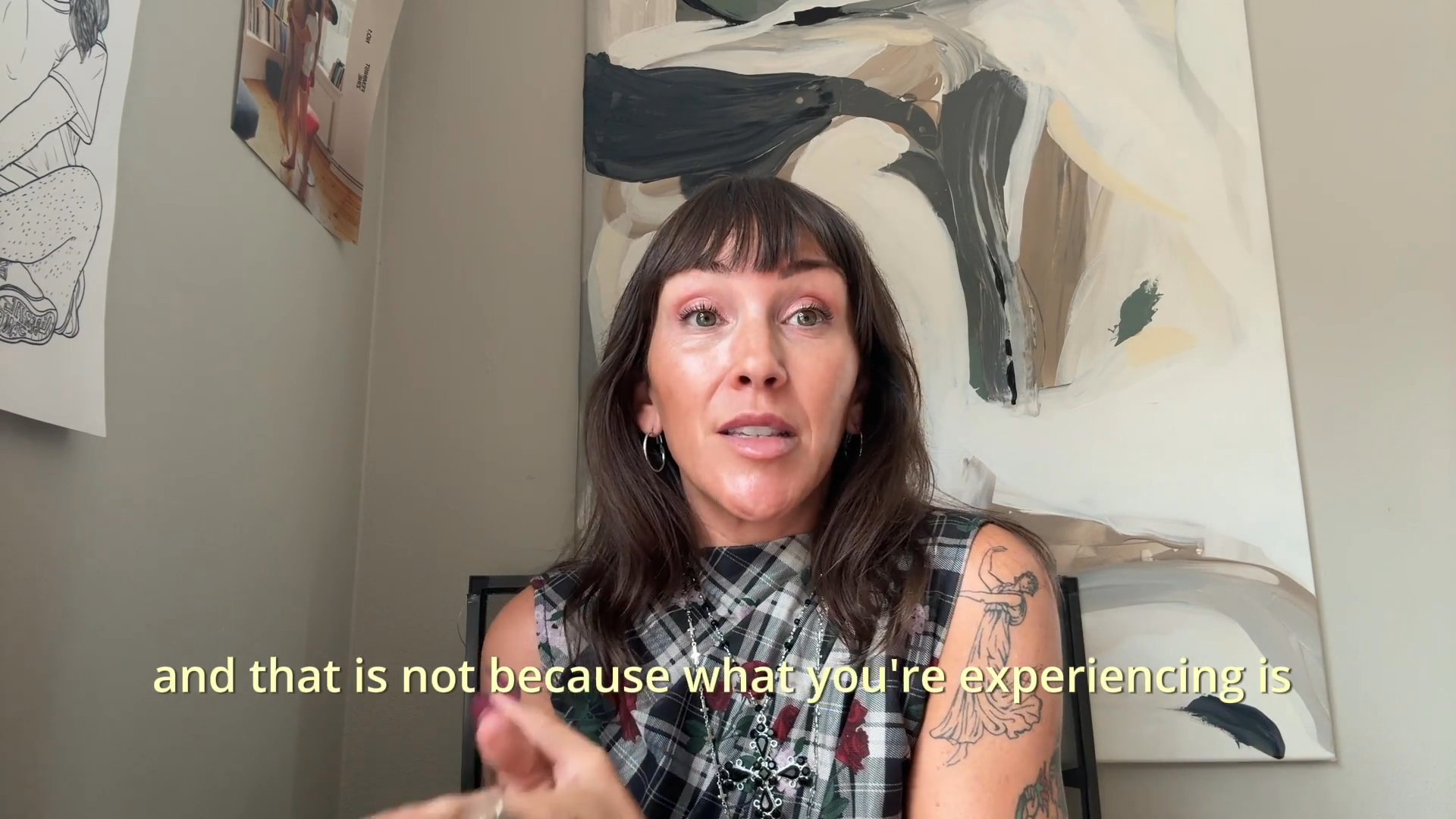
It became familiar. So later in life, when you meet things that are calm, consistent, or you have healthy people in your life, it might feel boring. It will feel unfamiliar. It might even feel unsafe. It might cause you to feel restless, like something's missing. It might cause you to self-sabotage or question if what you're experiencing is actually real. And that is not because what you're experiencing is wrong. It's because healthy is actually unfamiliar. So this is really important for us to name because so many of us think if it feels weird or uncomfortable, it must not be right to me.
And while I'm a huge advocate for trusting your intuition and your gut, A lot of times, especially if we have experienced any kind of trauma, whether it's a big T trauma or little T trauma or long-term trauma, it's hard for us to discern if what's happening in our body is our intuition or a trauma response. Safety will often feel strange at first. Calm might feel really empty and stability might feel suspicious. So the invitation is this. Give yourself permission to stick with safety even when it feels awkward.
Let your body slowly adjust to the idea that peace, comfort, and ease is not dangerous and that quiet isn't something that's waiting to explode. In time, your nervous system will start to learn a new definition of familiar and it will start to see these experiences as safe and it will actually become more averse to the chaos. Stay tuned for more videos on how to start to create this safety in your body and make sure that you follow and I am so grateful that you are here.
Reactions and comments are for members. Joining is free and takes a minute.