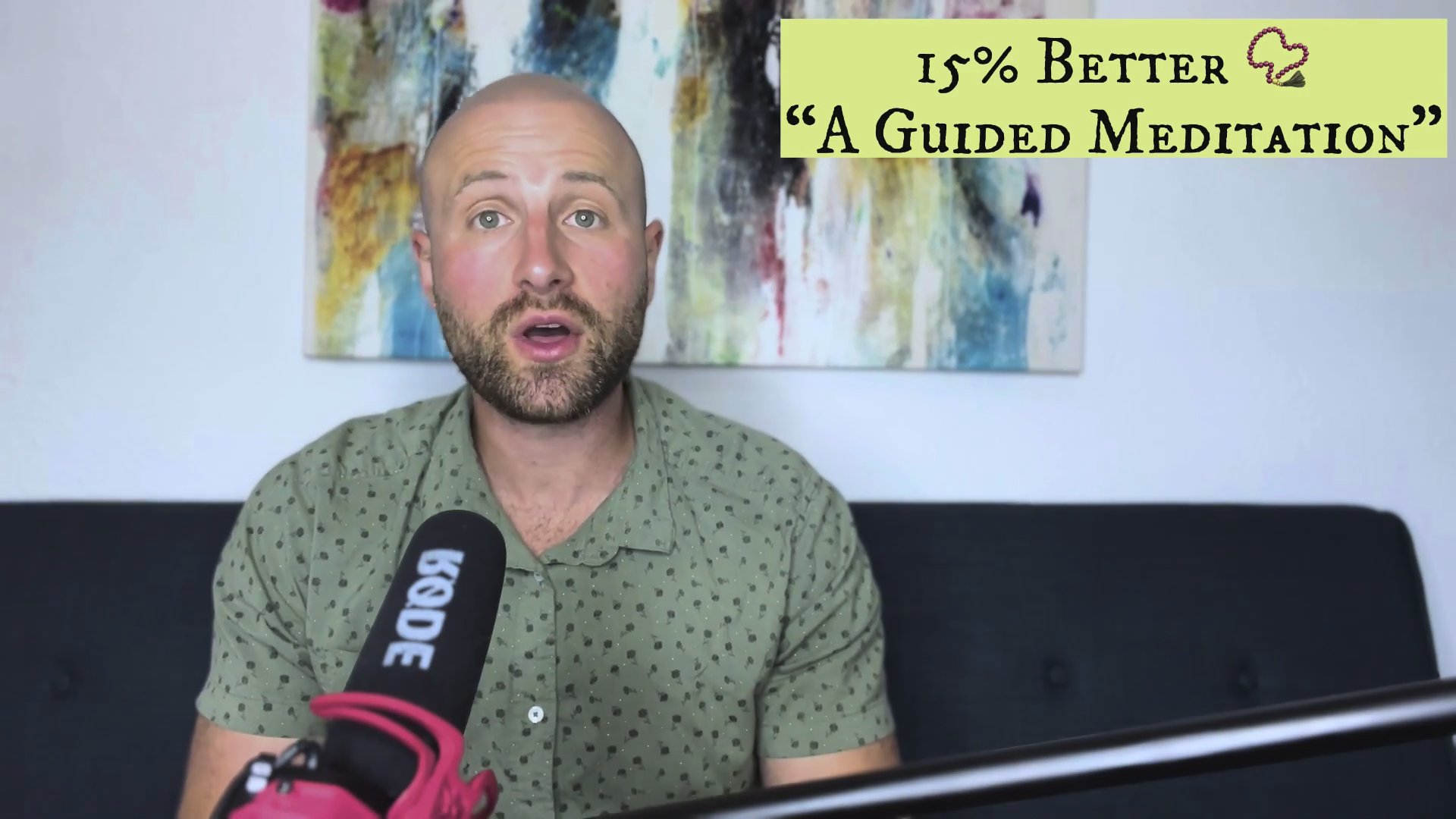
A guided meditation for people living with chronic pain and illness that leads a gentle breath-focused practice, body awareness, and imagery to invite soothing and relaxation in painful areas.
Welcome back to 15% Better, my series on coping with chronic pain and chronic illness. And today I'm excited because I'm going to walk you through a guided meditation before we talked about different ways of changing your mindset and different coping skills in regards to detaching from distressing and negative thoughts and feelings that come with chronic pain and illness. There's a plethora of studies that show a significant benefit and symptom reduction when it comes to chronic pain, both emotionally and physically so without further ado, I'm going to walk you through this guided meditation that's directed towards chronic pain.
First I want you to close your eyes and get comfortable. Sit any way you like or feel free to lay down. What matters most is that you're comfortable but not sleepy, relaxed but aware. As you close your eyes, focus your attention on your body away from the external world. If at any point you notice any pain or discomfort, feel free to adjust as needed. As you find the right spot, let your muscles relax as you feel ever more comfortable and calm. Now it's time to put our awareness on our breath. Notice how you automatically inhale and exhale.
As you inhale, notice how your chest rises as you breathe in and falling as you breathe out. As you inhale, notice how good it feels to take a fresh breath of air. And as you exhale, notice how your body begins to relax just a little bit further. When you exhale, it takes not a lot of energy or effort. It's a release that brings you just a little bit further into a relaxed state. Take another breath and notice again the pleasure that comes from fresh oxygen. And as you exhale, notice as you melt a bit deeper into your seat on the surface you're lying.
Now just stay here for a bit. Be present with the rhythm of your breathing and the good feelings and calm it brings. Now just take a moment to locate anywhere in your body you're experiencing pain , maybe it resides in your head, your neck, shoulders, back, legs, feet or hands. Just notice it, don't place judgment on it, just be aware. Now take a deep breath in and as you do invite a feeling of healing to this area, believe that it could be improved or perhaps relieved and exhale out. Next we will take five deep breaths and I'm going to give you direction before we begin.
With each inhale, I want you to imagine your area of pain receiving healing and soothing. As you exhale, let that area of your body relax. During these breaths, if you're having any pain in your muscles, just visualize them softening and relaxing. Whatever you visualize during these breaths is just fine, as long as you can see your body nurturing the area of pain. So let's go ahead and begin with our deep breaths. One, take in a deep breath. Notice any comfort that comes with it and exhale all the way out.
Number two, take another deep breath in, inviting even more space and healing to replace your pain and release as you breathe out. Number three, take a deep breath in, deepening your vision, seeing your body correct itself and breathe out. Number four, take another deep breath in. Notice the healing energy flooding your body as it softens and relaxes. Then just exhale it out. Now we take in our last deep breath, seeing the vision of your healing body, seeing more space, more light, more relief and breathe it all out.
Now bring your breath back to its natural rhythm. Give a moment to scan your body, welcoming this soft hum that comes when we flood ourselves with our healing breath. If there's any pain still remaining, just breathe it out with your exhale, releasing it from your body. Now slowly start to wiggle your fingers and your toes as you come out of your meditation. Now before you move forward, take a second to internalize one thing you're grateful for today. Imagine that the rest of your day will be better than normal with any healing energy you received in this meditation.
Now just remember to watch the next chronic pain video when you're ready, maybe save it for later, and take a break from thinking about what else you, namaste. I hope you enjoyed that meditation exercise and I want you to know that there's a lot of different resources online that have different guided meditations in regards to chronic pain and other resources for managing and coping with chronic pain that I encourage you to check out. So until next time, we'll see you later.
Reactions and comments are for members. Joining is free and takes a minute.