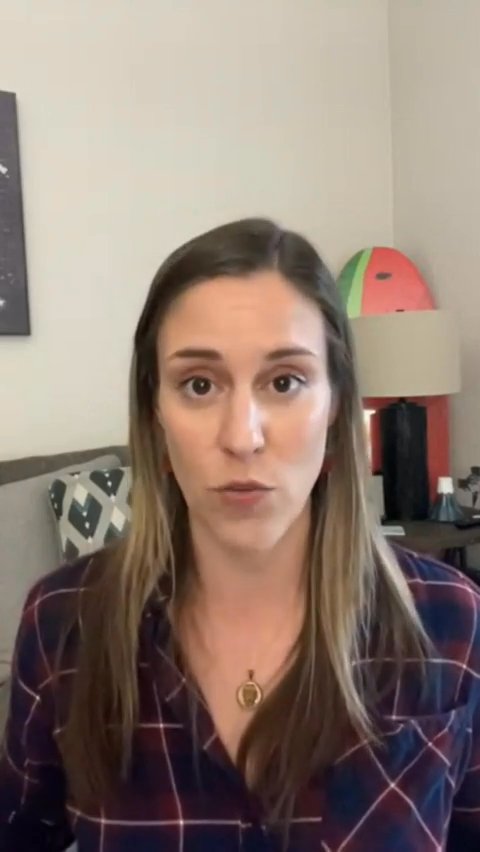
Amidst chaos, are you frantic and anxious, or calm and collected? Dr. Carrie will share practical steps to remain sober minded and think clearly amidst chaos and become contagiously calm.
Hey, Cadre family doctor Carrie here. Excited to be streaming live with you guys today. Just going to give it another few seconds here for people to join us. We're ready to go.
I have been told that I have this superpower of being contagiously calm. This boded very well for me in certain things, like when I used to work in the ER. But I realized I do have a superpower, but I just sometimes choose to not use it.
The root of all of those things that the antithesis of being calm, right, is being worried. Fear, worry, anxiety, and gratitude cannot coexist in your brain. The second you can switch your brain to gratitude, it has to turn the fear off.
Risa: My favorite place to journal my gratitude is a chair that I do my processing, my thinking, my talking to God. She says take a designated break if you need help slowing down and find your thing. Next week, we'll talk about how to calm down when you're going through burnout.
Hey, Cadre family doctor Carrie here. Excited to be streaming live with you guys today. Just going to give it another few seconds here for people to join us. Awesome. We're ready to go. Okay, so I'll jump right into this topic. I have been told that I have this superpower of being contagiously calm. Now, I would agree, disagree with that, and I'll explain why. So I have the ability, when there's utter chaos happening, to be extremely calm, unemotional, flat facial expression, not, like, frantically, everybody else.
And this. This boded very well for me in certain things, like when I used to work in the ER, and I'm in a trauma bay with a burn victim, somebody in cardiac arrest, you know, somebody's got blood, blood spurting out of them. Whatever the case may be, I was exceptionally calm in those circumstances, and I actually learned this about myself, that by being calmest in the room, it helps make everybody else calm in those circumstances, because occasionally I would work with a nurse who was maybe not the calmest person, maybe they shouldn't have been in the ER, because that's kind of typical of what we experienced every day.
But I could kind of almost control the environment around me if I was exceptionally calm. And the more chaos I was in, the calmer I actually was able to be. And I think that's just. I don't know, an innate skill. I don't know where I got that. Not sure. I do know that I was and still am very good at controlling my emotions, and that served me very well for most of the years of my life, not necessarily in relationships, because it meant that I was kind of unemotional and not vulnerable. So this can be, like, a good, good skill, and it can also be something that's not super, like, helpful in certain areas.
But I think I've just always kind of been that way. And yet, when people have told me this, I've said, okay, I can see how I can be contagiously calm in, you know, certain circumstances, but I wouldn't consider myself a calm individual in life. Like, I. I used to battle with fear and worry and anxiety really bad, to the point where I had to have a special circumstance for me to take tests in nursing school because I had such horrific test anxiety that I literally couldn't function. And I had to, like, be allowed to sit in another room to take my test because I had that much anxiety.
And so when people have told me this, I've kind of, like, been okay. I don't know if I agree with that, but I realized I do have this superpower, but I just sometimes choose to not use it. And so it made me realize I could probably be using this more in my life. And so I just want to unpack for you how to do that, because whether it's your superpower, it's an innate talent that you have to be calm or not, you still can do this. So first, I want to talk about just what's at the fear. What's at the root of fear, worry and anxiety.
And the root of all of those things that the antithesis of being calm, right, is being worried. And I am somebody who probably tends to worry a little bit more. I like to over process everything. My loving fiance told me that today. He's like, I think you've processed this enough. Like, you can stop with the brain. I don't know how you're sleeping at night. And so I think I tend to go to that worry place sometimes. And when we battle with fear, it just runs this monologue in our mind, right? And fear, worry, anxiety.
I'm going to use all those words interchangeably, but it just, it just goes. When you let it, it just goes. And I was talking to a friend the other day, and she's like, I think it's okay to entertain it as long as you stay. Stop it. At a certain point. And I think that's been what I struggle with sometimes, is like, I don't even want to go there. I don't even want to entertain the worry. I don't want to entertain the fear. I just need to get back to being calm. But then you have, like, this internal battle, and you're like, well, I can't be calm or contagiously calm when I'm battling with, like, just shut it off.
Just stop being fearful. Stop worrying. And so one of the things I do sometimes is I take out my journal, and I'm not a regular journaler. I don't really like writing like that. But I will sit and I will write down every fear that I'm having and just go there and just kind of like, let my brain go. And I'll set a timer, or I'll say, it's only one page long. And I will be like, okay, once I'm done with this, we're going to be done with this. And then I'm going to switch and I'm going to write all the things that I'm grateful for.
And I know I've mentioned this on other videos before, but fear, worry, anxiety, and gratitude cannot coexist in your brain. At the same time, like, it's physiologically impossible. So the second you can switch your brain to gratitude, it has to turn the fear off. And so then I'll sit and I'll write the same amount of things or more of things that I'm grateful for, and I'll say, okay, I let myself be worried. I let myself go there. Sometimes I have this conversation out loud with God in my apartment, you know, like, and I'm literally talking out loud.
And I'm like, this is what I'm worried about. And this and this. I'm not talking to anybody in particular, but I just, like, verbalize it out. And then I say, okay, now I'm done. And now I'm going to gratitude. And if you can do this with yourself and you can kind of process these things with yourself or a therapist or a coach is also super helpful, then you allow that space for you to show up and be calm for other people. Because really what we can do then is we can say, okay, in this situation where there's that person fearful about this, this doing this, you know, that person's gone straight to anxiety about this.
I'm going to be the person in the room that's going to be contagiously calm. And I can recognize, okay, you're fearful. You're doing this. And instead of engaging in that, I can say, okay, I'm going to go there later on by myself. I'll process the fear that everybody else is feeling later on. But right now, I need to show up and I need to be the calmest individual in this room and the most level headed. And so you can almost, like, physically, like, imagine yourself taking yourself out of this situation when this person's ranting about fearful things here and here, and you're like, okay, I see it's happening because I start to feel that inside of me.
I'm starting to feel my heart race a little bit. I'm starting to worry. My mind's starting to go. And so it's like, nope, I'm going to stop that right now. And this is where this emotional control comes in. And I'm. I can process that later, but right now, I need to be the most grateful and calm person in the room. And so then you can exude that calmness and just be that place of, like, peace for everybody else. And when they go to, you know, that place of fear, you can say, like, yeah, I hear you.
That that does sound really scary. I'm not going to engage with it right now, and I'm not going to tell you that you're wrong, but I can at least just hear you out. And then I'm going to bring us kind of back to maybe the original topic at hand. This is a really helpful tactic for leadership, too, because as a leader, you can't be the most anxious person in the room with your team. It doesn't help. There are times when you need to be like, okay, I'm going to shut that off right now. I'll process that later with my trusted individuals, and I'm going to just exude calmness.
The last piece of advice, and then I'll get to some of these comments is how you move, and especially if you're in person meetings or in, you know, in person and at work atmosphere. I actually have noticed that the slower I move actually can help create, like, a calmness for everybody else in the room, especially when I was working, like in the ER. Right? Like, because everybody gets a little bit frantic and you start to shake a little bit because you've got adrenaline going. Like, how do I get this medication open person is dying in front of my eyes.
And so, like, if you just, like, take those deep breaths and just slow your movements down a little bit, you'd be amazed at the mirroring effect that other people will start to do when they see you moving a little bit slower. So I always encourage this when I talk about trauma informed care, working with people who have been through trauma. Just slow the movements down a little bit. And it is so helpful. I teach a class on deescalation as well, and these are the same tactics we use for that. When you're dealing with somebody who's super escalated and aggressive is just like slowing your movements down, like, like almost robotically slow, and they kind of start to mirror your movements.
And so you can do the same thing with being calm and being at peace in a room full of chaos and fear and worry. So I'm going to take some the comments now. I know Risa test anxiety. It had me. It really had me for a long time. There was grateful. I'm done taking tests. My favorite place to journal my gratitude. I have a chair that I do my processing, my thinking, my talking to God, my reading the Bible. It is my go to place. And that's such a great point, Alec, because if you have a place, your brain associates places with things.
And so I know that when I sit down in that chair, it's going to be reflection time, and it could be process time, it could be crying time, and it could also be the gratitude time. And, like, that's just my process spot. And I have a very different demeanor when I sit in that chair than when I sit, like, on my couch back here. So I would definitely encourage you to have a place and, like, a designated journal that you use, too. Maybe you have a different one for the fear and worry and a different one for the gratitude.
I like to keep mine side by side to kind of, like, get it all out and then go to the next one. But maybe you distinguish that for yourself. That was another idea. Yes. Coffee, the shakes and anxiety. There's a lot of things, a lot of substances we take in that do not help with our anxiety, that do not help keep us calm. I totally get that. I don't need caffeine, but I like caffeine, and I like the flavor of what I drink that has caffeine. And I can tell when I'm in a different mood because of the substances I put in my body for the day.
So if you need help cutting coffee, talk to Alec. He's done it. Same with Luke on Cadre. They are experts in this field. I have yet to cut it. So go to them as the experts in this. I don't know how to slow down. Help me. Oh, risa, I think for me, and I will talk about this topic next week, too, when I go into burnout. But for me, I know my go to is when I'm irritable and when I'm not being as productive with my time. And then I'm like, okay, I need to go through the rest of my to do list. And I'm like, but I'm not actually productive with it.
So what do I need to do? I actually need to take a break. And it's so counterintuitive because we're like, well, if I take a break, then I'm not going to get the stuff done on my list. But your brain is telling you we're flooded, we're overloaded. You need a break. And there's a reason that, like, there's organizations that are super productive and they're not even open seven days a week. Chick fil a, for example. Like, because they're like, nope, our employees need a break. We do not need to be open on Sundays or whatever it is.
Like, you. You physically, mentally, physically, spiritually, emotionally need breaks. And so I would say take a designated break if you need help slowing down and find your thing. I know for me, I said yesterday I need to go hiking. Like, I flat out need to go. That is where I re center myself. Unfortunately, we've got, like, a monsoon coming into San Diego the next three days, and so that might not happen, but I know for me, that's where I reconnect with just kind of, like, my purpose and stuff.
And, like, I'm like, I need a long hike, and it's going to be in my near future. So have your things that you go to as well that help you slow down. I have a hard time being calm. For me, yes, I can be calm for others. How do you become for me? That's a really good question. Really good question. I guess I would ask you, Risa, like, what is it that you bring to other people that you can't give yourself? Is it like, I don't feel like I deserve to be calm or, you know, I can be there for everybody else, but I can't do that for myself?
Is it that, you know, I can, you know, bring that to the rest of the environment, but I need to stay busy. I need to stay worked up. I think there's sometimes we just. We have, like, these boundaries we set, and we will intentionally act a certain way with other people, but we don't give ourselves that same, like, honor and value and worth. And so we'll jump on a coaching session about this. I would love to help you further about just some of the, like, ways to identify, like, gosh, maybe I don't have the, like, the love for myself that I should have.
And I know I've been through stages of that in my life where I'm like, I will do everything for everybody else, but I won't do it for me. Like, what? What is that? Do I feel like I don't deserve it? Do I feel like I need to earn it? There's so much more we can unpack there. And maybe I'll record some more videos on that topic for you about just kind of, like, self worth and how we show up for other people is different than how we show up for ourselves. So thank you for the typic, the topic idea, risa, but, yes.
Welly, I would definitely encourage you to hang out with your dog. Well, he's adorable. So I hope this was a helpful topic for you guys today. And I just really appreciate the engagement and just know that if you're somebody who struggles with anxiety, fear, worry, it's okay. You're not alone. We actually have an anxiety group that Luke leads on Wednesdays. It's around noonish. Check out the community feed for the time and the zoom link. I think it's every other week, and you can join a community of people who are going through similar struggles and learn how you can just be a more calm, centered person for everybody else.
All right, guys, have a great one. God bless.
Reactions and comments are for members. Joining is free and takes a minute.