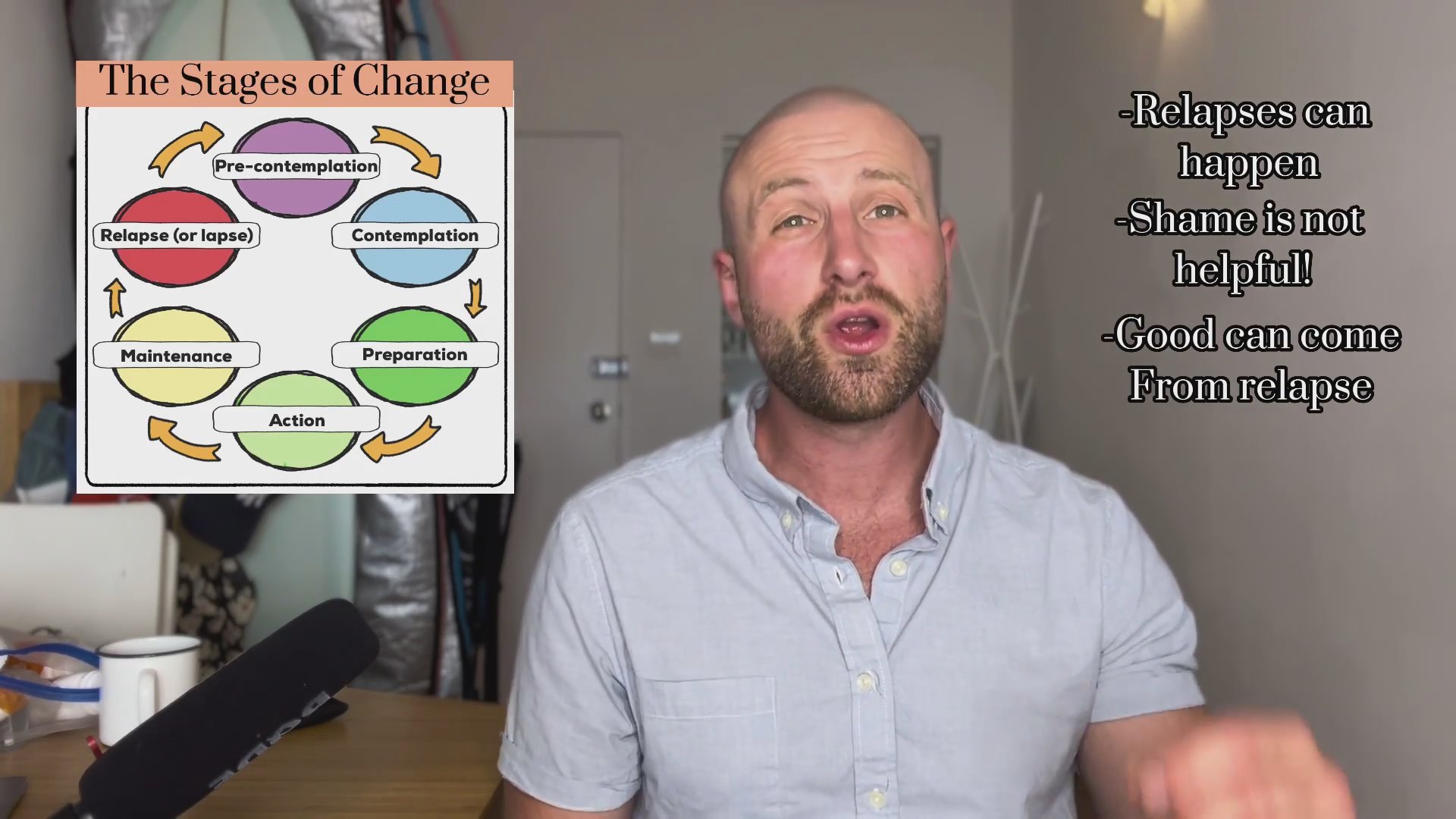
In Part 1 of "Change O'Clock," we explore what's known as The Stages of Change model, aka The Transtheoretical Model of Change, a framework developed by researchers Prochaska and DiClemente to understand how individuals progress through the process of forming new behaviors and abandoning unhealthy routines. This model outlines the stages people go through when making a change in their lives, from precontemplation to maintenance and even relapse. So join me as I delve into the stages of change model and how it can be used to support individuals in making lasting positive changes in their lives.
Welcome back to Change of Clock in my series on how to successfully change any habit or behavior or start a new healthy one and today's going to be our first video and we're going to be talking about something called the stages of change and I thought this was a great place to start because this model was invented in the 1970s by researchers Prohasca and Declamente and basically they've looked at people who are trying to quit smoking and tried to figure out what made these individuals successful and they found that certain decisions that individuals made really predicted their ability to have success in quitting smoking and they realized that this model applies to almost any type of change.
In fact it's not a theory it is a model meaning that any other theory of change or any other model could fit within it and that's why I really like this because as we go through the videos I'm going to be talking about something called the tripod method of change and this is how I help my clients change using this method and it follows the stages of change perfectly so let's jump into it. So in this video let's go ahead and break down each stage of change I'm going to go through a basic overview and hit the most important points as far as how we can use these stages to prepare to make our first moves in the tripod method so let's start with pre -contemplation.
All right let's go ahead and break down the first stage of change starting with the word pre-contemplation so pre-meaning before contemplation meaning thinking about, right? So this is before I'm even thinking about making a change. Now this could be for one of two general reasons, one I don't see a need to make a change. Whatever this behavior is whether it's smoking or biting my nails maybe I don't see any thing wrong with it or I may know in a sense that maybe I shouldn't be doing this but I'm not ready to even think about quitting yet, right?
For example we're going to use this example of smoking throughout because it's easy but let's say it's like look I'm going through this really stressful period at work and maybe I'll quit down the line but right now I'm not ready. Now other times like when it comes with addictions for example to alcohol or drugs when a family member confronts someone and says you really need to quit and they're like you know what it's not a problem and maybe they believe that but maybe they don't and that's where this one could get a little bit tricky because a lot of times I find when people are in the pre-contemplation stage of change or at least they appear to be they may actually want to change and we'll talk about that in the contemplation stage but they're just showing resistance because they see well you want me to change maybe I'm not ready so I'm going to go ahead and make all the arguments as to why I want to change.
So in the pre-contemplation stage it's basically said that if someone is in this stage like as a therapist there's not much I could do, right? There's not much to grasp onto as far as a desire to change so we just kind of leave it alone and maybe we continue to explore strategies but if you're watching this video you're most likely somewhere in the next stage of change which is contemplation . So the contemplation stage is at the core of what I do as a therapist because most people are in the contemplation stage about some kind of behavior.
We all do different things we partake in some are healthy some may not be as healthy some things we just take too far and most people want better for themselves and they don't want to be participating in something that's not in their best interest but sometimes it's hard to make changes especially if a behavior is reinforcing and unfortunately a lot of the times the most unhealthy behaviors are the most reinforcing and we'll talk more about that when we get into the science of change but the contemplation stage basically says I'm thinking about it and so everybody has these behaviors that we're probably thinking about changing and so that's probably where you're at right now when it comes to your behavior of choice if you're still participating in it and you're thinking about changing you're in the contemplation stage so almost all the strategies that we're going to employ moving forward are for the individual in the contemplation stage until we start moving further into the next one which is preparation so you've decided I'm ready to make a change I'm ready to take this journey but what do I do next this brings us to the preparation stage of change and I find a lot of people sleep on this step and they don't take it as seriously or put enough importance on it they say well yeah of course I should prepare but one of the reasons I find people most commonly fall short is they just jump into making a change they don't really think about it they don't prepare so here's an example and we're going to talk about a lot of different strategies as we go on in this series for how to prepare but let's say for quitting smoking an example would be I'm going to set a quit date I'm going to have the exact amount of cigarettes that I'm going to wean down on I'm going to have the patches or the gum whatever it is I choose to have that there at your disposal and you're ready when you take that first action step everything is right there and it makes it as convenient as possible to make that change and this brings us to the action stage of change and folks this is what we've been avoiding the whole time the reason is when we take action and we do a new behavior we essentially go into a form of withdrawal now maybe that's literal when you stop drinking when you stop smoking cigarettes drinking caffeine your body goes into a physical withdrawal because it becomes dependent on whatever you're doing and it doesn't have to be a chemical or a substance for you to feel a withdrawal like effect whatever behavior you're doing that becomes ingrained you're doing it for a reason so when you take that behavior away you don't necessarily have another tool in place so all of the strategies that we're going to do moving forward is to make this stage of change as easy as possible because this is the most difficult part this is the most uncomfortable part is when we take action however I promise you there's a light at the end of the tunnel and it's coming right now all right folks now we're at what I consider to be my favorite stage of change and that is maintenance action is the most arduous part of change because you're doing something brand new you haven't developed that muscle memory now literally think of starting running when you first do it the first time you go run or the first few times you're exhausted you could only go a quarter of a mile if even that the next day your legs are hurting right so the change process is difficult because I don't have that practice I haven't built up that strength yet I haven't built momentum and that 's what maintenance is all about is I've built this momentum so in the running metaphor I've built up the muscles I need my body has gotten more used to it now when I was able to run a quarter mile now I could run three miles no problem and I'm really enjoying it it's not so arduous I'm remembering the reasons why I wanted to make this change I feel good afterwards I look forward to it even and I was talking about momentum and another great metaphor is in a car when you're going zero to 60 that takes the most gas it takes the most energy however when you're going 60 miles an hour it takes much less to sustain that pace that's why highway miles are so much higher than city miles right so this is the light at the end of the tunnel right you got through that hardest part you had these strategies on how to get through it the best way possible now you're in maintenance however the work isn't over the key is that we need to stay in maintenance and avoid the last stage a change which is actually relapse so I bet when you were looking at the stages of change and you saw relapse you're like well how is that a stage of change isn't that something we're trying to avoid well yes we don't want to relapse right especially if you're doing something like heroin alcohol something that's really dangerous you don't want to relapse obviously but the reason it's on there is because it is so common it is more common than not that when we try to make a behavior change especially on the first try we may not succeed one of the reasons we're going to talk so much about this is one yes we don't necessarily want to relapse but there's a lot of emotional elements tied into relapse as well one of the biggest ones is shame it's like people clients in mind when they fall short of their goal sometimes they beat themselves up but I always say things like addictions or unhealthy coping behaviors really thrive on shame it's like a fuel for them right I feel bad about myself and therefore I feel stressed and I want to self-soothe I want to self-comfort and that unhealthy behavior so we're going to talk about a ton of different relapse prevention strategies but we're also going to talk about how relapse can be a benefit meaning whenever somebody relapses whenever we relapse it is information it provides us with valuable information so that when we go back and we take action once again to change the behavior we're much more likely to be successful so now that we have a foundational understanding of the stages of change I want to dive into another topic in the next video which is the science around habit forming how we form new neural connections because I want us to have as much success as possible by using evidence based practices this is what I base my model off of so please I don't want you to miss this and I think you'll find it really interesting.
Reactions and comments are for members. Joining is free and takes a minute.