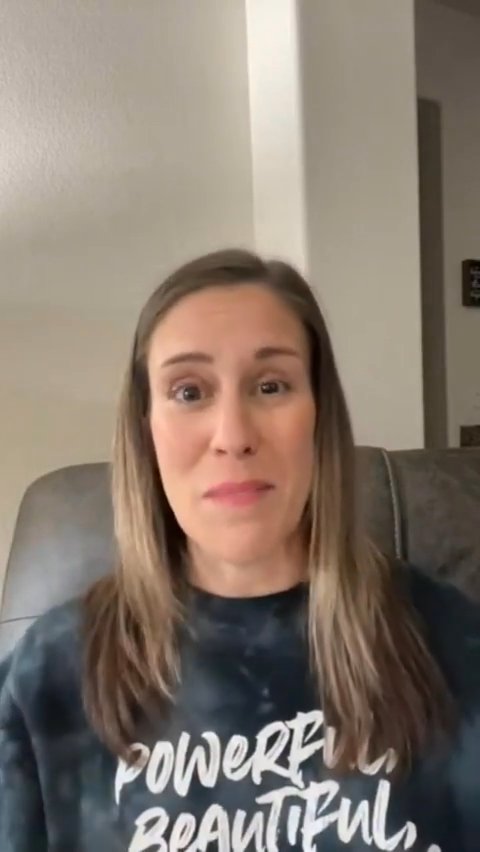
How do you cope when you’re beyond the point of burnout? Dr. Carrie will share tips on what to do when you’ve reached burnout in your job.
Carey: Today's topic is burnout. Raise your hand if you have experienced burnout at some point in your career. Carey: Talk about some practical tips for you to increase your resiliency.
The three characteristics of burnout are overwhelming exhaustion, feeling cynical and detached from your job, and a sense of ineffectiveness and lack of accomplishment. With increased demands on our workforce as we have more layoffs, it's just expected that we're going to burn out at some capacity.
The key symptoms of burnout are difficulty concentrating, racing thoughts, difficulty learning new information, forgetfulness, disorganization, confusion, frequent crying spells, feeling overloaded or overwhelmed. Difficulty making decisions is a big one for me. What do we do about it?
There's a resiliency assessment that I use when I present at conferences. It focuses on self awareness, determination, knowing your core values. Next week, I'll talk about how important friendships are in your life. There are many factors to what could be influencing you to feel burnt out.
Hey, Cadre, family doctor Carey here. Just going to give it a few seconds for people to join us. All right, let's get started. Today we have a lot to talk about. I actually have a lot of notes I want to cover today. But the topic today is burnout. Raise your hand if you are somebody who has experienced burnout at some point in your career. I think we can all probably say that we've experienced burnout at some point capacity. And I just want to shed some light on this topic, recognize that it's something all of us have probably experienced, and then talk about maybe some practical tips for you to increase your resiliency.
So I recently realized that I was burnt out and I hadn't had really a day off in a long time. Maybe like 2030 days straight work. I have the luxury of working from home so I can work as many or as little hours as I want. m. On Monday nights, raising hand. Thanks for the vulnerability, Katie. We're all there. And I actually have this struggle of like, I just don't know when to turn it off sometimes because I live by myself. You know, I can make time to go to the gym. That's usually like my one thing I do in the middle of the day.
But then I'll work till eight, nine o'clock. I have nobody holding me accountable to stop working. And I realized I was burnt out. And it took somebody pointing it out to me to say, like, hey, you're not your best self lately. You're a little bit more irritable than usual. You know, maybe, maybe you need to take some time, take a break. And so I just want to talk about kind of like some of the core symptoms of burnout because sometimes we don't realize we're burnt out and sometimes we're kind of past that point before it goes, oh, my gosh, I actually think I'm burnt out.
So I first want to just define burnout for you. The actual definition is a prolonged response to chronic interpersonal stressors on the job. So we all can get there, right? Our jobs can be stressful, our home life can be stressful, but we eventually get to a place where we kind of have, like, overwhelmed our nervous system of our capacity to bounce back and be resilient. So the three characteristics of burnout are overwhelming exhaustion, feeling cynical and detached from your job, and a sense of ineffectiveness and lack of accomplishment.
That doesn't mean that you aren't accomplishing your goals. It means that you have a sense of, I'm not doing enough. I, you know, maybe I am reaching my goals, but it just doesn't feel like I've actually accomplished anything. So the numbers can look like it, but you might not actually be, like, feeling like you accomplished anything. It's more talking about the feeling at the root than if you're actually meeting your goals. So that is what burnout the definition is. And just some interesting stats that I found.
Workplace engagement overall in the world decreased when COVID hit. And I think a lot of us can recognize that. Like, I completely changed careers in the last two years, and I changed jobs during COVID So a lot of us have had a lot of massive change as a result of things like this. But just overall, workplace has gone gotten harder. You know, like, I used to work in the nursing field, and there's just less bodies to go around as people leave. I was one of them that just left. And so, you know, you're asked to do more work and the funds aren't there for the company, so you're asked to do more with less, less resources.
So there's a very valid reason. A lot of us are burnt out. I just want to point that out because not everybody can raise their hand and be like, you know, I'm burnt out and have valid reason, but I think everybody has valid reason, especially of lately, because a lot of us are doing more than one person's job. We are running an entire department. We are managing entire staff of patients in the hospital. And, like, this is something a job used to be do by three people. So it's okay if you're burnt out.
And it's recognizable to be burnt out, because we're all doing a lot. And especially with just increased demands on our workforce as we have more layoffs, it's just expected that we're going to burn out at some capacity. We are human beings. We have a capacity, right? So there's just been so many people that have quit their jobs in addition to, you know, people that are getting laid off. But some of the key symptoms that I want you to do a little self reflection on of, like, increasing stress, nearing the point of burnout, or maybe even being at burnout, are difficulty concentrating, racing thoughts, difficulty learning new information, forgetfulness, disorganization, confusion, frequent crying spells, feeling overloaded or overwhelmed, difficulty making decisions, feeling lonely or worthless, a little interest in your appearance or punctuality, nervous habits, maybe fidgeting, feet tapping, increasing frustration, irritability, edginess, and an overreaction to small things.
Now, on any given day, you might have some of those symptoms, right? Like, this is. This is not just to say that you should be happy go lucky Pollyanna every single day, but if you're seeing a pattern of these things over time, you might be nearing burnout or at the point of burnout. And thankfully for me, I have people in my life that will point it out when I'm getting there, and I'm super grateful for them. But if you don't have people in your life to do that, do your own reflection and say, oh, my gosh, do some of those ring true for me, and, wow, I might actually be burnt out.
Okay, so what do I need to do about that then? For me, I know in the past when I've gotten burnt out at jobs, these have kind of all been present, but the ones that stand out for me are the irritability, overreaction to small things, just being general edgy. I end up having difficulty sleeping. Difficulty making decisions is a big one for me because I'm a really decisive person. I take in all the information when I make a decision, and then when I make one, I stick to it. And so when I don't want to make decisions, I should think that that is kind of like a red flag because I'm usually somebody who can make decisions pretty clearly and easily.
So know what kind of, like, your strengths are, too, of some of the things that, like, you're like, oh, if that's off, then that might be a key sign of burnout. So now that we've identified our key signs of burnout, the fact that everybody listening might actually be in a state of burnout, what do we do about it? Because I know I've been there. I've been there recently. Thankfully, I didn't get too far off, but so just kind of, like, know what your key indicators are. And now I want to talk about resiliency.
There's resiliency tools out there, and there's a resiliency assessment that I actually use when I present at conferences, and I encourage people to do it because there's different facets of resiliency when you are burnt out that you can assess for and say, oh, my gosh, I need more of that in my life. Kind of similar to the wheel of life that a lot of our life coaches use, the life coaches that we work with at Cadre here, by the way, you can get coaching through Cadre. If this is something you're like, I'm going to need some help in this area.
We are here for you on that. But the areas of resiliency in this assessment that I like to use are self awareness. So knowing what your strengths and your weaknesses are, determination, knowing your core values, what actually drives you at the end of the day, your vision for what you want out of life, your ability to problem solve and your confidence in problem solving. Your ability to organize yourself, your self confidence overall and just generally your self worth and your self appearance, your interaction, knowing how to effectively interact with other people and then your relationships.
Having those relationships and being able to rely on other people, which is actually the topic I'm going to dig into next week on my life. But if you think about kind of all of these different facets to resiliency, what does it come down to? You have to have a good, accurate assessment of yourself and know where you maybe need to put a little bit more effort and then know what your go to is. I always tell people when I speak at a conference, like, this isn't just go take a bubble bath and drink a glass of wine.
First of all, that's not a healthy option if you're somebody who struggles with substance use. So I just hate that cliche answer. But resiliency is more about finding out what works for you. So, like, maybe for you that means going for a walk outside. Maybe it means calling up a friend and saying, hey, I just want to vent for like, 20 minutes, and then I want you to hold me accountable to being done venting, and I'm going to get out of this negative headspace and I just want to be done with the venting.
Maybe for you, maybe it's what works for me, is actually laughter. I love watching, like, clean comedy shows. That is one of the best ways for me to kind of reset my brain and just chill out. Because if I end up watching a movie or a show or something, I usually am working at the same time and I'm usually, like, on my phone or I've got my laptop out. So I forced myself to actually watch the comedy show and, like, tune everything else out. Another thing that I like to do is go hiking. Like, I know that I need to go for a hike now that I've gotten to this point of, like, feeling burnt out.
And unfortunately, it's been raining every single day for like, the past week in San Diego, of course, of all places. But I know that for me, getting outside is a really good way to reset and just kind of have that just moment to heal from my burnout and then recognizing what is causing that burnout like, is it your work life balance? Is it that you're working too many hours? Is it that you have too much on your plate? Is it that you don't have good boundaries with your time? Is it that the relationships at your.
Your work are not going well? The relationships at home are not going well? There's so many factors to what could be influencing you to feel burnt out. And so do an accurate assessment of what is causing this. It might be something you're doing to yourself, like me, like working too many days and not taking a day off. That is all my own fault as to why I get burnt out. And I have to then be intentional to not work one day a week. Just one day a week. And so I just hope this was encouraging for you guys.
I know that burnout is a real thing. I know all of us have felt it at some point in our career. We probably all feel it now, too. And just know that you can do an accurate assessment and look at your own resiliency factors and. And ask yourself, how can I be more resilient to this? So I don't get to the point of, like, quitting my job or just not showing up and performing anymore, something like that. Because that's when we know burnout has gone too far. So I hope this was a helpful, informative live stream for you guys today.
Next week, like I said, I'm going to talk about friendships and how to have kind of like those go to important friendships in your life. So thanks for tuning in with me today. And just for s**** and giggles, we're going to have some time of laughter because I found this in my house. Well, no, I'm sorry. My dad found this in my childhood home and sent it to me as a reminder of how I used to have fun in life. Because I used to be very imaginative and I pretended that I was a prairie woman on the farm and I put out forest fire.
So he sent this to me as a reminder. So if this is your laughter for the week, I hope you enjoyed that, and I look forward to talking with you guys next week.
Reactions and comments are for members. Joining is free and takes a minute.