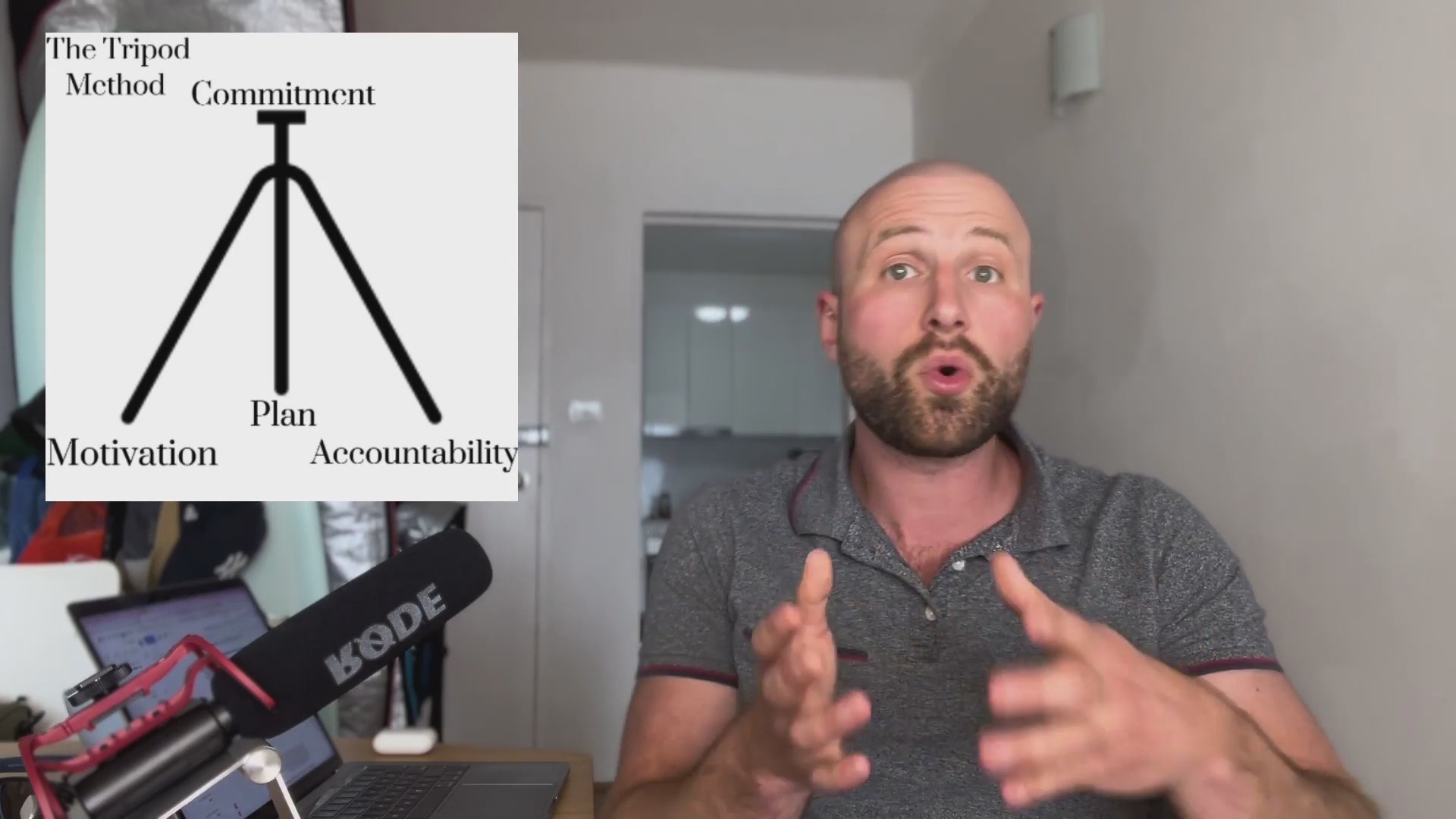
When I created the Habit Tripod and began teaching it to my therapy clients, there was a theme that kept popping up that I couldn't ignore. A variable so crucial I decided to add it to the Habit Tripod. First, I wondered if I should change the Tripod to a table but remembered that something always sits on top of a tripod, bringing us to the final variable. One that gets us ready to take that first step. So tune in to find out what it is and how to use it to our advantage.
The speaker introduces the 'secret' fourth element—making a commitment—to the tripod method of change, explains why it complements motivation, plan, and accountability, and previews how commitment moves you from preparation into action.
This section explores what making a commitment truly entails, emphasizing internal commitment to yourself versus external accountability, how temptation is an internal struggle often tied to trauma, and why commitment helps prevent relapse.
The speaker recommends making commitments with flair—rituals like writing or meditating—putting heart and emotion into a single dramatic act to propel you into action rather than a casual promise.
A list of concrete commitments the speaker uses: maintaining motivation, making and adapting a plan, and following through with a quit date, plus encouragement that these tools can be applied retroactively.
The closing section addresses what happens after action—maintenance versus temporary change—stresses the danger of a single lapse for addictive behaviors, and previews upcoming lessons on relapse prevention.
All right folks, it's change o'clock once again and today we're going to be talking about the final element of my tripod method of change and that is making a commitment. All right, I'm going to confess something to you. When I created the tripod method of change, there were only three items, hence tripod, motivation, plan, accountability. But the more I worked with clients, there's this theme that kept coming up and a suggestion that I would continually make. And that has to do with making a commitment.
So I had to decide, am I going to change my tripod to a four-legged thing like a table? But then I thought, you know what? Every tripod holds something up. And in this case, I thought it was perfect that it's holding up this final element, which is making this commitment to yourself and to others that you're going to make this change. And one of the reasons that's so important, it's this final act that brings you from that plan, that preparation into action. Because again, that's one of the hardest things.
That's what we're avoiding all the time is making that first move. It's saying no to that first cigarette that you normally would smoke. It's going to the gym that first time. There's always resistance. There's always this resistance to change, especially when it comes to a reinforcing behavior, which is likely what your behavior of choice is. So we're going to talk about some ways and how to make a commitment to give you that final push over the finish line and get to that point where you're ready to start.
So what does it truly mean to make a commitment? Well, it can mean a lot of different things. I'm willing to bet that in your mind, if you're watching this video, especially if you've made it this far to this video number, that you have made a commitment to give this thing a shot. You're following through, you're taking action. You've watched many minutes of this video series. and you're highly contemplating, you're motivated to take those steps and maybe even you dove in already, maybe you're even in the action stage, maybe you've already made it to maintenance.
But commitment can also be some of the things, some of the actions we've taken already. For example, when you tell your friends, in the accountability stage, when you tell your friends, your therapist, or anybody else that you are going to be making this change, right? That is a commitment, right? That is a commitment to others, and that is a commitment to yourself, right? Because at the end of the day, whether it's a commitment, whether it's accountability, When we do it to others, I mentioned this a little bit, when we do it to others, really we're doing it with ourselves.
It's always good to have that outside accountability and making outside commitments, but really at the end of the day, it's making that commitment to yourself. Because it's just you and you when it comes to a time where you're going to be tempted to go back to that behavior of choice when you have a craving, whether it's early on or way down the line, most of the time it's going to be you alone. And even if there's other people there smoking a cigarette, right, it's really just you in your own mind working this thing out.
And it's really an internal battle within with that part of you that seeks immediate comfort. We like to demonize it, but really it's a voice of our body telling us we need self-soothing, we need comfort. Because sometimes these behaviors could come out of serious trauma. One of the symptoms of PTSD is acting out in risky self-soothing behaviors like substance use. sexual compulsivity, gambling, anything like that, you're more likely to do it. So we don't always, we don't wanna demonize, but we need to understand and understand why it is these things are tempting and how by making a commitment to ourselves and eventually holding ourselves accountable, we could really avoid and prevent relapse.
So in the past when I've made commitments, what does that look like? Well, I always tell folks that you want your commitment to be a little dramatic. Put a little flair to it. You don't want to just say it in passing like, yeah, I'm going to commit to doing this, and this. You want to make it almost like a ritualistic practice, right? You don't have to like do this all the time, but just one time do something that you put a lot of energy, effort, and put some heart and emotion into it. This is a big deal.
This is a big deal for your life to make a big change. It could have a really big impact. It's kind of this is like the final thing to fire yourself up, to really push you out of that contemplation, ambivalence, and just make it happen. So some examples of this is all very relative, but a dramatic act. I mean, it's just something you put effort into. It's something you put your heart and emotion into. So just like we did before, writing it down. Sometimes I will write down a list of commitments that I'm going to make.
And when I write it down, it's solid, it's on paper, it's real, not just the passing thought. Another thing you could do is say some of the same type of things, which we'll talk about in the mirror. You know, say them to yourself. It's a little dramatic, right? Or perhaps in a meditation, perhaps in the context of speaking with a higher power, whatever that may be. So whatever really vibes with you. For me, I like to write it down or I like to do it in meditation. So I'm going to give you a list of the commitments that I like to make before I dive into something that's really difficult.
So I recommend getting out a pen and paper and feel free to write these down, feel free to steal them from me, but I want you to make this your own. So whatever commitment you want to make, but here's some of the ones I do just to give you an idea. So the first one, I base some of these off what we've been talking about, the tripod method, but the first one is I'm going to do whatever it takes to keep my motivation high, to maintain my change, and avoid relapse whenever possible. Number 2 is I'm going to make a solid plan and stick to it, but adapt when necessary.
Number 3 is I'm going to follow through with my quit date and take action when the time comes. Now you should have all the tools at your disposal for going from the preparation to action stage of change. And perhaps you've already done that already. You've been watching the videos and you got motivated and you already stopped the behavior of choice and that's great. Maybe you haven't, but now again, you have all of the skills necessary even if you already have made that change, any of these things you could go back and retroactively implement.
So for example, motivation. No matter where you're at in the change process, it's important to reevaluate your motivation and keep it high. Same thing with a plan, adapting your plan as you go, even if you're far into the maintenance stage. And there's always ways to add accountability. So it's not necessarily a one, two, three process. It's just having all of these elements there, having them in place. Because the more of these you have in place, the more likely you are to be successful in the change that you're making.
So once we've gotten through this first part, once we get into action and we get going, we get past that first stage, what do we do then? Because once we're in maintenance, That's just where we're at, like forever. So it just depends. Some people may have a goal to discontinue the behavior temporarily. For example, some people be like, all right, I'm going to go a month, two months, three months without drinking or smoking cannabis. And we're going to see how it goes. And then maybe I'm going to try to do it in a healthier way.
But then some people are like, no, I'm just done with this behavior. I don't want to do it for the rest of my life. I don't want to pick up a cigarette. That's great too. But that maintenance is a very long period of time. And for something like nicotine that's so addictive, like going back and smoking one cigarette often leads people immediately back to right where they started, drugs, alcohol, cigarette, whatever, whatever the behavior, even if it's more of a mild one, it's really important to try to avoid that first use of the behavior.
And now we're talking a lifetime. Again, I mentioned it's easier to stay in maintenance. However, it's a long game and you have to be on guard and you can't get complacent. So we're going to talk about all these tenets of relapse so that I can send you on your way feeling confident and ready to not only make the change, but maintain the change over a long period of time. So don't miss it.
Reactions and comments are for members. Joining is free and takes a minute.