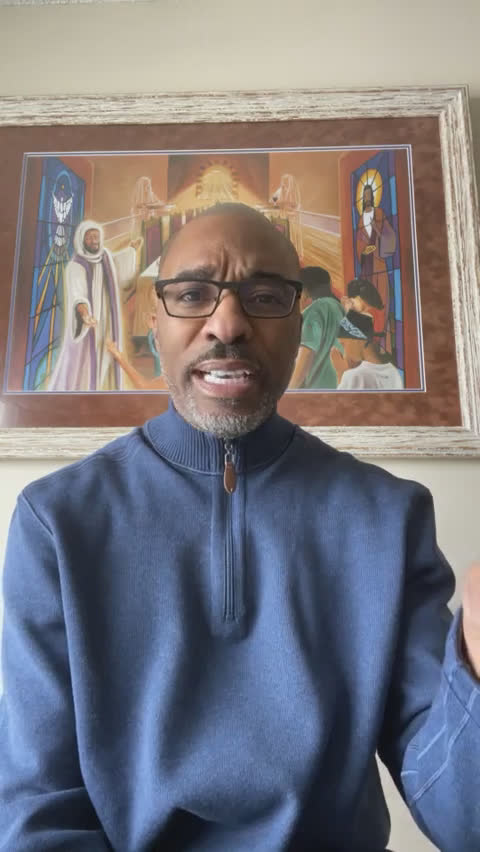
Doctor E. outlines three practical principles for making a difference—investing time and resources, getting involved beyond the periphery, and inspiring others—using examples from family, relationships, and teams to illustrate each point.
Doctor E. says you have to invest in whatever it is you're trying to make a difference in. Don't be on the periphery or the peripheral, he says. Become involved in the everyday aspects of what you all do. And then the last piece is inspire.
Good afternoon. Good morning. I hope you all are having a wonderful week and a wonderful Thursday as we really approach the weekend. I am Doctor E. Hopefully, you know me and I wanted to talk today for a minute or two about making a difference. And what does that mean, how does it look? And hopefully give you a couple of things that you can kind of utilize moving forward in terms of making some shifts or changes, however that might look. One of the reasons I didn't have in the title, making a difference in culture, or making a difference in your department or your organization or your team, or maybe even your life, is because I wanted to keep it general today and not be as specific in terms of a workplace or in terms of a specific work dynamic or a particular organizational aspect.
And so I think these are a couple of principles that you can apply to whatever you would like to make a difference in. Whether it is your family, whether it is your team, whether it is your staff or your senior leadership, or whether it is your organization as a whole. So, making a difference, the first thing I think is very important is that you have to invest in whatever it is you're trying to make a difference in. Whether it is yourself and your team, whether it is your family, whether it is a friendship or relationship.
You have to invest. And what do I mean by invest? Typically, people think of investing as you're pouring something into another thing or another person. But what I really mean is you have to give of yourself. Invest yourself into whatever it is that you are a part of that you're trying to make a difference in. And so, if it's a family, invest yourself in your time. If it's a relationship, open up and talk about your experiences and your expectations. If it's a staff or a team, invest in resources.
Whether it's you as a personal resource or other resources that help build the team and the camaraderie and the collegiality, the more that you invest in whatever it is you're trying to make a difference in, the more you will get out of it. So the more return ROI is the acronym return on your investment you will get, the more that you put in. And so think about it that way. The second component or the second piece I think is really important is become involved. Don't be on the periphery or the peripheral.
Really immerse yourself in what you're trying to make a difference in. So again, using some of these same examples, if it's your family, involve yourself in your family. However that might look for me, it's usually taking away from watching football or cutting out some of my golf goals and aspirations, going to the range and really involving myself and what my family does, even if it doesn't really liken itself to something that I may want to do for the most part. But still, becoming involved is really important, particularly from a leadership standpoint.
How are your folks seeing you? Roll up your sleeve and become involved in the everyday aspects of what you all do as an organization or as a team, or as a unit or as a department. That doesn't mean you micromanage. That doesn't mean you take or you supersede positions and authority and roles. What it means is your presence is there in a participatory fashion, and folks see you as a willingness member to contribute and so involve yourself in whatever it is you're trying to make a difference in. And then the last piece is inspire.
Folks love inspiration. So the more that you can make folks believe in what you're doing and what you're seeing and what you want to accomplish and your visioning and all of those other kinds of things, the more they want to get on board, the more they will get on board, the more they will support you. But you have to inspire them with a vision, you have to inspire them with practices, you have to inspire them with attitudes. You have to inspire them with all types of energy and everything that you bring to the table.
One of the most interesting things I've heard a leader say to me is from the first time that he arrives in the building, in the office, everything is on full display. So if he slams his office door, if he speaks to someone in a kind tone, if he asks someone how are they doing all of that? Set a model and atone for how the rest of that interaction or how folks might feel about the rest of their day. So you really want to inspire folks and take the mantle of inspiration as a personal challenge of leadership.
And so those three things I think will really help you make a difference in whatever it is that you're involved in, whatever it is that you're hoping to inspire and whatever it is that you're investing your time in, those are the three components, investing, involvement and inspiration. And you do those three things and I think you will be well on your way to making a difference in whatever it is that you're a part of. I'm Dr. E and I will see you next week.
Reactions and comments are for members. Joining is free and takes a minute.