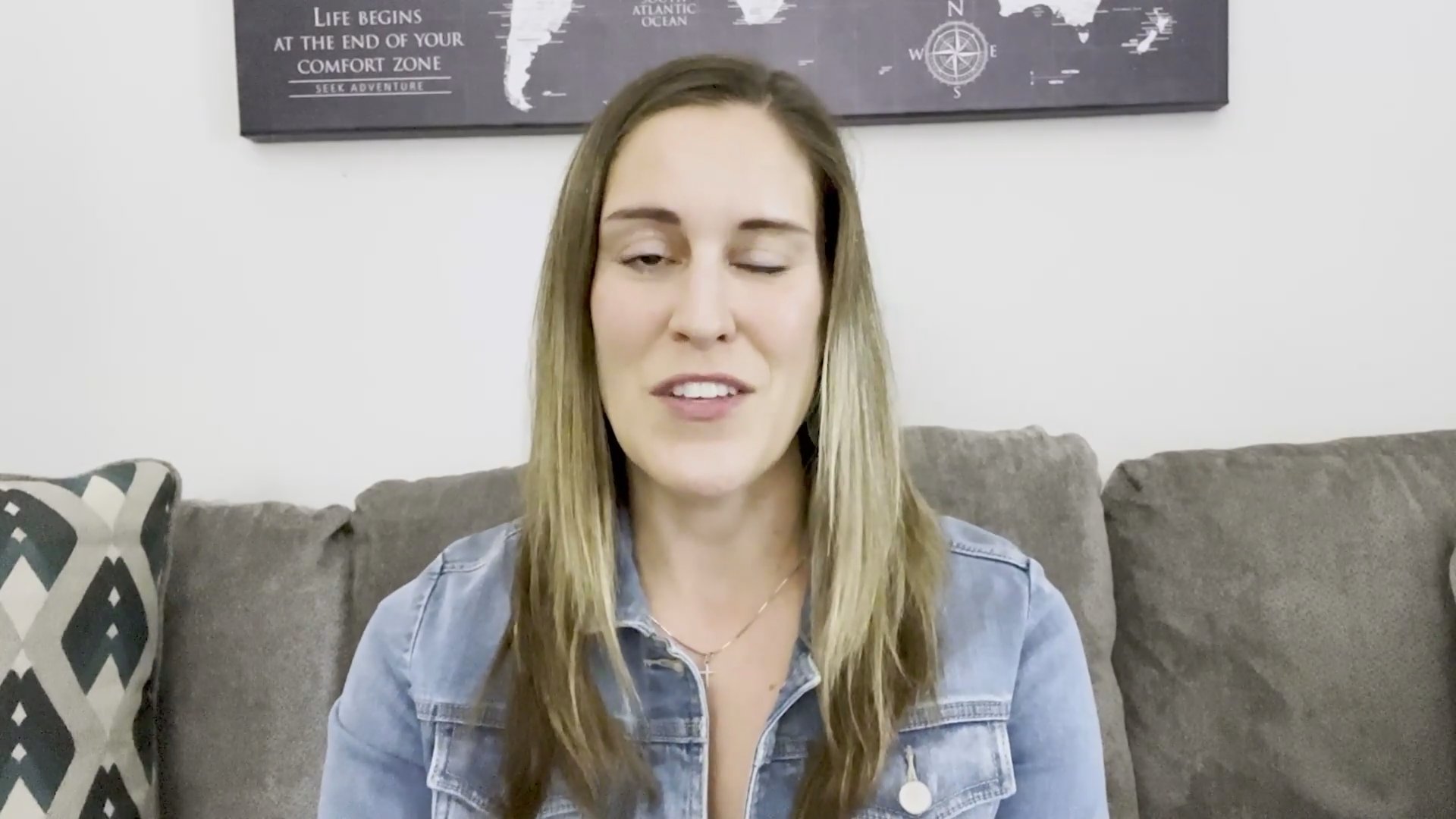
In Part 1 of this series, Dr. Carrie challenges the viewer to think back to when their money mindsets were first established and how this plays out in their life today. Prepare for reflection exercises in this series and the start of a transformation in how you view and relate to money.
Dr. Carrie Manke opens the series on money mindsets and briefly mentions an early childhood memory of feeling poor, inviting viewers to join the journey.
She describes believing her family was poor despite material comforts, comparing Sunday dinners, clothing, and possessions with friends to show how a child's viewpoint can misinterpret financial reality.
A family vacation anecdote about panning for 'gold' leads to a moment where a sister offers her keepsake to their father after overhearing money stress, illustrating how parental conversations shaped the children's fears.
She explains her parents' work histories, careers in finance, and how their scarcity mindset—rooted in older generations' hardships—meant money was frequently discussed and instilled both good habits and a sense of never having enough.
Carrie leads an exercise asking viewers to think back to the earliest money-related memories, look for themes from their upbringing, and consider how those beliefs play out in their current financial behaviors.
She previews part two of the series about working with money mindsets, encourages viewers to try the exercise and share results, and signs off.
I don't know if I can remember the first time growing up that I thought we were poor, but I have a ton of examples beyond that first time that I can distinctly remember. I'm Dr. Carrie Manke, and in this series, we're going to be talking about money mindsets. So join me on this journey. This is part one, money mindsets. And I want to share with you my mindset as a kid growing up and how that shaped my mindset as an adult. So I, again, thought we grew up poor. I didn't want for anything. I had two sisters.
We were actually upper middle class. But as a kid, you don't really understand what that means, right? And my friends always got pizza every Sunday for dinner and we never ate out. We always had a very plain home cooked meal in Minnesota, you know, potatoes, beef, vegetables. And we got our back to school clothes, like all my friends, but nothing extravagant. We never wore any super fancy name brands that I was aware of. And I remember distinctly thinking, why can't I have these luxuries that my friends have?
Like they get to, you know, go out and do stuff and they just, they seem to have more stuff than I do. Now, that being said, I personally owned 17 Barbies, just me. And I had two sisters, so they probably had another 15 each. So things like that, you just don't realize like what those things cost as a kid. But we always went on fancy family vacations twice a year. And I remember after this one vacation distinctly, we went to Arizona because in Minnesota it's freezing in the winter. And so in spring break, we always love to go somewhere warm.
So of course, all expense paid trip by mom and dad, right, to a cool place in Arizona. And we went to one of those little touristy things where you can pan for gold, which is basically like, painted rocks. But the kids think, oh my gosh, I actually found gold. And we pan for gold and my sister, my little sister was so cute. She was probably like... I don't know, seven or eight or something, very impressionable age, right? And she left there with her little like velvet pouch of gold. Like she just felt like she won the lottery that day.
And not maybe like one, two, three months later at home, we overheard my parents talking and my dad always talked about how we were never having enough money. Okay? It was never that we were poor, but as a kid, when you hear someone say we don't have enough money and talk about money and stress about money a lot, you translate that. right? You translate that to we're probably not going to eat tonight, right? As a kid, that's your logic. And so we were just sitting there. I remember thinking with my sisters like, oh my gosh, mom and dad are so worried about this.
And we just spent all that money on that trip. My little sister, her dear heart, she literally grabbed that bag of gold out of like her special drawer in her room where she kept it safe, right? And walked downstairs and went and just went like this to my dad, Daddy, I I want you to have my gold because I know that we don't have a lot of money. And my dad, I don't remember his response, but my mom over the years has told me his response was, oh crap. What did I just do that my daughters literally think we are like gonna be starving tomorrow?
And I'm sure my mom yelled at him like, can you stop talking about money all the time? And it was just, it's a funny family story now that we share because this is still how my dad is. And my dad grew up with parents who worked like two jobs, three jobs each, right? Like he paid his own way through college. So he's like the proverbial like person who had to like make it through hard work. And that's kind of always how he's viewed his relationship with money. And my mom actually, both of them worked in the finance areas.
My mom was actually the vice president of bank and my dad worked in 401k life insurance and very much rose up to a high level in his company. Both of them did very well. And we obviously never hurt from money growing up, but it was a mindset that my dad had based on his upbringing. His parents grew up in the depression, right, like one of many siblings and that mindset really instilled in my dad that we will never have enough. Coming from a family that had to work really hard to make ends meet, I get that.
My mom also grew up in a family where that was also the case. Both my parents had this mindset of no matter how much we make, we will never have enough. As a kid, I grew up with that kind of mentality. Money was talked about all the time and It was a common topic of discussion in good and in bad. I had my first savings account at age two and really learned the value of saving. My parents wanted me to pay for things out of my own savings account. If I wanted that new Barbie boat for my Barbie collection, then I paid for that out of my own allowance.
And they really just instilled good money principles in me. But I also grew up with this mindset that I will never have enough. because that is the influence that I had growing up. And so in this first part of money mindsets, that is the activity I want you to try. I want you to think back to the earliest memory you have about when money was discussed, mentioned, something in your household, and maybe you'll start to come up with a bunch of examples about how your brain related to money. And a lot of those mindsets you have around money right now, we're still at a very young age.
You were very impressionable back then, obviously. And so I want you to do this exercise and think about how does that play out now today? Do you still struggle with some of those things? Do you still have those mindsets? Maybe for you, it's a We, we never have an endless, like there's always an endless supply of money because everything was always paid for and you've, you know, used your credit card very freely because people have always paid it off for you. Maybe you have, you know, maybe it's a positive association with money.
Maybe it's a, you know, I learned how to budget and money was a good topic in my household. Maybe money is like evil to you. Whatever it may be, you'll start to see some themes when you think back to how money was discussed in upbringing and some distinct memories you have around money and you'll start to notice then how it plays out in today's life and how that impacts you. And so in the next part in this series we're going to talk about what to do with some of those mindsets and then we'll continue on different different ways we think about money in this series.
So stay tuned with me for part two and I look forward to hearing from you guys how this exercise went. Take care.
Reactions and comments are for members. Joining is free and takes a minute.