A strategist plans but a joyful one plans for joy. When did you last feel rested? What are you good at that comes so easy you assume it doesn’t count? Who’s in your corner? Whose rules are you still following? What made you smile today? We’ll tackle these questions with heart and extend an invitation to experiment trying something new and joyful.
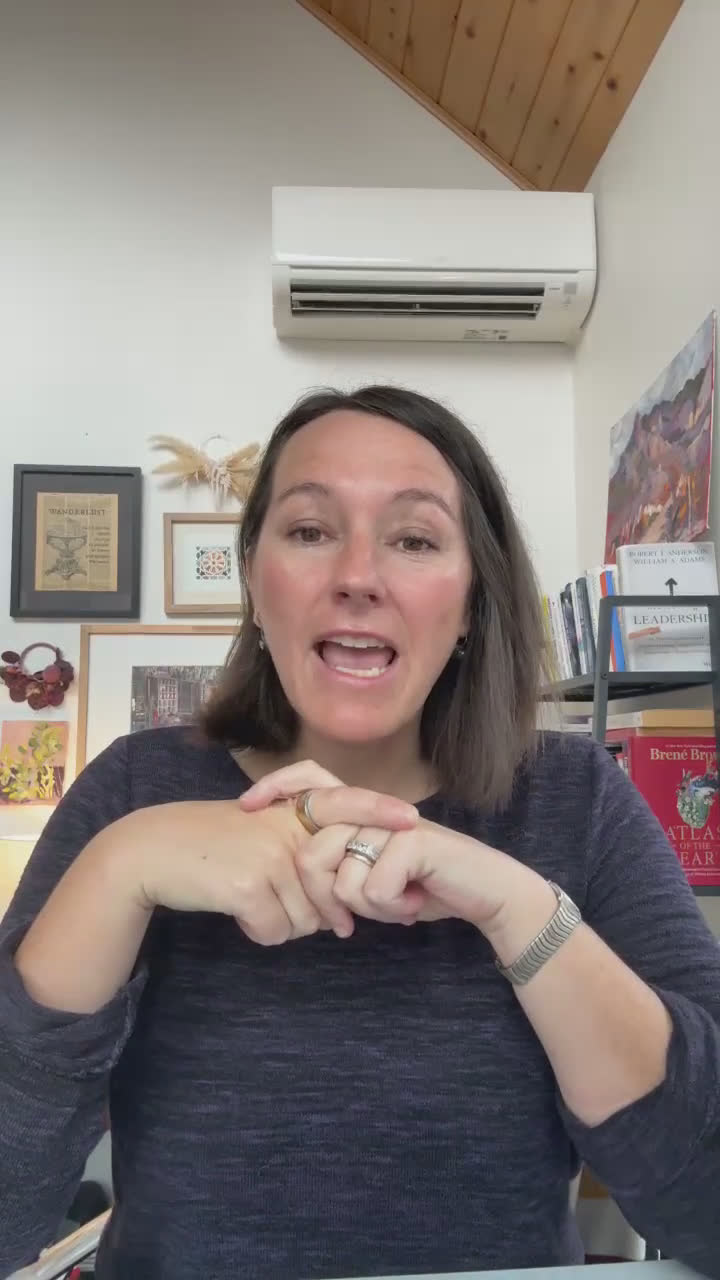
The host opens the live session, invites viewers to share a one-word check-in about feelings, body, and spirit, and establishes a warm, inclusive tone for the session.
The host reflects on last week's invitation to reach out to a friend for fun, describes going to play pickleball with a friend and bringing along their children, and sets up the anecdote about the experience.
Using the example of her eight-year-old struggling to serve, the host describes his immediate negative self-talk, introduces a reframing suggestion ('I'm learning'), and explains how such language influences belief and performance.
The host shares how her son kept practicing, then invites viewers to notice areas where they say 'I'm terrible' and try replacing it with 'I'm learning' to help their brain seek evidence of improvement.
A brief goodbye wishing viewers a great week and an invitation to join the next live session.
Hi, good morning. I'm coming today live for your midweek morning boost. First, let's do a one word check in. I like to check all of my weekly lives. How are you feeling today? No right or wrong answer. How's your body feeling? Your spirit? All emotions are welcome and all are welcome. So last week we chatted about connections and the invitation was to reach out to a pal and do something fun. I wanted you to drop in the chat if you're able to do that and what you did. I always need some new ideas for some fun things to do.
But on Sunday I did just that and I was just going to play pickleball with my one friend, but then we decided to bring our kids or more so if you ask my kids, I dragged them there. So I have a 7 and 8 year old and she brought her kids and we played. It was the first time that my kids had played pickleball. And it was so funny because my son, I would say is more of a natural athlete, immediately started volleying. We were starting to play, hit the ball back and forth. And it was super fun for me to see.
But then we started to describe the rules and let's do a game and which involved, needing to serve. And the first time he served, if you haven't played pickleball, you need to like serve into this like kind of very specific rectangle and you have to hit it there and sort of like opposite of where you're serving from on the other side of the court. And he couldn't immediately do it. But then it was like just immediate of like saying I'm terrible. I can't do this. And he said this all out loud, which I'm now thinking like, wow, okay, like how often are we in situations where we try something new, we don't get it.
And that's what we're saying internally. But an eight-year old is saying that out loud. And objectively when you hear that, you're like, no, that's not true. And I responded and introduced A reframe. I feel like once he gets older and he's like, mom, you know, as a coach, like, stop coaching me. But it was a reframe of like, no, hon, like you are just learning. You're not terrible. Say I'm learning. But he's so hard on himself and competitive. I'm not sure if anybody can relate to that, but that literally comes from me too of wanting sort of that perfection the first time that you try something or very quickly.
But the one thing that I have learned, from my own experience and through research is that when you talk to yourself like that, then your brain actually starts to believe it. And this is what I told him. I was like, if you keep saying that I'm terrible, your brain is going to believe you. And And because it will look for evidence to support what you think or say. And this is called a confirmation bias, right? Which is that tendency to look for, interpret, favor, and remember information in ways that support the way that we already believe, right?
This is kind of why if you think about the algorithms on social media. You click on something and then all of a sudden you see a lot of things that are just confirming what you already think instead of sort of alternative things. And so if you believe or say that you're terrible or I'm never going to learn, then your brain is going to focus in on that and look for the evidence to support it. You say that out loud and then you miss the next serve and you're like, see, I'm terrible, right? And then you just keep going and looking and finding evidence to support that.
So by the end of the game, it's not all about winning or losing, but I'm also competitive, but we did win. And he wanted to stay. It was about time for dinner, but he wanted to stay and practice serving and kept trying, which also was inspiring. So my invitation for this week is to look for opportunities for a reframe. Are there areas in your life where you are saying I'm terrible or this is so hard? And how could you maybe reframe that to I'm learning? Give that brain your brain a positive reframe to go up and then look for the evidence that you are improving and learning.
Okay, have a great week. See you next one.
Reactions and comments are for members. Joining is free and takes a minute.