What if the behavior you’re struggling with isn’t defiance or poor choices, but the brain working differently? Join Barb Clark for FASD: Behind the Behavior. We’ll tackle lying, raging, impulsivity, anxiety, repeated mistakes, and “knowing better but not doing better.” You may walk away seeing behavior very differently. 1 out of 20 kids have a Fetal Alcohol Spectrum Disorder. Let’s dig in!
All right. Hello, everybody happy Monday. It's Monday. I think it's November 9th. It is November 9th. Tomorrow is my son. Hezeki. Uh, 25th birthday. Wow. Um, he's getting old, which means that I'm getting younger. Right. Anyways today, we're gonna talk about. Anxiety anxiety. I call it a beast. Sometimes I call it other names that. Am I gonna say here, but it is. Hard anxiety is hard stuff. Um, I, the thing that we have to understand about anxiety is. Everybody has experienced anxiety. There is not a human being.
I don't even think there's. There's an animal. (laugh) to be honest. That has not experienced anxiety. We had a dog who passed away a couple of years ago. And boy, was he an. Anxious dog. So we can see this with animals, but humans, all humans have experienced. Anxiety, um, maybe it's, um, uh, given a speech, maybe you'd be anxious if you were talking right now on this livestream, maybe. It's a job interview. Maybe it's a driving. This is one big reason why we left M. Minnesota and moved to Florida.
Um, maybe it's, um, um, uh, driving in a snowstorm. I. Hate driving in snow and ice. I hate it. Hate it. Hate it. Um, we, the term that we'll often use and call it is white knuckling it, right. We white. Knuckled it through that storm. And this happens in rainstorms too. Honestly, man. These rainstorms that you gotta drive in here in Florida. They're no joke either, by the way, when it's really down, pour. Pouring. It's nothing like rain I ever saw up north. But, um, anyways, that's a common anxiety speak time.
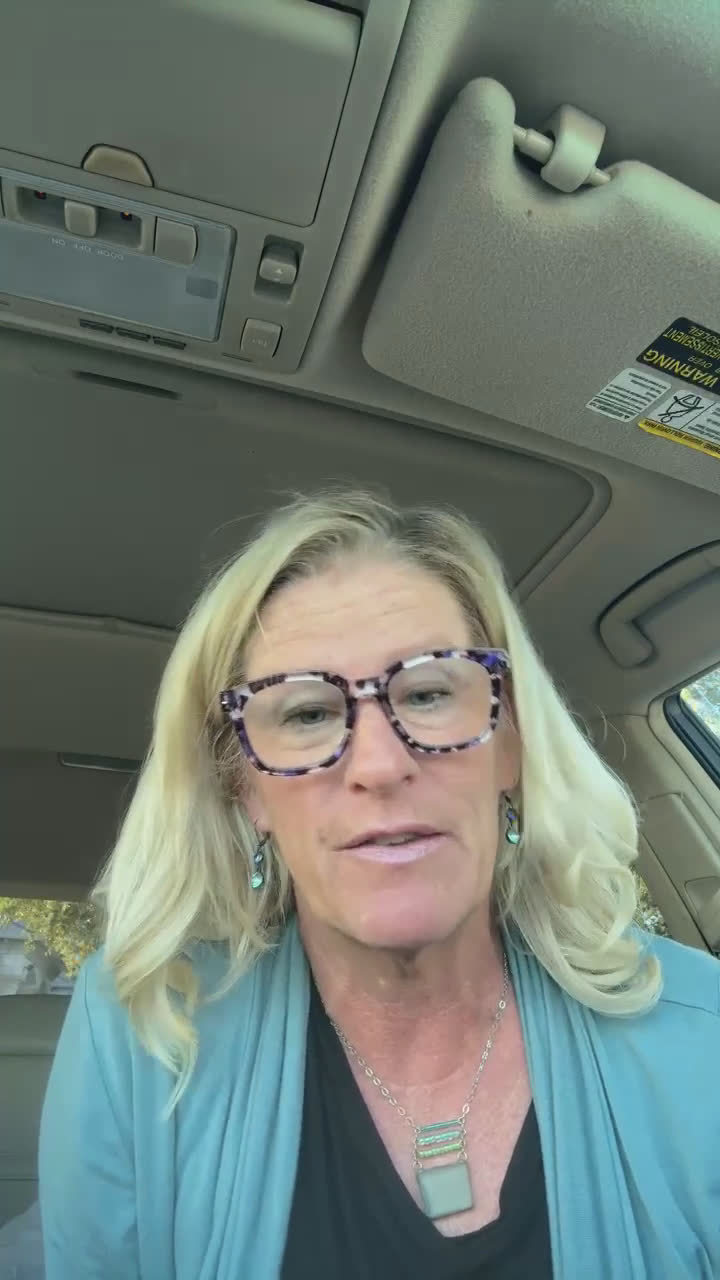
Another another time that's commonly anxiety producing that I often talk about is when you're driving. Down the highway. You can see I'm in my car right now. I'm not driving. I'm in a parking lot. But we're driving down the highway and all of a sudden you see those red flashing lights up in your rear view mirror. And you're like, oh, nuts. I'm getting pulled over. Right. And I am a bit of a speed. Demonn and so, um, anyways. So then you have this hot flash of anxiety, this like this. Complete neurobiological reaction that you have internally.
And then hopefully that officer passes you. Sorry. Zeke. My son is a cop. Right. I'm I'm I don't do this anymore. Right. I, of course I obey all the laws, but anyways, they. Drive past you, hopefully. And they're going for somebody else. And then you're like who? Okay. But even let's say, say it was a 30 seconds. Of you thought you were getting pulled over. It's not gonna just take 30 seconds for your body to give back to its normal. Regulatory place. Um, it takes way longer. To regulate to deregulate to get back to baseline than it does to get.
To the anxious place. And so, um, what we have to understand about anxiety, all of us have dealt with it, right. When we're anxious, our heart starts to beat faster. Right? You got the BA boom, BA boom, BA boom. Going on and that makes your body temperature increase. And that's why people pit out and. Sweat a ton when they're giving speeches have job interviews. Interviews, um, before a big game or tournament or whatever it is, whatever causes the anxiety. Um, our, you know, our bodily fluids start to have an impact.
Our, um, blood pressure increases and our, uh, blood sugar spike up and. Increase as well. And our bodies tense. Up right. Think about that. Like when I would drive in those. Dumb snowstorms. Right. I would literally have this horrific. Lower body E lower backache. By the time I got somewhere. So, um, and, uh, so. Again, I don't deal like a, with a ton of. Anxiety on the daily, like many people do who have like generalized. Anxiety anxiety disorder. Um, a lot of our kids and adults that have brain-based differences, like F a S.
S D or autism or a ADHD or other kind of things like that. Can kind of have some pretty consistent states of anxiety. And, um, and so what we have to understand is when we're anxious, we go down to our limb. Limbic system to the base of our brain to that good Ole amygdala area. Right. And that's where our fight flight freeze or fun part of our brain is. And when you are down in that, part of your brain in the downstairs brain. You don't learn. Well, you don't think, well, you don't process. Well, you don't it's you just don't do well when you are stuck down there in particular.
And so this is what we have to understand with. Anxiety and the anxious brain and stuff like that. Now I definitely do get anxiety. Uh, some of my friends who maybe will watch this recording or whatever can remember in Minnesota last. May there was a group of, uh, I think there was 11 of us moms who had rented a house. We were going to an. F a S D proof Alliance, caregiver conference. And I had a little bit of a meltdown. On one of the women, because I was coordinating the airport pickups and all this stuff, but I was.
Also doing 50 things like I'm always doing. And I was supposed to be, I think I was. Online leading a coaching call or something like that. And this person hadn't left yet, and I thought they should have already left. And one of my huge. Anxiety issues that I have is being late. I hate being late. It causes me ginormous. Anxiety. I know that's weird. Many people are the opposite right. Being on time. Isn't something that they're wired to be worried about. Like I am, I don't know what happened. In me that this made me so anxious, but I hate being late.
It causes me ginormous anxiety. And so I kind of lost Mapo a little bit, right. I had a little bit of a meltdown. And air, I wasn't yell. I don't think I was yelling. Was I yelling? I don't know if anybody's on here, but there's oh, Justine was there. I don't think I was yelling, but. I was stressed and I was losing it. I don't know Justine. You tell me maybe I was yelling, but. Anyways, I lost it. That caused me huge anxiety. Um, when we're down in that anxious place, things just don't go well.
And so, um, so we have to really, uh, we have to really understand that if you have a. Loved one, whether it is your child, whether it is your spouse, your sibling, your parent, your. Friend, whatever it is, who your coworker. Your boss. (laugh) that's fun. Um, anyways, if you have people in your life, that are constantly or consistently struggling with AC with some pretty significant. Anxiety. We have to really. Understand in those moments. A lot of times we wanna just let things go. And move on because when they're in the anxious brain, we're not learning.
We're not listening. We're not. Um, doing we're not doing great. And so we wanna come back to it at another point. Usually. And so, um, so with anxiety, especially if you're like. A parent or a caregiver with a kid with anxiety. Um, what often happens is you get a kid up here having these big. Ugly behaviors. Right? I don't know if ugly is the right word, but having some not fun behaviors. Behaviors. And we're sitting here, like, how do we get them to stop this right now? I don't like this. This is not fun.
Nobody. Likes it when we've got a kid or a spouse or anybody who's up here. Having, you know, big, hard behaviors. Behaviors. And so instead of how do we stop what they're doing or saying right now, what we need to look. At is what has their anxiety jacked up? What's got, 'em going through the roof. That is going to be much more effective and I'm not talking about only if you're a parent, you guys, this could. Be your colleague that you work with. This could be, you know, a, a patient, maybe you're a therapist.
This could be one of your. Clients like this could be anybody in your life. That's got the anxiety and stuff like. That going, um, that's what we wanna look at it differently. We wanna really dig. Deeper. We've got to do the detective work to figure out. What has them anxious? What has them stressed? And where can we meet that need? I just went through this amazing training called T B R I. Trust-based relational intervention of five-day training. I'm now a TB R I practitioner. And in the T B R I world, which is very trauma focused, by the way, it's a phenomenal.
Program hit me up. If you wanna learn more about it, put, gimme a message or something and I'll shoot you. Some info about it, but, um, we talk about meet the need. You gotta, first of all, you gotta figure out what. The need is, and then we wanna meet the need. And that is what is going to help the. Behavior deescalate and the anxiety decrease. Um, so, uh, I think that's all I have for today. You guys, I just wanted to talk here. Briefly about anxiety and kind of come at it from a brain-based brain.
Lens perspective. Right? A lot of times we look at anxiety and we think this person just. Needs to stop being anxious. Well, boy, wouldn't it be great if that's how it worked. You guys, you know, just. Don't just choose to be anxious or not anxious your body. Inside the system, the brain, all of those things are what is doing that. And so. Um, we'll keep talking about all this stuff. I appreciate you guys joining me today and I hope. You have an amazing week take care. And I hope that you're not super anxious.
Good. Good luck.
Reactions and comments are for members. Joining is free and takes a minute.