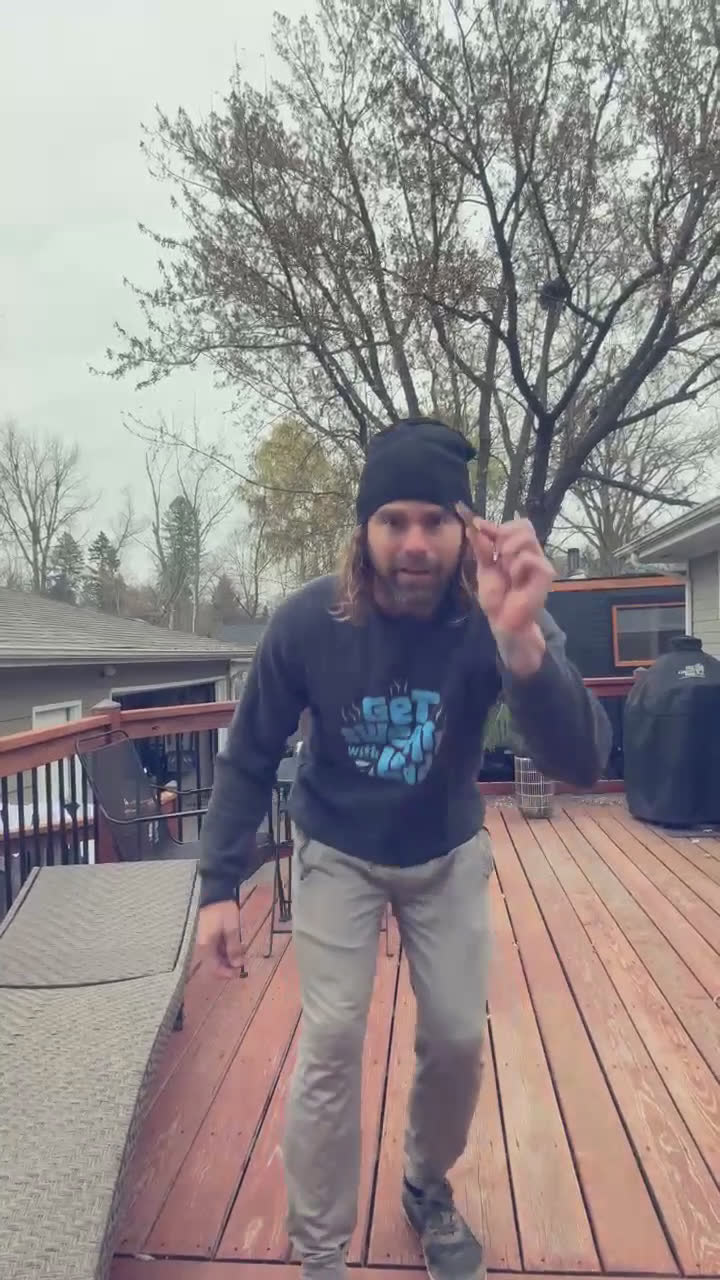
Self Talk - We can control the narrative of our lives by how we talk to ourselves. On 11/11, I’m beginning a series that highlights processes we can utilize to move through all types of pain. From how we talk to ourselves, how we move, what we put into our bodies, how we recharge, the environment we surround ourselves in, and what we can do to heal. All topics are related to my life and demonstrate what I’ve learned that is necessary for me to thrive. These topics are also elements from what I’m trying to bring to life through my community-based wellness experiences with Sessions by LeddWell.
The host opens with greetings, remarks about being outdoors, and introduces the continuing series on moving through physical, emotional, spiritual, and mental pain. They set the focus for this session on intentional movement.
The presenter describes how pain often arises when we move without presence or intention and how stressful thoughts can manifest as physical tweaks. They note that long-standing pain can be linked to glossed-over emotional or spiritual trauma.
Advice to assess how you feel upon waking and to perform gentle stretching to 'turn the body on.' The host demonstrates a big cat-like full-body stretch to engage muscles and prime movement.
Using examples like washing dishes and reaching, the host highlights common shortcuts—twisting the torso or bending with straight legs—that increase injury risk. They show intentional alternatives such as turning the body and bending the knees to protect the back.
A brief leaf-pickup demonstration models scooping with bent knees and engaging muscles as an example of moving with intention. The host discusses retraining the brain, nerves, and muscles to maintain movement patterns and the importance of priming the body before activity.
The host challenges viewers to notice their movement patterns, move from the center (transverse abdominals) for stability, and reflect if pain might stem from past thoughts or trauma. They close with encouragement to move intentionally and a friendly farewell.
How we doing, Cadre? Good morning. It's a little breezy, but I'm going to grin and bear it because I love being outside. And it is about 50 degrees, so we'll take it. The streak of outdoors continues, I like to say. Christy, good morning. How are you? Hope everyone else out there is doing great. I'm here today to continue on my series of moving through pain, physical, emotional, spiritual, and mental, to talk a little bit about intentional movement. Try to fix this, this is crooked. So a lot of times pain can show up in our body in the physical form because we're not present.
We're not moving with intention. Our heads, our minds are elsewhere. We're thinking about something else. And we can tweak our bodies When we're not in that intentional state and our framework of thinking leading into that, whether we're thinking about a stressful situation related to work or family or maybe it's a part of the past, that will show up in our bodies as pain. So we might think, oh, I stubbed my toe. It's like, why did you stub your toe? Did you stub your toe because you were thinking of something else that caused you to take your mind away from being in a natural state of flow in regards to movement.
So it's sometimes when you have pain that's stuck in your body for quite some time and you can't pinpoint it to an actual physical injury, that's because you experience some sort of emotional, spiritual, or mental trauma that you kind of glossed over and it unintentionally created pain in your body. So sometimes when I think about moving intentionally It's similar to exercising our mind right when we get up in the morning. Assess how we're feeling, assess how we're doing. And when it comes to the body, that's going to mean stretching a little bit, feeling, noticing any sort of pain in your body.
There are a number of times over the years when I would wake up and get out of bed without intention and all of a sudden I'd feel a tweak in my back or a tweak in my neck, a tweak in my shoulders. And it would last for the rest of the day or for multiple days until it finally just faded, getting masked in the everyday actions of life and forgotten about And when you forget about it, then you think, it's healed, it's fine. Well, it was actually never dealt with. And that type of pain will compound over time and make it easier to fall into pain through unintentional movement.
So I like to begin my mornings with that big cat stretch. Stretch. Oh, fully full up. full-on stretch, engaging the whole entire body, holding all your muscles, and it's an easy way to just turn the body on. Another thing that I notice when it comes to intentional movement, when I do it, is say I'm cleaning some dishes in the sink. And I'm going to kind of demonstrate this here. So say that I'm cleaning dishes in the sink and I'm doing whatever, doing whatever, and I'm like twisting to the side, leaning way over, or maybe I drop something and I'm just bending down.
See how I'm just rotating all up here. I'm not using my legs at all. That's unintentional movement. taking the shortcut to try to achieve something by standing in place and reaching over. But if I'm moving intentionally, like an athlete would, I will eliminate that risk of injury by moving with intention. So instead of reaching over to the side like that, I'm going to turn my body and reach over. Or instead of, say I'm going to bend down, I just want to bend and grab something. Well, that's not good right there.
If I'm going to bend down, I want to bend down with my knees and scoop that thing up. I was thinking a lot about how to demonstrate this, and my time as a baseball player came to my thought. Because say if I'm going to pick up, there's a leaf down here. Let's see if I can. Here's the leaf. Oh yeah, there we can see it. All right, cool. So I don't want to just go and like that. Like that is not, that is unintentional movement right there. Straight legs, just moving down. Like that is opening up opportunity for my back.
to get in pain. And then if my back's getting in pain and my mind is thinking about that and I'm not able to, hopefully you guys can hear me with my microphone, and I'm not able to then function my best throughout the day because now I'm thinking about this pain because I moved unintentionally. So I'm going to go get this leaf. The leaf that just blew away, mind you. I want to... Notice how I want to move down like that. I bent down, I bent my knee, and that's myself. That's like I've trained myself to move with intention.
So if I'm going to go and get this leaf that's blown away, I'm going to scoop down and grab it. Move with intention. engage my muscles, think about that contraction moving through to support my body. Most of the times when I'm bending down, I am thinking about engaging my muscles to contract so that I can properly move. And for years and years and years, this was something I didn't do because I was protecting my back pain And I would tell myself, I can't do that. My back is bad. But no, you have to learn to retrain your brain so that it can communicate with your nerves, which can communicate with muscles, which can fire muscles to move and keep yourself feeling good, right?
Bending down, bend those knees, use your legs, use your whole body. So that's what I mean when I'm talking about moving with intention. With every session that I have been hosting, sessions by Leadwell, I start each session with a movement exercise designed to turn the body on. That's essentially going from your toes all the way to your neck to establish that communication between your brain, your nerves, and your muscles to move properly. So I do that before any type of vigorous activity. Oftentimes I do it when I wake up just to get my body moving.
and functioning. It's kind of just like, priming the engine before driving it, driving it, driving it or flying it or doing whatever you're going to do with it. So, I challenge you to think about those times when you're unnecessarily twisting or kind of just haphazardly bending over. even if you're working out, it's so important to be neurologically sound and that mean with like a straight gaze, not lifting something and looking over to the TV to see what's going on. Like that is not moving with intention.
So maybe throughout this day, try to recognize your movement patterns and try to challenge yourself to be centered with those movements. Try to think maybe you're moving with your transverse abdominals. It's your lower part of your abdominals, almost the most center central part of your body. And if you can move with intention through the center of your body, you should be more stable in your movements and will be able to avoid those unintentional tweaks of pain that show up in the body. And then again, if you do tweak your body of some sort at any point in time, have the presence of mind to think about why that happened.
What were you thinking about before then? And is what you were thinking about, could that be the trauma that's stuck in your body? Because that's taking priority from the task at hand of simply being present in the moment. So intentional movement, it can really help and unintentional movement can really harm. So get out there and move with intention today engage your body, contract your muscles, keep everything firing, and I hope you feel great and have a successful day. And I will chat with you very soon.
Cheers, Godre.
Reactions and comments are for members. Joining is free and takes a minute.