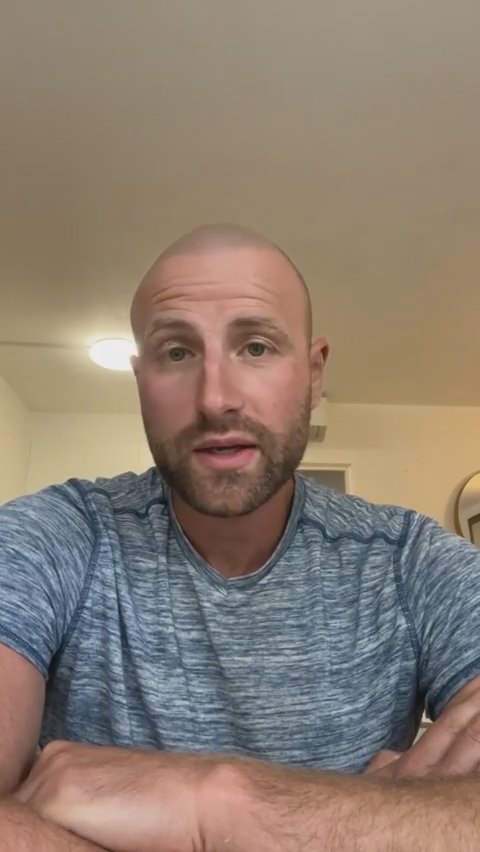
This week I got to attend a summit at Harvard University with some thought leaders in mental health and fellow content creators in the space. We had a fascinating conversation about the mental health system writ large and how we view mental health disorders in the future. So let's talk about it together and I can share my thoughts.
This is the first episode of Mental Health Matters. The name is a play on words. Like, it's important, but also mental health matters. Let's see who pops on the beacon.
What is the difference between a mental health disorder and what is a normal human experience? One of the things we talked about in a summit was how do we change the way we view mental health versus calling these things a disorder, maybe a condition?
A disorder essentially is susceptibility plus stress. You're more susceptible to depression, substance use, when you add stress to it. The first questions I start to ask is about someone's environment.
I'd love to hear more from you about your experience with mental health diagnosis. Were you, was, was that harmful in any way or did it make you feel good? Was it relieving in some way? I'll be on later this week with another brand new topic.
What's up, Cadre folks? Welcome to another episode of Mental Health Matters. Well, I don't know about another episode. This is technically the first episode, because now that's what I've named it. And if you haven't noticed, it is a play on words. And that is, like, mental health matters. Like, it's important, but also mental health matters. Like, we're talking about various matters. See what I did there? Now let's go ahead and wait a little bit. Let's see who pops on the beacon has gone out. I just got a notification that I'm live.
Super exciting. So we'll see if anyone else is as excited as I am to hop on as we talk about this topic, and I've hinted I've talked about it a little bit before, but it's in the vein of what is the. The difference between what is a mental health disorder and what is a normal human experience? And the reason I'm bringing this up is I got invited to this really interesting, they call a summit through Harvard University. Super prestigious. Yeah. So one of the topics, there's like a series of different meetings that we do, and the topic was really interesting because it was me and other creators in mental health.
And we talked about, well, the person leading it was some renowned psychiatrist or something. And it was cool because, I mean, these are folks who probably have a lot of sway in where we go in the field. Now, some of the interesting things about mental health compared to some of the other medical sciences is there's a little bit more of a gray area. It's, you know, when we talk about disorders, it's kind of like our best conceptualization of an actually occurring phenomenon. Like, we know, depression happens, bipolar happens, schizophrenia.
Right. These are a very specific set of symptoms, but everyone individually experiences them differently, probably more so because it's involved in human behavior, which could be much more diverse. And let's just say you have a cold and you have a certain set of symptoms. Now, everyone may have a different set of symptoms with that cold, but there's going to be, you know, overlap in the same way. But it may be like, I have a runny nose. I don't. Right. But with mental health, it's like it could be, you know, a list of 1520 symptoms, and those are only the ones that we list, and it could turn up differently.
So the question is, like, what is this type of depression? So it's all where we draw the lines. So, for example, more dysthymic or persistent depression, a lower level, but for longer. Longer of an episode pretty much ongoing, versus. Is this a major depressive disorder, which is kind of the classic depression versus. I'm just sad. So I have a lot of those symptoms. But is that actually the same ailment? It's not necessarily all that clear. So let's give a little example. Poo. So. And the easiest one is depression.
And one of the things I talk about when I discuss this topic is the three variables I look at when I'm assessing for a mental health disorder, and that is frequency, duration, and intensity. Now, starting with those three, how often, how long does it last, and how intense are the symptoms? Because a disorder of sorts would be higher in all of those categories. It was interesting because one of the things we talked about in that summit was, how do we change the way we view mental health versus calling these things a disorder, maybe a condition.
Right? Because language is always changing, and language represents how we view things. So sometimes it is important to change the language or the way we look at things, but it's never perfect because we always change it eventually and say, oh, this is something that's better. So we had a really interesting discussion, because when it comes to diagnosis of a mental health disorder, we want to remove as much stigma as possible. But I brought up the point that on the other side of that is sometimes a diagnosis is important.
People actually get benefit from receiving a diagnosis because, in a way, that destigmatizes it, because it's not just me. It's not just my personality. It's not just this innate thing. It's, you know, I have this specific condition, and it, you know, I hate to say, like causes me to, but, you know, causes certain symptoms and certain behavior. And so that could be freeing. But also, if I know the extent of the problem, I know the solution, because a lot of the evidence based practices that we do in mental health are tied to the certain disorders and conditions.
So we know that this intervention is good for this disorder, etcetera. This medicine, same with medications. This medication is indicated for this disorder. So it's important. We don't want to, like, fully get away and just call it like a. I think I was, like, kind of joking in the group, and I was like, you know, a, you know, a mental health whoopsie or something versus a disorder like oopsie Daisy, you know, like, we want to, you know, take this seriously. And just because it's a diagnosis doesn't mean that it has to be something stigmatizing.
But back to where we draw that line, right? It's a fine line between disorder and what we're going through. So that's another thing that we look at. There's different variables. If I'm doing an assessment, for example, is there substance use involved? Because when someone is abusing substances, they exhibit behavior that could look like just about any disorder. If you ever have someone, well, I guess maybe you wouldn't if you're not a therapist. But if you ever meet someone, let's say, who has a history of addiction, you look at their medical records or something, as far as what they've been diagnosed, that they're going to have, like.
Like bipolar and this, that and the other. But most of the time it's not the case because they were using substances, altering their brain chemistry. So it looks like depression, looks like bipolar. Maybe you could still call it depression because those are the symptoms as well. So it could kind of be two things together. It could be depression first, and then the substance uses to mask a lot of that. Because with co occurring disorders, most folks who have severe addictions also are going to have maybe a history of mental health, depression conditions prior to them starting use.
So it becomes a coping tool and mechanism. So with that being said, it's not a perfect way of doing it. So the question is, how do we conceptualize disorders moving forward? Do we conceptualize them as disorders? You know, like I said, I'm always kind of a down the middle sort of guy when it comes to this stuff, but, yeah, how can we maybe change the way we look at it to destigmatize it, to normalize it a little more, to remove the shame, but also to acknowledge the realness of it. There's another thing, too, when you call it a mental whoopsie doozy daisy, right?
That kind of takes away from the fact that it's like a real condition. The other thing I didn't mention is, you know, not just substance use, but what's going on in your life. Did you in bereavement, did you just lose somebody? Are you having a lot of stress at work? That's the first thing I look at as a therapist. The first questions I start to ask is about someone's environment, their daily habits, because a lot of times it's those things that can make the difference, that can make the difference and be causing the stress, which then causes the symptoms of a disorder manifest into an actual disorder.
Because a disorder essentially is susceptibility plus stress. Let's say we're all a ship, and the ship is built, and, you know, there's every ship has maybe its weaknesses of how it was built. Maybe in the hull, maybe in the bow, the stern. I'm just saying boat terms and the engine, whatever, right? There's vulnerabilities there because no one's perfect. But let's say you put stress on it. Like you run it full throttle and you go into these giant waves and you just go, right, you're putting stress, stress on the boat where's going to be the first place to malfunction.
And that's where in our bodies and minds it is. You're more susceptible to depression, substance use, when you add stress to it. So that's really all a disorder is in the end. Well, that's not maybe the best way of phrasing it, but that's a lot of times how these things manifest. And if you have a huge susceptibility, right, let's say the hole was made, and I don't want to like say you're made poorly, but, you know, just for the metaphor, like it was. Had a great susceptibility that maybe you don't even have to put stress on the boat, that you just drive the thing normally you're cruising around and things start spilling with water because the hole was not made securely.
Let's say. Let's put it nice. So anyway, I hope that makes sense. Hope you got something out of it. I'd love to hear more from you about your experience with mental health diagnosis. And what do you think? What do you think? Are you okay with how it is? And I guess I'm curious just from a personal standpoint of if you were given a mental health diagnosis and if so, how did you feel about it? Were you, was, was that harmful in any way or did it make you feel bad? Or did it make you feel good? Was it relieving in some way?
No, for me it was more the latter. So anyway, I'd love to hear from you all. It's good to see you again. I'll be on later this week with another brand new topic. Do I know what it is? No, I forgot. But I have it written down so we'll see what it is and you can see it on the schedule. I wrote it down. Anyways, folks, take care. Have a great day. Love ya.
Reactions and comments are for members. Joining is free and takes a minute.