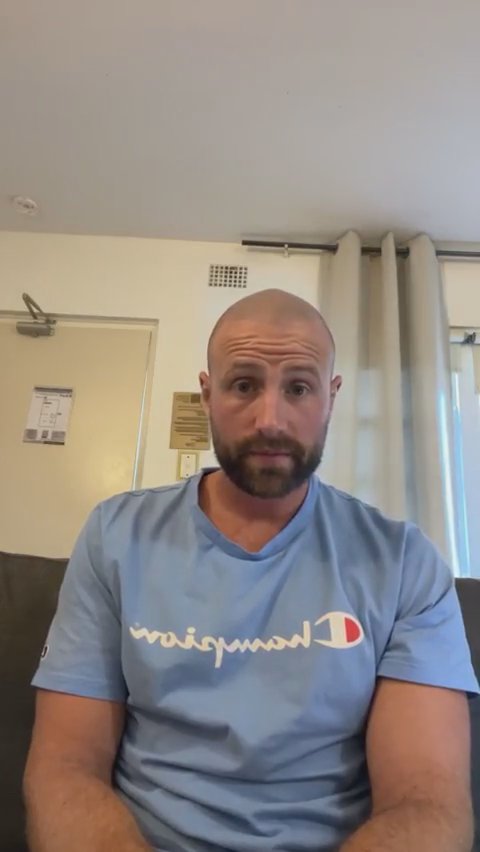
In this Livestream, I will answer questions from Cadre users and even coaches! So please join so I can answer any mental health and addiction questions you have. Feel free to post them in the Community feed in advance, especially if you can't join in live and want to watch it later.
Cadre fam. Welcome to another live stream. This is mental health matters. Feel free to ask any questions you have about mental health or addiction. If you are watching this, as it's already been recorded, remember, reach out to me.
What is the connection between loneliness and mental health? One of the key, crucial components of living a happy, healthy life is the quality of our connections. Investing time and energy in relationships is really important.
Should we be concerned if someone is all of a sudden silent and just stares and observes everything around them? Change in behavior could often indicate that something is off.
What do I do if a friend or family member is struggling with addiction or mental health? Another question here is a co worker. What happens if my coworker, if I'm starting to smell alcohol them? A lot of these principles apply, whether it's addiction, anxiety, whatever.
There's a couple ways to approach the situation. One is extending olive branch. The other is saying it's a little bit more. Most of the time it depends on the severity.
For someone who is an emerging teenage girl, because of hormones, social pressure, social media, they're just statistically more at risk. The same principles apply. You have to come in, you got to be non judgmental. Offer help. Be tactful in what you use.
So we kind of touched on some of these other topics. Extending the olive branch, offering services, offering your support. These are just things to avoid their walls coming up and putting up resistance. If you have any other questions, put it in the community feed.
Hey, Cadre fam. Welcome to another live stream. This is mental health matters, where we talk about matters regarding mental health and the fact that mental health is important. A little play on words always have to announce that at the beginning. It's become like a little tradition. Anyways, so the beacon is gone now. People are getting notifications that we're live, and I hope we get some folks joining. If not, that's okay, because today we're doing another Q and a session. And, I mean, as simple as this sounds, I just found that often this is the really makes for the best lives.
So I did it a couple weeks ago, and I'm like, okay, we have to do this regularly. Because we had such a good conversation. People were hopping on asking great questions. It was a lot of fun for me and seemingly for other people. So in our community feed, I put out a question, which is, what questions do you have about mental health and addiction, whatever that may be. So we got some good ones. What's up, junk food junkie? I feel you on that one. But, yeah, so we have some really good questions from people who, as far as mental health and addiction.
So for any of those hopping in, feel free to ask any questions you have about mental health or addiction, and I should have time to answer them. The other thing is, if you are watching this, as it's already been recorded, remember, go ahead, reach out to me, put it in the community feed, tag me, and we'll get you on the next q and a. So why don't we just go ahead and jump into today's proverbial Malbag video? So the first question, and this was asked by our fearless leader, Luke. So what is the connection with loneliness and mental health?
So one of the things, one of the first things I do as a therapist when I'm doing a diagnostic assessment, we're looking at mental health disorders. And I've talked about this in the past, and I think I have some videos on this, but it's, it's like, what is the difference between just being sad, having a hard time in a struggle, and actually having a mental health disorder? And sometimes there's a very fine line. What is a pervasive pattern? What is more of something that aligns with a disease model, say, like depression or schizophrenia?
So the reason psychology is so complicated is because humans are so complicated, and we're very impacted by our environment. So a simple way to look at it is frequency, intensity, and duration. How frequently am I experiencing these symptoms of feeling? Let's just say with depression, feeling low, feeling as bad as suicidal. So those are some of those indicators of that versus just kind of a fleeting bad time. Now, the question, is this a brain disorder, or is this based on circumstances? So when it comes to loneliness, that would be one of the things that I ask probably pretty early on.
Not just, like, are you lonely? But I ask about somebody's connections. Are you, you know, who are you close with? Do you have a good set of friends? How's your romantic life? You know, are you married? Are you satisfied in that relationship, the relationship with your kids? Is there stress at home? Because these are all things that really greatly correlate to then having a reaction or, you know, presentation of what would look like depression or anxiety symptoms. So does that mean you have a pervasive brain disorder?
Not necessarily. Now, would something like an antidepressant be helpful? Potentially, sure, just like it would for a more pervasive type of depression. But the question is, why are you having those symptoms in the first place? Because some people that the. The thing with, like, more clinicalized depression is that everything could be seemingly good around you. You know, you have a good family, your job's good, but just, like, your brain is just not producing the chemicals that it needs to now. So in this case, this is like a long way of trying to sing that.
One of the key, crucial components of living a happy, healthy life, and I talk about this all the time, is the quality of our connections. Who do we have in our life? Are there people that we could go to when we're needing support? Are there other people that we can support? What is the quality of our connections? Because not only is that associated with mental health, but also physical health? Because that was another part of the question is, does loneliness impact our mental health as well as our physical health?
And these two are very aligned because our physical health very much correlates with our mental health, but also the quality of our relationships. So, extremely important. So that's something I try to work with clients with. If they have those deficits, if they're. So it's like, where do we invest our time and our energy? And one of the best ways to look at that is through some of these studies on happiness. At least that's my opinion is, okay, where do I invest my time? Is it chasing clout and material success?
Some of those things don't necessarily correlate with being happier. So does that correlate with being happier? A lot of times, the answer is no, and I'm not going to go through each and every one. I do have a livestream about this that was not from not that long ago. So you could check that out about happiness and what some of the research shows. But the main point of this is investing time and energy in relationships is really important. So let's jump onto one of the last questions from junk food junkie.
I just forget, I shouldn't wear light colored shirts. Should we be concerned if someone is all of a sudden silent and just stares and observes everything around them? Now, I guess that depends on the context. And I was just saying, like, you saw this happen one time, who is this person? Is this a friend of yours or just some random stranger? One thing I could say off the bat is sometimes they'll just say it's a friend and you're noticing that they're just maybe not as present lately. You know, they're quiet, they're kind of off into space.
So one of the things is when it comes to just mental health in general, overall emotional health, because there's a lot of questions here about supporting friends. Right. And family is a change in behavior, a change in behavior patterns, because that could often indicate that something is off. Right. So who used to be outgoing? Yeah. So, yeah. So that's kind of what I was thinking is like a pattern of change in behavior can be something that is concerning. And that's going to tie us in actually really nicely to our next set of questions.
And these are questions that I get all the time. So it's kind of like, what do we do about it? So some of those questions is supporting loved ones. So what do I do if a friend or family member is struggling with addiction or mental health? Another question here is a co worker. What happens if my coworker, if I'm starting to smell alcohol them? And that's a really complicated. I don't even know how I'm going to answer that, but it'll just kind of come up. But. So I've done videos on this in the past and I've done, I think there's a video actually that's on here right now that you should check out, and it's, Alec had asked the question.
I made a full on video about it of like, how do you support people that are anxious? So a lot of these principles apply, whether it's addiction, anxiety, whatever, any mental health where you're concerned. So let's talk about what not to do. Now, addiction is one of those that's like very behavioral based. Right. So there's very often some problematic behaviors coming with that, whether it's stealing you know, extreme mood swings and just complete changes in personality. So she just turned 13. Right.
So going back to her real quick, I mean, just one thing to think about is that there are different life stages, and one of the biggest one is going through puberty. And especially you see this with. With girls that are very, very at risk group. So there's going to inherently be some personality changes around puberty. Now, the question is, when does that become concerning? So, which brings us to our next question. So I'll give you an example. So recently, I got a little group of friends here in Australia.
I've been here for six months, and I've kind of formed this core group of friends. We're all on this, like, WhatsApp chat, you know? You know, kind of our core group, right? And we always just, like, any group chat, have fun, whatever. And we've kind of become, like, really close. All of a sudden, one of our friends gets off the group chat, which is, like, kind of shocking. So, like, why did they leave? Right? And there's kind of some dynamics going on, a little bit of drama among us. I mean, I try to stay hobby, but a little bit of, like, romantic affairs going on anyway.
So I know that he's kind of prone to, you know, having, you know, down periods, you know, and that he could kind of isolate and, you know, is struggling and stress and struggles with some of those, like, loneliness, isolation kind of things. Right. So, I mean, there's a couple ways to approach the situation. And just one example, what I did with him is I just sent him a personal message. And honestly, I didn't know if he was, like, upset with me about anything. I had no idea. I really had zero clue.
But I just sent him a message. I just said, hey, man, don't know what's going on. I should probably pull the message, actually. I'm just like, hey, man, and don't know what's going on with you. Well, actually, let me just pull the message up so I have it right here. So he left the group chat, and I said, you know something that's very simple, you know, and we're kind of like, bro, you know, bro. So you gotta kind of be, like, a little bit of a bro here with folks like him, so. Or like us men. Okay.
So I go, hey, man, you good? Let me know if you ever want to chat. And I just kind of put, like, a little inside joke and with it, too, just kind of, like, a little inside. And I'm not going to share because, like, probably not appropriate, but so I put a little inside joke in and that's it. I left it there. Right. So I extended the olive branch and I just left it there. Now I wasn't concerned to the level of like he's going to hurt himself or he's like a danger to himself or others. That's a whole other story.
So it kind of depends on the severity. But most of the time in these situations maybe like your niece, you know, someone who's maybe drinking heavily or they're starting to drink more heavily and you're noticing it versus someone who's disturbed here and then of course like literally the second I start the livestream they're like jackhammering like literally 30 seconds after I start this thing. Alright, so sorry about that. Do not disturb is on. So it really depends on the situation. Most of the situations may not be imminent and then you got to kind of crank up any kind of pressure or anything.
So in this case it was just, yeah. So just let him know, hey if you ever want to chat, I'm here. And he probably saw that and appreciated it but at the moment maybe just wasn't ready to reach back. So he didn't really respond for like a week. And I'd kind of seen him, you know, around them but kind of living a small town here so I've seen him. I don't know, we didn't really like lock eyes or anything like that. But if I saw him I probably would have been like, hey, how's it going? You know, and just because I actually like didn't know if he was like upset with me about anything which is like possible because I sometimes upset people.
So that's just one example which is extending the olive branch. Now let's say it's a little bit more. And I knew that he had other support and other people were talking to him so I didn't push too hard. But let's say I was like starting to get concerned. Like let's say maybe he didn't say anything overtly or leave a WhatsApp group or anything quite dramatic like that. But maybe he, you know, is like totally isolating, doesn't say anything to anyone. Maybe we notice that he's drinking a little bit more, having outbursts, you know, whatever.
In that case I would maybe say something more like hey man, I've noticed, you know, I just want to say I've noticed x, y, Z and you know, just as your friend, it's a little bit concerning to me. I don't know what's going on. However, then I probably say the same thing. Like, if you want to chat, just know I'm here for you, extending the olive branch. Now, if I start pushing too hard, it pushes people away. So basically I'm pushing and then I'm pulling back. And the hopes of pulling back is that they follow me back.
And it may not be right now, it may be when they're ready. Now, let's say there's a little bit more concern. And I'm just like aware that they certainly have an alcohol problem. I may say something like, you know, I'm seeing this, this and this. I'm concerned. And in any of these situations, I put it on them. Okay, what do you think? Do you agree? Because maybe I'm wrong. So now when I say maybe I'm wrong, we're doing this little thing that kind of comes from motivational interviewing because if I say you have an alcohol problem, da da da, what are they going to do?
They're going to argue back. Well, no, I don't, because you only have an alcohol problem. This is kind of funny. It's like you don't think you have an alcohol problem because you're always comparing yourself. So everyone who drinks more than you is an alcoholic, right. So it's pretty easy to kind of have some denial around it for some people, or some people, they know it, but they don't want to outwardly admit it because that means they have to do something about it and they may not be ready. So anyways, instead of saying you're an alcoholic and da da da da da, they're gonna argue back.
I say my concern. So I'm pushing a bit. Well, they push back a little bit. So I gotta be honest. Then I pull back and say, what do you think? I may be wrong? This is just what I'm noticing. You could even say something like, am I crazy? This is like actually a really good line that you could use because no one wants you to say that you're crazy, right? Like no one wants to be like, yeah, you're crazy. Now, that may happen. Maybe you have like a spouse and you got like a real contentious thing and, oh, yeah, yeah, you're, you're crazy.
It gaslights you a little bit, you know? But if it's like a good friend and you don't necessarily have this like intertwined relationship, you know, just like different. If you're a husband wife, husband husband, you know, whatever, there could be those complex dynamics versus like a friend maybe up and down or whatever, but ultimately we're pretty chill. Now. So in that situation, you could be like, look, blah, blah, blah, I'm concerned, and say something like, am I crazy to be concerned here that there's anything.
So they'll likely say something like this. So they'll likely say, look, you're not crazy. I've been struggling a little bit. Now, they may downplay it, but at least there, they will likely acknowledge that there's something that you are observing, something. Now, they may blame it more on mental health or, like, you know, I've just been struggling. I've been stressed. I'm struggling. I'm a little depressed. And then you could just. It just opens a conversation up, and you could just kind of listen, hear them out.
And instead of, like, inserting. Instead of. Instead of inserting your opinion, instead of inserting criticism or what to do, you just listen and reflect and maybe repeat back and what they're saying in different words to show that you're listening. And at the end of that, you can then extend that olive branch. Offer help. Another step you could do, and this is one, is offer resources. So let's say you already know there's an issue with alcohol. You'd be like, hey, look, I had a friend who kind of was in a very similar situation.
They're doing really good now, and that's because they got help from this therapist who specializes in substance use. You can kind of, like, tailor it a little bit because there's so much stigma with substance. They really struggle with people who are stressed out and maybe, you know, find alcohol to be a comfort. Right. Instead of saying addiction, because then they're like, well, I'm not. I don't have an addiction. So you gotta be a little, like, tactful in what you use. So now with a teenage array, that's complicated.
So you're asking here. Let's see. So she turned 13, I kind of think, after you said next phase in her life and maybe a depression state, fear of being a teenager. Yeah, I mean, it could be a whole lot of different things. And that would also tie into another question about social media and stuff. But, like, right now, like, again, we're aware that she's at an at risk state. She is. And again, we're not generalizing fully, but, you know, we have to keep in the back of our mind that for someone who is an emerging teenage girl, because of hormones, social pressure, social media, they're just statistically more at risk.
And so maybe it does, you know, and sometimes, like, suicide rates are pretty high. So sometimes you got to keep that in mind and maybe try to address it a little more urgently. Now, the same principles apply. You could, you know, but you got to come in, you got to be non judgmental. You have to come off as supportive, and you have to come off as not having an agenda, because whatever that is, it's going to push them away and they're going to want to do the opposite, especially if it's a teenager who's trying to, you know, you know, emerging adult and be independent.
So you really have to just be careful with what you say. Now, jungkook junkie, you may actually be in a very unique position to help them, right? Like an auntie or uncle. You know, it's kind of like one step away from parent. And so you're kind of like. And again, not all relationships are like this, but you're, like, kind of like, you know, kind of. You're like the cool aunt or uncle, right? You're not, like, disciplining them, but you're always someone who could kind of be an ear. You can almost, like, be a conduit.
You know, often you're, like, in that place to be someone to look up to and, you know, kind of be like, a hybrid of, like, a friend and older adult figure that's not their parents who's, like, lame and, you know, going to potentially punish them, you know, whatever. So often you, you may be at again, if you have that good relationship with them, you may be a great person to do that and just do that same formula. I told you, again, everyone's gonna react differently. You may do what I just said, and it may blow up, but, I mean, just in my belief, in my experience, it's, like, probably about the best you can do, and I don't think that that's likely to happen.
If you're just being supportive now, they maybe get a little snippy, maybe a little defensive, and then you just back off more. Okay. Just know that if you ever want, I'm not gonna push you on that. So if you ever want to talk, I'm here. I'm not, you know, I'm not going to judge or whatever. Just, you just know, you could talk to me. And sometimes they just need a little bit of time. Sometimes they just need a little bit of time to process it and just let them come back. Now, again, if the concern gets higher, that's a whole different story.
If there's, like, cutting behaviors or suicidal ideation, you may have to, like, as an adult, not you, but parents more likely in this situation would have to intervene a little bit more and maybe have to put a little bit more pressure to get services and help where it could be an issue of safety. So it's a little bit. A little bit of a different story. You said, gotcha. Just be her buddy, and like, I happen. Yeah, exactly. So, actually, like I said, you're very. You may be in a very unique position.
Well, anyways, I gotta hop off here pretty soon. Time flies. I really enjoy this, and these are great questions. So we kind of touched on some of these other topics. Like, Luke had asked about, what if I smell alcohol at work on somebody? Well, that could be another way. Now, if they're operating heavy machinery or they're a teacher or a therapist or something, you may have to, like, report them if they're a danger. But if not, you know, you can maybe bring up that concern in the same way and offer help and support in that way, too.
Yeah, that was a little trickier. Like, there's some more nuances, but really, like, a lot of these principles apply. Extending the olive branch, offering services, offering your support. And these are just things to avoid their walls coming up and putting up resistance. So great stuff. I hope you find that to be helpful. If you have any other questions, put it in the community feed. Thank you, jungkook junkie, for participating. Thank you for everyone who shot me some great questions today. And we'll do this again in two weeks.
We'll do another q and a. Yeah. Awesome. No, not a problem at all. I really appreciate you participating. And with that, folks, I'll catch you later. Take care.
Reactions and comments are for members. Joining is free and takes a minute.