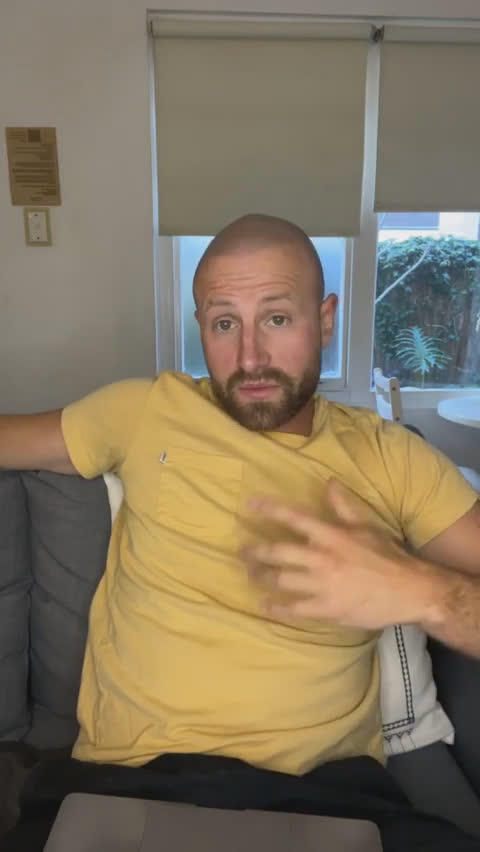
In this Livestream, I will answer questions from Cadre users and even coaches! So please join so I can answer any mental health and addiction questions you have. Feel free to post them in the Community feed in advance, especially if you can't join in live and want to watch it later.
Evan is your resident mental health and addiction therapist. Today we're going to be doing a q and a session, so we're doing this every other week. If you ever want to ask a question, there's a good chance I will answer it on here.
Some people are asking, did I start over? Yes, I did. I was having some Internet issues, and I just wanted to make sure everything was working. So seems to be working a little better now. Let's go through some of the question first.
Medical marijuana is big deal these days. Does that mean it should be illegal? In Luke's opinion, probably not. A healthy relationship with substances is something that you use once in a while for fun.
Harm reduction versus abstinence, just some quick ideas now. This is gonna be the hardest thing I've ever done, is to say, to break this topic down quickly. I'm gonna see if I could give the quickest answer while also giving this question justice.
There's politics within mental health and addiction. The more progressive idea of harm reduction is two things. It's a form of public policy, and it's an intervention. With harm reduction, it tends to be better for people who are less severe end of spectrum.
In some of the programs I run, I don't allow medical cannabis. I believe cannabis is a severely addictive substance. Will I change my mind? Eventually? There's a place for it, just not me.
Most effective intervention for ADHD is a stimulant. And unmanaged, ADHD could cause a lot of problems. Does it have the potential for abuse? Yes. Are there ways to mitigate that?
Would my information be compromised? What would it mean if you randomly receive a HIPAA violation letter in the mail? The bigger you are, the more vulnerable you are to being targeted. Is there a financial benefit from getting help?
What's up, Cadre fam? Evan here, your resident mental health and addiction therapist. This is mental health matters. Today we're going to be doing a q and a session, so we're doing this every other week, so we're going to have a little bit of fun. I'm going to go through some of the questions that you all have asked over the course of the last week, many of them from the Cadre fam, whether it's Cadre users or part of the Cadre community. So if you ever want to ask a question, there's a good chance I will answer it on here.
You could always put that in the community feed and tag me, and I'll get to that. Or if you want to comment on one of my videos, I'll get notifications there. So if you have. If you're watching some of my videos on mental health and addiction and you have further questions about or want me to explain anything more, comment, and I'll be sure to do that for you. What up, Jill? What up, Luca? All right, man, this is turning into quite the party. So that's awesome. But, yeah. So if without further ado, I could jump into some of the questions that we've gotten today, all of these, which I could do a entire video on.
Some people are asking, did I start over? Yes, I did. I was having some Internet issues, and I just wanted to make sure everything was working. I wasn't seeing people hopping in, so I restarted it. So seems to be working a little better now. Probably was working good before. I just couldn't see all this stuff. So, anyway, let's go through some of the question first one by Chris. Medical marijuana is big deal these days, or. Yeah, so I don't know the question yet, but, you know, the medical marijuana is big, and so I get a lot of questions on that, which is like, okay, now that it's legal, what does that mean?
Is that okay? So as far as medical marijuana, so it's like, when something becomes legal, it does not change the nature of the substance and maybe changes the availability of it. But one of the examples I said is, well, alcohol is legal, but that does not mean it has a less damaging effect. In fact, it's probably more damaging because it's more accepted and all that stuff. Now, does that mean marijuana should be illegal? In my opinion, probably not. It doesn't make sense to have it as a schedule one controlled substance, meaning it has zero medicinal value, extremely high addiction rates, and, you know, no potential good could come from it.
And it's deadly? No. Okay, so, no, that doesn't make sense. But how can we have a more balanced view? This because of, you know, weed is extremely powerful, and what you see happen in places where it does get legalized, right? There's more of supply, therefore more people do it, and then therefore, more people experience consequences, because it's really just a numbers game. A certain percentage of people who do a certain substance or behavior, that is the potential for abuse, a certain percentage of them will struggle with it, will get addicted.
Therefore, if more comes in, maybe not a higher percentage will per se. I don't know. But just more people in general will. And that could have a negative impact on communities. You're starting to see in Colorado and places like Denver, a lot of consequences happening that maybe weren't foreseen by many. And also with the really high rates of cannabis now, especially with things like edibles really prompting serious psychosis events and maybe turning on that schizophrenia gene that people may have, that may have otherwise laid dormant.
So, yeah, I mean, so then the question goes, what do you do? Because one would argue, some people argue that it does have some additional benefit, and there seems to be some truth to that. Now, sometimes the question is, okay, but could you get the same benefit from something that isn't mind and mood altering? Because, I mean, let's face it, so many people are, like, super into weed because it's fun and it feels good for many people, not everyone. So why would you be so. No one's that passionate about antibiotics and reading amoxicillin magazines and curating a life around it by any means.
There's a reason why it's so attractive, because it does feel good. So the question is like, okay, am I doing this for the right reasons? Am I doing this because it is the best medicine, or am I doing this just because it's a nice little escape? What I find with weed, and really I kind of have this litness test of, is my use being done in an addictive way, or does it have the potential to cause issues? The simple litmus test is, I say, a healthy relationship with substances is something that you use once in a while for fun, essentially, if that is your approach to any substance, whether it's drinking weed, even heroin.
But again, when you start getting to hard drugs, it's like, almost impossible to have this relationship with it. But if this is something you do once in a while for fun, there's almost no never consequences from it. It's always when you start to use a substance to fulfill a certain purpose a purpose that, right. You could potentially get elsewhere, right? Or, like, for example, if you're using a substance to cope with physical pain, emotional pain, boredom. There's a million reasons why people use substances.
But if that becomes your primary tool, that's the trap you could fall into, because substances are an immediate quick fix, and in the brain, you get, your brain is so adaptable, it adapts to needing this outside thing to solve an internal problem. Right. Thanks, Luke. I don't know. I just came up with that one. Yeah, it's just like, you know, no one's just, like, that passionate about other medications. I'm, like, very passionate about Advil. Like, I would wear an Advil t shirt and sponsor them.
I mean, you shouldn't take that all the time. I'm not recommending that. But, like, I don't know, for whatever reason, it just, like, works really well for someone who's had, like, chronic pain. It's like, that's the good stuff for me. Those liquid gels, man. Let me tell you. So I'm a big advocate, but, no, don't. You probably shouldn't do that. Don't take any medical advice from me. Your doctor probably tell you, take that s*** as little as possible, which probably seems to be the best way to go.
Anyway, there's that tangent. So, anyway, having a balanced view on something like cannabis, because we want to, you know, have that relationship with the substance of something I use once in a while for fun. If not, that's where the potential for harm comes in. That's where you get hooked, and that's where the consequences come in. And where could get time to, you know, where you get into those more severe use disorders where it can become a brain disease. So, yeah. Which brings us into the next question.
I think that follows in to. We'll go to this one also from Chris. So, like, of harm reduction versus abstinence, just some quick ideas now. This is gonna be the hardest thing I've ever done, is to say, to break this topic down quickly. I think I may have a video on this on Cadre. I can't remember. I know I have one. I'm like. I actually have a similar one with, like, the twelve steps versus clinical based, which kind of falls into that a little bit. I'm gonna see if I could give the quickest answer while also giving this question justice.
All right, let's see. Just like in life and in politics, there's politics within mental health and addiction. Now, I want you to take away your preconceived notions on what is right and wrong, whether it's liberal, conservative, whatever, right? But like, think of more of, there's always going to be progressive ideas of, we need to change things, things need to be more permissive, we need to have an environment, because inherently what we're doing is probably wrong. And we need to figure that. Now the conservative side is like, hey, we're probably doing some things right, and if we change too quickly, bad things could happen, right?
So it's kind of this constant push and pull. And for a long time, this idea of abstinence, which is no drinking, if you have a substance use disorder, do not drink either. Use drugs in any form. It's not safe. It's a chronically relapsing brain disease. Therefore, if you do it, it's so likely there's gonna be immense harm that it's a best approach to just not do it at all. And in fact, that's actually easier to avoid harm than trying to manage it. Right? And this was the prevailing idea. And of course, I believe there's some truth to that, a lot of truth to that.
And a lot of people take, millions of people have taken that approach and found success and been able to not do it at all, still find fulfillment and actually have it be a realistic goal, even though it's difficult. But managing substances, if you have any use disorder, is just difficult no matter what you do. Now, the more progressive idea, this camp of harm reduction, now, harm reduction is two things. It is more than two things, but it's like an overall philosophy. It's a form of public policy, and it's an intervention.
So, meaning, basically, harm reduction is saying that if you. The goal of harm reduction is to reduce the risk of harm associated with any risky behavior that has the potential for harm or consequences that could be like, for example, the advent of seat belts is a form of harm reduction. Condoms are a form of harm reduction for pregnancy, HIV, STI's. So there's a lot of examples of how we use that as a public policy now. Also, it's taking a little bit of a different approach, saying that, look, if, you know, we could go around telling everyone that they just need to stop using.
However, that may not be realistic because a lot of people just aren't ready or they don't have the means to do that, or they're just not in that stage of change. Therefore, we meet them where they're at. We say any goal in the right direction is a win versus, you know, that maybe you define your own recovery a little bit more than just the traditional no use. That's the way to go. So it could be like, hey, if I'm drinking seven nights a week and I drink six, that's a win. It's reducing the chance of harm and improving quality of life.
Now the flip side of that is like, if you have a severe use disorder, you know, it's often in like, the use disorder itself is an inherent difficulty of controlling and managing. Now, some people just don't have the skills or knowledge or whatever, and then when they have that, they actually are better able to manage. Some people are drinking often using. I mean, people almost always are drinking for using, for an underlying issue. But sometimes it's just like a temporary. Like with COVID I had a lot of people coming for substance use disorder.
There was a new thing for them, the 30, 40. And they never really. Maybe they were big drinkers, but this really was a big issue for them. And with them, I was able to kind of do more of a harm reduction approach where we either took a break or I helped them learn skills how to reduce youth. Now that's the intervention is teaching people how to set boundaries around their use and minimize the main consequences. And so some of them were able to do that because they didn't go too far. So who's appropriate for what?
Right? So it means. So again, these camps don't always get along. I think it's kind of a false choice. These two things actually mesh together really well. It's more about pairing the right individual for the right intervention. I find with harm reduction, it tends to be better for people who are on the less severe end of the spectrum and the most severe end of the spectrum. Right. The people, it's like, not appropriate to put someone in abstinence if they're like maybe a teen who's like just starting to experiment, or people who are just not ready at their earlier in the stages of use.
And to throw them into an abstinence base or twelve step approach would just kind of freak them out and it may actually turn them off in case they need it later, because often these folks will kind of phase out or they'll figure it out and adapt, or they're going down the road of the more disease based addiction. Now, those folks often, I tend to recommend more of an abstinence based approach, even if it is just temporary. Who have more of that chronic severe addiction. Then when you get to, like, the highest ends of people just don't have the means.
They're on the, I mean, they're relapsed they've been using for 40 years. And it just may not be realistic for them to get sober at this time. A lot of those people do end up recovering even the hardest cases. But those folks often it is better to take more of a harm production approach, try to give them a better quality of life. But also, it is for society. Harm reduction is not what's good for the goose, is good for the gander. Like with harm reduction. For example, I worked at a syringe exchange, the largest one in Minnesota, and it was a really interesting experience.
The guy who ran it told me, he's like, look, by doing this, if we prevent one case of hiv being spread through giving out clean needles and condoms and such, or education, it pays for the whole syringe exchange for a year. Because this is like, you know, like, some of the stuff with healthier is like, very expensive. And especially something like alcohol is one of the biggest burdens on the healthcare system because of the harm, the physical harm that comes from alcohol. Like, we're all paying for it big time.
So things like harm reduction, if you're not, like, the biggest fan, like, it's. It's really beneficial to society and it's. So it is more of an overarching thing. So anyway, that's my brief breakdown of the two. And I may do a more in depth video on it, but you can check out my video on kind of twelve step recovery versus clinical, where a lot of these concepts interweave into it. So that's a good one. So similar. Okay, so stimulants in while new in recovery. So here's another one, another hot button one, because we're talking about, like, the medical cannabis.
So in some of the programs I run, like, as far as housing goes, I don't allow, at this time, I don't allow medical cannabis, because just my personal opinion is, like, from, if you, like, have an addiction recovery perspective, like, that should be because I believe cannabis is a severely addictive substance. I've worked with a ton of people who have such a hard time getting off, it causes withdrawals. People have an emotional, psychological, physiological dependence on cannabis. So unless that person has done every single possible thing to avoid taking this substance and finding other ways to cope and manage, I just don't think it's great for an abstinence based recovery setting, which my housing program is.
So I don't allow that. Other houses do. Cool. No judgment. There's a place for it, just not me. Okay. Will I change my mind? Eventually? Maybe now stimulants I think it's a little different. This is also another controversial area. So, stimulants. Right. Used for ADHD. Now, the thing with ADHD is right now, what the literature shows stimulants is the most effective intervention for ADHD is a stimulant. It just does something different to the ADHD brain than it does for other people, and it abates the symptoms, at least for the time when you are on it.
And unmanaged, ADHD could cause a lot of problems. Does it have the potential for abuse? Yes. Are there ways to mitigate that? Yeah. So it's a delicate balance because, like, people in early recovery will often abuse anything. Like, I hear like, it. Literally, despite how long I've worked in addiction and every crazy story I've heard, like, I. Things like, still shock me. Like I heard the other day, it's like, yeah, someone was snorting their wellbutrin. Like, they're wellbutrin. It's like an antidepressant.
They're snorting it. I mean, doesn't surprise me too much. It's just like, it's still like everyone. I'm. What? You know? So it's like, if you could abuse wellbutrin, you could easily abuse stimulants, which does have a dopaminergic effect, meaning it's a reward, chemical reward reaction in your brain, which. The higher a dopaminergic reaction, the more likely that substance or behavior can have addictive potential. So. But, so here's some things I look at. One is like, has this person, like, when were they diagnosed with ADHD?
Have they been on these medications for a while? Do they have a history of abusing the medications? But also some of the medications have more of a high potential abuse than others. For example, something like Adderall, which can be a more effective med for a lot of people than the other, such as Ritalin or Vyvanse, which is a long acting Ritalin. And there's also the non stimulant medications, like Strattera. Right? So it's like, have you tried some of the other ones that are less harm potential than Adderall?
It's like, whenever I hear someone, like, abusing a stimulant, it's almost always Adderall, typically. And then even then, with Adderall, one of the big things, like, okay, are you on an extended. So it's harder. It's much harder to abuse extended release substances than it is instant release. The faster and the more intense you raise those brain chemicals of dopamine and the other rewarding ones that creates the stimulating effect. The harder and faster something hits you, the more reinforcing and addictive it is.
So being on an extended release reduces the potential for abuse. Another thing is mindset, right? I mean, just even asking someone, like, are they committed to the recovery? Are they going to meetings, meeting with the sponsor, you know, check boxes of, is someone taking the recovery seriously? So the more serious they're taking the recovery, the more likely they are to not abuse it. So those are some of the things I look at. So I was maybe more closed off to it, but the more I've learned about it, the more I dove down the rabbit hole of ADHD, which you will hopefully see soon that I have about a 15 video series all about ADHD and managing ADHD, and hopefully will be out soon that you all can check out where I talk a lot about that.
So it does have its time in place, and for a lot of people, it's a benefit for recovery. ADHD is about impulsivity, delayed reinforcement. So ADHD is highly associated with addiction, the ADHD brain. And so the symptoms of ADHD really, really are like tinder for the flame. That is addiction. And so a stimulant medication is like kind of keeping that pile of wood damp so that fire doesn't go ablaze and take over the entire region. Kind of like yesterday I was walking down by the beach here in Sydney, and there was, like, smoke in the air, and it got thicker.
And what the h*** is, like, something like a campfire. But you look, it was just hazy with smoke. I'm like, oh, my God. It was like a building on fire. But I guess they were doing controlled bush fires or whatever you want to call it, brush fires, like, right in the neighborhood next door. And the wind just blew it and kind of ruined everybody's day. So I just, like, left town because it was not pleasant. So my lungs are probably a little hurting today, but, yeah, that was my ADHD tangent. There you go.
See it in action live. Let's see, there's one other couple other interesting questions for today. This one's interesting. I don't know exactly how to answer that. Okay, so what would it mean if you randomly receive a HIPAA violation letter in the mail from one of your therapists? What would my information. Would my information be compromised? So HIPAA, right? Health and Information Protection act of action? I don't. Okay, so if. So, Hippo, right, is basically the law that protects your private health data, right?
So any of your medical records is where you have to, like, send a release of information if you want that shared. So it's very. And it's very strict, like, for somebody who runs, like, a healthcare organization, like, one HIPAA violation would, like, ruin me. You know, like, it's. It's, like, very expensive. You know, it's kind of like when you're watching, like, a video, you know, you put a VHS, and it's like, this is punishable. Like, copying this could cost you, like, $500,000 in five years in jail.
It's like, kind of like that. It's like you don't want to hip a violation. I don't know how many people, like, often, like, end up paying that fine anyway. You know, it's important. So we got to protect people's health data. There's all sorts of rules and regulations around that, but I think kind of what Luke here is getting at. So, our company selling data for online app companies to insurance companies is their industry knowledge of information being pawned off to other players for unethical purposes.
So a lot of amazing information on these subjects. So this is interesting. I'd love to hear more about it, but just, like, from being in the industry, I can just tell you, like, what I've heard, and I haven't heard much about this, but it certainly could be going. I just. I don't hear everything, but I know that the one thing I heard about some of the bigger apps, like, maybe a betterhelp or something, not to call them out, but, you know, they apparently, and again, I really don't. I don't care how big of a company or how big of a corporate overlord they are.
Like, I don't like to rush to judgment until I hear every side of the story, but I know that that was something in the news that there could potentially have been data compromised. So there's certain rules and regulations now, let's say, like, you've probably. You hear this all the time, right? People hack into stuff. You know, things are probably more vulnerable than we like to believe. People have hacked into your email. They get your password, so there can be data breaches. Or if you're in a huge company, I mean, just like, one person could succumb to a phishing operation, right, where they give a password, and then they, you know, people can get in.
I think the bigger you are, the more vulnerable you are to being targeted, because for whatever reason, people either just want to wreak havoc or they want to actually take that information because our information is valuable. So there is this incentive structure for our data now? And I really think this applies to anything, right? I don't know. I don't know how. I'm sure our health data is, like, quite valuable, but I don't know, like, hackers who are taking it and running experiments or something like that.
You know, it's usually. It's usually always comes back to a financial reason. So is there a financial benefit from getting help? I'm sure there may be something I've just never heard of, of that being a huge issue. I mean, I've heard of people getting black. You know, they're kind of these black mal campaigns or their. What are they? Kind of these, like, hostage situations where they, you know, take your computer down and you have to pay, and then they give you your records back. And this happened to hospitals and some companies, you know, wind up paying it, you know, ransom, ransomware or something like that.
So I was not the best person to ask on this because I haven't heard too much about it, but it's like, kind of. Should you be worried? Yes, if you get something like that in the mail. So I think it would depend, like, like, if my, like, clinic said, hey, we had, like, a data breach. And, like, sometimes, like, a data breach just means, like, someone got into the system, doesn't mean that they did anything. There was just a breach, and they had to tell you. I mean. I mean, I wouldn't. I don't want to give advice here, but, like, I don't know if I would be, like, personally that worried.
Like, I just. I don't want them, like, publishing my therapy notes and, like, what medications I'm on to the, like, in a public forum. Like, I'd probably be, like, most worried about that. I'd be like, I don't want my business aired out there. Like, it'd be embarrassing, but I don't think I've ever heard that happen. I doubt that would ever happen. Yeah, it's. A lot of it just feels bad, you know, it's just like, it's kind of a violating feeling. You know, this is your personal health data, but these things are going to happen.
You know, the more we rely on technology. Back in the day, you remember those old paper charts behind the desk of the doctor's office with the color coding and everything like that? So in order to get that information, you had to break into the doctor's office. But now, with more convenience, becomes more security risk, so that this kind of stuff's going to happen. So I don't know. I don't know what to tell you on that one, but yeah, I'd love to see some more articles about this because, yeah, all my client stuff is on an EMR and let's say someone got my password or was able to hack into the system.
Theoretically they would have access, but I don't know what incentive there is to do that. But anyway. So I think that we'll leave it there. But those were some awesome questions. Often engagement, conversation. Thank you Cadre, which I believe is Alec for the comment there. But yeah, remember community feed, watch my videos, comment, ask questions, and in two weeks we'll do another one. But I'll have a, a fresh topic for next week. So we're at the end of the month, so I have to come up with some topics.
So if you have any suggestions, let me know and I could do a video or do another live stream on that in and of itself. All right, folks, you have a great day. It's been real. Take care.
Reactions and comments are for members. Joining is free and takes a minute.