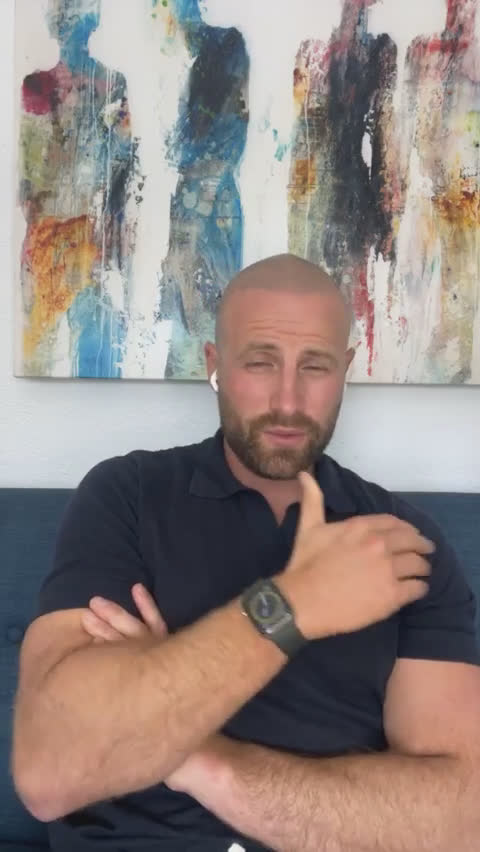
Today we are doing another episode of Mental Health Matters, except you bring the topics for me to answer. This usually makes for a lively and fun conversation, so come join and contribute your questions or experiences. Feel free to put any questions in advance on the community feed and tag me whether you are joining live or watching later.
Evan: This is mental health matters, where we talk about matters related to mental health. If you want to participate, hop in and I could answer questions live. The more the merrier.
I'm back in the United States. I was in Australia visiting family for way longer than I expected. Here it is, summer, and I'm loving it. I'm excited to answer some Luke's questions that came in. If anyone has any questions as we go, comments would be awesome.
The most common one is borderline personality disorder, BPD. It's a pattern of behavior that looks a lot like negative coping and emotional dysregulation. The term BPD splitting comes from this idea that folks with BPD often try to pin staff against each other in treatment.
A colleague of mine calls other employees narcissists. What really is a narcissist? There's three different clusters. A healthy narcissism is not healthy. It's extreme, problematic, and deeply ingrained.
Khaled: I like the personality disorder questions. People are very fascinated by them. There's kind of this mystique around them. And so they're very popular in many ways.
What is the extent of your relationship? Are you very close, or is this someone you like you don't know at all? Giving them an opportunity so you could say something like, hey, I just noticed that you haven't seemed like yourself lately. They may then open up to you, and there you go.
How does one deal with a person that is all about themselves all the time, no matter what the situation is? Do I just distance myself from them or do I tell them? Is it worth having that conversation?
A lot of times, like in conversations or in these situations, ABC, it seems like, you know, you're the focus. And then you kind of give them the benefit of the doubt. People are going to be less defensive, and it may actually get through to them. Give that one a shot.
We'll see you at this time next week for another episode of Mental Health matters. Feel free to comment, to reach out in the community feed, to ask me questions. This really helps me direct what topics we talk about.
Welcome to mental health matters. I'm Evan, your resident mental health and addiction therapist. How y'all doing today? We got an awesome live. This is mental health matters, where we talk about matters related to mental health. And because mental health is important. Anyways, the beacon has gone out. Hopefully we'll get some people joining live for all of you who follow. If not, you should follow me on Cadre, and then you'll get some of these awesome notifications if you like doing these lives.
And you could always go back and watch them later in the app. But if you want to participate, hop in and I could answer questions live and we could have an awesome discussion. So the more the merrier. Anyways, today our bi weekly ask me anything, which honestly tend to be the best, I think of the lives when it's just open for them. But I do have some awesome questions that have come in and I look forward to answering them. And hopefully we get some people in to ask some questions of their own or have an open discussion or dialogue.
So we'll see who pops in. Anyways, I'm back in the United States. As many of you know, I was in Australia visiting family for way longer than I expected because it's pretty awesome there. But coming back to the US, it's pretty awesome. Here it is, summer, and I'm loving it. So, hey, junk food junkie, our number one. How you doing? I'm good. As I was saying, I am back in the United States. That's why you're seeing me in the morning again. Hey, Luke, what's going on? I'm excited to answer some Luke's questions that came in, but yeah, why don't we start jumping into it?
And again, if anyone has any questions as we go, comments, that would be awesome. We'll keep this thing going. Alright, let's pull these bad boys up. Alright, our first question, it was just, ah, basically BPD splitting question mark. Okay, so what does that mean? So, BPD, borderline personality disorder. And as we've talked about, you've seen maybe in some of my other videos and lives, where personality disorder is essentially when someone exhibits a pattern of behavior that is deeply ingrained and problematic in the context of one's culture.
So what does that mean? Now, a lot of times, personality disorders are essentially just like any other mental disorder where you have a susceptibility, right? Maybe you have certain characteristics in your personality, not necessarily bad ones. Like, we all have interesting parts of our personality that maybe aren't always serving us best, but. And then you throw trauma upon that. So you have a little fire and you throw gasoline and then it creates a big problem. So it's not necessarily a problem in and of itself.
So. Oh, look at that. I remember that you said your niece was out of her funk. She told me she was nervous about change becoming a teenager. Thanks for your advice. Okay, well, I'm glad you did that and took that approach. That's really good to hear. You know, sometimes I always say, like, a loving aunt or uncle is a great resource for a teen because they're not going to listen to your, their parents so much. So that's awesome. But anyway, so a personality disorder. Yeah. So basically personality traits plus trauma.
So the most common one is borderline personality disorder, BPD, which was brought up by Katie here in this question. And essentially, it's a pattern of behavior that looks a lot like a pattern of negative coping and emotional dysregulation. So probably like, emotional dysregulation is one of the biggest features. So people could be really quick to anger. They could be, you know, be seen as manipulative because they're like constantly trying to get these emotional needs met. I always say it's like having a hole in the bottom of a, you know, having a hole in the bottom of a bucket of water you have to keep filling just to keep it, to keep it that way.
And so you see that. So then also to fulfill those needs, you see a lot of substance use. One of the key features is self harm. So things like cutting or any other type of self harm. And these folks often end up in treatment settings, whether it's therapy, hospitalizations, treatment centers, because their negative coping becomes so problematic that they tend to need help. And so the term BPD splitting comes from this idea that folks with borderline personality disorder, often, it's like, it's often used in the form of like staff at a treatment center.
Like it's used by professionals to say, oh, they're just splitting the staff. Right? So it's like parents, it's like a kid. And this could work in this context, too, where it's like you're kind of pitting your parents against each other or you're kind of getting some needs met from one where the other one doesn't know. And so it's kind of seen as a form of manipulation. So you do see that a lot with folks with BPD, not just folks with BPD, but, and again, I think when it comes down to BPD, it's all about just getting your needs met.
And so it's like a frantic. They're often in like a frantic state, a frantic attempt, when the hole in the bucket is there and the water is continually coming out. It's this frantic effort to fill that. And sometimes in order to do that, they go to any means necessary. And so I think the concept of splitting, that's often what you would see is someone trying to maybe pin staff against each other in treatment, pin their parents against each other, or try to secretly kind of get needs met from one to the other.
But again, all of it is just an attempt to get their needs met. And that's just one way that may show up and often again. And you would see this in, at least, because I guess I'm in a professional, this is where I see it most, is I'm trying to think of other situations. It could be splitting members of your friend group, but typically staff parents is where I would maybe see that most in these situations. So that is an interesting question, an interesting concept that you just learned about, probably that you would have never heard otherwise.
So, next one from Mister Luke. I apologize why my AirPods are connecting, disconnecting. Let's see if this works, too. But let's take a look at our next question. So a colleague of mine. Okay, let's do this one. So, my coworker calls other employees narcissists, and I hear that a lot. What really is a narcissist? Now, this is a great addition to the last question, because we're talking about personality disorders, this pervasive issue, a pattern of behavior and interacting with the world. That is extreme.
I forgot that part. It's extreme. Problematic within the context of one's. Did I say that before? What else? So it's extreme. Yeah. Pervasive and problematic. And so there's different clusters. I remember we've talked about this in past lives where I really broke this down. But there's different. There's three different clusters, right? And the most common, right, are the cluster b, which would include borderline personality disorder. Now, in that same family, you would have something called narcissistic personality disorder and cluster B.
The definition is a pattern of lack of behavioral and emotional control. So you can see how that fits the BPD. Now, the concept of narcissism, you know, you could date that back to the greek greek or something. The myth of Narcissus, the man who died from falling in love with his reflection. And the pond. Right? So that kind of that fable. So, you know, kind of this idea of self love and some of the key characteristics of narcissism, or in this case, the clinical disorder would be narcissistic. Personality disorder would be like kind of the self obsession.
Focus on self feeling like you're better than others, feeling like you deserve more than other people. Right. Despite your level of work or accomplishment, you feel like you deserve more. A pattern of maybe manipulating people. Obsession with, like, money, wealth, power, beauty, you know, a lack of empathy, a willingness to cut others down to reach your goals, to exploit other people. You know, you see this a lot in certain professions, like politicians, surgeons. Well, maybe not at all. Yeah. Anyway, so you kind of like politicians, leaders, clergy, kind of like leadership roles.
Now, narcissism in and of itself is just like a colloquial pattern of behavior. Now, again, the personality disorder is a little different, right? That's a set of criteria one has to meet. So someone could be, we all know people that are a little bit narcissistic, maybe a little bit self obsessed, or a little too focused on some of those more superficial things. So there's just, you know, all those things I described, people, you know, we all have a certain level of. We have to have some level of self focus and, you know, self focus or desire for better things, right?
So there's what I would call, like, a healthy narcissism, where in this case, it's not healthy, right. It's extreme, problematic, and deeply ingrained, often stemming from trauma or someone who may have more of a biological capacity for sociopathy. Right. For lack of empathy for other people. So with that being said, that's kind of an issue that your colleague is going around calling people that because that's, like, very derogatory. It'd be like me going around and like, I don't even know if I could think of an equivalent because that's, like, really bad or it's really stigmatizing to go around and, like, talk, first of all, like, it's kind of toxic to talk behind people's backs and to nonetheless say they have, like, a mental health disorder.
Maybe that's not what they mean. They're just saying. But if you say someone is a. So there's difference between someone is acting narcissistically, but when you call someone, you label someone a narcissist. I find that to be very problematic, so to speak, because a lot of the times of people who, like, are kind of on this other side of, you know, saying, well, we should act with kindness to each other cooperatively. Kind of the opposite of what a narcissist not manipulating. It's a little bit ironic, I find, when people are, like, going behind people's backs and talking smack and referring to them and putting labels on them.
Because when you say someone is a narcissist, that's a focus on them and not the behavior, because maybe they are acting in certain ways that are toxic, and maybe they're quite toxic in the place that they're in now. But that is, to me, a little bit of an irony when you're not acting in this form of you're not acting with kindness. So, yeah, so let's see, what else part of that question. Yeah, so that. So to say someone's a narcissist, you know, to diagnose someone with narcissistic personality disorder, I mean, it takes a lot of psychological testing, a lot of getting to know somebody.
It's not just something you could diagnose in one session. And I think there's levels to it, too. Right? There's that healthy narcissism, but then sometimes there's kind of a social narcissism that comes just from the society we're in, and we kind of live in a narcissistic society. So a lot of that seeps in and affects us. Some people may act extremely narcissistically, but maybe not down to their core. It's just like a coping mechanism. But then I find that people who have, like, true narcissistic personality disorder, you know, often very much have that underlying sociopathy in its worst forms.
And for other people, it's just this really ingrained pattern of behavior that came from learning how to navigate life in a mal dysfunctional type of way. So we got to really be careful about that and putting labels. And it's really a pet peeve of mine. And it's very rare, honestly. Like, I really believe that NPD is more rare than probably your most, like, stringent clinicians who do the, you know, would agree that it's quite rare. I mean, I've only, I always tell people I've only met, like, at the top of my head, like, three to five people that would, like, really meet that criteria.
And a lot of times there's very confounding issues where if somebody's abusing substances, like a lot of. A lot of people with addictism, but again, they're an active addiction, is that really who they are? Is that really their personality? Or is that just kind of a coping mechanism? Or is that just a reflection of where they're at? So I would never diagnose someone with that if they're an active addiction or if they're in a bipolar, manic episode, hypomanic episode. Those folks can look very narcissistic in that state, but that's not really a true reflection of them.
It'd be like, you know, it'd be like if someone was, like, literally drunk and acting like a narcissist and being like, oh, that's who they are, you know, or just, like, giving them any kind of label now, like, when they're just drunk and just saying that's who they are. Right. It's just not a true reflection. It's either completely not them or just an exaggerated version of them. So, Khaled, let's go to the next question. That was good. I like the personality disorder questions. And it's interesting.
You'll see a lot of engagement online. People are very fascinated by them. There's kind of this mystique around them. And so they're very popular in many ways. So that is interesting. Now, okay, let's go to the next one. A colleague of mine has a lot going on. It's obvious they aren't in the best spot mentally. How do I ask them for how you can help? You know, I think this is a situation, right? When we've talked about, let's say, like, jung Fu junky, the situation with his niece, who's like a teenager, right?
Sometimes it starts to get complicated when you're talking about, like, a loved one, a teenager, someone who's struggling with addiction. Right? All these variables that can be. Can make the situation more complicated. So in this case, it seems like you're in a pretty good position, depending on your relationships. I guess that's the first question I would want to know is, what is the extent of your relationship? Are you very close, or is this someone you like you don't know at all? All right, so let's take two different paths here.
Let's just do this little thought experiment. So let's say I have a co worker. I'm really good friends with. I'm close with them. We have a good working relationship. I think in that case, it's a little bit easier where, you know, you can say something, you know, like, I've abdicated before to just kind of sit him down and come from that place of humility, being like, hey, I've noticed this, this and this. I could be wrong. What do you think? So I call it the I you statement. You maybe heard of an I statement of, like, I feel, I think I believe.
Right? So kind of focusing on you. But I like to call it an IU statement, where in certain cases, you put in the. Here's what I'm seeing. What do you think? Giving them an opportunity so you could say something like, hey, I just noticed that, you know, you're like, hey, I just want to chat with us for a sec. You know, like, take them to a private spot. Hey, I just noticed that you haven't seemed like yourself lately. You know, here's some examples. You know, just my observation, hey, it could be off here, but I just wanted to check in with you.
What do you think? Right? And then get their. Get their take on it. And they'll usually, I mean, depending on the relation, maybe they don't want to say anything or just like, no, I'm fine. Okay, well, what are you going to do then now? I'll tell you what you can do then. But. So let's say they. Okay, but let's say they say that, like, no, I'm fine. Everything's good. All right, well, you gave them that opportunity, and then you could say at the end of the. Then you can say at the end. Okay, yeah.
Thanks for letting me know. Maybe I was off on that one. I just wanted to check in, and if you ever need to chat or anything, I'm here for you. Oh, thanks. Great. And then just leave it there. Because maybe at that point they're not ready to talk about, but now they know that you're someone who's, like, a safe person potentially, so then they may end up coming to you later, which is a good opportunity. So you're planting a seed now. They may then open up to you, and there you go. They may say, you know what?
You're right. I've been struggling at. My sleep's been off. I've gone through a breakup, or my aunt got diagnosed. We can't, you know, like, it could be a million different things going on. So that's probably how I would approach. That's for someone who, you know, well, have a pretty good relationship. Now let's do the thought experiment. What would I do if I didn't know them? Well, I'd probably do about the same thing, but maybe I would just acknowledge that fact of, like, kind of call it the elephant in the room.
Like, look, I know we don't know each other super well yet, but I just have noticed this, this and this, and I wanted to check in on you and, you know, I wanted to check in on you and see if you're okay, if, you know, if you wanted to chat about anything. And they may just be like, who is this person? Right? But I think deep down, if someone did that, you would appreciate it. Even if it was just like, nah, my wife and I have a newborn at home and I've slept like 3 hours, so I look like s***. So I think the same principle really applies.
But I think maybe in that situation, you don't know them well. I would just say, hey, look, look, I know we don't know each other very well yet, and this may seem a little out of nowhere, but I just. I noticed this. And you even say, like, you know, I had a friend in this similar situation. Now, we talked about this before. Like, what if I have a co worker who's, like, shown up drunk to work? What do I do about that? Right? So there's certain things that can make the situation more complicated. But if you look at some of my past content and past lives I've talked.
I do have a video. Well, I do have that video out there. It's much more in depth about helping friends and family struggling with addiction who may be resistant to help. All right, so let's go to some other questions here. So, Evan, just to let you know, my niece is out of her funk. She told me she was nervous about change. Okay, we already did that. Okay, so then you said, how does one deal with a person that is all about them all the time, no matter what the situation is? Now, this is what I like to call a parsley in the teeth moment.
Evan, what the h*** are you talking about? Now, let's say you have a stranger that comes up and they are talking to you. That parsley, you know, or cilantro or something in their teeth. Do you tell them that could be a little awkward? Now, that one's pretty easy. Hey, you got a little something in your teeth. Ooh. Alright, it's a little awkward. Like, what if they have, like, a booger or something like that, right? And you could think of these situations where it gets progressively more awkward.
And now you get to this point here where let's say you have someone, you know, that is all about themselves and maybe they're just not that aware of it. And so it depends on the situation. Because one, you could be like, look, and what probably a lot of people do with this person is deal with them as little as possible and they just don't get close to them or you just distance yourself from them. But what if you can't? What if they are a co worker? What if they are a, you know, a friend that you.
It's really hard to distance yourself or you, maybe you like all these other characteristics about them. So again, I think there's a lot of different variables here, but so I think you have to ask yourself kind of one or two of two questions, like, do I just distance myself from them or do I tell them? Now, the second option could feel a little bit more cringe. It's about having those uncomfortable conversations. And I think the question under those questions is, is it helpful? You know, I don't think you're obliged to tell people to point these things out and have these conversations.
But if you do, it could have a couple different scenarios, right? One, they could take it in and actually maybe make some changes and it could actually help them because they may have people just, like, leaving their lives and they just have this blind spot. They don't know how it affects them. So they go through life and it has all these negative impacts. They just don't know it. No one's pointed it out to them. Right. They have cilantro or parsley in their teeth and they don't know it. And so people react in a certain way.
It'd be like if someone had, like, bad breath or something like that, right? And they just never knew it. And, like, you know, never seem to get past the second date kind of thing. And, like, obviously you don't want that pointed out, but if not, right? So it's one of those things just in any scenario where someone could point something out that you could be defensive about, do you want someone to tell you? So I think just that's the question you have to ask yourself is what person, how is it, what role does this person have in my life?
And is it worth having that conversation? It's going to be helpful to them. Is it going to have a negative impact on me because it's like your boss or something like that, like, maybe pointing that out, even in a tactful way, could be an issue. So how would you have that conversation? So, you know, you could. What would I say in that situation? Like, hey, look, there's something I wanted to talk with you about. And, you know, I know it's like, you know, could feel a little bit awkward and I wasn't sure if I wanted to have this conversation.
Right. So you're pointing out the elephant in the room. I wasn't sure if I was going to want to have this conversation. And, sorry, I'm just working this out in my head right now, but this is something I felt that you should know about. And say something like, look, like, you know, myself and others have noticed that oftentimes when. So it's a good friend. Many years. Okay, great. It's a good friend. So this is a little bit easier to do if it's a good friend. Still not easy, though. All right, say, look, you know, I'm just saying this, you know, you could take it as you will and maybe you agree or not, but I just wanted to, you know, just relay this because this may be something that you don't realize, and I think it's having a negative impact on you.
So, you know, a lot of times, like in conversations or in these situations, ABC, you know, it seems like, you know, you're the focus. You always bring the focus back on yourself. Here are some examples of that. And I think it. And from my observation and what, and from what others have said, it, like, pushes people away, right. And then you kind of give them the benefit of the doubt. I'd be like, I'm sure you don't actually mean to do this, even though they might, you know, it's like, I sure you don't actually mean to do this.
It's just sometimes we don't see how we're coming off. And I don't want you to have, you know, relationships, you know, your relationships impacted by continuing to do this because I know that's not what you want. And be honest. Be like, even I felt this way. There are times I felt like I've been cut off, and it makes me and others maybe not want to be around you as much. Right. But you always got to give them that benefit of the doubt. Look, I know that you're, you probably don't mean that. You know, you don't notice you're doing it or don't mean to do that, but I just, I'm just telling you, I know this is awkward, but I'm just telling you this because I want to be helpful.
And if you do it in that way, it lowers their walls. People are going to be less defensive, and it may actually get through to them, and you could actually really have a positive impact on that person because they're more likely to change versus if you approach it in a way of like, yo, man, what the h***? Like, you're always like, why are you always bringing the conversation to you? You're so selfish. And it really pushes all of us. What are they gonna do? They're gonna be defensive. It's not. Maybe it'll get through a bit, right?
Maybe some, like, shots will get through, and then they'll feel damaged, and the walls will go up, and they won't let anything else in, but it's less likely to have a positive impact, and then they're gonna push themselves away from you. Now, if you're like, I just don't want this person in my life. So I'm gonna tell them to f off, and then they'll back away, and I'm done. But, I mean, that's just not a great way to go about it. I think kind of doing the first way actually will lead to them being more likely to change you, being able to have a better relationship, because if you're still friends, there's probably things that you like about this person and want to still be with them.
Otherwise, you would have just left a while ago. But sometimes that pattern behavior could build over time, and maybe it gets worse or it stays steady, and eventually you just get sick of it, and you're like, you know what? We've been friends for 20 years. I love you, but, you know, I don't want that negativity in my life, and I want to be around people who have more of a reciprocal dynamic between us, and I feel more supported and aren't always bringing things to themselves. So, see? Give that so food.
So give that one a shot. Maybe next live, you could tell me how that went. Maybe. Could we rewatch the live and my impromptu put together question? Yeah. Be t. Yeah, exactly. Tact is a key word, but, yeah, I think you say, yeah, approach it in that way of trying to be helpful, doing it tactfully, humbly, from a place of support where I'm not trying to criticize you or dunk on you. I'm not trying to make you feel bad. I'm literally doing this to help you. And they still may be defensive. This is really touchy.
So they still make. Be defensive, and they'll maybe give their defenses. Be like, well, yeah, I do that because of this. Or, well, I don't think I do that. I think I'm more just this, this, this or this. And then you could, like, agree with them. Be like, no. You'd be like, yeah, I understand that. Um, yeah, I understand that you do that for this reason. You just kind of, like, agree. Like, yeah, I get that. I'm just letting you know that this is how it comes off to myself, other people, and I see that it's having this impact.
So I just wanted to relay that to you because I want to help. And then again, you provide options. You could either take this and do something with it or just walk away. You don't say this, but walk away. Say I'm an idiot and forget it. But I would say, like, yeah, you could. Look, I know, look, yeah, maybe I see why you say that. I know. Maybe you don't agree, but, you know, I just wanted to relay that info because this is just something that I'm seeing, how I'm feeling and how others and how I see others are feeling as well.
So, you know, take that information for what you want. Take it, do what you want with it. But I just wanted you to know that because I'm trying to be helpful now. Again, if they take it and like, oh, well, if you approach it in that way and they're still really hostile towards you and they don't change, then that's an appropriate time to start backing away. You don't need that toxicity or whatever in your life. So you could at that point say, look, I did my part, I said my piece, and now I'm going to distance.
And if they ask why, you know, if they happen to ask, hey, how come you're not returning my calls number? Hey, remember we had that conversation and, you know, I, you know, and I told you my feelings about how x, y and z is impacting our relationship. Well, it seems like you didn't take that to heart, and I'm still seeing this continue. And so that's why I've been distancing myself, just so, you know. And then they could deal with that as they will. They could be defensive and angry and upset. That's their prerogative.
That's their choice. So, unfortunately, that's usually the more immature response. And again, some people aren't in a place where their ego could handle that or take that hit. But I think the more we could do that and allow others to do that for us in our lives, like, those are our true good friends, right? The one who tells us, that shirt looks stupid on us, you know, versus just, oh, yeah, that's great. So anyways, folks, it's good checking in. It's good to be back in the US of A. And we'll see you at this time next week for another episode of Mental Health matters.
Feel free to comment, to reach out in the community feed, to ask me questions. So this really helps me direct what topics we talk about, what videos I make, and what we talk about in the live. And we'll have a couple good questions for next time. Anyways, junk food junkie. Thanks. And everyone else who participated, I'll talk to you all later.
Reactions and comments are for members. Joining is free and takes a minute.