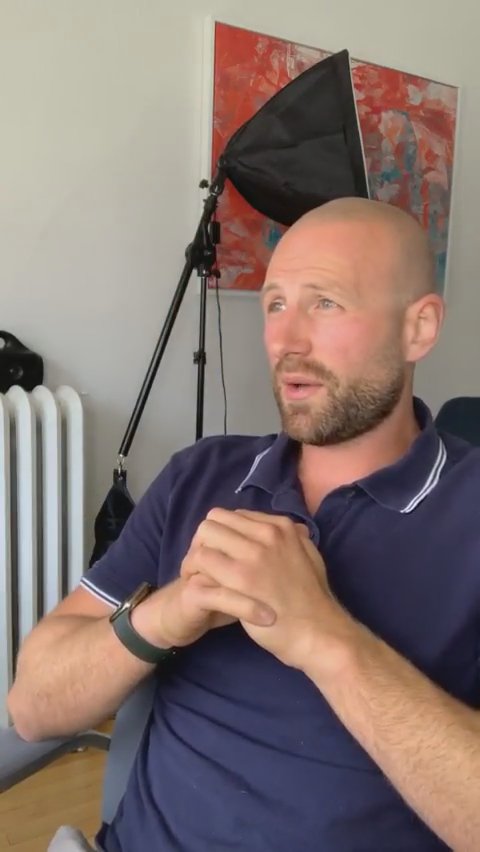
In this livestream I will talk about my opinion about the self-help industry and how to know what is a scam or actually legitimately beneficial information. I have benefited from self-help books and seen others that probably would do more harm than good. So come join as I give my experience and I want to hear yours.
There's a lot of self help books and not all are created equal. How do we discern what is a good, like, self help book but what isn't? And how we can recognize absolutist language. This applies to so many areas of life.
What I refer to as absolutist language versus probabilistic language. For example, saying always or you will good. This is basically anything that is like black or white, it's all or nothing. And we should steer away from using this type of language in communication.
These distortions often see how I use these words a lot. They often come back and fire against us. It could be a weapon for meeting our goals in an unethical way often. Or it could be used against ourselves to label ourselves. What works for me is not always what's going to work for other people.
What's up, Cadre fam? Welcome back. This is another episode of mental health matters where we discuss matters regarding mental health and because mental health matters. So today I'm excited to talk about a topic. I don't think I've ever talked about this before, and that's just regarding self help, not being that I'm your resident mental health and addiction therapist. Being in this field, there's a lot of self help books and not all are created equal. And that really goes for the overall wellness field in general.
There's just so many, and not just self help books, but programs. You know, maybe you'd find something from a YouTube creator, something with a. Whether it's a YouTube creator, someone just like any social media site selling their ten step program or videos, or you can do what's up, junk food junkie. And so there's just a lot out there. It's a lot to sort through. But so I want to talk about, you know, how do we discern what is a good, like, self help book but what isn't? However, that's just the surface topic because I want to talk about something deeper and more important within that is language and how from a communication standpoint, language could be used, good or bad, and how we can recognize this form of language I'm going to refer to as absolutist language and how that kind of associates with potential self help books or programs that you want to look out for.
But that applies to so many areas of life, whether it's politicians, medical professional like. I just find that this absolutist type of language is really associated with a lot of dangerous things out there, especially in the political realm. But anyway, before we talk any more about that, I want to break down what I refer to as absolutist language versus probabilistic language. And I'm talking about this because I just wrote, some people know I'm writing a book on communication. And so I'm writing a passage right now about these two types of language and why it's important to recognize and why we should steer away from using more absolutist language in communication, because there's a lot of drawbacks.
So let's talk about some of the differences. So first, let's talk about absolutist language. And that is basically anything that is like black or white, it's all or nothing. For example, saying always or you will good. Even saying something is good. So labeling something is good, something is evil, something is beautiful, something is your I am, or they are beautiful. Now, that doesn't sound like a bad thing to say. However, you know, sometimes labeling could have a lot of issues associated. So I kind of put that in the same category or even words like, absolutely, you must.
The best. It will are generalizing to a group what's going on. You're the best Cadre. Cadre is the best. It will. Catholics believe I am dumb. I am smart. Right. More labeling. And these are examples of absolutist language. It is, it isn't black, white. And the thing with this language is it's really easy to use it and it's really tempting to use it. And that's because for a few reasons. One, it's comforting if someone is telling me, something will happen. If you do this, this will happen. Right.
And you can start hearing like, you know, a politician saying, if you elect me, this will happen, I will do this, I will solve your problems. Right. Like, this absolutely will happen. And we're drawn to that kind of language because it's comforting. It's comforting to know that I'm going to be taken care of. And, you know, so whether it's a politician, whether it's, you know, a nutrition expert, if you do this diet, this will happen. Right? So it's comforting. Now, the other part of it is, it is attractive.
It is intoxicating. You can even think about it from like a partner standpoint of like, you know, just getting those promises, like, I will be there for you no matter what. I will take care of you. I will. And I mean, those are obviously good things you want to say, but a lot of times, there's just not a lot of truth in that, right? Because they're saying things absolutist. I will do everything for you. I will fulfill all your desires. I will take care, the biggest one. I will take care of all your problems.
I will. This will happen. So it's attractive. It's intoxicating. This is the language that dictators use, the ones that start violent revolutions. The language used to influence people, to manipulate people, a cult leader. These are all, these are all different elements, aspects, people that would use this type of language. And we're so susceptible to it. It's like built into our DNA for whatever reason, to have these types of certainties and being attracted to that. I don't know the exact reason.
If I probably sat long enough and could think of some evolutionary reason why this language is important, right? But maybe it's for categorization. It's black and white. It's the comfort in knowing what something is versus isn't. Where are the love defined boundaries? What are the boundaries of what is and what isn't? Now the problem is this doesn't work. This doesn't work well at all because it's not a reflection of reality. So now let's say the absolutist language has counterpart and it's a brother.
I'll just say for the sake of Arg has a brother and the brother is probabilistic language. And if the absolutist language is confident and sexy and attractive and charismatic, the probabilistic language is kind of the nerdier, a little quieter. Yeah, so kind of nerdy, quiet. Maybe not as sexy, maybe not quite, not as definitely not as confident. However, this type of language reflects reality, is much more accurate, it is much less activating of our primitive nature. Yet this language is extremely important, especially when communicating something like mental health or nutrition or medical science.
Now, very often things are and they aren't right, especially in the physics, mathematics, it can be pretty black and white. Something is or something isn't. However, even in those examples, we're not always right. Yeah, exactly. They would guarantee. Oh, that's a good one. I'm going to write that down. Guarantee, horrible word. The only good part about guarantee is if you say, if it doesn't happen, I will do this and you actually follow through, it's like, I'm going to fix your computer. If not, I'll give you your money back.
And if they actually do, that's fine. So that guarantee is fine. But you know, that's another great absolutist word. I guarantee this will happen. Right. And that's confident. And it's so easy to listen to that probabilistic language is more like it can be, you may oftentimes beneficial versus it's good, flawed versus evil. I believe probably you ought to instead of you must, you ought to, or it could be beneficial. It's the best versus it's excellent, it will versus it can potentially, let's see, the opposite of guarantee would be, well, there's a very good chance.
Catholics believe that example versus a majority of Catholics believe I am dumb versus sometimes I do foolish things, even I am smart, I have certain intellectual aptitudes, right? So you can see how this language is a little less certain, a little less sexy. However, it is more accurate because things are usually a probability. Things are usually in the gray, and even in mental health, we try to people away from that absolutist black and white thinking and language. We call that a cognitive distortion.
These distortions often see how I use these words a lot. They often come back and fire against us. Right? It could be a weapon. It's a weapon for meeting our goals in an unethical way often. Or it could be used against ourselves to label ourselves, to say we are all of one thing and another. Whether that is good or bad, it is a problem. And so that's one of the things I think people should look out for. Because let's say I'm writing a self help book, which I am, and I want to be confident. I want to inspire people.
I want them to follow through. And even if I have good intentions, let's say I. Because a lot of times, maybe it's not even malice, because let's say someone really believes in their diet. They're not a huckster, although this is the language of hucksters and con artists. But let's say I actually believe. I believe in my product, I believe in my way. I believe in my solution. I believe in myself. That's great. But the problem is, what works for me is not always what's going to work for other people, or what works for a lot of people is not going to work for everybody.
And even if something would work for everybody, maybe it's just not that easy to attain. You know, like, let's say I were to do a diet where I cut out a certain amount of calories. That's my diet. You cut out this many calories, and you do it in this way. If I did that, would that work? Yes. Would that work for almost anybody? Probably. Right? If I cut out 500 calories a day, very likely. Again, very likely, you would lose that weight, but not all the time. But even if so, it's not that easy to attain that.
Right. And so having someone who's a charismatic person who is telling you these guarantees, and they say that often will motivate more people to do that. So it actually could be a benefit if the program is, let's say, good. However, it's not being honest. And that person becomes more of a draw by using that language. Right. Just like a politician, they become, you know, if a politician comes up and says, look, if you elect me, there's a very good chance this could happen. However, you also have to elect, I need a coalition of people in Congress, so you have to vote for them, too.
And if we do that, we may be able to make. Right. You start getting into all that. People are like, this guy is just wishy washy and not going to get anything done. Versus I'm going to go in, I'm going to get this done. And yet we're so surprised every time. You know, we're all susceptible to this, right? I use that language, but I really do think we're pretty much all susceptible to this. Not that we all do this, but we are all susceptible except for maybe a very small few who are imperturbable in this way.
But for the most part, we're all susceptible to this. And yet we're surprised. We're surprised every time, you know, there's a promise made and then someone gets into office and they don't fulfill it doesn't matter what side of the aisle we're on, this happens all the time. But we still do. We still elect that person. We're still drawn to that. And when I say we'll more likely than not that individual who speaks in that manner. And it happens time and time again. So I guess the moral of this story is, whether it's in choosing a self help book or program or just in your life, how you speak to yourself, how you speak to others, how others speak to you, being mindful of that language and really putting your guard up when you start to hear that, when others start promising you these types of things, they may be right, they may be correct, and these things may be correct.
In your case, however, you just got to use a stronger filter and at the end of the day, just use critical thinking to the best of your ability and try to weed through some of that bias and your own bias and knowing what kind of things you're susceptible to falling into. So I hope that was a benefit in some way or another. But again, from a mental health perspective, you know, let's steer away from that type of labeling in absolutist language and lean more towards probabilistic language as individuals and as a society.
Anyways, folks, I hope you have a good day and got something out of that. We'll see you next week at this time and look out some more videos coming. Yes, that is another good example. All right. Anyway, take care. See you later, Mr. Junk food junkie, and we'll see y'all later.
Reactions and comments are for members. Joining is free and takes a minute.