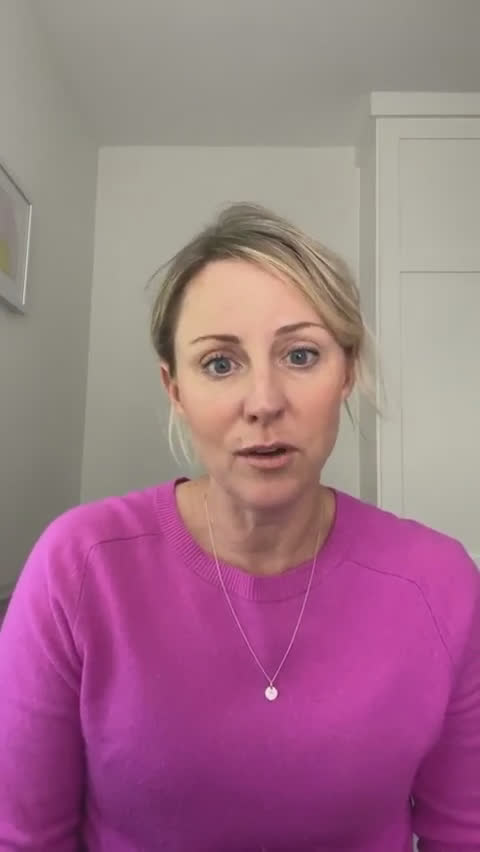
Join us to kickoff off our series - How to Stop Living in Survival Mode.
Shannon: Happy Monday. Today we are going to kick off a series. It's really about living, I call it living above zero, how to stop living in survival mode. The series will cover topics that are in my life.
The author has an anxiety diagnosis, a child with autism and panic attacks. Seven years ago, she realized that she was living in survival mode. In a new series, she explains how to get out of that state and into a place of safety.
This is a series about how you can take care of yourself. The first thing and how you know is to just pay attention. Notice that something's happening that's not in alignment with who you are. That's the first step to getting to living above zero.
Hey, everybody. Happy Monday. It is Shannon from aloud. It is 04:02 on Monday afternoon. I'm a little late today. m. But today's a Monday. So what happened, happened. Well, I'm so glad to see you here. I'm gonna give it one more second to see if anyone joins. However, I'm excited because, again, I'm Shannon. I'm from aloud and allowed exists to normalize talking about taboo topics. And so today we are going to kick off a series, and it's really about living, I call it living above zero, how to stop living in survival mode.
And I'll explain a little bit about what that means. And, yeah, this series is going to be a couple of things, right? It's going to cover topics that are in my life, things that have happened for me in different spaces, and, you know, parts of my life that are difficult to live through. But really, what it all started with is the acknowledgement that I was living in survival mode. All right, so we're gonna start. This is day one. I'll explain what it is, and then we'll sort of, as we go, explain how it's gonna work.
But, yeah, so really, I discovered a while back that I was living below zero. So what does it mean to live below zero? This is a self defined term. And just to remind everyone, I'm not a therapist. I am not a mental health professional. I'm a human who has an anxiety diagnosis complex post traumatic stress disorder, a child with autism and panic attacks when I was younger. So basically, mental health has been a big part of my life for a long time. I think for years I pretended like it wasn't. I was very type a.
I still probably am today, but definitely, you know, you just keep going. You push, you do all the things you have to do to get through. And I hit a moment about seven years ago, actually, I think it's longer than that now. Maybe it's eight years where my world broke. And what happened was I've been married for ten years to my husband. We had two beautiful children, two boys. I just finished my master's degree. We just bought a beautiful house. I had been successful professionally. I was fit and strong, and I had a handsome husband, and he was smart and everything that you could imagine.
And I remember at this moment, there was this moment in time sitting in my bedroom on the second floor of this, again, perfect house. We just bought, I don't know, nine months before, and saying to myself, is this all is this all there is? And I looked out the window. I'll never forget it. It was probably about 630 in the evening. It was a beautiful, a beautiful evening. And I looked at the trees out the window. We live in St. Paul, Minnesota, and there's beautiful trees and they were moving in the wind.
And I've always loved trees. Nature for me is sort of. Is incredibly healing. And I remember looking at them and saying, this can't be all there is. This can't be all there is. I've done everything I'm supposed to do. I've done everything that I should do. I'm successful, you know, according to the world. And I was manic and panicked inside with fear that this was all there is. Fast forward a few months, and I said that out loud. I'll tell you that extended story at another time. It's worth telling in and of itself.
But I remember the day I came outside and said to my husband, this thing is happening. I don't like it. And it's true and it is. And so I think at that moment I realized that I was living in a place that was not sustainable. I was living in a place where I was frantically trying to take care of everyone else, take care of my children, my husband, all the roles that I have taken on as a human being and realized that none of it was true anymore. Right? I was living in survival mode. And though it was an elevated version of survival mode, it still was barely getting by.
So living below zero, what that means to me is that there are times in life and times in your day and times in all of our lives, in weeks and hours, and all of the things, seasons of life, where we're in a state of. We're in an emotional deficit. For me, that manifests physically, mentally. I know it because my body starts to tell me, but I hit these moments where I can't go on. And living in that state for a really long time takes you down. And so one of the things that I believe for me, and I'm guessing for many of you, is that when we're young, we are taught how to take care of others, right?
We are taught how to be kind, and we're taught how to be polite, and we're taught how to, you know, treat others and defer to them. And I didn't know until I was 40 that I was deserving of that same level of care. I followed all the rules. I was type a. I did all the things to be a good person, to honor everyone around me. But I thought that care, giving care was for other people. It's not something I ever did to myself, which is why I fumbled through that day with my former husband seven years ago, eight years ago, and was unable to really articulate it.
And it's why I blew up my life, because I didn't know how to take care of myself. I didn't know how to get out of that emotional deficit and into a place of emotional safety. So this series, how to stop living in survival mode, really touches a couple of different parts of my life. Definitely. Number one, being a caregiver of a child with autism. My son's 14, and we've been doing it now for 14 years. And so that is a role that I will always have. That is a role that will never be off my plate, and that takes a toll again.
That's its own separate story, which we will get into at some point. But managing CPTSD, managing emotions, managing relationships. And I did a live a couple weeks ago, talking about a couple weeks ago, a couple of days ago, saying that. Saying that, oh, my gosh, my brain is dying today. I'm trying to say too many things. Ah, I forgot what it was. But that's okay. I'm living below zero right now, if you can't tell. And so this is what happens. Bodies start to shut down. So getting back to it, this is a series about how you can take care of yourself.
This is a series about me right now in this moment, knowing that this live that I'm doing is imperfect and starting to know how I can take care of myself and starting to know that I'm worthy of care just like everyone else. So I'm going to use what I learned in my time and the things that I went through, and I'm going to give you one step today. This is one thing you can start doing today. To start to be on that path towards living in a better place and living outside of. Outside of survival mode.
And that first thing is to know, okay, it's so basic and it's so hard, and it might take you a really long time to know, maybe you know, right now, but really what knowing means is you feel it in your body, you know it in your gut, you know it in your soul, you know that you're tired and you're fatigued and you know there's a misalignment somewhere within you and with how you're showing up in the world and that might be tied to things that you can't control. And that's life, right? And that's really freaking hard.
And it might mean that you're trying to live up to a standard or an expectation that someone else is putting on you or you're putting on yourself. So the first thing and how you know is to just pay attention. So pay attention to your stomach when you do things. Pay attention to the feeling you get. For me, one of the things that would happen is I get frozen. That's what I call it. I would freeze, and I would be in these moments where I was so aware of not wanting to disappoint those around me and so aware of the fact that I might be falling down in whatever role I'm assigned, that I would just freeze and I would feel nothing and I would get through it, and I would always defer to the other person.
My body knew it wasn't right. My body was telling me, like, this isn't. This isn't good. But at that moment, I didn't have the strength to do anything about it or didn't have the tools. So, step number one, you notice that you're not okay. Notice that something's happening that's not in alignment with who you are. And for this week or for this session, that's all you have to do. That's it. Write it down. Don't write it down. Just pay attention to it, whatever it is. But that's going to be your first step to getting to living above zero and to getting out of survival mode.
So, so much more to come. Next time I come, I hope I'm a little bit above zero more than this. I think today I'm probably a plus ten, which actually is good. Sometimes I'm a plus 50, and I know the things that get me there. So, yeah, so thanks for being with me, even when I'm, you know, in a lower state. We'll be back with more and lots of tips and ways in which you can live above zero, because you deserve to. You are awesome. More to come. Happy Monday. We'll see you soon. Have a great rest of your night, Cadre friends.
Okay, see you soon.
Reactions and comments are for members. Joining is free and takes a minute.