In this video we dive into what the medical model of wellness is and how it falls short or ACTualized growth and change. Through reframing our trajectory of pursing wellness, agency is reclaimed and achievable steps become apparent.
Cadre family, welcome back to week two of these pre recorded videos. Today, we're going to be exploring five reasons why we may need to reconsider the medical model of wellness.
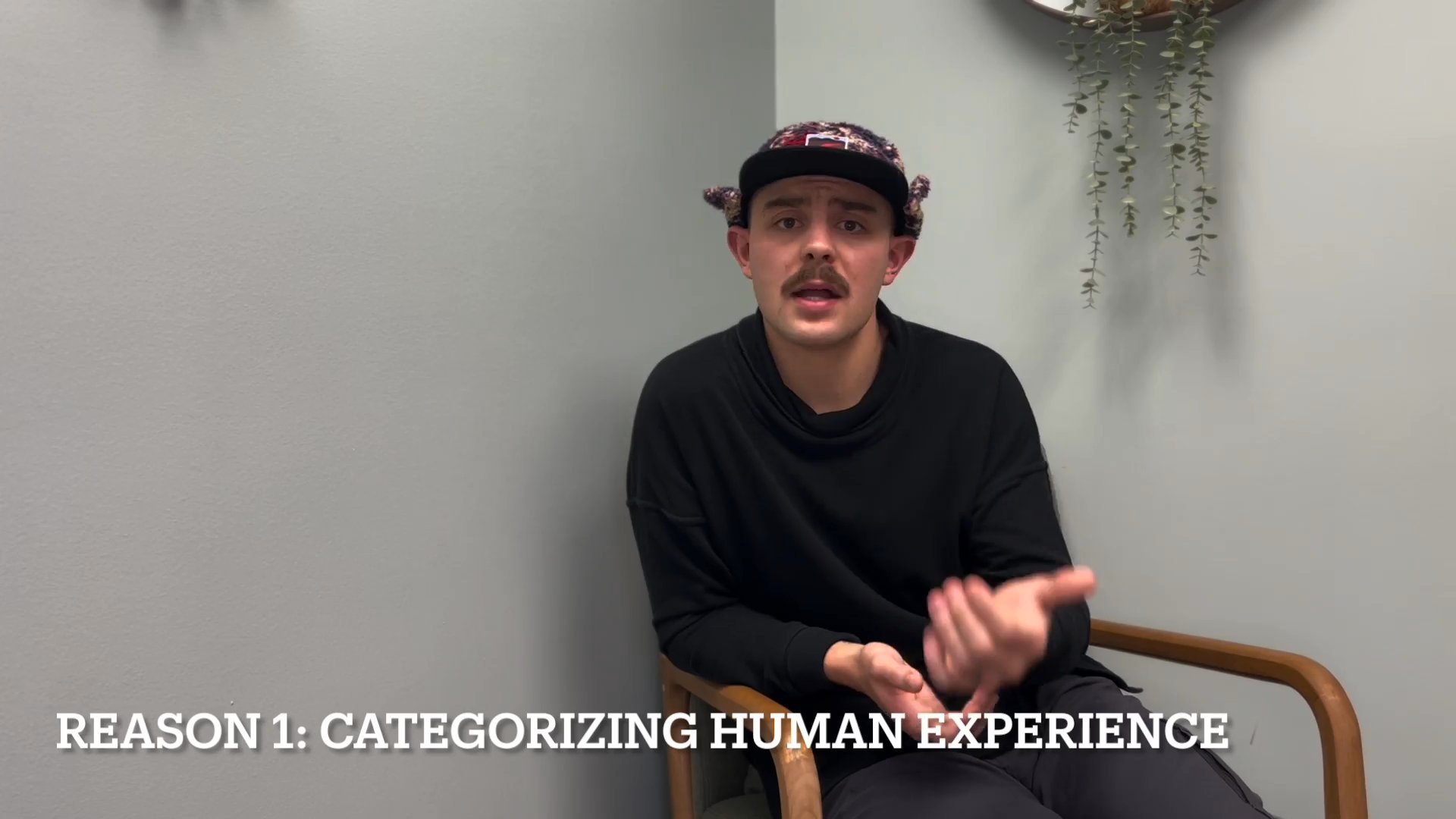
When we have a medical model of mental health, it is a necessity to put things into categories. It's awfully exclusionary of lived human experience. It forgets the part of life that is human. Sometimes our thoughts, emotions, experiences get in the way of who we are.
The medical model of wellness gets in the way of our ability to connect with others. Your mind is a tool. It has a purpose, it has a reason for being the way it is. Until you take action, until things actually change, nothing is enough.
Welcome back, Cadre family, to week two of these pre recorded videos. I'm excited to share with you today some exciting information that expounds on the video we started last week, which has to do with transforming wellness, rethinking what it means to be well. Once again. My name is Eric, clinical counselor, and my goal is to bring forth accurate, actionable mental health information and resources that are affordable and accessible for you. Today, we're going to be exploring five reasons why we may need to reconsider the medical model of wellness.
And before we jump into that, what is the medical model of wellness? Well, if we think about going into the doctor's office, why do we go there? We often go because there's an illness, there's something wrong with us. There's something that is making us not healthy. Right? So maybe it's a cold, that we need some medicine for an infection or something of that sort. And we internalize this idea of being well as being without the pain, discomfort, agony, comes with our physical illness. Now, that works great in the place where we can heal those things in the sense of suture up a wound or give a medicine to get rid of a bacteria, but it doesn't translate so well to our mental health.
And here's five reasons why. The first reason is that when we have a medical model of mental health, it is a necessity to put things into categories. And I'm sure you've heard them before, depressed, bipolar, anxious, traumatized. Now, although those phrases can be incredibly helpful in communicating sets of symptoms, ideas about maybe where this person is at in terms of the different possibilities of things they can be experiencing, it's awfully exclusionary of lived human experience. It forgets the part of life that is human.
The fact that we do experience anxiety, we do experience sadness, that we respond to the world the best way we know how, and sometimes due to environmental factors or otherwise, the ways in which we've learned to respond to the world, our thoughts, emotions, experiences, becomes more of a hindrance than the support gets in the way of who we are and what we're actually capable of doing. And this rolls into my second point here, which is that the medical model of wellness gets in the way of our ability to connect with others.
It's sidesteps connection between, because it puts forth this idea that perfection is the goal, that being without pain, being without struggle is where wellness is. And when I have an experience of pain, that's very much so blocking my vision of the future, and I look around and I see a lot of other people with smiling faces and happy and whatnot. All of a sudden, I'm on the outside. All of a sudden, I feel the need to put forth this person who isn't me so that I will be accepted. When connection is actually found in the parts of ourselves we often hide the most.
Reason number three. Reason number three is what is enough, right. When we have a medical injury or issue, it's usually fairly clear. Once enough, right? We have a broken bone. Well, we got to get that back in place and allow it to heal. That's enough, right? We're doing what is enough for the injury to no longer hinder our lives. But with mental health, with wellness, what is enough? And when we're constantly perceiving that our ability to be well, to be normal, to be healthy, is somewhere out there, nothing is enough.
And so we're constantly fighting for these different plateaus that we tell ourselves are going to be the answer, are going to be the solution to why I feel this way. That seems so far outside of the norm in my little category, apart from others, nothing's enough, number four. And this one's incredibly important because often it's understated and undervalued. It's often the reason why people leave therapy prematurely, or not even prematurely, but because they don't see anything actually changing.
And that's because we need actual actionable things in our lives that can contribute to us being. Well, imagine you're in my office, and we can sit here and go back and forth all day, pick apart everything. But until you take action, until things actually change, despite the myriad of thoughts, feelings, emotions, things going on in the background, that wellness is actually engaged, that we can see a part of our lives that feels more full and valuable, that we can be open to things changing and the flow of life existing without our need to control it and instead controlling what we can take action on, not what we cannot.
And this bleeds into our last point, number five. The reason the medical model of mental health and wellness needs to change is that your mind is a tool. Your mind has a particular function, actually many particular functions that have been honed in on your survival. It has a purpose, it has a reason for being the way it is, analytical, future predicting, or at least it believes so. Ability to keep you safe. It is a tool of our survival, but not a tool of our growth. And when we don't see our mind in that way, when we see our mind as a cesspool of all the things we hate about ourselves, and we try to extinguish all those parts of ourselves without seeing the use.
We're constantly at war. We're constantly unsettled. We're constantly out of this place that may be well. And so there it is. Five reasons why the medical model needs to change. I hope that those reasons resonated with you and maybe were a little bit convincing, because they're the very reasons that convinced me to maybe seek a change. I spent a large portion of my life pursuing the extinguisher of my anxiety that just left me scared, feeling vulnerable, and acting out in ways that wasn't who I was or wasn't how I wanted to act.
But it was all in the pursuit of something that I thought would be fulfilled time and time and time and time again. Join with me here again next week as we continue to explore these ideas around wellness. And this is just, again, the foundation of where we're going to be headed. Because eventually, once we have an understanding of why something may need to be looked at differently, we can implement how we're going to pursue those things in a different way. So I'm excited to have you with me and look forward to continuing to connect via this platform in the weeks to come.
Take care.
Reactions and comments are for members. Joining is free and takes a minute.