🦃Holidays can bring up a LOT for folks. From grief to anxiety to body and food, it’s important to prepare for these moments and equip ourselves to navigate what might arise. In this live we’ll talk about boundaries, grief, food, and more. Bring your questions, let’s navigate this together!
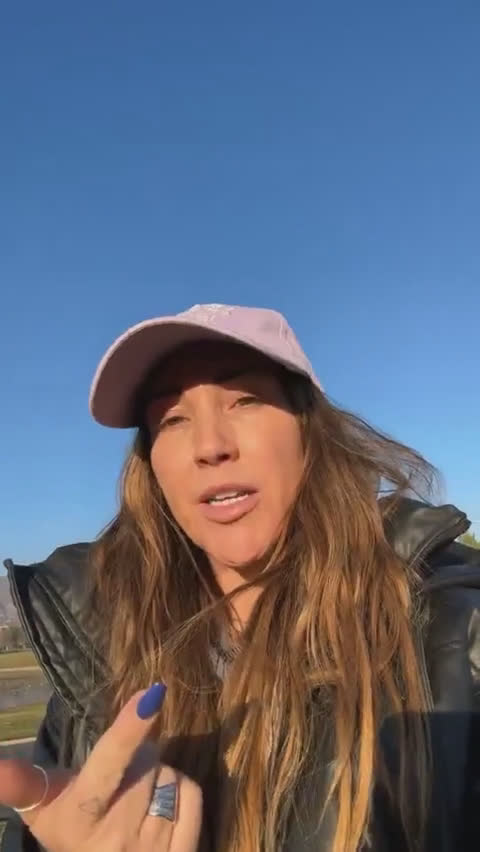
Cadre crew coming to live from Sugar House park in Salt Lake City. Thanksgiving can be a challenging time for anyone who has struggled with an eating disorder, with mental illness, with grief. If you have any questions during the live, live. Please feel free to drop them in the comments and I'll do my best to answer them.
The holidays can always be a time that really tests our boundaries. No matter where you are in your journey, have extra grace for yourself during this holiday. Think about maybe one to three boundaries that feel really, really important to you.
Grief is a time to talk to people we've lost. It's perfectly okay to experience extra grief this time of year. Find ways to honor this person, too.
You are the only person who chooses what goes in your body. Whatever you choose to do is fine. The challenging part about the holidays is there's so much narrative around. what we should do. Everyone is different, and they have a different history and different goals.
DJ Kur will be back next Wednesday at 03:00 p. m. ET. Please leave comments for what you would like to see him go live on next week or in the following weeks. If you have any questions, please do not hesitate to reach out.
Hi, Cadre crew. Happy Wednesday. I am coming to live from Sugar House park in Salt Lake City. It is a beautiful day here. I don't know if you can see the moon in the mountains. I just arrived. My dad and I drove here from Seattle to visit my grandma and my aunt and uncle for thanksgiving. So I'm gonna find a nice little patch of grass here in the park, and we'll sit and chat a little bit about coping with Thanksgiving. Thanksgiving can be a challenging time for anyone who has struggled with an eating disorder, with mental illness, with grief.
And so I just wanted to kind of chat today about three things. Oh, the air is thin here. Breathing hard. Rach. So I want to chat with you today about boundaries, food and body talk and thoughts and anything that comes up around food and body during this holiday, as well as grief and coping with grief. So. Hi, t vals. If you have any questions during the live, live. Hi, beautiful. Please feel free to drop them in the comments and I'll do my best to answer them. So let's start by talking about. Let's start by talking about boundaries.
So no matter where you are in your journey, whether you're just starting to set boundaries or you're a seasoned expert, the holidays can always be a time that really tests our boundaries. Because oftentimes we're around people that we're not normally with, and maybe we only see seasonally or once a year, which means that a lot of change can happen between the times that we've seen folks them again, which means we might have these boundaries that we've been practicing and setting for a year or months.
And now we're seeing people for the first time after a long time who are not used to those boundaries and aren't comfortable with them yet. And so sometimes boundaries that we have for ourselves or that we've set can feel suddenly like they're being challenged, even though they've been ingrained in us for a while as well. We might be setting new boundaries for the first time about whatever it might be, whether it's things that we want to talk about, things we don't want to talk about, you know, things that we might need to do for self care.
So this is just a gentle reminder that no matter where you are in your journey, have so much extra grace for yourself during this holiday. And notice if at any point you feel like your boundaries are being pushed against or maybe you're softening on your own boundaries because it feels easier than sticking with them. And I want you to just know that none of that means that you're doing anything wrong or that you're aggressing. It's kind of like asking yourself to do. To go for a run, if you're a runner, to go for a run.
Like in an ice storm. Right? Like, we're not going have a perfect run. It might be extra cold. We might have to slow down. We might have to stop. We might feel a little bit of extra soreness. And so it doesn't mean that you're not as good of a runner as you were. It just means that the conditions that you're under are much harsher. So please have extra compassion with yourself. This goes for anything, whether it's, hi, Gabby. Hi, Rachel. This goes for anything, whether it's with boundaries or anything else that comes up.
So what I like to do for these kinds of holidays is think about maybe one to three boundaries that feel really, really important to me. So run. What's that exactly? We're not doing that for a while. Hang on. I'm gonna lay down on the grass. I'm gonna get myself as close to the grass as possible. So I have found for myself that, like, having a few boundaries specific to the holidays or that feel extra important to me and just focusing on those rather than trying to make sure that I set and keep all of my boundaries.
So, for example, for me, for the holidays, like, one thing that I like to think about, too, is, like, there are differences between personal boundaries, boundaries that I create with myself, versus boundaries we create in relationships. And oftentimes over the holidays, we're around people that we might not have sustained or long term or frequent interactions with. And so I like to focus more on my personal boundaries. So those might be things for myself around, like, for example, because I have a history of an eating disorder, those might be things like my boundaries with food and body.
So that means, like, I'm choosing not to engage with conversation about food that has to do with, like, calories or amount or quantity or kind. So any conversation that I'm having about food is going to be about cooking, about how something tastes, about how something smells, about how I'm enjoying it. I'm choosing not to engage in conversation about what I'm putting on my plate, how much I'm putting on my plate, how much I'm eating, how much other people are eating. I'm not going to comment on what else anyone is eating.
And so those are some boundaries that I'm creating within myself, and that's within my control. And I can kind of. I can be mindful about that. And I also, you know, if someone is asking me, like, why are you eating that? Or, like, aren't you gonna eat any of this? Like, I'm allowed to say, you know, I'm choosing what I want to eat. Or, you know, this is something that I think would taste really good. Or, you know what? I'm not really feeling like I want to eat that today. And feeling like, you know, it's okay for me to say those things and have comfort in that and reminding myself that my.
My recovery comes first, because if I'm not, well, then it doesn't matter. Doesn't matter if I'm even here or not. So I like to think about my personal boundaries when it comes to the holidays additionally, like, certain things that maybe, for example, like, I'm not comfortable talking about. Right? So, like, knowing for myself, like, there are certain things that I don't want to talk to my family about, and that's okay. Like, if my family asks about my dating life, I don't really have an interest in talking to them about my dating life.
And so I might just. I might just create a phrase for myself. If someone says, like, are you dating? How is dating? How's being single? I have a phrase that I preset for myself so that if someone asks me that question, I don't have to fumble around with, like, people pleasing. That might come into my mind. Or, like, I have to answer this, or, how do I answer this? Or, like, ugh, what is the back and forth happening? I just can say, you know what? I'm dating, and it's been fun. And at the time, I'm just enjoying.
I'm enjoying other things in my life. I just have this, like, stock phrase that I use when it comes to something that I don't necessarily want to talk about. So thinking about stock phrases is really helpful as well when it comes to maybe fielding questions that we're not necessarily interested in having conversations around. So that's my little spiel about boundaries, is focusing on personal boundaries, picking maybe one to three that you're, like, focused on sticking with, thinking about stock phrases, and then remembering that you need to have extra compassion for yourself because you're a runner going through a nice storm, so the conditions are worse.
Okay. So the next thing I want to talk about is grief. So oftentimes, and I actually, this is not something that I was prepared to deal with until after I got divorced was the feeling I would have when holidays would come around for the first time after getting divorced and having my first holiday experience without my husband was pretty. Was pretty alarming and pretty distressing. The same is true if we've lost somebody. If we've lost someone to death or maybe perhaps to illness. Sometimes people can't be present because of an illness, or perhaps they've lost cognitive abilities or physical abilities.
And so there is some loss around what, you know, how a person presents or shows up and. Or we've lost pets, or we've experienced the loss of a job or whatever it might be. Holidays can kind of bring up the absence of these things that we once. These things are people that we once shared those times with. So allowing yourself, again, extra compassion for any grief that comes up and also knowing that it's perfectly okay. I know it doesn't feel good, and it's perfectly okay to experience extra grief this time of year.
Everything is extra heightened and sensitive. So my invitation for anyone who experiences any grief or anticipates experiencing grief. Number one, talk to. Talk to them. If it's a person, talk to them. Like, I'm not. I don't. I'm not someone that prays at all. And grief is a time to talk to people we've lost. And so I literally will find a way to find some privacy, whether it's in my room, a bathroom, taking a quick five minute break outside, and, like, literally speaking out loud. Hey, so and so, I really miss you right now.
We're about to have dessert, and I just remember how we used to make pies together, and it's really f****** making me miss you. I wish you could see what grandma is like right now. She is still full of life, even though she's not able to move as much. And f***, man, I just wish. I wish you were here to see it. And so just talking to them, right. I find it's really sad, and it can bring up a lot, and it can be really cathartic to give yourself the opportunity to vocalize to this person that you miss them.
If the grief you're experiencing is not about a person, or perhaps it is, you know, it's a person, but they necessarily don't miss. Like, sometimes we. Sometimes we still grieve people that we don't necessarily want in our lives anymore. We can grieve people that we no longer want to have relationships with. So maybe we're estranged from a family member. Maybe we went through a breakup or a divorce, and we know it's not someone that we want to be with anymore. And the absence of them still brings up grief.
Allow yourself to talk to talk to somebody else about it. Allow yourself to call a friend, allow yourself to text. Allow yourself to write things down in a diary or a notebook. One of the most important things that we can do is really process things outside of the mind and get them out somewhere into the world, whether it's on paper or in a phone call. So making sure that you have an outlet so that these things don't just ruminate in the mind and that they can kind of come out into fruition. And then the other thing I would say about grief, too, is, like, you know, finding ways to honor this person, right?
So if it's a family member that used to be there, maybe it's like setting an extra little setting for them at the table. Maybe it's pouring them a glass, glass of wine or juice. Maybe it's, you know, like, I used to always like to decorate on Thanksgiving, and I would make name tags for everyone. Maybe it's just having an extra name tag for that person that used to be there and taking. And just taking a moment to find some gratitude for that person and what they used to represent. Maybe it's honoring a tradition they used to have.
Right? Maybe if it's someone who always was the one to do a toast or to instigate a game night. How can you keep something alive that this person used to do that you can, by still being here, keep alive. So just being mindful again that, like, you know, grief might come up and if it strikes you unexpectedly, try and talk to someone about it. If you can text, just text a friend and say, hey, I just got hit with this wave of grief, and I was not expecting it. You don't have to say anything. I just needed to tell someone.
And sometimes the act of doing that can be. Can be relieving alone. Rachel says thanksgiving was always my dad's day. I don't even like to acknowledge it anymore. Not avoidance, but it isn't a day I celebrate anymore. Rach, thank you for sharing that with us. And, like, that can be a. That can be a really hard thing, too. And, like, a certain holiday is really representative or indicative of a person we've lost. We sometimes are. We sometimes choose not to celebrate it any longer because it doesn't feel celebratory.
And. And so I think, you know, like, you get to decide this is. There's no right way to do any of this. If it feels. If it feels good for you, if it feels healthy for you, if it feels healing for you to choose not to celebrate it right now, that's okay. You don't have. There's no. Again, there's no right way. It doesn't mean that it'll always be that way or it will. There's no black and white about it. You just. You get to decide at each moment in time what feels good for you. And again, like, I'm glad that you're here, and I'm glad that you're talking about this.
Thank you for last week, for asking that. We talk about grief around the holidays, because I think it's a really important thing, and I'm proud of you for stating your needs and for being here and being in a supportive environment. Okay, so the last thing I want to talk about is food and body and this. And in this way, like, you know, again, this is. There is something that has to do with boundaries. But I also just want to talk about the fact that you are the only person who chooses what goes in your body.
You are the only person who chooses how to move your body. Nobody else gets to dictate that but you. So if that means that. If that means that's it. Period. There's no, like, you know, if that means that what you want to do is. Is, you know, have all the food that's presented on Thanksgiving. That means you have all the food that's presented on Thanksgiving. If that means that you want to eat in ways that you know are gonna fuel your body, and because you have certain allergies or intolerances, then you do that.
Whatever you choose to do is fine. You get to choose, and you get to choose only. The challenging part about the holidays is there's so much narrative around, especially with Thanksgiving. There's so much narrative around, well, Thanksgiving is a day that we. That we eat a ton, a ton. A ton of food at dinner time. Meaning we either don't eat all day long or we eat less all day long, or we get a lot of movement in the morning so that we can prepare for all of the food we're gonna eat later. And this can really create a lot of self doubt around our own intuition around what is good for our bodies.
I used to get really caught in the trap of, oh, today is a day about eating as much as I can at Thanksgiving dinner time, which means I have to follow this sort of, like, idea of. Or ideology of fasting or starving myself until the meal, because that's what we do. That's the. That's the thing. And all that did was feed into my disordered eating. It fed into this idea that I had to earn my food, that if I wanted to eat more at a certain time, I had to eat less at a prior time to prepare for that, that I had to exercise to compensate for the food, and I really had to unlearn that.
And now, on Thanksgiving, this is what I do on Thanksgiving. I eat breakfast like I do every other morning. I eat lunch like I do every other day. I eat a snack in the afternoon like I do every other day. And then I have Thanksgiving dinner, and I eat whatever the f*** I want. And sometimes that means I have a plate that's the size what I would normally have for dinner and dessert. Sometimes that means I have three servings of mashed potatoes and three pieces of pie. Sometimes that means I don't really feel like pie this time, but I'm having wine.
Whatever. Whatever. It is a nice, special meal that I get to enjoy with my family, and I want to have. I want to enjoy it the way I would any other meal, like a dinner party with friends. I do not have to compensate for that meal. I do not have to eat less beforehand, and I do not have to exercise more. And that's me, right? That's me. Someone who's come from a history of disordered eating and eating disorder pathology. You have your own history. You are on your own path, and you're on your own journey, so you get to decide what feels right for you.
And, you know, and I think that that's a really important thing to remember, too, because I think a lot of times, you know, there's so much narrative around what we should do, and there is no should because everyone is different, and they're on a different path, and they have a different history and different goals. So I invite yourself to think about, what are my goals? Not with thanksgiving, but in life. What are my goals? What are my values? What's my history? And where am I vulnerable? And then by having some awareness around that, that's where you make your own personal plan when it comes to food and movement.
Not a plan that you should do, not a plan that is healthy, not a plan that is recovery oriented. If you're not in recovery, you're gonna have a different. You're gonna have different needs, right? If you're not an eating disorder recovery, you'll have different needs. If you're not actively focusing on sobriety, you're gonna have different needs. Right? If you are actively focusing on sobriety, you're gonna have different needs. So being really, really. Remindful. Remindful? I was gonna say mindful.
I said remindful. I kind of love it. Okay, so you're gonna be remindful. Wow. This salt lake, this salt lake air is really getting to me. You're going to be really remindful that it's your body. Okay, so take a moment. Take some time this afternoon, this evening to check in with your goals, your values, what you're vulnerable to, and your own history, and then allow yourself to make choices based on that. So. And that being said, no matter where you are, I promote feeding yourself, so please eat.
I promote hydrating, so please hydrate. And movement is lovely. If you can get outside and get touch some grass, do it if you can. And also just, you know, remembering that hopefully, hopefully you get the opportunity to connect with people. And if you don't, you can always send me a message on Instagram. I don't think we can do live or we can't do like, DM's here on Cadre. Hopefully maybe someday soon, but you can always send me a message and say, hey, Rachel, I have no one to connect with today.
Can you send me a silly meme? And I'd be happy to. Okay. That's what I have for you all. And I am now going to walk to my aunt uncle's house and spend some time with them. And then we're all going to have dinner and wake up tomorrow, and I'm going to have breakfast, and then I'll have lunch, and then at Thanksgiving dinner. If you have any questions, please, please, please do not hesitate to reach out. Feel free to. Hi, DJ Kur. Please feel free to leave comments on this video for what you would like to see me go live on next week or in the following weeks.
m. I'll be back in Rachel's room. And that is all. Sending you so much love and gratitude. Thank you for being here. Thank you for committing to your well being. Thank you for committing to community. I adore you. I'll see you next week. Bye.
Reactions and comments are for members. Joining is free and takes a minute.