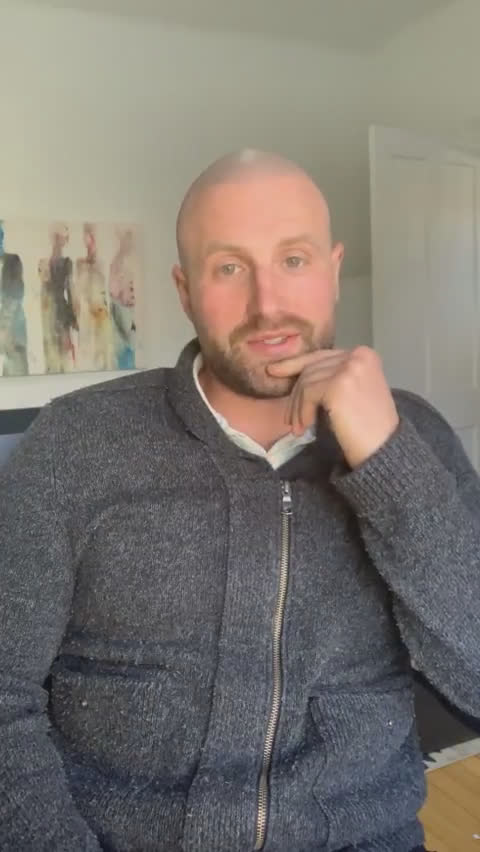
In this Livestream, I will talk about the topic of work burnout. The causes, symptoms and solutions. So come join the topic and share about your experiences with feeling stuck at a job and what you did about it.
This week's Mental Health Matters focuses on work and work burnout. There's a direct tie between mental health and stress. Find co workers that have the same interests as you to make the job successful. If you want to share your experiences with that, JFJ or Almeo, seven seven.
About 70% of us employees experience work related stress in the last month. Building routine, setting boundaries with yourself and your remote can work wherever. Continue to find a sense of purpose when you're retired.
86% of full time remote workers have experienced burnout at their current job. You would think being fully remote is going to relieve a lot of stress. There are some issues on the other end that do actually make it a little bit hard.
In remote workers, 48% of remote workers feel no emotional support from their employers. 76% ofremote workers say workplace stress affects their mental health. 40% say being unable to unplug from work is their biggest challenge. Here are some solutions.
When you don't have someone looking over your back, watching over your shoulder, it's easy to see how someone's productivity could go down. And I do find that some people are just not cut out for that. It really takes more internal motivation to find those things to do.
Idea for subject next week, since it's Christmas, how to deal with holiday depression. And to address Almeo, which is really important too, is like that work life balance. We should take pride in the work that we do.
When I was in, I was living in Australia for half the year, some of you know, and it was really interesting. They really like living life and not making work the number one, but also prioritizing their health. Oz is Medicare for all so people can work jobs they like versus jobs that give you medical.
You cannot single someone out because of the healthcare benefits. A lot of agencies are hurting because of those wages going up and then the actual payments of the services aren't too. Even if you're compensated super well, if the job's not fulfilling, you're going to be dissatisfied.
Hey, folks, welcome to another episode of Mental Health Matters, where we discuss issues around mental health, addiction. And because mental health is important, it matters anyways, every other week we do a topic. Every other week we do a ask me anything. This week is a topic. And so I thought I would talk about something that impacts just about everyone and talking about mental health in the workplace. So focusing around burnout, and I've talked about this in the past, but I think it's really important.
I have more and more people asking me about it. So I thought today I would go through some of the statistics about work burnout, but also some of the additional problems, but also solutions as well, of things you could think about if that's something you're experiencing. Now, when I do a mental health assessment or an addiction assessment with somebody, some of the first things I ask is just about their life in general. And it's really, I'm trying to get a cross section of someone's life. And instead of me just asking, oh, what are your mental health symptoms?
And do you have bipolar symptoms? How much substance do you use? Just like very direct mental health questions. Some of it is just getting to know the person. And one of the reasons that's important is because there are all these different things in our environment that can contribute to stress, which then contribute to your mental health. There's such a direct tie between mental health and stress. So it's important to see what those are, because these are some of the issues I would consider low hanging fruit.
Because, like, let's say, unwinding and processing childhood trauma and dealing with genetic predispositions and medications for depression or other disorders, it's a little more complicated, takes a little bit more time. But if, you know, our goal is to run a marathon. Oh, hey, junk food junkie. It's been a while. So it's like, if our goal is to go for run a marathon or go for a big hike up a mountain, and the first thing we do is say, okay, well, what's your equipment looking like? All right, you don't have any shoes.
You have rocks in your backpack. These are like low hanging fruit or things that we could fix to give you some immediate relief. And then the training and the technical aspects of climbing the mountain and getting that cardio conditioning up, that takes time, but it's very doable. So some of those initial things, off the bat I'm looking at is for stressors in someone's life. And so one of the big areas is work. And that is because 8 hours of our day. I'm just saying, on average. Seven, nine. What up on Mayo?
Seven, nine. Oh, there's a mountain emoji. I'm in that mountain. So it was a good metaphor. So, yeah, seven to 9 hours, let's say, on average of our days, five days a week are spent working. That's a big chunk of our waking hours. And not only that, our work is so important for our basic survival, getting our basic needs met. So having insecurity at work or am I going to lose my job? Having those or even just worries tied to that is going to impact your functioning overall. So that's why it's really important, I think, to assess that with folks.
So, yeah, so for those of you who are here, you know, feel free to share a topic. Is work and work burnout. And so if you want to share any of your experiences with that, JFJ or Almeo, seven seven, if you all want to share your experience with that, that'd be awesome to hear. I just got to remember I got to wear the dark clothes on the live stream so I could read the words on. So we learned a long time ago that to find co workers that have the same interests as you to make the job successful. Well, that's interesting.
Yeah, I mean, I think that's a really important part, too. Is your coworkers, who are you working with? Do you have good working relationships? Because, you know, like I heard once, what makes a job a job is if they didn't, is if they didn't pay you, you probably wouldn't do it, right? And even if you enjoy your job, hey, car jazz. So even if you enjoy your job, you know, many of us probably wouldn't do it or put as much time into it if we didn't get paid whatsoever. Right? Maybe it's such a passion, we volunteer, but usually not 40 hours a week for nothing, especially if we have bills to pay.
So that's what makes a job a job. And so there's going to be stress with it. And look, if our job, sometimes, if your job is too easy or your life is too easy, that could actually create some issues. Like humans, we need a struggle in some ways, but it's just a matter of how much people say, oh, man, it'd be great to be fully retired, to do nothing. Hey, what's up, Speakwater? So again, folks, come in, we're talking about work and work burnout. So, yeah, again, like, let's say it'd be nice to be retired.
It'd be nice to not have to work or worry about money. And, yeah, that's absolutely true, especially if you're in a really stressful situation. But a lot of times when people hit that retirement age, they're like, what the h***? They lose this sense of purpose. As human beings, we typically like a challenge. It promotes our self esteem. It gives us purpose, something to do, or as Karjaz would say, our icky guy, our japanese word for a sense of purpose. So, yeah, so that's really important. Right, too.
That's one of those, let's call it, like, a protective factor. Like we say, a protective factor for mental health. Well, a protective factor for your mental health at work would be having a good set of coworkers. Now, we can't always choose that, but maybe making, you know, taking effort to make better, deeper connections with those who we kind of already like there. So here's some statistics about work burnout. Are you retired? So I'll still have friends that work. That's awesome. How do you feel being retired?
What do you do to occupy your time? I think that's one of the big things when you're retired, is to find. Continue to find a sense of purpose. And that could be just spending more time with your family, grandkids, hobbies, to keep you occupied in purpose mode. So overall, so about 70% of us employees experience work related stress in the last month. There was a survey from the APA, American Psychological association. So 79% work related stress. Okay. And that makes sense. Everyone's gonna have some stress, but I guess the question is how much?
If someone's probably saying yes, that may be more than what they would like. So that's pretty high. It's 80%. Building routine, setting boundaries with yourself and your remote can work wherever. I love what I'm doing, but I've had a hard time making time to rest. Yeah, that's important. So, actually, I'm going to talk about here, too, and I'll just maybe skip to that. So remote workers. So 86% of full time remote workers have experienced burnout at their current job. And that's interesting because you would think being fully remote is going to relieve a lot of stress.
I mean, you have a little bit more freedom. You have someone literally looking over your shoulder in the cubicle. You're not necessarily driving. You're in that commute with traffic. But there are some issues on the other end that do actually make it a little bit hard. You work hard doing honeydews for your wife. Well, that's nice of you. And that should keep you plenty busy, make her happy. So mental health impacts. 76% of remote workers say workplace stress affects their mental health. Okay, I guess that makes sense too.
But I think one of the things that I heard. Here's some more. In remote workers, 48% of remote workers feel no emotional support from their employers. 40% of remote workers say being unable to unplug from work is their biggest challenge. And so sometimes, again with the remote work too, it's hard to disconnect, especially if you're like working from home, the lines sometimes get a little bit blurred. So I'll give you an example. Since the pandemic, I've worked fully remote. It's hard to imagine going back and not doing that.
You know, it's enabled me to do some very cool things, to do some traveling, spend more time with my dog. So there's some benefits and I cut back. I put on a very few miles on my car. I only put on like maybe like 6000 miles a year on my car, you know, so that my car's probably thankful, you know, so there's all these benefits, but at the same time it can be difficult and it was definitely a learning experience. Right? Like I think like certain, like so like you said, habits and routines. I think that's a really good point that it's really important to have habits, routines, boundaries as you said, as well.
Like things I learned is probably best to avoid wearing sweatpants. Like I try to at least dress for the job. You know, I'm on some Zoom meetings now and again so you know, I want to still look like somewhat professional. Sometimes I'm wearing like workout clothes because I like to try to get a workout in the middle of the day a lot of days. Sometimes like in the early part, you know, 910 or you know, or like midday get like a 30 minutes real hard workout in. Do that at home. I've always done, I've actually always done home workouts but get a good hard home workout in.
That kind of gives me some energy through to push through that afternoon, you know, that afternoon post lunch sleepiness, you know, but trying to dress the part, you know, I'm lucky I'm able to have a separate office space. So usually when I'm in here I'm usually in work mode and then when I'm out there I'm kind of in home mode. So JFJ noticed that a lot of remote workers from home get burned out because to go log into work servers well under the weather today. So when it's not there hours to work because they feel the need to complete the task.
Yeah, you know, that makes a lot of sense. I've heard that as well. There's just a lot of really different issues that you're kind of dealing with, you know, technology wise and with support as well. So, yeah, remote work, that's definitely its own specific category, but, yeah, so having those habits, those routines, I try to, you know, get my b*** at the desk at a certain time. I try to, you know, be diligent. I probably do this anyway, but be diligent about having a list of things, goals to accomplish, because it is easy to get sidetracked.
I try to go for walks, you know, before work with the dog. Or if I don't exercise, maybe I'll go for a longer walk for 30 minutes at midday, turning off. And then I have some of these projects, like I do with the social media piece, writing, all these kind of passion projects. So I spend a lot of time doing those. But I typically try to get out of the house. So, like, especially here in the winter, over the past couple days, I'm diligent. Even just. Even if I'm not, like, necessarily talking to anyone, I just go to the local coffee shop and get a change of scenery, at least get out of the house, especially if I don't have plans that evening or dinners or whatever.
So those routines are important, just probably, as they are important for any type of work you're doing, to have those routines. So what are some solutions? And I'm going to have a video coming out about this here quite soon. But if it really becomes an issue where you're, like, on the borderline of, like, I can't take this anymore, my mental health is so bad. Work is a big part of it. It is important, if possible. I know that it's not always possible if this is the only job I have to do this job, even though it's a bad environment, you know, finances, it's just not feasible to just go find something else.
And I get that that's the case. Sometimes when you're in that mindset, though, that may not be the case, and that there's just a fear of change. Yeah, yeah. Dressing for the job. So there's that fear of change. And so it's like a resistance to looking into other things, but also having that fear of having that conversation with your boss, of just being honest where you're at. I was actually having a conversation today with a friend where we talked about maybe having her do that because of some significant life stressful situations where she's burning out physically and emotionally, more so because of changes of what has happened in her personal life.
The job hasn't changed, but it always was a very, you know, high, high productivity type job, you know, just like very. Or demanding, I suppose a pretty demanding job, which she enjoyed, but then life circumstances happened where she was not able to keep up and worried about losing it, you know. So we talked about, what would that look like to have that honest conversation or maybe take some time off or to take some pto or a leave instead of just sticking in it and doing, you know, half work and maybe it's affecting your reputation and people don't really know, or they just think you don't care or something.
But to be open about it and, you know, normalizing those conversations and maybe taking some time off and coming back, you know, with a little bit more recharge, some of those conversations could also lead to finding solutions. Right. Let's say situations at home have changed. Maybe you could do part remote work. So I think a lot of people are pretty happy when they're able to do that or they appreciate going into the office, but also having that flexibility of doing some remote work. So I think that's a solution.
And it could be like a change in the task you're doing, whether it's being put, put on a different project or doing maybe a slightly different role. You know, I always had a teacher who talked about this and burnout in mental health workers, which is very, very high, you know, or she always was a wise sage, and she recommended, like, you know, switching up some of the duties where it's like, maybe if you're doing group counseling, you could do more assessments for a while, or where she. That's how she started teaching.
So she was able to have, like, a diversity of roles within the same field that she could do within her scope of practice. And, you know, her background enabled her to do some of these things. So basically, keeping it fresh could be something positive to come out of those conversations as well. But, yeah, and sometimes, like, kind of in its worst case, it could be trying to find something else. And that doesn't necessarily. It doesn't necessarily mean just quitting or even having to quit, but sometimes, like, looking at other opportunities.
Let's see, Evan, I thought about this ever since our kindergarten through high school, we were trained to be social bees, and that is hard on remote workers to not have that atmosphere. Yes, that's very true. One other thing I've done with other remote workers, I've done this a few times and wish I'd do it more with some of my other friends is like, we would do, like, co working. So sometimes people will come to my place, I'd go to their place, we'd all have our little nooks, and we'd co work together, you know, and then, like, get lunch together, have a little.
Take a little time to goof around one friend where we would do this. But then we realized we're just so unproductive because we would just shoot the s***. And so we're like, okay, we got to set boundaries. But, okay, you and I, we're going to work. Let's work hard for the next hour, and then let's take, like, a little time, 20 minutes, and just goof around and, you know, just talk about whatever we want. Then we get lunch, right? So then you could say again, that's about those boundaries. Because when you, like, in these situations where you have too much freedom, you may have too many boundaries.
Or if you have too much freedom, freedom, you need to set more firm internal boundaries for yourself. These core boundaries, I sometimes call them, but these limits that you set on yourself in order to be more productive, to reach your goals, not to just fall into lying on your impulses. It seems like the culture we built around work has led to this ideal. Overworking and needing to put work above our needs will be good to find a balance in reframing the mindsets we have about work, scheduling playtime.
Yeah, I think that's good, especially with folks like myself who have ADHD and really struggle with this and setting boundaries, but really doing some time, blocking throughout the day and being sure to schedule some rewards and treats and some. Sometimes I'll do that where it's like, okay, if I can knock off this, this. This task, I'm cool to go, and I'm gonna go listen to a podcast. So sometimes, too, like. Like, let's say it's like I'm like, kind of having a slacker day, and I'm like, all right, I'm gonna go for a walk.
You know what I'll do is I'll put on a podcast, but I have some, like, more business work, like self improvement professional podcast. Like, all right, it's within work hours. If I'm gonna listen to podcasts, I'm gonna listen to this one where it'll, like, serve some type of purpose. So just try to set any rules you can, because when you don't have someone looking over your back, watching over your shoulder, you know, it's. It's easy to see how someone's productivity could go down. And so that has been an issue.
And I do find that some people are just not cut out for that. And everybody says, I don't like being micromanaged. I don't like having someone look over. But then you put them in a situation where they're not, and they just aren't able to succeed. Right. And then they complain and say, I'm not giving enough direction. You know, it's just. But it's really hard to self motivate. Maybe that is the case where they don't have enough direction or something. But, you know, it really takes more internal motivation to find those things to do and to do what's already tasked to you.
Idea for subject next week, since it's Christmas, how to deal with holiday depression. Oh, that's a good one. Maybe we could do that next week because it'll be the AMA. So maybe we could, maybe I could change it up and we could do AMa holiday edition. I like that. I will, I will address that. That is actually really good. I like to do something, whether it's a video or, you know, whether it's at work. My clients talking about the holidays, I feel like from Thanksgiving to New Year's is like this absolute high risk time, especially for those addiction clients that I work with.
So what else? What else? Yes, I was another, I was talking to a friend and I think one big element as well is like how somebody is appreciated because people are able to work hard and are okay with that. But if they don't receive that kind of appreciation, sometimes that could be more draining. Oh yeah. And to address Almeo, your statement above, which is really important too, is like that work life balance. And I think it's an important thing, is the balance. You know, I think it's okay to have your work take on a level of importance and we should take pride in the work that we do.
I think we should, you know, meet our expectations of what we put promised. You know, if you're in situations where they're not living up to their end of the bargain, that's a whole nother story. But, you know, I do, I do believe in that. And I've been in certain situations where I'm like, okay, maybe it's not ideal anymore, but I'm gonna, you know, I committed to doing this, so I'm gonna stick it through. And then once that's done, I'm gonna move on. Maybe it's just not worth it though. So when I was in, I was living in Australia for half the year, some of you know, and it was really interesting.
It was like a culture shock in some ways. So shocking. But there were some interesting differences. And my brother who's there, you know, kind of gave me a lot of insight, too, into, you know, him living there now and being a citizen, some of the things that he likes, right. Is that work life balance that, you know, folks there, they work hard, but it's not everything to them. And they always try to make time to usually, like, go surfing or something like that, right? Like, go surfing, do something outside.
They have hobbies, activities. They're really big about getting into nature, camping, getting a camper van and just driving. Really like living life and not making work the number one, but also prioritizing their health. And actually, that's another big one, too, that I recommend that I talk about in one of the videos I made is that prioritization of health as number one. And that includes mental health because, again, it's some of those circumstances outside of work that can make work more stressful and unbearable.
Like, for my friend, I was saying before, is fine for her, but the problem was that her home life was a mess and, like, all these things are chaotic. Therefore, of course, you have less sex. She can't do what she needs to do or have the capacity to do it and then have the fear. And so, you know, therefore, she's not going to be as, you know, happy about that. So. Yeah, so taking care of that, going, you know, making sure you're getting enough exercise. So which brings us back to what I talked about at the beginning, which was, like, when I do the assessments of folks not just digging into the mental health but looking at what they're, you know, what that snapshot of their life and where there could be other areas of stress.
So some of those things I look at is, you know, their relationships romantic or just family, friends, do they have close connections? Do they get enough sleep? Are they taking care of their health? And then the big one, too, is the work life. So again, those low hanging fruits. Exactly. So, junk food junkie, my man. I think you're on the right idea. So car jazz, too. I believe she's. Believe she's making a trip to Oz in January. So Oz is Medicare for all so people can work jobs they like versus jobs that give you medical.
Yeah, that's a very good point, too. Yeah. So you're not necessarily tied to a job based on solely the benefits. So if you're able to work part time or find other situations, you know, or maybe it's starting up a business or you're able to take more, more risk because you're not so tied to the benefits in healthcare. So that is a big stress relief too. And then again, too, if, like, you're someone who has a lot of health issues and the healthcare system here is not meeting your needs or just so expensive that it's, you know, know, gonna cause undue stress.
When I was there, I went to the doctor. I was actually picking his brain a little bit because I think he'd spent some time in America and he worked in the UK as well. And I think he was kind of comparing, and he's like, he's like, you know, the US has the best healthcare, but not, like, not good coverage, and it's just really expensive. So for a lot of people, it's not very accessible or it's too expensive and therefore not as accessible. But if you're trying to find, like, the best specialist in something, you know, I guess we got to give ourselves credit for that.
But it just, you know, it doesn't necessarily equate to better outcomes as a whole. And it's just money, money, money. Too expensive. Yeah. So covering those things, the internal switching, your external circumstances, and I think a big thing too, right? That goes back to that appreciation, you know, working for those who you could tell appreciate you, even if the job's hard and you're putting in those extra hours and it's something maybe you're passionate about, have purpose about, you're able to tolerate more, still feel okay.
That's what I found. You're able to be in that stressful situation. So for me, as a healthcare worker and being in these situations, like working in hospitals, psych units, working in treatment centers with really sometimes difficult populations, a lot of mental health and issues with criminal, all these things that could, you know, having a caseload of 18 clients and with all these chaotic things, they're okay with that, right? They signed up for it. Maybe they even as healthcare workers, like a little drama and chaos, be lying if we didn't.
But then when it comes to the organization not feeling supported and then not getting paid what you believe you deserve, now, maybe your beliefs are delusional, little Delulu, as they say nowadays, but, you know, very often you may be underpaid. I had a so, like, in my field, right, with addiction counselors, let's say. Like, when I started in the field around, let's say, looking at my first job, 2014 or so, I took a job for like $21 an hour. And that was, like, pretty good because some people were getting, like, 1819, you know, now, you know, the bare minimum for even someone that's, like, not even bachelor level would be like, at least 25, 26 an hour.
So the wages have, like, gone up, but, like. But then on the high end, it's really gone. So someone who's a really steady, reliable counselor, bachelor's level, I mean, they could easily find themselves at more like 30, 32 an hour, right? Kind of that. Sixty k. Sixty five k. Even up to, like 70. And then the people, the masters level with the dual licensure could be making, like, I've seen, like 80, you know, used like 70. I was surprised. And now, like, a handful of years later, like, 80, it's like, whoa.
Right? So. And a lot of people don't realize, I had, like, one friend, right? His head was kind of in the sand. He didn't really realize that. And, you know, and he really didn't get many raises. And then kind of his organization would be like, well, you know, we're going through some issue here. And, you know, we're paying, like, and even told him, like, look, we're paying for your benefits, which are, like, really expensive. And he, like, reached out to me because they were going to, like, give him a raise or, like, give him a different position.
And he knew that. Like, I knew a lot about the industry in general, you know, and I've, like, I've had employees and contractors and I kind of have done recruiting and stuff. And so he's like, telling me all this, like, what are you making? He's like, like 23, 24. And I'm like, okay. I'm like, you do realize you could probably go get a job for like 30 an hour? Like, you're being, like, grossly underpaid. And he's like, oh, okay. Really? Like, yeah. He's like, well, you know, the only other thing here is I'm getting all these benefits from my wife and kid, and they're telling me that these benefits are really expensive, like, eighty k a year.
So I'm like, your benefits are not eighty k a year? Like, that's crazy. I mean, you can't really do this, but, like, okay, why don't you just give me sixty k a year extra and then I'll find my own benefits? You know, it'll be cheaper for you. But no, I mean, they must have misquoted them or you remembered wrong. Like, no one's paying eighty k a year for your benefits in healthcare. You know, it'd be like 20, you know, like if you went on healthcare dot gov comma, you know, something like that, but you go to another organization, they don't factor that in.
And actually I told them, like, look, just so you know, it's like, it's actually illegal for them to even factor that in to making that decision. Like, you cannot single someone out because of the healthcare benefits. Like, if you're a, if you have a family, and we can't be like, well, we're gonna pick Johnny because he's a single young guy, so his insurance will be cheaper versus, you know, Mikey, who's got a whole family now we're paying more. So like, it's actually illegal what they're doing, you know, so, you know, so he was kind of being taken advantage of in that situation.
Maybe the employers don't even realize that. And one of the things here too is, I guess this is totally off topic, but a lot of agencies are hurting because of those wages going up and then the actual payments of the services aren't too. So again, coming back to it being appreciated and part of that could be in the compensation itself. However, even if you're compensated super well, if you're not being appreciated in other ways, if the job's not fulfilling, you're going to be dissatisfied and you'll have to kind of make that decision of, is this extra worth it to do this kind of unfulfilling work?
Anyway, folks, I hope you got something out of that. It was awesome. So many people come in. It was awesome for everyone who contributed. Really was great insight. Made me think of things that I didn't think of. So it definitely sparked some good conversation. So that's fun. So if you all want any questions answered on here, of course you could just join, but you may not always be able to. So you can ask me some questions, whether it's in the community feed and tagging me or even going to any of my many videos on here and asking like a commenting I'll see it as well and we could bring it to the next episode, but next week ama bring whatever and maybe we'll make it about the holidays like JFJ suggested.
Anyway, folks, appreciate it, appreciate you, and I will see you next time.
Reactions and comments are for members. Joining is free and takes a minute.