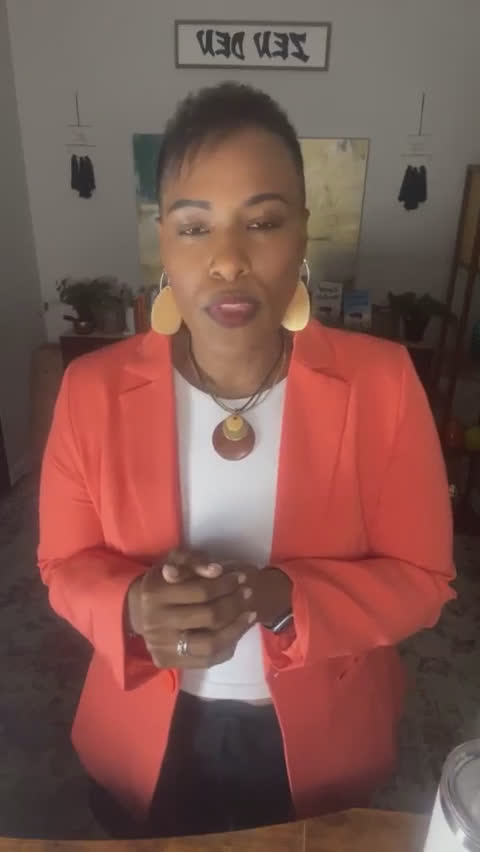
December’s focus will be the Neuroscience of Personality Traits and their impact on health and eating habits.
Doctor Charryse is a licensed clinical mental health therapist, author and speaker. She focuses on personality traits, your health and eating patterns. Don't sleep on the Monday motivation. They are pre recorded videos, normally two to three minutes long.
We do see a connection between personality and the influence that it has on your eating style. Your eating choices and the two of those combined are also going to have an impact on your metabolic health. Take inventory of how our personality can be a benefit or a barrier to the goals that we have for ourselves.
Audrey: When you think about your personality type, is your personality nature or nurture? She says there can be dynamics in our lives that have altered our natural core personality. Audrey: Typical type A personality patterns would be achievement oriented, competitive, fast paced, and impatient.
type A personalities have a high level of neuroticism. They are often very focused and concerned about how they present to others. What does that look like in terms of eating?
Ask yourself, where do you see yourself in the characteristics that I identified also? Do you see any connection between the level of emotions and stress or uncommunicated dynamics in your life? Are you set up in an environment that allows you to come down off of that personality?
So I'm ending at 23 minutes. Check out Monday motivation, any of the other videos that you need. The biggest thing that I want to continue to encourage you to do is please share this tool. Have an amazing week and I'll see you guys next week.
Good morning, good afternoon, or good evening, depending upon when you listen to this. It's so good to be back with you here on Cadre. Don't you love it? I. I can't get enough, and it's so good to be in this space and to know that we can stay connected. Beverage of choice for the day is water. Whenever I'm, you know, in that real kind of education mode, then I'm like, let me stick to water, because we all know what happens when I have anything other than water, truthfully. Good morning, Shawna. We'll give everyone a few moments to kind of get logged in and get looped in.
One feature that is so important if you're not using it, is. I love that here in Cadre, you can go to the calendar and you can set a reminder for lives who doesn't need that. So if you feel like I can't find them or I always forget about them until later, then just go to the calendar, use the reminder. It will let you know when they're about to happen, and then you don't have to miss anything live. But also remember that there's replay and it doesn't go anywhere. That being said, if you are new to these parts, I'm Doctor Charryse, a licensed clinical mental health therapist, author and speaker who is passionate about helping you experience peace and harmony in every area of life.
And I am pumped about what we're going to focus on today. I'm going to go ahead and get right into it because if I. I actually finish this in 15 to 20 ish minutes, it will be a miracle. I'm going to do that because that's what I have committed to doing. But I'm also going to give that disclaimer, because you guys who know me, you know how I am when I'm getting excited about something. The other thing that I want to say is, don't sleep on the Monday motivation. Monday motivation are pre recorded videos, normally two to three minutes long.
Hearing Cadre doesn't have to be a Monday when you listen to them, but Monday typically sets the tone for our week. So I definitely encourage you when you're like, ooh, Monday is mondaying, and I need something to go over to that spot and to share those with people who are in your face and talking about, oh, this is so difficult. This is so hard. You can go, well, you need to go over to Cadre and listen to doctor Charryse, and she just talked about this on her Monday motivation. Beth Schofield. I see you.
I see you. In the house. Hello, Dorinda, and all the others who are saying good morning. So we're going to spend the next month. I know that that sounds like a lot of time, but don't be nervous. I'm trying to focus and center on the content that I'm giving you so that it can build. And so I'm also not cramming in so much information at one time if I'm going to do things shorter. But I really want to focus on and lay the foundation around personality traits, your health and eating patterns. You know, we know from research.
I was looking at some research on the National Institute of Health. I often will use the National Institute of Health as well as other medical journals that I am privy to being able to see as a source of the information that I provide. So know that nine times out of ten, the information that I'm giving you comes from research. If it is, you know, the book of Doctor Charryse, I will let you know. And let you know that. It is a personal disclaimer, but here's why I thought it would be extremely valuable.
This is commonly a time where people are really looking towards the end of the year, assessing their health, assessing their eating patterns. They're noticing things about themselves, noticing things about their emotions. These may be things that you notice all the time, but at the end of the day, the whole concept of being mentally fit, right, means that we are fit, we are well, and experiencing well being from an integrated dynamic that's going to be mind, that's going to be body, and that's going to be spirit.
And spirit depends on your connotation of whether that comes from spirit, spirituality and faith, or whether it comes from spirit. Energetic being. I believe in both. I believe that we have an energetic presence that we were all given. And most of you are full, fully aware of my place of faith. So you have to take those pieces and allow them to land with you in the way that you would like. But one of the things that I continue to see in research as a specialist, an eating disorder specialist, which I am, some of you know that some of you don't.
But just to give you background, is that we do see a connection between personality and the influence that it has on your eating style. Your eating choices and the two of those combined are also going to have an impact on your metabolic health, which are those basic core health indicators, such as your insulin resistance, the level of your kidney, your liver, your telomeres, which are part of your brain health, and your impact on aging. All of those dynamics are related. We are what we eat. And that does not mean that we ever need to seek perfection.
And it does not mean that there is this perfect eating path and that if you eat this way, you'll never experience any difficult health moments, because we don't have that much control. But it is important for us to take inventory of how our personality can be a benefit or a barrier to the goals that we have for ourselves. And not just your physical weight goals. But I really want you to consider, what does it mean to be well in your life? Because you could be at a place that you feel like, hey, I'm where I want to be physically.
I'm good with myself. I feel active, but I'm not always as happy as I feel like I should be. I'm still struggling with my mood. There's certain dynamics and aspects of my life that are inconsistent. And so this is going to be a framework that's going to help you. Each week, I will go through one type at a time. Of course, you know, I'm going to caveat here and there, and I created some notes because I do want to focus and center. So if you have a notebook or something to write with, I would encourage you to jot that down.
I want to start with type a personalities. Know that as I go through the different personality types, we all have facets of each personality type. But you're also going to have a specific personality type that is more prominent or dominant. Something that I encourage you to consider is when you think about your personality type, is your personality nature or nurture, meaning that there can be dynamics in our lives that have shifted and altered our natural core personality. I'll give you an example.
If you are more introverted, but were raised by extroverted parents or grandparents or caretakers, you may have been pushed a little bit further outside of your natural temperament type. So part of your conflict that you experience is that you are trying to operate in a temperament type that was nurtured by the people around you, and you were forced to mimic it, you were forced to match it in order to survive that environment. But at its core, your true nature is actually very different. I, earlier in life, I am more evolved and actualized now, would put myself in that similar category.
I remember the moment I was like, I am an introvert. I thought I was an extrovert because I had no choice. Life did not afford me the opportunity to step back and to sit back. Survival forced me into coming off in a more directive way than I would. Now I'm a direct person that has always been a part of who I am. But how it displays is very different. So people often make that assumption that I'm an extrovert. And then I go, no, I'm passionate. I will stand up for injustices. I will speak up when things are wrong and need to be challenged.
But my core nature is an introvert. And for so many years, I didn't know that, but was internalizing so much anxiety. So outwardly, people thought, oh, my goodness, she's so confident, she's so this and that. And there was an aspect of that that was true, but there was also this internal terrain of anxiety that I did not understand because that was my introverted overstimulation, depending upon how many things I was being forced into. So I definitely want you to understand that about yourself or begin to reflect on, here's what I'm operating in, in my job, in my home, in my marriage, in my relationships, in my friendships.
But is that really congruent to the part of me, the part of my personality that experiences peace when I'm not being forced outside of that? Or what do I need if I have to operate in that way to come back? So there's a lot of areas, for example, of my life where I have to operate on a level of extroversion in order for me to engage, in order for me to connect, in order for me to let people in. But what is it that I need? What is it that I know that my personality needs so that when I come back down, I am at a place that I'm returning to that balance so that it doesn't drive eating habits and sleeping habits and stress patterns in a way that can be harmful.
So typical type A personality patterns would be achievement oriented, competitive, fast paced, and impatient. That was one of the first ways that I knew. I am not type a. I never thought I was. People often think that, again, I achieve through passion, but I'm not achievement oriented. I am the least competitive person on the face of the planet. No desire to be competitive. The only lick of competitiveness that I have is if you tell me I can't do something that'll fire me up. But that's more of a don't doubt me kind of thing.
Fast paced, not my preference. Can I handle it? Yes. Life has taught me that. Trauma has taught me that. Has life or trauma taught you to handle fast paced environments? But then you also tap out at the end. So I want you to begin to think about this is really just setting the framework for the discussion. What does it look like in terms of your eating behaviors? That's a question that I want you to reflect. What does your eating behaviors look like when you're in this fast paced environment, when you have a lot of things to do and it's go, go, go versus the moments and seasons of your life that tend to be more balanced because that's going to be a key indicator of what you need in order to maintain and continue.
Hey, Audrey, thanks for coming on and saying hello. So that's something for you to reflect on and then impatient. Type A personalities, by nature have a very low tolerance level, not just for other people, but just for different things. It is okay if you feel like your different personality types because as I said, you're going to see different parts of your personality come to the surface depending on the context. But what you're going to find is if you're looking to identify the primary one, one you can take an inventory online for free.
There's multiple assessments where they're going to ask you questions, and they do a really good job of identifying what your type is if you're confused. But the other one is, you will know what your primary temperament type is in two ways. One, who are you in crisis? Because your crisis dynamic really matches your temperament core and how you want to get through things versus who are you at peace and at rest and when things are good. But again, take a assessment. I would encourage you to do that.
Find one again online. There's several free type a, type b, type c, type type d that I'm talking about specifically because that will definitely help you. I love the people who are like, I am type a. I know that I am type a. Type a individuals also tend to take charge, not trust other people to take charge, and then at the same time find themselves stressed and overwhelmed. I'm going to take a sip because I know I'm calling out a good number of people there. But here's the dynamic of being that type a temperament.
Type A temperament. If we talk about, I want to hop into your physical characteristics and your eating characteristics. A couple of things that we see, for example, is physical characteristics that you may experience as a type a individual. You keep a lot of tension in your body, specifically facial tension. So a lot of my type a personality, you wear your emotions on your face. Everyone knows what you're thinking, whether you say it or not. So if your mouth doesn't tell on you, your face is going to say it all.
So there's typically someone who's like, fix your face. Love you, girl. Fix your face. You know, that kind of thing. Love you, dude. Fix your face. My husband is a typhae, and I'm constantly like, honey, I need you to fix your face. People are looking at you, and they know exactly what you're thinking. And then he'll be like, oh, okay. And no, I won't name any names. Other things that you may find type a personalities, physical characteristics. You may struggle with teeth grinding, whether that's during the day or at night.
You may often have dark circles under your eyes, and that's due to the level of stress, the level of tension that is in your face when you're focusing on something. And you get so wound up mentally that you will often have a difficult time sleeping. So my type a personalities either struggle with sleep or you work yourself to the bones and then you fall out. But then your sleep may not be as restful. Remember that this is a longer continuum, so all of these physical characteristics won't necessarily apply to you.
I'm just giving you some examples of what we typically see. I also find a lot of facial sweating with my type A's because you're often very pensive and overly focused and concentrating. Part of that is you're highly intelligent, as are all personalities. Because you're that high achiever. You are over focused and over determined to do things well. As a result of that, you then overcompensate. When it comes to getting things done, you mean well, but your desire to achieve often means that you spend extra hours doing things that you don't really need to, and that comes at a cost.
And then you feel frustrated because you're not able to overachieve in any area of your life. So what does that look like in terms of eating? Because I do want to go there for a few minutes. What we often find is type A personalities have a high level of neuroticism, which essentially means because you're so intense, you maintain a lot of anxiety, even if you don't outwardly show it. And you also have something we call alethemia alophemia means that some type A temperament, not all have a difficult time verbalizing and communicating what they're feeling.
So part of the desire to achieve, part of the desire to look and present a certain way. For example, Enneagram threes are often type A's just to pull a connection. I won't go there too deeply because that could be a whole session within itself, but I think it's a great connection to have. They are often very focused and concerned as well about how they present to other individuals. So that dynamic creates that neuroticism. I have to go. I have to be the best. I have to be seen a certain way. Even if you make a little post somewhere to say, oh, my goodness, I'm giving myself grace.
You're trying to work yourself through giving yourself grace, but there's another side of your shoulder that is typically beating yourself up and demanding that you do something to a certain degree. Because there are no levels with type A, there is no level and level ten with a type a. And you do things. Part of that makes you great. A few weeks ago may even have been this week, I talked about a strength and a struggle. Your strength is that if you need something done, ask a type a. They're going to get it done.
But your struggle is, if you need something done, ask a type A, because you're not going to say no. And then you're faced with having to put in these huge boundaries. So you sometimes struggle to find that middle ground. How does that show up in your eating? I told you, so much information. It's hard to pull back and not give you such a good foundation when it comes to your traditional, typical type A eating patterns. You're going to tend to be hot or cold if you are not very disciplined and intentional in that area.
What we also find, and I thought this was the coolest thing in a systematic review of information. A systematic review of information essentially means there were 1900 articles that were reviewed and synthesized and then pared down so that we could look at it. I could look at it and go through and pick the different themes that were through. And so one of the things that was noted in this research was that when it comes to eating patterns with type eight individuals, they tend to favor sweets and carbs.
I'm gonna sip. I'm just gonna let you take a breath there. So if you are in a place that you're working on your eating habits and you feel like, man, I'm finding my groove, type a's research shows that type a's will typically veer off for sweets. Yes. I'm a call a spade a spade. I just crawled into half of your homes and looked in your pantry, your refrigerator, in your trash can from the last week and called you out. You know, I'm gonna get on your toes. That's what I do, right? So I thought that was so incredible to see.
But part of that craving comes from, let's put in a little bit of neurobiological information, because why not when you're a type A personality and you're in that neurotic. Let's go. I really don't want to communicate how I feel because I don't feel like filtering it for you. And if I communicate it to you, it's going to be so straight that it hurts your feelings. Or I could be a type a, but a people pleaser. So I'm going to internalize my feelings. Both dynamics then go up to the base of the brain.
Lizard brain is firing off. Protect yourself, protect yourself, defend yourself. And lizard brain is always going to crave goodness. Sugar, dopamine, sweet. That's your way. And you also like the push that comes from the sugar and the carbs because it creates that fuel that then adds to your adrenaline, which makes you then feel like, I want to continue to do this more so that I can keep going and overachieve and get everything done, and then I'll worry about later. And I'm intentionally raising the level of my voice for a reason, because that's what it's like to live in a type A world.
So a type a is going to have a difficult time when things are calm, slow. You're going to be highly resistant to things like meditation and yoga and Tai Chi and slow walks, all of which you need in order to balance out the stress and the energy that is a driver to your appetite. Now, for the sake of time, I could go on, but I promised that I would not allow these lives to last longer than 20 minutes. I am going to pause here. What can you do with this information? Go back, listen to this one more time.
Listen to the characteristics that I pointed out, and ask yourself, where do you see yourself in the characteristics that I identified also? Then notice, what do you see and have you seen lately in your eating patterns and specifically in the moments that you feel like you're veering off from the balance that you would like to keep? Do you see any connection between the level of emotions and stress or uncommunicated dynamics in your life or when you have to communicate them? You're dealing with, with the aftermath of, whoa, that took a lot out of me to let somebody know how I feel.
And as a result, I now need something sugary, sweet, and carby to make myself feel better. So if you're an individual, just to make it even more simplified for those that are still in denial, who find that your way of supporting yourself is navigating through the drive thru of bojangles, of chick fil A, of Zaxby's, of your favorite bakery or Starbucks to get something nice and warm or cool and sugary with whipped cream. And you're a type a personality. I am talking about you. Yes. Yes I am. There is no shame but as an opportunity for you to look at that dynamic.
So when the part of you that feels like I am afraid that I am not going to be able to maintain my health progress, then part of that is going to be looking at how does your personality dynamics play into that? Are you set up in an environment that allows you to come down off of that personality? Because if you are a type a in a high demand and high stress environment, that is a recipe for hot mess of a disaster. So you want to look at those environmental factors, those relational factors, those personal factors, and then I'll get into this at the very end of December.
I also want to give you some information around what type of physical activities will also help your temperament and help mitigate the way your eating patterns try to push you based on your temperament type. So I'm ending at 23 minutes. I'm still giving myself credit for 20 minutes because the first three minutes was me greeting you and giving you a background for this. It is going to be so good. We are just getting started. I have so much more information to give. As always, I love that you're here.
I love that you choose to be here. I love to see you, to see your names, to see your comments and all the goodness. I look forward to reconnecting with you next week. Check out Monday motivation, any of the other videos that you need and the biggest thing that I want to continue to encourage you to do is please share this tool. Part of me being on the Cadre platform is because it opens up access to all. So don't just hoard me for yourself, share this with someone who may enjoy it and who may benefit.
Have an amazing week and I'll see you guys next week.
Reactions and comments are for members. Joining is free and takes a minute.