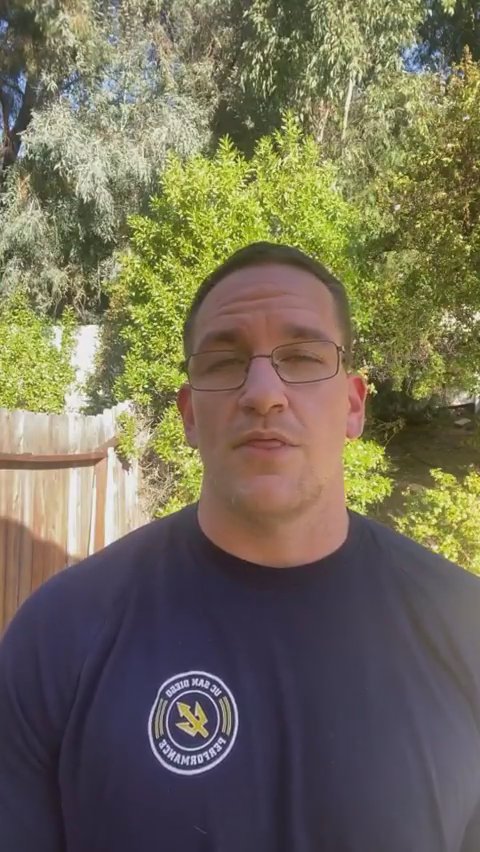
As sport psychology becomes more and more popular in today’s world, maybe you’ve heard of it but are still curious what it is. Take advantage of your curiosity and ask any questions you may have!
Garrett Westfield: Today is really just about asking questions. He wants to talk about sports psychology in general. Feel free to drop any comments on this live stream if you have any questions.
Jordan: How do you help athletes manage performance anxiety? He says there are two main types: cognitive anxiety and bodily performance anxiety. Another question is how do athletes come back from injuries, setbacks or failures?
Jenna, as far as setbacks or failures, failure is sometimes called the f word in sports psychology. It really funnels down to the difference between growth mindset or fixed mindset. If you have a growth mindset, you might see failure as an opportunity to improve.
Jordan: Can you share some strategies for maintaining focus and concentration during competition? He says the biggest thing is to control the controllables. Focus on the things you can't control, like your effort, your attitude, your preparation. Overall, mindfulness is a great way to improve your focus and practicing that consistently.
Aaron Rodgers might be nervous to play after last snap, was tearing his achilles. How would you advise him to come back mentally strong during his first game back? Feel free to add any more questions on here.
Sports psychology is not just for athletes. The skills that make an athlete more confident, resilient and focused are the same skills and tools that makes everybody else more confident. So it applies to everybody. If you're curious, feel free to ask those questions.
Another one from Jenna is what advice do you have for coming up with goals for the new year? The biggest thing I would say is break down your goal into a process. Get very specific into measurable specific actions that you can take to get to your goal.
What's up, Cadre? Happy Monday. Garrett Westfield here for mental skills Monday and our live today. Because I am our quote unquote, sports psychology expert today, I just want to do an open ended, sort of ask me anything, ama, for short, about sports psychology. I mentioned this in previous videos that this month of December, I'm gonna really focus and hone in on topics related to goal setting because of ramping up to our new year and what commonly people associate with that, which is New Year's resolutions.
So that'll be coming. But in the meantime, I just wanted to kind of get a gauge of the pulse of our Cadre community, see what questions maybe you're curious about and things of that nature, and just talk about sports psychology in general. So I know it's becoming more and more popular in the media and things of that nature. So whether you're curious about how to improve yourself in a lot of different areas, maybe you've seen athletes yourself, maybe in your recreational leagues, or maybe you've seen professional athletes on tv or locally, that you're curious about why they perform a certain way.
Today is really just about asking questions. So feel free to drop any comments on this live stream if you have any questions. Also, I know a lot of people watch the live streams later and being live streamed, but even if you watch it after it was live, if you comment, I'll be keeping tabs in the comment section. I'll make sure to respond to those questions. But as people are hopping on, I just wanted to talk about sports psychology in general and performance psychology even more generally for that.
And it's becoming more and more popular. Like I mentioned, there's a lot of shows that mention it, such as Ted Lasso. They have a sports psychologist on staff. There's also, I can't tell you how many times I've had athletes talk to me about Ted Lasso, and they say, oh, do you do what that person does in Ted Lasso? I'm like, yeah, kind of. But there's also other shows that mention it. So we have our first question, which is from germanxiety or pressure in high stakes situations. That's a good one, a really good question, and one that a lot of people experience.
And one message that I try to get across in all my videos is that these topics aren't just related to athletes. I'm sure you all have had experiences with performance anxiety. Maybe you were talking in class and gave a big speech in middle school that got you nervous, or even now at work. We all get nervous from time to time in a performance situation. So this is applicable to everybody. But to answer your question, Jordan, how do you help athletes manage performance anxiety? Well, it's all about a lot of, with these skills, it's all about awareness.
So recognizing where that performance anxiety manifests is really key. So, for example, we like to. In our, in the sports psychology science discipline, we like to kind of distinguish what type of performance anxiety you're experiencing. So usually there's two main types, and that's cognitive anxiety, performance anxiety, and then there's somatic or bodily performance anxiety. So the first option, cognitive anxiety, that's one that I think a lot of us can maybe resonate with. And it's easy to understand.
It's just those thoughts of worry, maybe apprehension or fear and nervousness. Those thoughts when you go about a situation and you have more of that mental chatter that's giving that performance anxiety, that's that cognitive component. And then there's the bodily component, which might be you, the quote unquote butterflies in your stomach, the sweaty palms or maybe dry mouth, things like that. And that's important to distinguish with the awareness piece, because the methods that you might use are different based on your dominant performance anxiety type.
For example, if you have more cognitive anxiety, then we might use more cognitive techniques, right. We try to match the technique with the type. So that might be ways to reframe your anxiety. So maybe, you know, you're going in a high pressure situation. Just the simple statement of pressure is a privilege, for example, can be really helpful, you know? So for athletes in, in the championship, and they're really nervous, you should be nervous. You care a lot about your sport. You've put a lot of time and effort into this sport, in this championship setting.
So you should be nervous. Pressure is a privilege. So that's one. And then more bodily anxiety, there's also strategies for that as well. So that's. You can do, you know, body relaxation, body scans, some mindfulness approaches. There's, there's. I mean, the list goes on and on, but those are some of the more in the weeds techniques, and I can certainly make some videos on those to go more in depth as far as pressure in high stakes situations. That's actually. That's interesting that you say that, because I just was, I just finished reading an article about this yesterday, pressure training.
So as sports psychology professionals, we can help athletes and coaches and teams perform under pressure. So rather than just, for example, a baseball team practicing their swing in practice, that's great. They might improve their technical skill of swinging but they need to also learn the art of or the skill of competing. So that might be putting pressure on them. Maybe they have a little competition. Maybe they have a little leaderboard or some performance metric that they're trying to compete for in practice.
So that adds the pressure. And not only does that get them better at the technical skills, but that gets them better at competing. So for hopefully that answers part of your question with performance anxiety. Jenna Ackerman, also two ackermans. There we go. Is another question is how do you help athletes come back from injuries, setbacks or failures? That's a lot, but that's a good question. And I'm always saying that because there's a lot, it can go a lot of ranges or a lot of directions we can go with that.
I'll start with injuries because that's a big one. I was going to talk about, you know, athletes in popular culture. There's one, Aaron Rodgers. I am a Packers fan, so I've been following Aaron Rodgers for a few years now, but he's going through, if you don't know, a big injury, he just tore his achilles a few months ago and he's trying to make a comeback. There's a lot of athletes who are recovering from injury. As you can expect. Injury is most people think of the physical recovery, whether they go through surgery, whether they go through physical rehab or physical training, there's a physical piece.
But even if an athlete or a person is physically recovered, sometimes they're not mentally ready. So injury can affect them mentally in so many different ways. It can affect them when they experience the injury, number one, how they kind of appraise that process. And then also during the rehab, the mental side is very important. And also what's really important that sometimes people misses the return to play that is very mental. You might have a lot of fear and anxiety when you're returning to play, which goes back to Jordan's initial question.
So with injury, what I personally first like to do is really just start off again with awareness. That's kind of my approach awareness. So I actually do. If any of you were around for the performance profile that I did a few weeks ago, maybe a few, maybe a month and a half, two months ago on a live stream, it's what I like to do, an injury wheel. So it's all about self awareness with that. So basically athletes, there's eight, I list them eight important qualities that are important for the mental side of injury recovery.
And the athletes sort of rate themselves on all those areas. So that might be your focus, your ability to focus during rehab, for example, that can also be your social support. So how can you go about noticing or improving your areas of social support? That can be friends taking you to rehab. That can be people just cheering you on, or family members. There's also like your expectations of the injury. If you have an ACL tear and you're expecting to get back in, you know, a month or two, well, that expectation might lead you to get very frustrated when you're on month three and you're not getting much progress.
So expectations is big, and that's why I like to collaborate with athletic trainers and physical training staff as well. So injury is a big part of that. And just trusting the process, like goal setting during the rehab process is big. As far as returning to play, starting to trust their rehab process and trust that they've done what they needed to do to get back to playing at a high level. So that's a big one. And I'm sure a lot of you in this community maybe have gone through an injury and realized that sometimes it's more mental than physical.
There's a lot of mental hurdles that you might come about. So it's important to set your expectations right away, set some goals and use, you know, relaxation strategies if you need to, pain management strategies. And those are all things that if you have more questions about the specifics of that I can get into. As far as. I'll be brief here with the second part of your question. Jenna, as far as setbacks or failures, failure is sometimes called the f word in sports psychology. So it's all about using it as a learning opportunity.
It really funnels down to the difference between growth mindset or fixed mindset. If you have a growth mindset, you have the belief that, you know, whatever you're born with, you can develop it. So your intelligence is trainable, your physical skills are trainable, your mental skills you can improve on. Whereas a fixed mindset, basically, you know, if you're born, or whatever you're born with, you're stuck with for the rest of your life, you can't really improve. So those two mindsets both experience failure differently.
If you have a growth mindset, you might see failure as an opportunity to improve, to learn, to grow from that quote, unquote failure or negative experience, whereas a fixed mindset, you might see a failure as well. That just means I suck, right? And that, as you might expect, isn't very helpful for future performance. It doesn't give you much direction to improve. So it's all about quality self reflection of maybe. Why? Sorry about that. The tripod's a little moving, but as far as that failure goes, yeah, it's just about being self reflective and adopting more of a growth mindset in that sense.
Same thing with setbacks as well. Jordan, again with another one. Can you share some strategies for maintaining focus and concentration during competition? Heck, yes, absolutely can. And this is something I talked about a few times, actually, with focus and concentration. So one thing I think the biggest thing that you can do is simply a simple phrase to remember is control the controllables. So there's a lot of this applies to athletes and pretty much everybody. Whatever your role is, there's a lot of stuff going on.
And sometimes we can lose our focus or get distracted by things that are outside of our control, and then we start to feel more nervous because we can't control that. So it's really important to shift your focus into things that you can control in that sense. So for an athlete, example, they can't control their coaches, they can't control the weather, they can't control the referees. So if you can't control it, why focus on it? Focus on the things you can't control, like your effort, your attitude, your preparation, your nutrition, your sleep, your hydration, things of that nature.
So really, the short answer is control the controllables, number one, in regards to focus and concentration. And then I also say another video that I similarly to control most important in a given situation, and how can you allocate the most focus points towards what's important? So those two are, are really key. And then just to add a third one, again, brief is just controlling your breathing, honestly, really focusing on your breath that can kind of center you. Just a great topic to delve into.
There's a lot of great people on here, a lot of great wellness experts at Cadre who work with mindfulness, myself included. So overall, mindfulness is a great way to improve your focus and practicing that consistently. So, yeah. And then another question from, ooh, good name, Garrett. My name as well. So he says that how would you advise Aaron Rodgers to come back mentally strong during first game back? Might be nervous to play after last snap, was tearing his achilles. So how would you advise him to come back mentally strong during his first game back?
That's a great question. And it's something that happens a lot with what you mentioned, considering his last snap was tearing his achilles. That can be a very traumatic experience for anybody, especially at that. You know, it was a big stage week one of the NFL season, and millions of people around the world were watching him when he tore his achilles. There's a lot of pressure and all the, all the different contexts behind that. So definitely a lot of trauma that could be relived after going through that injury and then coming back.
So it's important to again, focus on what he can control. He doesn't, right away, he needs to, again, kind of set his expectations, not necessarily limit himself to his potential, but focus on what he can control in that sense and try not to do too much and in that sense as well, rely on his teammates and basically identify the things that worked for him in the past and continue doing those things for him. Specifically. He's a four time mvp and as a Packers fan for years watching him, he's pretty dang good at what he does.
So he doesn't, when he comes back, he doesn't need to, you know, change his whole perspective on how he plays quarterback. He just needs to continually do the same things that he's doing and, and do that. And then there was another thing that I just forgot to point out him. I know for sure he used a lot of breathing techniques, so he, that can also be a way to kind of allege that or improve his focus during. So if he's been out of the game for him, I believe it's three months now and over three months.
So since he's been out of the physical, I need to get mental reps with your muscles. So visualizing, what is it going to feel like when he goes and runs out onto the field? What is it going to be like that first drive when he is feeling inevitably a little nervous or worrisome, what is it going to feel like? And how can he use mental skills and strategies to be ready and practice those skills mentally? So then when he actually is out on the field, he can just execute what he's already thought about.
And that's another thing that I'll definitely dive into in the next few months is imagery and or visualization. So all good questions out of those. So feel free again, people, if you're getting on, feel free to add any more questions on here. And as well as, you know, even after this live stream is posted, feel free to add comments. I can respond to those directly in the app, which is a great feature, so I'll make sure to respond to any comments. Even if this is months down the line. You happen to watch this video, just hit a comment.
I'll be more than happy to talk about this. I'm obviously biased and passionate about this subject, so I can talk about it for a while. But I just thought it was important to see what people are curious about, because, like I said, it's becoming more popular in the media. There's tv shows about it, like Ted Lasso. There's shows on Netflix. They're really diving into sports shows like quarterback. As you can tell, I'm a big NFL fan and football fan in general, so quarterback. They follow three quarterbacks out the course of an NFL season, including Patrick Mahomes and two others.
And one of the other quarterbacks, Kirk Cousins, quarterback of the Minnesota Vikings, he actually used a sports psychologist in the show, so I thought that was good exposure. As well as Ted Lasso, like I mentioned, he has a sports psychologist on staff. There's a bunch of other shows on Netflix, like full swing. It's a show about golfers. There's also breaking point, which is a show about tennis players, and they all talk about the mental side of their sport. Also, in general, athletes are talking more about mental health and mental wellness in general.
So, for example, a few years ago, Naomi Osaka, the tennis player, she withdrew from, I believe it was a championship round or maybe just an event in general, she withdrew because she was having panic attacks. So she talked openly about having anxiety. And she, at the time, she was the number one ranked tennis player in the world. So to hear her talk about her struggles with that was eye opening. Simone Biles withdrew from the Olympics because of similar struggles. So that's a big one. Lane Johnson, in the NFL, he talked about his experiences with anxiety.
So again, it's. It's getting more popular in the media. Another question from Jordan. She's keeping going with these questions. It's good. What strategies do you employ to help athletes bounce back from disappointments? Mm hmm. That's another good one. Similar to the previous question of bouncing back from failure or setbacks. But, um, I believe it's in, it's really important to, again, have that growth mindset of rather than disappointment or failure. It's just an opportunity to learn and grow.
We're all not perfect. We all might mess up in certain scenarios. So it's good to use that as a learning opportunity. A specific strategy that I use for that I've used many times with athletes, coming back from disappointments is just a more structured way to reflect. And that is an acronym that I like to use of WBL, which stands for, well, better learn. And all that means is an athlete identifies, maybe from practice or performance. What is one thing you did well? What is one thing you could do better.
And what is one thing that you learned from that situation? A lot of the times our mind jumps to, ah, that game sucked. You know, that performance was terrible. We just think about all the negative things and when doing that, we don't really have a direction for how to improve. So instead of that, the Wellbetter learned WBL for short framework offers a much more structured and productive way to deal with disappointment. That's just one example. It reflects an overall mindset, though, of, again, that of being oriented towards growth and development rather than failure and disappointment.
Yeah, that's a good one. You know, maybe like, I've seen athletes talk about this a little bit in popular or in the media. Like a few weeks ago, a Chiefs wide receiver had dropped what would have been a game winning touchdown pass. It's natural to feel disappointment, but use that as motivation, use that as learning rather than letting it get you down and affect your future performance. It's all in the past, so you can't change it. You gotta focus on the now and where your feet are. And also with that's kind of more after performance, but also something that within a performance that you can do to kind of deal with disappointment is what's called the reset routine, or some people call it like a mistake ritual.
So let's say, for example, you are a tennis player and you are just plain not to your standard. You're missing serves, you're missing easy hits, you're frustrated, you're disappointed to go to Jordan's question. So if you're disappointed, using a reset ritual is a good standardized way to, again, or as the name implies, reset. So, for example, with that tennis player, maybe they're just. They're just going down a negative spiral. They're disappointed, frustrated, all those things. And rather than just keeping going and going through the motions with their next serve, they might employ that reset ritual that might look like before your serve, you turn around, touch the fence, or, you know, whatever's behind you, maybe you have a simple one to two breaths that are really deep.
Maybe you have a ritual of grabbing your towel, wiping your face off, and then taking that breath. So a reset ritual is key for if you're still performing or maybe, you know, some more reflective stuff after that performance. So, yeah, all good questions and maybe take a few more seconds, see if anybody has more. But the key point here with talking about sports psychology and performance psychology in general, but I wanted to iterate to you all, is that it's not just for athletes. There's a lot of great content creators on this app and you can certainly go to any and get a lot from it.
And if you don't like my style, that's great. And I understand there's a lot of great people on here, but I don't want anybody to not watch these videos because they see sport in my title and they don't think it's applicable to them. It's applicable to everybody. These skills that we talk about on these mental skills Mondays, mental skill Mondays, and all the topics that I bring up are applicable to everybody. The skills that make an athlete more confident, resilient and focused and consistent are the same skills and tools that makes everybody else more confident, resilient, focused and consistent, just to name a few.
So it applies to everybody. And maybe you can just hop on if you're curious, if maybe you see an athlete on tv and maybe you're just curious, why is it that Patrick Mahomes is such a clutch performer? For example, which again, as a Packers fan, he was not clutch last night when the packers beat him on Sunday Night Football, but he is a clutch performer, typically. So maybe you're curious about that. So feel free to ask those questions. Another one from Jenna is what advice do you have for coming up with goals for the new year?
That is a great question and one that I'm going to have a series of videos coming out, so feel free to watch those in little bite sized pieces talking about goal setting. But in general, the biggest thing I would say is break down your goal into a process. So start off with the outcome that you want to achieve. Maybe it's you want to get a new position, or maybe it's you want to lose weight, maybe you want to stop, stop eating sweets, whatever, whatever goal it is, whether it's for health, business, relationships, etcetera.
Start with the outcome that you want to achieve and then work your way down to what is a the process that it would take to get you there. What are the habits that it would take to get you there? So break it down as much as you can. Get very specific into measurable specific actions that you can take to get to your goal, because the outcome overall isn't fully in your control. What's in your control is the daily processes you take. So if it is, for example, you want to lose ten pounds by June for 2024, well, what do you have to do to lose those ten pounds?
What's your process? Are you going to maybe exercise three times a week? And what does that exercise protocol look like? Are you going to have a certain nutrition plan. Well, get as specific as you can and things that are fully within your control and that will set you up for success. That's the short answer. But there's a lot of stuff that I'll be diving into in terms of goal setting. So that's a great question and one that I hope to have more answers for people moving forward. Yeah. Alright. Happy Monday, everybody.
Like I said, feel free to keep dropping these comments in this video and I'll be sure to respond to those as quickly as I can. Again, even if it's months down the line, you're watching this video, just drop those in the comment section and I'll tag you in your user profile in the app and have that response ready for you. So whatever you're curious about for yourself, or maybe just curious about how certain athletes perform in a certain way, I'll be happy to help. So again, happy Monday. Thank you all for joining and I look forward to next time.
Reactions and comments are for members. Joining is free and takes a minute.