Welcome to S-Town. Where I take something culture says I should be ashamed of and reframe it as part of the human experience.
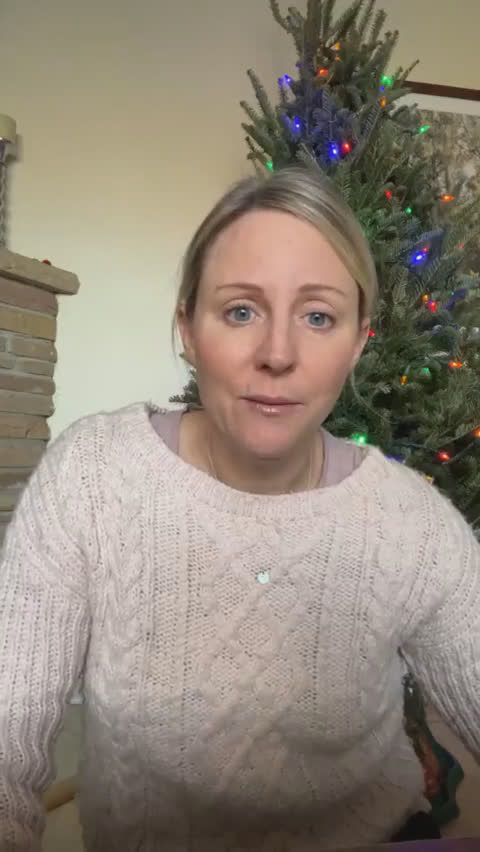
Shannon: Is it Wednesday? It's Wednesday morning, and I'm glad to be here. You can see my Christmas tree. It's nice to see you today.
Today, we'll talk about the topic that we're going to cover, which is to reframe shame. I want to make it light because this can be a heavy topic. But at the same time, I want it to not be. The way to get out of shame is to say it out loud.
Maria Cardona: I've been divorced twice. She says being twice divorced is incredibly shameful on the surface. Cardona says shame can come from a story we tell ourselves about being inherently bad. If there is something that you feel ashamed of, she says, you should never be ashamed.
Good morning, Cadre. It is Shannon. I'm coming to you this morning from my living room. You can see my Christmas tree. It's nice to see you today. It is a Wednesday. Is it Wednesday? It's Wednesday morning, and I'm glad to be here. All right, so today, I know as people join today, I'll talk about the topic that we're going to cover, which is to reframe shame. And now, for some of you, this is just a little anecdote for some of you who know JC here on Cadre, and you've joined his in the thin space Sunday night segments.
You know that he has musical talent, so I did pitch the idea to him to take the concept of reframe shame and make it like a rap version, you know, where we, like, talk about shameful things, but we wrap them. So, you know, I was like, hey, JC, let's do, you know, twice divorced. And that's okay. You can love yourself anyway. Now, I may have just experienced shame doing that right now. No, but actually, I want to make it light because this can be a heavy topic. Hey, good morning, Beth. This can be a really heavy topic.
Excuse me. And at the same time, I want it to not be. And the way, if any of you follow Brene Brown, which I'm sure you do, the way to get out of shame, get out of a shame cycle or get out of that feeling of shame is to say it out loud and bring light to it. All right, so shame. I'm going to talk about shame in the context of myself and the fact that I am divorced twice. So divorce is, as, you know, a socially taboo topic in the sense that while it's incredibly common, it's still something that's uncomfortable for people to talk about.
And of course, it is. Right? Because it is uncomfortable and it's messy and it's all the things. So I've been divorced twice, and my first marriage to my husband, I had two beautiful kids. We had a great life. And then I hit a place where I decided that that marriage wasn't working for me. So that was my choice. That was my conversation with him and with myself. I remarried, I had a second husband. And the second time, when I got divorced, it was his choice. So I've been on both sides of that experience.
And what I can tell you also is that being twice divorced is incredibly shameful on the surface. It is an incredibly socially taboo thing to say. And so I struggled with that for a really long time. I got divorced at 40. I'm 47 now. My first divorce was at 40. My second divorce was two and a half years ago. So I'm on the other side of all of it, which is why I now know that I did my best in each of those marriages, and there were just things that I didn't know. And so what I want to. What I want to get to in this conversation is that shame can come from a story we tell ourselves about being inherently bad.
And so the difference in my armchair psychology version of what, you know, what you can google about shame versus guilt is guilt is when you say, ah, I did this. I had this behavior. I did this thing. I feel really guilty about it. But you don't assign an inherent negativity to yourself as a human. You don't think you're a bad human. You feel bad about a behavior. Well, shame is. I think I'm inherently bad, and I can absolutely say that that's what I believed. So I had incredible shame about the fact that I have been divorced twice.
And then what I learned was that I didn't know. And this is the real lesson in this, is that I grew up in a very complicated family, and there's a bunch of history, but my dog is drinking my latte. But at the end of the day, when I went into both of my marriages, I was doing my best. And so how this relates to you is if there is something that you have in your life that you feel like you're ashamed of, whatever that is, whether it's around your role as a professional, whether it's around a behavior that you had.
Good morning, Maria. It's nice to see you. I'm glad you guys are here. So is Gilbert, my dog? Wherever you feel like there could be shame in your life or wherever there's something that you feel ashamed of, I want you to think about if you went into it or you're continuing to go into it with your best intention, because if you are, you should never be ashamed. So what I learned, in my experience was I didn't have role models for successful marriages. And so, honestly, I hit a point. Or successful relationships, actually.
And so I hit a point. Even in the last six months, I've had a conversation with my therapist that went like this. Me saying to her, I don't know what good is. I don't know what healthy is. And so what I'm doing now is I'm trying to figure that out, and I'm learning, and I'm doing all the things that I need to do, and it's the same for you. You are not born inherently knowing how to do everything right. None of us are. So we do our best, and we learn as we go, and that's all. And that's it. And so shame tricks us into thinking that we're doing something wrong or we're not good.
And that's just not the case. We all. This is my belief. I've said it before. I believe every single person is born into this world inherently good, like wanting to be good, wanting to add value. That's just my belief that as babies, we come into the world with good intentions. And I believe that the majority of people always want to be good, right? Or feel good. And so what that means is we're always learning. We're always growing. And there's some things you just don't know. So I can say to you now, hey, I'm twice divorced and know that the 40 year old version of me was doing her best and that she just didn't know a lot of things and that the 45 year old version of me, or however old I was when I got married the second time, I guess I was younger than that, was also doing her best.
And so you are, too. So if there's something you feel shame around, please take a moment and just say to yourself, am I doing my best? Do I have good intentions? And am I following my values? And if all of those things are true, there's nothing to be ashamed of. We're all growing every single day, and we'll continue to grow until the day we die. So I can say to you now, I am twice divorced, and I have no shame because it led me to where I am today, which is talking to you and also trying to get my dog to stop licking my latte.
But thanks so much for being here, Beth and Maria. I'm so glad to see you both. I hope you have a beautiful day. You are doing a beautiful job being you. Both of you and everyone else out there in cadres fear because you're doing the best with what you know. And that's it. And that makes you a perfect human being. All right, friends, see you tomorrow. I'll tell you the things my therapist taught me.
Reactions and comments are for members. Joining is free and takes a minute.