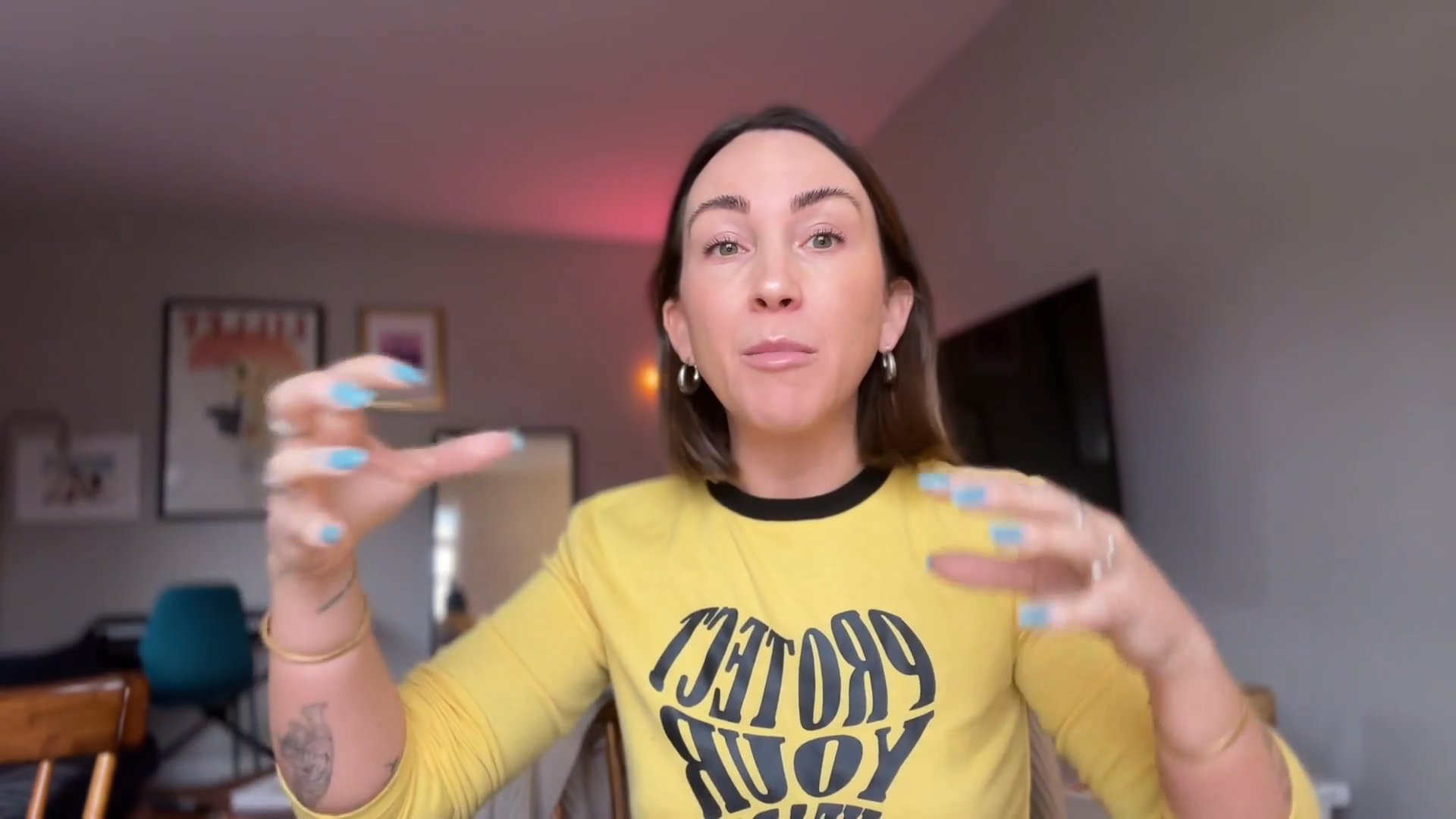
Today’s tip is to stop explaining artistic choices. Instead, include consumers in your process. Remember you are the driver, and your audience wants to join you for the ride.
Rachel Havocost is a mental health writer on a mission to destigmatize mental health through storytelling. Instead of explaining your artistic choices or asking for permission to create or change, include your audience in your creative process. Top ten tips for creative individuals to thrive and manage their mental health in 2024.
Calling all of my creative people who also experience a buttload of self doubt. Hi, I'm Rachel Havocost. I'm a mental health writer on a mission to destigmatize mental health through storytelling. And in this series, I'm sharing my top ten tips. Top ten tips for creative individuals to thrive and manage their mental health in 2024. So this is tip number four. If you're just joining us, I recommend going to my profile and starting with tip number one. Today's tip is replace explanation with x position.
So instead of explaining your artistic choices or asking for permission to create or change, I want you to start including your audience in your creative process. What does this mean? What does that look like? I'll give you an example. So when I started writing in 2020, my blog posts and content on social media were very specific. I wrote about my experiences with my mental health. I shared journaling prompts for self discovery, and I was very focused on inner child healing because that's what I was working on in therapy at the time.
Over the last four years, my values have changed, what I'm working on in therapy has changed, and my creative interests have changed. But I was so scared that my audience wouldn't accept me or care about my writing if I started writing about what I wanted to. So I spent years apologizing, asking for permission, and polling my audience to see if it would be okay with them for me to pivot in the content of my writing. What I didn't realize is that the people who engage with your work and like what you do already trust you.
At least they should. I'm happy to make another video about that if that's of any interest. In their eyes, you are guiding them on a journey. You are the driver and they are the passenger. If you're constantly checking in the backseat and asking where they think you should drive or what road you should take or what music to listen to, they'll start to actually lose trust in you. They'll feel like they don't get the chance to sit back and enjoy the ride, which is why they got in the car in the first place.
Yes, it's important to check in and see how the passengers are doing and make sure they're safe and comfortable. But. But ultimately, you're the driver. So if you plan to take a new route, take the new route and let them know what to expect. If the car needs a new tire, get out of the car and teach them how to change it while you do it. Include them in your creative process and choices instead of explaining them or asking for permission. Let me know in the comments if this resonates and I will see you next time for tip number five.
Reactions and comments are for members. Joining is free and takes a minute.