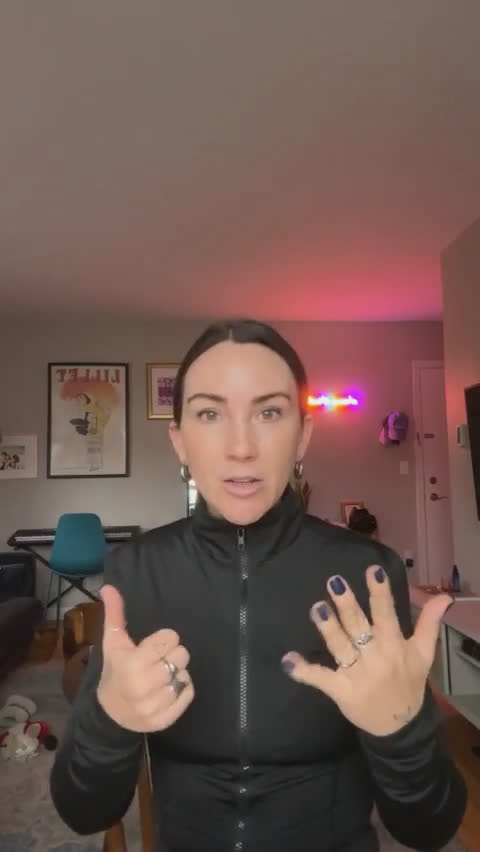
Rachel Havocost, mental health writer and advocate, explains SMART goals — Specific, Measurable, Achievable, Relevant, Time-bound — and how to use the acronym as a checklist. She walks through each letter with examples and offers to workshop viewers' goals live.
Rachel Havocost is a mental health writer and advocate. In recovery, she learned about smart goals, which she'll talk about today. Smart goals is an acronym, and it's a really great way to go about goal setting. If anyone has a goal that you want to work through together, we can.
When we set a goal, we want to get really specific with the goal we're setting. The a stands for achievable. The r stands for relevant. The t stands for time bound. How do we know when enough is enough? How do I measure that my goal is succeeded?
So the next question is measurable. How will I know that I've written a book? What's the when? At what point do I feel like I've succeeded? Is this achievable? Can I do this? For me?
Hello, Cadre fam. Happy New Year. I am so happy to be here on the first Wednesday of 2024 with y'all. Today I'm gonna be talking about smart goals, which is something that came up in my livestream last week. So last week I went live and talked about New Year's resolutions and kind of the question of is it right for me to make New Year's resolutions? How do I know if I should make them? Is it healthy for me? Etcetera. And we had a really good conversation about that. And one thing that came up was this concept of creating goals rather than resolutions.
And I had mentioned how in recovery, I learned about smart goals, which I'm going to talk to you about today. And that was a really wonderful way for me to start implementing goal setting into my life so that I could accomplish things that I wanted to accomplish, do things that I wanted to do, and make choices from a place of I love myself enough to want to do these things in my life versus if I don't do these things, that I'm not good enough. And so smart goals is an acronym, and it's a really great way to go about goal setting so that, that we set ourselves up for success rather than burnout, rather than perfectionism, rather than high expectations and feeling like a failure if we don't meet those expectations.
So I'm going to kind of outline what smart goals are, what the acronyms stand for, and then if anyone has a goal that you want to work through together, we can, you know, you can let me know your goal in the comments, and I will kind of work through the steps of how to make it a smart goal. Otherwise, I'll just use an example from my own goals. So if you're new here, hi, I'm Rachel Havocost. I am a mental health writer and advocate. I've been in therapy for 19 years for my own mental health. I also have a master's in psychology, and everything I do is in service of helping people feel less alone.
And I also like to share things that I've learned along the way that I found really helpful. And this is one of them. Let us begin. Okay, so, smart goals. So each letter stands for something different, and the idea is that you take a goal that you have and you start to kind of do this checklist using the acronym to see if it does, in fact, fit a smart goal template. So the s stands for specific. And if you're watching this as a replay or if you're joining us live, if you want to grab a piece of paper to write these down.
You can. Otherwise you can come back to this. It'll be recorded on my profile. So s stands for specific. So this means that when we set a goal, we want to get really specific with the goal we're setting. We want to be specific about what it is that we want to accomplish, who is involved in accomplishing this goal, how we're gonna make sure that it's done, or how it will be done, and what the steps are. So we wanna make sure that the goal is specific. And I'll kind of talk about how to do that after I go through all the acronyms.
So the m stands for measurable. So for all my perfectionists out there, this is gonna be a really important component of it, because if we don't know how to measure whether or not a goal is successful, if we have a tendency to be perfectionist or not feel enough, then we will just continue to push and push and push that goal because we'll never like we've attained it or we've reached it. This is kind of the question of how do we know when enough is enough? How do I measure that my goal is succeeded?
And again, I'll talk about how to create measurement in a goal when we, when we go through an example, the a stands for achievable. So is it realistic? Am I setting a goal that is actually plausible for me, Rachel, to achieve in the timeframe that I'm putting out there for myself? So, for example, like, if my goal is I want to, I want to make a million dollars in the next month, is, is that achievable? Well, if I'm already making 900, 9500 thousand dollars a month, maybe it's achievable. I am not.
So making a goal of making a million dollars a month, it's probably not going to be achievable or realistic for me. It doesn't mean it won't be down the line, but right now, it's probably not realistic. And so it's really good for us to set goals that sort of stretch us, but are still in this realistic, achievable framework. The r stands for relevant. So does it really matter to us? Is it something we actually care about? Am I setting this goal because I think it's what I'm supposed to do? Am I setting this goal because somebody else might expect me to, or I'm doing it to maybe impress someone, or am I doing this because I really care about it?
So asking yourselves, why are we setting this goal before setting it and asking if it's relevant to where we are in our life. So this also can be, you know, if we're, let's say, for example, if I'm in the midst of recovery for an eating disorder and I make a goal to run a marathon while I'm in eating disorder recovery, that might not be a very relevant goal for me in this time of my life. It might be something that's important to me in general, because I have always wanted to run a marathon. So it could be relevant for Rachel, it could be relevant for my interests and passions if I'm a big runner.
And it might not be relevant right now in the context of what it is that I'm working on in my personal, mental, and emotional world. So we also have to ask ourselves these questions around, is this relevant for me based on where I'm at in my life? And then finally, the t stands for time bound. So we want to make sure that we're setting goals and that we're kind of giving ourselves a deadline. And again, we want to be, once again, we want to be realistic and achievable about this, right? So we don't want to set a goal where we're setting ourselves up for very little time to accomplish a goal that might take longer.
And again, we also want to create some kind of an end point. Otherwise, we have nothing to really work towards. So what does this look like when we put a goal together? So, let's say my goal that I start with, and I like to journal these out, right? So if I'm going to make a goal, I'll start on the top piece of page, just with my first initial thought of a goal. And then I'll go through my smart checklist and rewrite it until it feels like a smart goal. So let's say I start with a goal of I want to write a book.
Okay. I want to write a book. Great. So let's go through the checklist, right? So, specific, what needs to be accomplished? Well, I need to write an outline. I need to write chapters. I need to have a formatted manuscript. I need to get it published. I need to do a cover. I need to have it edited. There's all these steps that go into writing a book. I also need to know what it's about. I need to know what the concept is or the storyline. I need a title. And so then I have these other questions of who's involved?
Is it just me? Am I the only one doing it? Do I need a publisher? Do I need an editor? How will I know? What are the steps to getting this done? Right. So rather than just saying, I want to write a book, I might say something like, I want to write a memoir about my experiences as a single woman after getting divorced. And I want. And I'm going to self publish it on Amazon. And the steps I'm going to take are writing an outline, then filling in the chapters, and then hiring an editor to edit the entire piece.
Right. So I'm getting really specific. And what this does is it kind of shows me, while I'm writing the goal, what the steps are going to be to make that goal happen. So I'm already getting my brain organized around the steps rather than staying in this really overwhelming, daunting place of, I want to write a book, but I have no freaking idea how to do that. So I'm making it specific. Right? So the next question is measurable. How will I know that I've written a book? What's the when? At what point do I feel like I've succeeded?
Is it that I have simply written the manuscript? Is my goal just to write the content? Is that my goal? Or is my goal to have it completely published and on bookshelves and available for people to buy in person? So when? When do I know I've accomplished this goal? And this might look different for everyone. So I've already written a book. So for me, my measurable goal might be, you know, once my book is published on Amazon, available to buy, ready to go, that's how I know I'm done. Rather than maybe if it was my first time, setting a goal of I want to write a manuscript for a book that is then prepared to be sent to a literary agent, whatever that might be.
So again, we want to measure how do I know when I'm done? What does it mean? What is the ending of writing a book? The third one is, how do I know? Is this achievable? Can I do this? For me? Yeah. Because I've done it before, so I know it's realistic, right. And the. This question might come back in after I get the timeliness piece in, right? So if I say to myself, I want to write a memoir about, you know, what I've already said, and these are the things I'm going to do, and this is how I know I'm done and I want to do it in the next two months, that's time bound.
But is that achievable? Not for me. I'm not going to be able to write a full book in two months. So sometimes the achievable realistic piece is, yes, I can do this. But also, is it achievable realistic within the time frame that I'm setting? So I'm going to come back to this one. Relevant doesn't matter. Yes, because I really care about communicating to people what it's like to go through divorce to reducing shame and stigma. I think it's important to have stories out there for people who maybe feel like their stories aren't spoken about so they can feel relatable and related to I know after my divorce, I felt very alone and wanted to read more stories of single women after getting a divorce that did not involve simply finding another partner.
And I love to write and I love to tell stories, so it feels relevant to me. So then time bound. How do I know? What's the timeline on this? So maybe I might say by the end of 2023, I will have published on Amazon a memoir about my experiences after divorce being a single woman. And I will to take those steps. By February, I'll have written an outline. By June, I will have finished a full draft. By September, I will have edited completely. And by. By December of 2024, did I say 2024 before 20? I don't know.
By 2024 it will be published, right. So already in my goal, I've. I've literally set up a timeline for myself just by using this framework. So this is a really helpful way for us to flush out a goal and also kind of break it down into steps without even really realizing it. So I really love this tool when I'm setting goals, especially if I have a lot of goals I'm setting. It also kind of helps me filter out what goals are more important to me than others, because some goals actually might not really be that achievable or relevant, in which case they can kind of go to the bottom of my goals list.
m. PST for another live. If you have any suggestions or ideas or questions about things you would like me to go live about, let me know in the comments. And as always, I am so very happy to see you, and I'm very happy you're here.
Reactions and comments are for members. Joining is free and takes a minute.