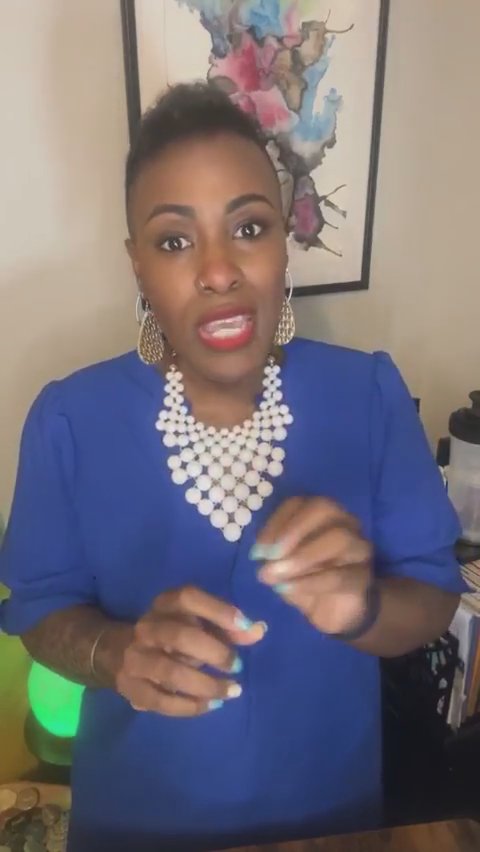
Focus - Part 3 Today’s session will address: “6 Benefits of Being More Focused”
Kadra Spear invites you to join her for mental fitness class. Grab your beverage of choice. Non alcoholic, I hope. Let's get into it before I do anything.
Doctor Charryse Johnson is a licensed clinical mental health therapist, mindfulness practitioner, and author. She says we feel better when we look better. As always, let me know where you are in the world.
How does focus, attention, and alertness fit into your pursuit of optimal health? Over 10 million new cases of dementia each year worldwide occur right now. Always think about both your present and your future health, because the golden years are not promised to anyone.
The top six risk factors that could increase your chances of being diagnosed with dementia. dementia is not always inherited. We always have the ability to take nature, and nurture it by our habits. Movement not only helps your focus, reduces the factor of dementia, but also helps your brain, reduces aging.
Not socializing enough can increase your likelihood of getting dementia. Chronic stress can impact your ability to focus and can become a risk factor for dementia. Other factors include consuming excessive alcohol and then eating an unbalanced diet.
Today's seven at seven of what are seven benefits of being more focused. Cultivating optimal health, both in mind and body and in spirit, before the moment of crisis. If life gets hard and you abandon yourself, then we know you've got some work to do.
When we have greater cognitive flexibility, we are more focused, concentrating and alert. Individuals who have better focus have better decision making. Number two, you develop more positivity, and positivity relates to your level of optimism. Problem solving is not just a skill we learned in math.
Don't back down. Don't doubt yourself or play small. Continue to live boldly, out loud, and know that better is always possible. Have a good one.
What's up, Kadra Spear? Can you even believe that it's time again for us to get into this goodness that we call life, this goodness that we call mental fitness? Grab your beverage of choice. Non alcoholic, I hope. And let's get into it before I do anything, you know, I'm gonna take a sip. I'm feeling a little spicy today, but I also have a lot of education that I want to give you, so we're gonna make it a game time decision. As always, let me know where you are in the world. Those of you that are in warmer weather, we're all vicariously living through you.
I actually have a friend who is getting ready to head. Can you believe the audacity of this? To Turks and Caicos. I am here in Charlotte cold, and she's getting ready to head to Terps and Caicos now. I'm excited for her. I really, really am. But I'm also a little jealous. Good morning, syringia. This is your first time here. I'm Doctor Charryse Johnson, a licensed clinical mental health therapist, mindfulness practitioner, and author, and I am passionate about helping you experience peace and harmony in every area of life if you do the work.
Wait a minute. Did I see somebody from Frederick, Maryland, on here? Oh, my goodness. That's nostalgia. Lived there right after college to support my mom going through cancer and my father for about eight years. So that place has just a special place in my heart. So welcome, welcome, welcome, and thank you. You know, I try to make sure I look nice for you guys. I think that's important, you know, because life is life, and you can come as you are. But I also believe we feel better when we look better.
I just do. And I remember my mom always said to me, you don't have to look like you feel like. And there are definitely days where just getting up and getting dressed for me and whatever that looks like for you can be super helpful. We're going to continue our conversation on focus. This is part three. I want to go in a couple places today. One area that I want to talk about is how does focus, attention, and alertness fit into your pursuit of optimal health? Because this isn't just about a quick fix.
And let me make you feel good. When you think about your health, I really want you to think about the full capacity of what does optimal health look like? So I want to come right out the gate and give you a little application piece. If you have not considered or thought about how do you define optimal health? That's something that I want you to reflect on, and I want you to be able to define it, to have a clear picture. If I am living in optimal health, here's what I would be doing. Here's what I would be experiencing.
Here's what my cognitive life would be like. Here's what my physical life would be like. Here's what my spiritual life would be like. Because optimal health is. Isn't just about what we look like or what we sound like, because we know the right thing to say. Optimal health is all about our thoughts, our actions and our behaviors. So it's essential for you to have that picture of yourself so that you also have an awareness and an understanding of when am I moving away from what I said I desired for my optimal health?
When am I engaging in practices or habits work? Or when have I stopped doing the things that bring me the optimal health that I know, that I desire and that I deserve? So, as we talk about the concept of focus, here's why it's important for you to be cultivating and aware of how to develop focus now, whether you're 18 or whether you're 80, over 10 million new cases of dementia each year worldwide occur right now. Current statistics there's already about 55 million people in the world who have dementia.
If you're thinking, what's the difference between dementia and Alzheimer's? Dementia is the umbrella of cognitive decline, and Alzheimer's is one of the types of dementia because we're often a little bit more familiar with one over the other. Here's something to also know that equates to every three points, 2 seconds someone is being diagnosed with dementia. Let that sink in. So if there's any part of you that's kind of like, oh, do I really need this? I'm not really going to pay attention. I don't have issues with focus.
It's not just about where your current issues are. This is about life. This is about your future. My mother was diagnosed with stage four cancer at 45, and by 53, she lost her life. Yes, difficult time, tough season. But there are so many lessons that I learned in watching her navigate through that season. And I will never forget the moment that she said to me, you have to live now and always think about both your present and your future health, because the golden years are not promised to anyone.
So all that being said, I hope that resonates with you the way it did with me as a 25 year old sitting there, 24 year old sitting there with two children under two and starting to go, I need to start paying attention now. So that my golden years will be golden. And let me just say, now that I'm in the golden years, they are golden. But I work for this, I educate for this. That's part of my passion. So I share that story with you to go. I'm not just a creator, a provider, a professional that's here talking to you about something that I don't really believe in.
I am talking to you from research, from clinical research, from education, but also from a life experience and moments, because this is work that we all have an opportunity to do. The other thing that I want to highlight is the top risk factors of dementia. And I want you to notice some parallels to these top risk factors in comparison to some of the things that we talked about that will help you with focus and concentration. So the top six risk factors that could increase your chances of. Of being diagnosed with dementia.
And then let me add as a caveat that dementia is not always inherited. And so one of the things that we sometimes do and undermining our health is we may think if something does not run through our genetic bloodline, that it is not possible for us to have it. And that is not necessarily the case. We all have a genetic coding, a DNA, and depending upon how that's designed, yes, that can set us up towards certain things, but we always have the ability to take nature, which is our genetics, and nurture it by our habits.
It's your lifestyle habits, it's your awareness, it's your daily actions that will either load that genetic encoding or allow that genetic encoding to stay dormant. So do not think because this is not something that your family has experienced, that it does not apply to you. You even want to start looking at how are you supporting your spouse, how are you supporting your children in their cognitive focus. Because we do expect to see a greater issue with cognitive decline, because we have children that are constantly growing up in different situations than we did.
And while they're super intelligent in one way, they're focusing. Concentration is limited because they've spent more time on technology. So risk factors of increased chances of getting dementia, which leads us to why focus, concentration, and alertness is a significant part of optimal health. One not moving enough, so not moving your body enough, that's going to be a little bit different and unique for each person. I love saying moving because I want you to open yourself to, it's not exercise, it's not laborious.
We're not talking about something that you need to do just for the sake of calories, but you need to be doing things that help your cardiovascular health, that are going to help your strength, your muscle building, especially as we age. And we need that muscle to reduce the likelihood of osteoporosis or osteopenia, which impacts your bones and your flexibility. So you want to make sure in your movement that you're including a variety of different things. Number two, not sleeping enough, not sleeping enough, inadequate sleep not only impacts your focus, but when your focus and your cognitive decline is down, that impacts your long term cognitive functioning.
Some of you that are familiar with me have heard me talk about this before. The telomeres in your brain are a significant factor of aging. They lengthen or shorten shorten based on how well we care for them. Exercise is one of the things that increases your telomeres, which slows down the aging process. So movement not only helps your focus, reduces the factor of dementia, but also helps your brain, reduces aging. And all of that is an integral part of metabolic health, which is the kind of health that you want to have.
The third one and this one surprised me a little bit. Not socializing enough. So all the extroverts are like, yes, let's go. I knew it. But all the introverts are like, oh, no, are we in trouble? We might be in a little trouble. Socialization is important to us at every developmental stage. A lot of times, if you have children or nieces or nephews, you may be really big into making sure that they socialize and they stay connected. Well, guess what? We still need to continue to do the same thing as we age.
But it will be more difficult because if you're not naturally an extrovert, we tend to do less and less socializing over time. When we actually need to continue to do that. Why is that important? When we're socializing with different individuals? It keeps our mind sharp, especially if you are socializing in diverse situations. So I also want you to really think about when you're having a difficult time. What are your habits around socialization? And if you notice that you become someone that backs away from socializing, or if you've noticed since COVID you have not really returned to a very consistent social life for various reasons, then I want you to push yourself just a little bit.
To continue to be engaged in things that allow you to be social. Because it is important for the health of your brain. And it does help improve your focus, your concentration, and your alertness. Other factors is being chronically stressed. When you are chronically stressed, it not only impacts every area of your life, impacts your sleep, impacts your appetite, but it does impact your ability to focus and can become a risk factor for dementia. I, of course, am not saying that if you are chronically stressed, you're going to have dementia, so make sure that you understand that.
But I do want you to understand that managing chronic stress has been something that is a factor in almost everything I've probably ever talked about. I took a really cool trip this past summer to Cartagena, Colombia, what was in the fall, and we went to this remote village that was called Palenque. And it was a group of indigenous individuals who don't know anything else but each other. Really cool story, but here's why I'm telling it. Average lifespan of the Palenque individuals was between 96 and 105.
And in that region, dementia does not exist. The individuals in their indigenous tribe maintain their full cognitive functioning for the entire duration of their life, which is not something that we experience, experience as a whole here in the US and in most areas of the world. So, you know, I was talking to the few individuals in the village who were able to speak both their dialect in English and go, I know that every now and then you've allowed people to come out. I am curious, what do you think is the difference between what you all experience and what we experience in, say, America?
And one of the first things out of their mouth is, we're not stressed. We are a collective community. We are big on socialization. Everything they do, they produce themselves. So movement is a part of their lifestyle. And all of those factors, as well as how they eat and various dynamics, that was not an issue. But his first thought in engaging with people over years is, we are not stressed. And I was like, can I come stay or at least visit for a few months, because that is much more difficult. So chronic stress is something that is a significant factor.
And one of the ways that we see that is when we study other cultures and regions that may have similar genetics to us, but don't experience some of the same health inequities, that's something to consider. Other factors, consuming excessive alcohol and then eating an unbalanced diet. Let me go through all of those again, six factors that can increase your likelihood of getting dementia, regardless of the genetic factors that run through your family. Not moving enough, not moving your body enough, not socializing enough, not getting enough sleep.
Being chronically stressed. Consuming excessive amounts of alcohol and eating an unbalanced diet. Again, my wording is always specific. Part of why I use the word unbalanced is because I do want you to experience food in moderation. I am never a proponent of you going all the way to an extreme that is not sustainable nor appropriate for the level of micronutrients that your body needs. But I always want you to take a moment and ask yourself, you can do that even now. What does your diet look like over the last two weeks?
If you're comfortable, pop in the chat and let me know. Are you eating in a balanced manner? Now we're operating off of your definition of balanced, not mine, but go ahead and give me a little kind of in the moment insight around what are you noticing about the quality and the balance of your current dietary habits, nutritional habits. And while you're doing that, I'm going to go on to the last piece that I want to give you. Today's seven at seven of what are seven benefits of being more focused?
Because if we're going to have these conversations, then I want you to leave here knowing, okay, but why? I know I want to live a long life, but do I really need this? Absolutely, you absolutely need this. Because I don't want you just to go through life, survive life. I want you to thrive. I want you to wake up and go, I am ready for the day. I feel good. Even when life is hard, even when you're dealing with a difficult season, you can still rise up and win. But doing that means that before the moment of crisis, before the game, I know the plays.
You've heard me say that before. You cannot wait until the game to learn the plays, which means I have to be caring for myself. Cultivating optimal health, both in mind and body and in spirit, before I hit the moment of crisis. So that when the moment of crisis comes, optimal health becomes your anchor. Here's how you know that you're not there yet. If life gets hard and you abandon yourself, then we know you've got some work to do in the off season, because I don't want you to abandon yourself.
So, seven at seven. Seven benefits of being more focused. Number one, when we have greater cognitive flexibility, we are more focused, concentrating and alert. We make better decisions. So better decision making, it allows you the ability to sit back and really work through decisions in a very concise manner, utilizing some potential framework. Maybe I'll talk about that somewhere down the line. But individuals who have better focus have better decision making. Number two, you develop more positivity, and positivity relates to your level of optimism, which is going to be extremely helpful to you in the moment of crisis.
If you're an individual, focus has been off, concentration has been down, alertness is low. You're tired, you're exhausted. You're not moving. Your health is unbalanced. Your nutritional intake is weak. Then when the time comes and you're facing crisis, you may struggle to access positivity. Now, some individuals are naturally wired with this incredible amount of positivity, and it will rise to the occasion no matter what. But there are others of you that have to work for yours. And so when you are focused on doing some of the things that we talked about in part one and part two and cultivating a greater level of concentration, then it puts you in a situation where you're going to have a greater level of more optimism and positivity.
Number three, you will develop a better understanding of yourself, self. We all seek to understand, but typically we spend more time trying to understand other people than understanding ourselves. Here's why you want to understand yourself best. One, you're going to make decisions that are going to be more well informed. You're going to make decisions that are going to be more authentic to your nature. But the other capacity or the other dynamic of it is your understanding of other people will always be through the lens of how you understand yourself.
Anytime we look at someone and we view someone else, it is filtered through the lens of our experiences. So let me give you an example just to make this hit home. When you are struggling to focus and you feel like you're in a fog and you feel down from all these multiple factors, how you take in other people is just different people that you used to think, we're good, we're in a great place. I feel great and connected around them. When you're in a difficult cognitive moment, you start to question, wait a minute, things feel different.
Are we okay? Have you ever done that where you have not been in a good place? And so you thought because you weren't in a good place, that the interpersonal relationship between you and someone else was struggling because you were reading them based on your current cognitive state. I know I just read somebody's mail. You don't have to tell me, but I know I did. I'm going to take a sip for you so that you can take a break. But a lot of times when we're in the place, as Becky just said, that we are not liking other people, we need to take that mirror and go, what's going on with me right now?
What am I not liking about myself or my life that I am projecting on to other people? Because that feels better? I'm gonna take one more step for y'all. I get it? Number four, when you improve your focus, one of the benefits of being more focused is that it improves your problem solving. Problem solving is not just a skill we learned in math. It is something that is going to be a part of life for the rest of our lives. There is no one way to solve a problem. We need to have a variety of perspectives, of outlooks of people that we can talk to that are also in a good cognitive place, different ways of attacking situations and problems that we have.
But if we are not in a good place of cognitive focus and flexibility, then we will struggle. Number five, seven benefits of being more focused. You're more likely to implement new skills and knowledge. So when we protect our cognitive state, develop our cognitive state, work on that mental fit muscle in our brain, in our concentration, we stay teachable. And staying teachable and learning new things is also one of the ways on a sidebar that we reduce cognitive decline, memory loss, and those risk factors of things like dementia and Alzheimer's.
It is important for us to constantly be learning. Doesn't mean you have to go to school for the rest of your life life, but nobody tell my husband that because I do want a second PhD. But it does mean that it's important for you to not only hear new information, but you are actually implementing that is the verb, that is the action step. Implementing new skills and knowledge. Today's hard truth listening to me, watching someone on TikTok reading a book is not implementation. That is hearing without doing.
And knowledge is not power without application. So I'm always going to push and do a little plug about making sure that as you learn new things, that you are also implementing verb action, doing something to put those new skills and that new knowledge into practice and in your life in a different way. Number six, seven benefits of being more focused increase clarity and decision making. Who doesn't need that, right? We want to make the absolute best decisions that we can. But going back to that positivity, when you have both, it means I don't have to fear my decisions.
You don't have to fear your decisions. You can make a decision given the most amount of clarity that you have, but also you recognize, if this decision doesn't work out the way I want, it's not the end of the world. It's a learning experience. So we also know that individuals that focus on their cognitive state, their alertness and their concentration don't beat themselves up when things don't go the way that they'd like, they recognize, I can learn from this. And now how do I make a new decision based on new information?
But it does not mean that I'm a failure because things did not go the way that I'd like. Last one, number seven, likely my favorite, is greater psychological determination. That's that deep part of you that refuses to be defeated. You may get knocked down, you may have moments that take the wind out of you, but when you have a strong sense of psychological determination, that is when you put both feet on the ground, your shoulders back and down, and you decide, I will not let this season take me out.
I will not let my family fall apart. We may fall down. We may need to pull over on the side of the road and take a break. I might have a moment where I struggle, but that psychological determination is going to rise up and ignite me to go. I refuse to be defeated. And that is what I want for you. All of these things that we're talking about aren't just about you feeling great. They're about you being great. They're about you recognizing your power and your strength if you do the work. So take the pieces that we've talked about today and really put them together with part one, part two, part three.
You might still be working on something that I told you to apply on week one. Wonderful. Please continue. That's why I'm staying on the same thing for a month, because you can't keep working on different things. Every week takes time, typically 21 to 36 times, to repeat something before it starts to become an ingrained behavior or habit. But if I could leave you with anything, no matter what you're facing today, refuse to be defeated. And if you are in a place where you feel like, oh, I'm there, I feel strong today.
I feel wonderful. Then take a moment and help somebody else who might be struggling. All that being said, you are amazing. You matter. The world would not be the same, same without you. So don't disappear. Don't back down. Don't doubt yourself or play small. Continue to live boldly, out loud, and know that better is always possible. And I'll see you next week. Have a good one.
Reactions and comments are for members. Joining is free and takes a minute.