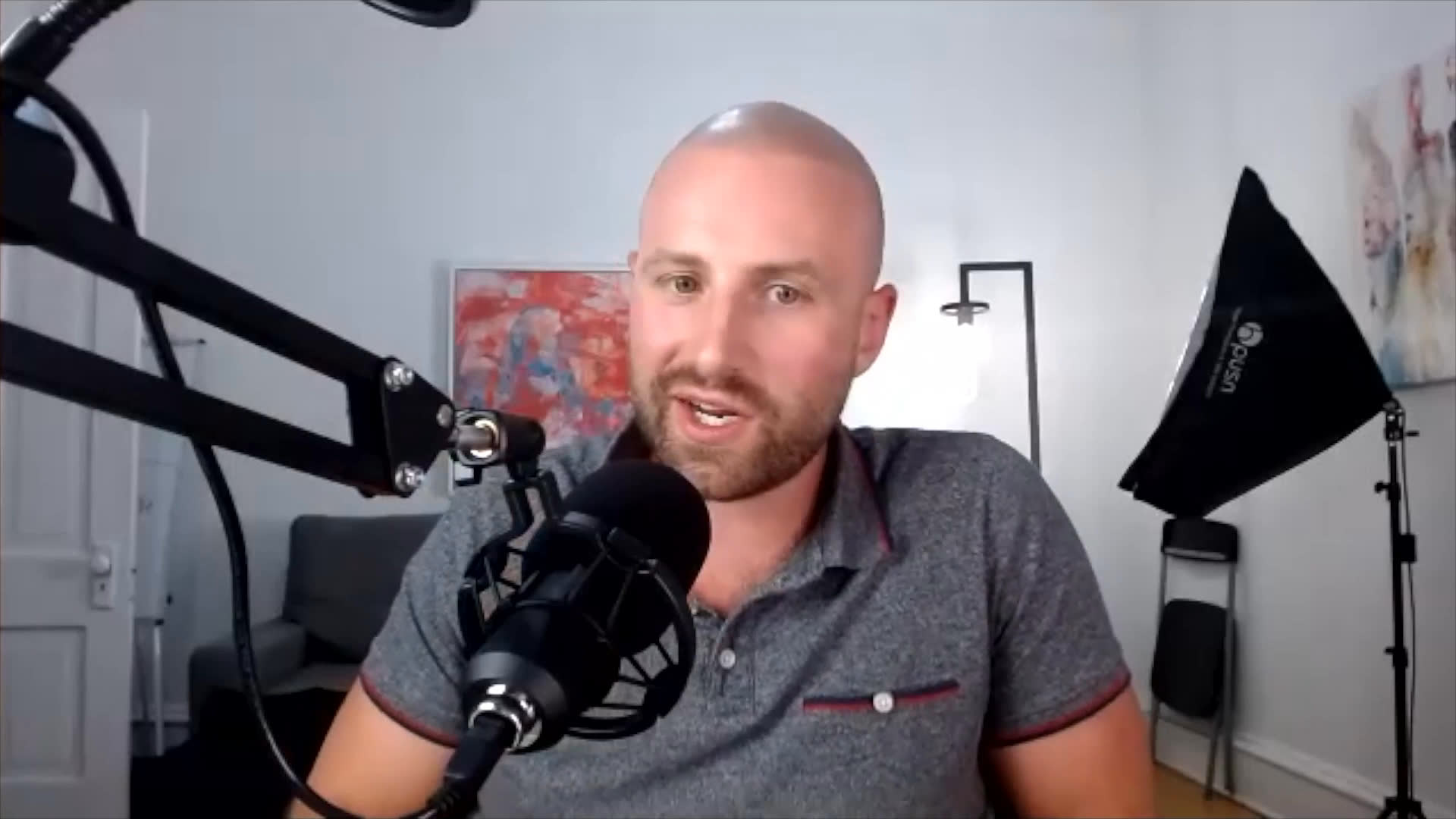
Folks, this is a special bonus episode of our Conversations with Cadre series and Evan Lieberman's series on managing adult ADHD. In this video, Evan interviews Dr. Patrick Kennadye, a primary care physician and ADHD specialist who has profound knowledge on the topic and creates content on social media to educate his followers. Dr. Kennadye is an incredible educator and beyond knowledgeable, so if you have an interest in ADHD, you must watch this as we cover just about everything you could imagine.
Doctor Patrick Kennedy is as close to an expert as possible in ADHD. He's a primary care physician in Oklahoma. We talk about how he conceptualizes ADHD. Also his theory of how way more people have ADHD than suspected. Check it out.
Doctor Patrick Kennedy is a medical doctor and also a specialist and ADHD. Evan ran into him on TikTok and saw his content and absolutely loved it. He's been generous enough to connect me with different research articles. Evan: Thank you so much for being on.
TikTok live stream going. Doctor Patrick Kennedy is a specialist in ADHD. If you have any questions about ADHD, please post them and we'll get to them later.
Patrick Kennedy is a family medicine physician from Oklahoma City. He has a particular interest in ADHD. He says he learned best when he taught. People like to hear what he has to say on TikTok.
A lot of doctors have a misunderstanding of what ADHD is and what causes it and where it comes from. I never took a stimulant until I figured I had ADHD about two years ago. How has it helped you in your professional pursuits?
A lot of it depends on how you define disorder, too. If you define ADHD based on social dysfunction, then the numbers are certainly a lot lower. As a physician, what is my role? What am I supposed to be doing for people?
In general, I think that the medication stimulants are a huge benefit, and the benefits far outweigh the risks of medication for most people. Whether or not you are willing to take that medication has to do with how you classify the good things in the, the bad things.
Many people who suffer with addiction actually probably would benefit a lot more from using stimulants. I think that there's a large misunderstanding about how addictive these medications are. I try to teach residents how to engage in good prescribing practices.
Amphetamine. has a much lower release of catecholamines into the synapse. If you take it orally, for example, it takes 20 minutes, 15 minutes. So you don't induce addiction that way. That's why basic behavior modification is important.
A lot of times it depends on how we define abuse. One of the biggest issues that I would worry about, particularly in college, is using Adderall in combination with alcohol. Meth is oftentimes way cheaper and easier to access, especially in Oklahoma. Risk of addiction is so, so low.
What makes ADHD a brain? You know, if you want to call it disorder or a different type of brain structure. What's different in the ADHD individual versus the normie, so to say. Why do people at a low dose of alcohol become hyperactive?
The stimulants work in the basal ganglia, and the basalang is having 99.9% of stuff is automatic. A very small percentage of stuff has to get shifted into your frontal cortex, where you can actually pay attention to something. And so the stimulants basically activate you.
People with ADHD struggle to activate that prefrontal cortex as much or as often as they want. Sometimes it turns on when you don't want it. And that's one of the reasons that using stimulants helps people with addictions. Essentially, it's more of a disorder of shifting.
Why is ADHD so popular on social media? A lot of it has to do with people describing ways of experiencing the world. There's a great book that says most people should be normal. Anything in the middle should just count as normal. We shouldn't medicalize those things.
The etiology is what really is going to have a big impact on how you're going to treat somebody. For women, the expectations are a lot different for women, for example. Diagnosing ADHD is much, much easier in women who have autism.
There's a lot of talk about changing the name ADHD. It's a better term, probably executive function deficit disorder. A lot of protections for in terms of disability are codified under the term ADHD. I would not expect any wholesale changes.
People always see me as a super chill, laid back guy. But I'm also very impulsive, right? Like, I can make really quick decisions that aren't always the most forward thinking. And in this process can be very distressed, and it tends to activate your firefly response. And people are really, really anxious.
ADHD increases the likelihood that you're going to develop PTSD. This is partly because it leads to higher emotionality. Anything that has an emotional component, you remember it much better. Since this is very highly genetic, a lot of your both, often under both your parents have it.
There's no good evidence to suggest that your parenting causes this, that watching video games causes this. A lot of those are just socially mediated issues, I think, in terms of nutrition. Nutrition does play a big role in helping with adhd and depressive type symptoms.
We're so, you know, the primary intervention for ADHD, and this is something I didn't understand. Maybe you just do the behavioral or behavioral with medications that actually show some benefit for ADHD symptoms. Where is your personal cutoff on when the line is crossed to start with medication?
Children can become functionally blind in one of the eyes because they favor one over the other. There's just abnormal tracking of sensory information from the basal gangway up to cortex. If you start the simulants earlier, you probably would develop your executive functions better.
LZ: Why are you on TikTok? How did that happen? LZ: I started a bunch of lip sync videos, and I hyper focused on that. With testing, what is the best way to get tested? What do you think the best method is to get an accurate diagnosis?
There are certain injuries that happen a lot. I have patients that are blind with type one diabetes and they have adhd. They have horrible outcomes with other chronic medical issues. One or two resources that you recommend for someone who wants to learn more about ADHD.
Patrick Kennedy: I've seen Doctor Amen stuff and I'm not a fan. Patrick Kennedy: If I ever decide to make videos again, I think I want to make them. And that's what we'll get you linked to. Hashtag all my videos with my old username.
Folks, welcome back to another edition of Conversations with Cadre. So today I'm going to be doing an interview with a guy who I love and respect so much. His name is doctor Patrick Kennedy, and doctor Kennedy is what I would refer to as as close to an expert as possible in ADHD. He's actually a primary care physician. And we've talked about in this series how one of the most common prescribers, I think probably the most common prescribers of stimulant medications for ADHD are actually primary care doctors.
They do amazing work, and they're frontline healthcare workers. And he noticed how much ADHD he was seeing in his practice. He works in Oklahoma, so he's in a very rural setting, and he's a fascinating guy. He's someone who has ADHD himself. He has it in his family, and he just took this interest in it. So he talks about in our interview that he has ADHD and autism. So he has this double hyper focus, and the guy is like a genius. You could tell by talking to him that he is brilliant. So I thought he'd be a great person to interview for this ADHD series.
As an add on bonus, we talk about so many incredible things. We talk about how he conceptualizes ADHD, some of the things that we talked about in the series, like importance of medication and what his take on it is, his theory of how way more people have ADHD than suspected, and also the limitations of how we diagnose the disorder and what symptoms or maybe outside the DSM. So anyways, you could listen to this one like a podcast or watch the video, but it is super informative, so I'm calling it a masterclass.
So check it out. You're going to love it. All right. Welcome to Evan the counselor live. I'm Evan the counselor. I'm super excited today to have our guest, doctor Patrick Kennedy, who is an MD. He's a medical doctor. He's also a specialist and ADHD. And I ran into him on TikTok and saw his content and absolutely loved it, reached out to him, and he's been generous enough to connect me with different research articles, and I've learned a lot from him, so I'm super happy to have him. Doctor Patrick Kennedy, thank you so much for being on.
Absolutely. Thank you. Doing all right. Doing all right. Spending the day in New York. So live from New York, I could tell. I am live from New York. From New York. Are you? I'm not. I'm from Oklahoma. Oklahoma. A little different. A little different. A little different. Yeah, I did. I just went and geeked out. I went by Rockefeller center, so I watched them recording the NBC Nightly News. That's how Lester Holt and Al Roker. So that's awesome. Just walking through New York, you always see something.
There's always, like, nostalgia, too, from, like, movies. I've only been there once. I was walking around like, oh, there's that from that movie kind of. You have an automatic nostalgia there. So it's never been before, but it's the one big city in this, in the country I hadn't been to, so I figured it was about time. Oh, is the first time you've been awesome? Yeah. Lots of touristy stuff. So I made the rounds. Plenty to do, for sure. Well, again, thank you so much. And for everyone who's just joining, we do have the TikTok live stream going.
And so again, doctor Patrick Kennedy. He is a specialist in ADHD. So if you have any questions about ADHD, please post them and we'll get to them later. All right. So first question I usually ask people, who are you? Who is doctor Patrick Kennedy? What's your background? What got you here? Sure. I'm from Oklahoma City, and I'm a family medicine physician. I graduated medical school from University of Oklahoma in 2015. I finished residency and family medicine, where I trained in Oklahoma City in 2018.
And then I've been in practice for about three years. And I got a particular interest in ADHD probably about two years ago when I realized I had it. And so I hyper focused on that and tried to help, do everything I could to diagnose my family of things and what I could to help. And so I've just gone down that rabbit hole, and I realized that I learned best when I teach. I'm just a teacher at heart. And so as I started to teach stuff, I realized I could learn it better myself. And people like to hear what I had to say on TikTok.
So that's where I am. That's where you are. That's how did, so how did you realize, like, two years ago or a couple years ago that you had ADHD after all this time and going through medical school, you think you'd have an inkling or something? And what, what, like, what was the light bulb that went off for you? I think for me, a lot of it was just the general misunderstanding of what ADHD is and what causes it and where it comes from. And in medicine and medical school, we certainly talked about it somewhat.
I mean, it came up, but it was something we delved really into. And so I think me having a misunderstanding of what it was, and most physicians, I think having a misunderstanding of what it is kind of kept me blind to it. And I think most of what we think about in terms of diagnosing ADHD or the stereotypical things you see in little boys, and that's how we usually treat it. And actually, I went through entire family medicine residency, and I know a lot of doctors, even family physicians, who think it's not real.
I know have colleagues I still work with think it's not real, who think that stimulants are extraordinarily dangerous, that we shouldn't be using them. I actually prescribed stimulant medications in residency. We had kids that would come in that kind of fit the more stereotypical mold, and I never really knew how to dose the medications. We just kind of were winging it, frankly. And I decided at some point when there were a lot of family issues going on and was trying to rethink about psychiatry a lot.
And as I was going through some of the more in depth information on ADHD, I started to think about myself, started to think about my son. So I have three kids, and, and in good ADHD fashion, they, a lot of us have it in my family, including all three of my kids. And certainly one of the more common times that adults figure out they have it is when their child's diagnosed. And so when I realized that my son probably had it, that was when I started to ask myself that question. And once I asked those questions, then I went down the rabbit hole.
You went down the hyper fixated rabbit? Yep. Do you think, you know, having ADHD? How. And this will tie into questions I have, but how has it helped you in, you know, becoming a doctor and, you know, your professional pursuits and how has it been a liability, if at all? Well, I think for me, I. So I went straight through without knowing I had it and didn't. I never took a stimulant until, um, I figured I had about two years ago. And I think that certainly it made a big impact in terms of what I was able to focus on.
So I was always really good at school. I focused on that really well. And so I didn't have much of a social life outside, and so I was able to really hyper focus on school and do great in school. And. And then when I got into medical school and I was planning my wedding, I realized that I wanted to focus more of my time on that. And I really kind of struggled to transition between doing, between focusing on planning a wedding and then also staying focused on school the way I wanted to. And for me, I was usually somebody who was always at the top of my class, and it's always a big jump when you get to medical school and you're not.
But I still was, even after my first year of medical school. And then when I started playing on my wedding my second year, I slipped a little bit. I still graduated the top half, but I definitely noticed there was a bit of a slip there. The other big thing is that for me, as kind of a perfectionist, I think it's certainly one of the coping skills that people have is sometimes perfectionism, and you double and triple check everything. And so there were times when I just spent way more time on something than I needed to.
I would study for tests, and it would probably take me two, three times longer than it really should. And I think that was one of the biggest hindrances. And as far as helping, it certainly helped me learn a lot. I will say this, too. A lot of doctors actually have ADHD, too, especially depending on how you diagnose it, how you think about what the specific diagnostic criteria, a lot of them wouldn't necessarily meet the DSM criteria, but actually a lot do, particularly men do, a lot of women don't quite as much.
And after I started doing this and I started telling a lot of my colleagues about me realizing I had ADHD, actually, I was very surprised at how many male doctors basically came out the woodwork and said, oh, yeah, actually, I have ADHD, too, that I know personally, that I've known for a long time. And it's just like one after another, one after another, one after another, and never happened with the female physicians that I know. But I think a lot of that's still just social expectations. And so I think that certainly a lot of doctors have ADHD and they don't realize, and actually they're oftentimes the ones who aren't willing to admit that it exists.
Yeah. Oh, that's interesting. I have a whole bunch of questions based on what you just said, but I just. For a lot of us, I guess we just assume everyone knows what ADHD is, and I think everyone has. Not everyone, but most people have a general sense of what it is, and especially folks who follow us on mental health, social media. I mean, it is one of the hottest topics, I would say, what is it? That was a broad question. But what, you know, explaining it to a layperson, what is ADHD? So lots of different directions I could go with that.
So if you want to give the kind of standard, official answer. So, DSM criteria, you have two large domains. One is inattentiveness and one is hyperactivity and impulsivity. And there are nine general symptoms in each area. And if for. For children, if they have to have six in each area, and for adults, have to have five in each area. And that's how you would get diagnosed. And you can be diagnosed as either primarily attentive type, primarily hyperactive and impulsive type, or a combination. Now, I think that that definition is very, very specific to a certain type of people, certain type of people with ADHD, depending on what it is you think that it is.
And with that definition, then you're looking at roughly on the order of somewhere around 10% of children ish. It depends on where you're looking. And then in adults, you're looking about 5%. Now, I think that if you kind of expand an idea of what you think ADHD is, which I try to do, the general traits on kind of a spectrum would probably be somewhere closer to, like, 50% to 60%. Now, that's very unofficial, and that is controversial. Yeah. So I don't know. Yeah. There's even a disorder that point, or is that just.
Yeah, that's a question. So you get very philosophical in these questions. Is it a disorder or not? And I could ramble on this for hours. So I don't want to go too far in this, but I can talk as much as you want. But that is really the question. You get very philosophical about what is a disorder and when should you treat it and does it need to be treated? And I think that the other issue is that a lot of the research you look at in terms of outcomes, certainly those are based on the official DSM criteria.
And I think that most people that would meet the official DSM criteria would have the worst outcomes overall. In particular, we've seen. There was retrospective data. I don't know if you've seen this, about the life expectancy of people with ADHD, how much that has impact. So you're looking at somewhere on the order of about nine years of reduced life expectancy for a child with ADHD compared to one without, and then 13 years for adults. 13 for adults. 13 years for adults. Now, is that because, you know, just based on the numbers you said, it sounds like some people kind of graduate out of it?
Because you said 10% or I forget the kids. It was less for adults. So it sounds like some people graduate out of it, or that's the only conclusion I could draw. Yeah. So I think that really depends on what you're using as a defining characteristic. So if you're defining something in terms of social dysfunction, then, yeah, some people find coping skills to deal with what you have as a neurological underpinning, and so they don't show up so much in the. In terms of dysfunction. So there are questions, certainly, about, you know, people could say that, do I have ADHD?
Because I graduated, you know, valedictorian high school, and I had highest GPA in my college graduating class and still have top half of my med school class. So do I qualify as having ADHD because of. Yeah. So if you define ADHD based on social, whether or not you meet social expectations, then the numbers are certainly a lot lower. But people do kind of figure out how to do that. And the other thing, too. It has a lot to do, I think. So it's hard for me to fully kind of convey without, like, drawing pictures.
I have a certain scheme in my mind about neuroanatomy and neurophysiology, and I can go into that if you like. But certainly some people would say that they potentially grow out of it depending on what your definition is. So in one definition, yeah, they grow out of it. In another definition, people don't for sure. And so as you were saying that, I was kind of thinking of maybe like a metaphor. And is this similar to what you were saying where, let's say, like, a lot of people drink heavily, right?
Like some people, or use drugs recreationally or pretty heavily, but not all of them have consequences from it. So can we really call those heavy drinkers alcoholics, people with substance use disorder? If they don't have consequences yet, they still have a lot of the traits. Is it something similar? Yeah, I could say something like that. So a lot of it can. It depends on how you define disorder, too. So how do you define disease? So if you think about these are very. I've thought a lot about the philosophy of these things, philosophical medicine.
And if you are defining things in terms of a mismatch with your environment, that's a big debate that goes on. Now. Some people say that it's not a real condition. It's really just, you know, some people, people evolved a certain way, and then now there's a mismatch with the environment, which I think is certainly true. I do agree with that. But then you get into the question of, is that a disorder? Is that not? And I think that one of the big philosophical questions, you start running into religious questions as well, how should the body be?
Why do we do anything in medicine? As a physician, what is my role? What am I supposed to be doing for people if I say that my role is to save lives? Last time I checked, 100%, people died. So what am I doing with my life? Why am I doctor? And so you got to think about, what exactly am I trying to accomplish? And so my philosophy on this largely is if somebody feels they don't feel well and they want to feel better, like, and they come to me and I can figure out some neurological, biological basis for what's going on, and I can make them feel better in a way that they would like, then that's what my role is.
And so that's why sometimes those questions about, is it disorder or not? I always think about. I don't really think about what the. I don't worry about how common something is. I think about, is there something I can do about it? org website, I mean that, you know, I'll quiz you a little bit. Do you know, like, if you have males in the United States, what percentage of males will be diagnosed with cancer in their lifetime before they die? Ooh, any kind of cancer. Any at all? 30%. Yeah. So it's in that.
In that range. Exactly. That's 40%. 40%. And for women is 38. So in those situations, you say, okay, well, well, that's really common. And as a multicellular organism, I would say that it's actually expected that cancer would develop. So, in a way, having cancer is normal in humans. Don't we all have cancer cells in our bodies at all times? Yeah, we do. And it's just a matter of, does our body, does our immune system allow those to overgrow? And so at that point, do you want to come to me and say, doctor, can I have cancer?
And I say, oh, no, no, I'm sorry. I don't treat things that are common. I don't treat things that are normal. I'm treating things that happen at rates of 40%. And so sometimes you have these questions about people argue all the time what the rates of ADHD are, and they don't want to expand the definitions of ADHD because they don't want it to be a large number of people. And I think that's a philosophical standpoint that I just don't hold well. And back to, like, that addiction metaphor, right? It comes to, you know, and again, like, you know, is addiction a disease?
Is it like a disease? Is it right for ADH, even if it is common, is like, do these characteristics cause issues in people's lives now? But again, it's that double edged sword where there are some advantages, right? So maybe it's like, do the advantages outweigh the disadvantages? Or like, if we treat ADHD, do we still have the advantages and reduce the disadvantages? Right? Or does like being on a stimulant medication, does that take away some of the advantages of ADHD or the creativity? And I was going to ask that too about some of the downsides, but we can go over that now if you want, or we can.
What do you think about that as far as DSM criteria? I mean, these are usually negative things. These are negative consequences where maybe some people have that structure, some people cope. And like you mentioned yourself, it may have been a net positive for you. I mean, look where you're at now. However, you know, maybe now that you said that you're being treated for it, I mean, I guess just using you as an example, would you say that you've maintained the positives that have gotten you to where you are, but then also stimulants or whatever it is that you're doing, would you say that that reduces the negatives and it's all out a win?
Yeah. So I think one concept, too is we tend to say things are all good or all bad sometimes. And I'm certainly, I'm a very measured person in that. So whenever we basically, if you add something to a system, I give you any medication whatsoever, there's going to be effects and some of those effects. So science doesn't tell us what our values are. Science doesn't tell us what's a good effect or a bad effect. We decide that. So whenever I put a medicine in your body, you take a medicine, take a pill, things happen.
Some of those things you'll classify as good, some things you classify as bad. And whether or not you are willing to take that medication has to do with how you classify the good things in the, the bad things. In general, I would say that if people generally have the same values as I do in terms of medication, I think that the medication stimulants, for example, are a huge benefit, and the benefits far outweigh the risks of medication for most people. And maybe I could concoct a hypothetical person that they don't benefit, but I think that in general, the benefits highly outweigh the risks.
And then my other big medication I tend to use is a non stimulant medication in combination with the stimulant. And I use guanfacine extended release, which is a generic for a brand name, intuitive. And then that is something that I think is very helpful because it can reduce some of the side effects you get with stimulants and then provide additional benefits that stimulants cannot provide for sure. And that actually was one of my questions of, I'm kind of bouncing around, but it doesn't matter what.
Who would be someone that wouldn't be appropriate for stimulants because, I mean, they are powerful medications, and I know that some of them that have the word amphetamine in there, and I know that's maybe scary. And I'll admit, too, that I had maybe a negative tilt or bias and me coming from the addiction world and seeing a lot of people who do abuse them. And some of the side effects, yeah, you know, that they do release. You know, that there is maybe a reward release, maybe more for some than others that, you know, I've been like, I've changed my opinion.
I'm always evolving, and I've warmed up to it a little bit more. But it, yeah. Are there people, I guess it's asked a lot, but, like, are there people who, like, who would be the person that you'd maybe think twice before a stimulant or trying other measures first? So I think my opinion on this is quite a bit different than most people. And I think I've given a lot of thought about the nature of addiction, what exactly is it and what causes it? And I think about it from a neurobiological perspective, and I try to look at a lot of basic science research on it and not rely on general societal attitudes toward addiction.
And so for the most part, my default is, is using a stimulant in basically everybody that I think has at least trying it, even if they have addiction. And I do prescribe slightly differently, try to be a little bit more cautious. But actually, I think that many people who suffer with addiction actually probably would benefit a lot more from using stimulants. And so I treat a lot of addiction medicine. I think I mentioned before we started about, I use suboxone to try to do as much harm reduction as possible.
And I oftentimes, I think those are people that benefit very, very highly from stimulants. So in general, I'll tell you what a lot of physicians will shy away from. So if anybody has, they'll say, oh, you have anxiety, you can't use a stimulant. Or they say, oh, you have high blood pressure. You can't use a stimulant or, oh, this person has addictive tendencies. They have a history of addiction to heroin, for example. I have a history of addiction to alcohol or anything. And they will say that, well, they can't handle it because the medications are addictive.
And I think that there's a large misunderstanding about how addictive these medications are. And even in scientific, I watch lectures sometimes, and people just very offhand say, oh, well, these medications are very addictive, so you gotta be careful. And I found they're just not addictive as people think they are. And what induces addiction is a very specific set of circumstances that if you are getting stimulants prescribed by a physician, knows what they're doing, that it's really not something that people are going to struggle with.
And so one of my big things that I do is I try to prescribe or try to teach the residents that I teach in family medicine residency where I work. I try to teach them how to engage in good prescribing practices in ways that are helpful to people so that they find that they like the medication and that they get a big benefit from it and that they don't have side effects from it. And we can go over why I think all that, if you like. Or we can. We can adjust. Yeah, yeah, yeah. That's a really interesting perspective.
And I've heard, I guess I've seen maybe a little bit of an attitude shift of, you know, that a lot of folks with addiction, that's one of the reasons why. I mean, it's because they, like, I think it's so comorbid. And now I just. I see it more. And, I mean, honestly, I think from, like, being on TikTok, and we'll talk about that. Like, I've gotten, like, a six credit education on ADHD. I mean, like, all these different doctors. And it's like, I've learned so much about it, and a lot of it makes sense.
Like, for me, I'm in the recovery community, and I just, like, now I see it ever, I'm like. I'm like, oh, yeah, sob. It's like all you guys got, you know, like, neurodivergent tendencies. And it makes so much sense. And it almost seems like, in some ways, it is like a harm reduction. Like, it almost is like a suboxone for, like, let's say, people who self medicate with, like, meth. Is there, like. And then I was gonna ask that too. Is there a correlation with people who, let's say, their drug of choice is stimulants and ADHD more so or no.
So I think a lot of times people's what they are getting addicted to, more tests to do with what's available. I think that's. I think that's more so than anything. I don't think that I'm not seeing any data on people that have ADHD. Do they tend to prefer methamphetamines versus methamphetamine versus opioids? I don't know anything about that. I'd have to look that up. If someone has that information, I'm happy to check it out. But what I think that the. So that's another area that a lot of physicians would not prescribe stimulants to.
They say, well, the history of meth addiction. So therefore, stimulant addiction or stimulants is a bad idea. And I disagree with that, and I'll go through the reason why. So, in particular, addiction is something that is mediated, obviously, through dopaminergic pathways. So it's also, it's basically kind of almost like a tertiary step. So you have to think things have to be motivated, mediated through an opioid and then followed by a dopaminergic pathway. So dopamine is involved in the pathways with reward and behavior, behavior continuation, essentially.
And if you're thinking about methamphetamine, for example, methamphetamine does not work on that pathway directly, but what it does is it works on it indirectly. That's what a lot of substances do. And so what happens is, as you take an opioid, for example, so the opioid system, if you activate that, will then lead to a type of pleasurable response, and then that will lead to the release of the continuing behavior on the dopamine side. Yeah. The stimulants, methamphetamine and amphetamine, for example, they do not work on either of those pathways.
They work on a different set of pathways. So they lead to release of norepinephrine, for example, into the synapse. And so the only way that you would really develop an addiction to that would be, well, there's a couple ways you could develop addiction. Number one would be if there are significant rises in the levels of the substance or the methamphetamine very rapidly, and then if there's a sustained level where someone develops dependence and tolerance. So, again, separate concepts from addiction, which we know you're familiar with, but I can go over for everyone else, too, if they want, or if you have sustained dependence and tolerance, and then you suddenly withdraw back.
So if you, if you take the substance away after a period of time, then there are, there are negative effects that the body experiences that are unrelated to addiction. And then whenever you reuse a substance to take away the withdrawals, you teach your body, essentially, you teach your brain that taking the substance actually makes me feel better. And you just induce addiction in that, you know, it's like, sounds like more like that dependence. You know, more of a physical dependence. You know, people have chronic pain who just like, you know, get hooked on opiates, but maybe they don't have that same, you know, concept like a holistic and, you know, more classic addiction where it's like you're using to cover emotional pain, trauma, using it for all these other purposes, versus just that, physical dependence.
So people oftentimes will compare amphetamine, for example, to methamphetamine. And certainly if you look at them in a little cartoon structure, they look very similar. And there is only the difference is a methyl group on it. So that's why I call it methamphetamine. So, my undergraduate degrees in Solomon biology. And so if you think about how these molecules attach to receptors, very small differences actually have a huge impact on their downstream effects. And so methamphetamine, when it binds those receptors, releases the catecholamines into the synapse at about a rate of five times compared to what you would get with amphetamines.
And in particular, for something to induce addiction, you have to have a very quick stimulus response type of temporarily. They have to be very, very close within five to 15 seconds to induce a continued behavior. So if someone injects Iv methamphetamine, so you take methamphetamine, you put it into the, uh, and into your vein with a needle, then you're going to get very, very rapid, uh, rise in that. It's going to fit to the brain. You're going to have a huge release of the catecholamines. You get a big rush, you get a very, um, large sympathetic stimulus.
You feel great for a little bit at least. And that feeling great very instantly is then associated by your brain. So I injected the meth and now I feel great instantly. And if that, if that process happens within between five to 15 seconds, then you're very likely to induce addiction in that particular pathway. And so anything. So iv meth, definitely very addictive. Amphetamine. On the other hand, if something has a much lower release of catecholamines into the synapse and then on top of that, if you take it orally, for example, it takes 20 minutes, 15 minutes.
I mean, if you take an immediate release, 15 minutes before you get a rise in the blood concentration, before it actually gets to your brain, start doing something. So you actually don't get that temporal association. So, you know, you don't induce addiction that way. That's why basic behavior modification, right. You need that, you know, like, the quicker you associate the reward to the stimulus, you know, even if it wasn't from the substance, right. If I gave you like a cracker and then gave you some kind of rewarding stimulus after, right.
You know, that would become paired and, you know, the route of administration and how quickly you get it. Yeah, that was really instilled into me, you know, in my addiction training and behavior mod and, you know, actually did a bunch of coursework and, like, autism and applied behavioral analysis. I got to learn a lot about that. But, you know, for example, like, smoking cigarettes, and I believe that, like, this is true, that that actually was smoking something. You get the reward fastest, like, through your capillaries, and then it's like shooting and then snorting.
And you could see how addictive those are versus people who just inject even alcohol. You get, like, kind of a preliminary effect and then it, you know, then it continues throughout. But, yeah, that makes a lot of sense why that would be less addictive. And, you know, again, like I said, I had this, like, bias against it and, you know, like, yeah, it says amphetamine salts and this, that and the other. And, um. But, yeah, I mean, like, when I think about from addiction, like, I can't think of that many.
Like, I can't think of, like, really any cases of people who have, like. Like, that was their drug of choice where they admitted to treatment whatsoever. I can't really think of anybody. When I looked at the research in Minnesota, there was, like, very few people. I, you know, personally, I have seen some people where, you know, let's say, like they were in early recovery may not have been the amphetamine itself, but they did abuse it. I mean, I think people. I have seen people abuse it, and I think it's usually people that aren't in a great place, you know, maybe they're still using other substances, you know, where they rely heavily.
I do have a question, like, are there any, you know, are there any of the meds that say Ritalin, vivance, Adderall? Is there one that is more reward producing? Like, I always had in my head that, like, Adderall is the one that if someone is going to abuse, like that seems to be the one to do it. I think a lot of times it depends on how we define abuse. So if we say that abuse is anything that's not prescription, and that happens a lot more, but is that necessarily something that is harming anybody?
And, you know, certainly, you know, legally don't do that. I'm not trying to lose my license, so whatever, just how I prescribe. But, you know, if, for example, if you've got someone who doesn't take their Adderall and they sell it in college and someone uses it so that they can sell study for their test, by one definition, that is abuse because it's unprescribed use. And on the other hand, is someone ending up losing their job and their families and stuff like that because they took some out? No, not really.
One of the biggest issues that I would worry about, particularly in college. A lot of people will sometimes use that in combination with alcohol, for example. And that combination is something that when you're using the stimulants, your blood alcohol content can rise a lot higher and you don't quite realize it. And so you could be at higher risk for alcohol poisoning in those situations. And it also can be something that people, they feel more, I don't know, maybe a little more invincible than they are.
So that would be one issue. Now, as far as to answer your question as which one of those is something that's mostly to be abused, I think really has to do with what is most available and what's frequently cheap. And I think that when people think about Adderall, it's mainly just for that reason. I think that's probably the main. It's more available. That's really a lot of it. And so one of the things that I certainly advocate for is using longer acting versions. So that is one way to help reduce any sort of harms.
But if you're, for example, you know, if I give. If, you know, if someone's prescribing an immediate release, Adderall, for example, if that makes amphetamine salts, then if someone is very easy, you know, you could crush it and do whatever you're going to do with it. And so that's. That's one of the issues that you'd run into. So, so trying to avoid situations where that's the case. That being said, though, you know, methamphetamine is oftentimes way cheaper and easier to access, especially where I'm in Oklahoma, than it is to get amphetamine, you know, I mean, going to try to get.
Try to get some Adderall from somebody. It's kind of expensive. I mean, it's per pill, it's a lot more expensive than meth would be. And meth is. Meth is just a whole other level in the route. Yeah. The route of use is very significant. So anytime you're taking orally, risk of addiction is so, so low. Well, yeah, yeah, when you're taking orally. I've really seen very few people. I do have one example I was going to run by. I've never seen very many people abuse an XR extended released. When I have seen it, it is those instant release.
And even thinking about OxyContin, obviously way more addictive. I used to abuse it back in the day. We'd get those in the south and we get those 80 milligram oxyContin. Right. You could crush those things up and, like, whoa. You know, versus, like, just swallowing it and doing, like, an extended release. It doesn't have that. It's still addictive, you know, the opiates in a different level. But, you know, you. There are a lot of people who I knew, and, you know, I think it's. People grow out of this.
You know, I think it's like a lot of, it's like high school, college kids who don't have anything better to do, but, you know, they'll, you know, they'll crush Adderall, snort it. Right. They'll get. They'll get the reward. They'll, you know, and then they're, like you said, with drinking, it's very paired with drinking, and then they're like, oh, I could drink more. And it does become a combo. It's almost like the 1940s, like, housewife combo of taking amphetamines throughout the day and vacuuming.
Right. That stereotype. And then drinking or taking, like, a Xanax to come down. And that is one of the downsides I've seen with some people. And it's probably because they're miss medicated, right, where it's seven, eight o'clock and they're, you know, wide awake, and then they have a hard time sleeping and they feel like they need to take something to come down, like a Xanax or alcohol. Yeah. And so really, you know, when I'm thinking about these medications, I think a lot of time about the. Just the very specific brain structures that are involved.
And so we can go over this, too. And why I think that's certainly very helpful for using the medications. And I can tell you the kind of schema that I have in my mind because it's certainly much different than what people typically think about. So I don't want to hijack this too early, but if you're ready to go there, I can now. Yeah, I mean, I was going to, you know, I had that in my question is, like, what is the brain structure? You know, I mean, maybe make it a little layman's here, you know, you and I, I mean, we could, we can nerd out all day.
I could tell we could have some good combos, but, yeah, I mean, like, what. What makes ADHD a brain? You know, if you want to call it disorder or a different type of brain structure. What. What's different in the ADHD individual versus the. The normie, so to say. Yeah, so the structures. So if you think about this. So this gets very philosophical and people get very angry because there's a lot of it. Let's go. But, so if you look at evolutionarily how humans developed as compared to, say, other animals, for example, one of the things that makes humans humans, it's not unique to humans 100%, but kind of is our ability to take information and then kind of hold it in mind and think about a longer term goal.
So I don't know if you ever watched series on from Doctor Russell Barkley on YouTube or not. We've got some great series. He's got great lectures on executive functions and what they are and how they help us. So if you're looking at an organism, for example, like a dog, so you can certainly do a lot of conditioning with a dog, but of course you have to do something on a very instant basis. So you have a stimulus response, stimulus, response, response within five to 15 seconds. And in order, you have to have a stimulus.
And then as the organism responds to the environment, you have to have some other either pleasurable or negative reward or consequence that comes toward them. And that's how actually most of our brain processes information. 9% of information that comes, sensory information that comes from our bodies up to our brains, is processed on an automatic basis. And it's all based on this conditioning, stainless response, stimulus, response. And the parts of our brain that are significantly different than other, a lot of other animals is the prefrontal cortex right up here in the front.
So this is your brain that basically is you. It's your personality, it's what you do to take that information and suppress the initial responses that the rest of your brain is going to would otherwise do and then enact behaviors that achieve a further goal beyond the immediate present. And so when you're a baby, you don't actually have this. You. This party brain is very developed. You're just. You're. You're like, just like any other animal almost as a baby. And people don't like when I compare humans to animals, so that's part of what people get angry about for that, too.
But, oh, yeah, we are. We're animals. We're animals, you know? Okay, we're animals plus, like, get over fine. And so when you're a baby, there's no concept of ten years from now. There's no concept of a week from now. There's no concept of an hour from now. There's just the ever present. That's all that there is. And as we get older, our frontal cortices start to grow. So, literally, they grow back to front. They grow further, further, and further forward. And so as you get further and further forward, they're more hierarchically complex.
So the structures are more complex, and the part. The parts that are actually most complex right behind your eyebrows. And so that's the part of your brain that is thinking about the future. And this part of your brain does not have the same type of redundancy that the rest of your brain does. And so, for example, why do people, you know, so if you look at alcohol, you say alcohol is a depressant, and yet, why do people at a low dose of alcohol become hyperactive? Well, it's because you're getting disinhibition.
So the alcohol is acting on gaba receptors. It's blocking neurotransmission. But a lot of your brain and those lower structures have a lot of redundancy. So there's a lot of things like breathing. Um, there's a lot of redundancy there. And so as you. As the alcohol is blocking your brain's related function, the areas that have the least redundancy are going to be shut down first. And that's in your frontal cortex, where you have the most hierarchical, complex structures with no redundancies. And so, initially, at low concentrations of alcohol, you're going to start to get a disinhibition.
So things that you would otherwise do without your. Your better judgment, which comes from up here, you're going to do. And so that's why people will do things that are much more impulsive and much more in the now, whenever you are drunk, for example, and as you get drunker and drunker and drunker, you start to shut down more essential parts of your brain to the point that you may stop breathing, for example. And of course, Howard complex is also includes the cerebellum. So I think it's, what, three quarters of all your neurons are in the cerebellum.
And so, yeah, so you start to get a little wobbly, for example, when you first start to get drunk. So those are the areas that require the most neural connections to function, and those are the first that go away. And so what happens is that if you look at a single medication, for example, like amphetamine, we talk about it improving your executive functions, which actually are mediated by your frontal cortex. But the stimulants don't really work there. They don't actually activate primarily in the frontal cortex.
They actually activate in your basal ganglia. And there's actually a. There's actually one research paper that not going to be replicated, I don't think. But it was looking at methylphenidate, and they had radiotax. They said, if you give methylfenad to somebody, where does it concentrate in the brain? Concentrates in the basal ganglia. So the way I think about this in particular is that all the sensor information comes up from your body, comes up through here, and it goes through the base of your brain, and almost all of that is getting sent to your automatic processes.
So things you don't even think about, they're not, they're unconscious. Things about, you know, how. How much distention there is at centimeter 57 in your colon, for example. Like that, just that, things that your brain's regulating and thinking about and managing all the time, regulating how full your bladder is when you pee, when you poop, what your blood pressure is, there's a lot of sensory information. Good. Could that even be, though, like, things that are automatic, like, I always use that, like, with the basal gang, I know it's like, where a lot of habit forming happens, right?
So, like, like, I formed the habit of, like, driving a car, like. Like, where I'm not even thinking. I'm on autopilot, whereas when I'm 16, I'm thinking like, oh, God, the light. And then it becomes a natural process. I don't have to think about it. And I could sit there and daydream, and then I wind up at my destination. Is it similar to that, with the automatic responses? Yeah, similar to that. So what happens is, so, so when you're learning things, there are certain parts of your brain that are active, and then once it's already in your system, and it's on autopilot, there's other parts that are active.
So whenever you're 16 years old and you're driving for the very first time, this is a new thing, and you have to plan things out. You have to think, where am I? Where am I going to be? What do I have to do? There's lots of very complicated things you've got to think about, and that's mediated by your prefrontal cortex. After you have done this, for example, for a long time, your prefrontal cortex basically guides where these automatic processes and memory are going to be, how they're going to be structured.
And then after a time, you no longer have to use your prefrontal cortex in order to. To drive, for example. You drive and think about other things. And so, and then when you. You move, for example, and you have to take a different exit or take a different route, if you're not paying attention, you'll automatically go in that spot. Right. 9% of stuff is automatic, and a very small percentage of stuff has to get shifted into your frontal cortex, where you can actually pay attention to something. So what you're paying attention to is oftentimes very, very teeny amount of sensor information coming in.
So, for example, I'm sitting here talking to you. I wasn't thinking about the sound of this air conditioner previously, but my brain was processing it just the same. What you have to do is look for differences between all of the background information. So which information needs to be kept in the background and what you need to think about, and use this higher brain function to think about future goals. So what the stimulants do is they help the tracking of what's going on in the basal ganglia, so they get more information where it needs to go in the frontal cortex.
And so if you think about, from a neurobiological perspective, where is ADHD come from? If you think about. So, we do know that there are differences in the dopamine receptors, and there's questions about where this came from originally, but differences in the way the brain attaches to dopamine, for example, in the basal ganglia, particularly, there's one called Dr. Four. And if you have basically got a certain amount of stimulus down here and for something to go to, the frontal cortex has to be very different.
So there kind of a difference between stimuli. So if there's a decreased difference between something that gets tracked in the prefrontal cortex, then you're going to get a lot of sensory information that you don't otherwise want in the frontal cortex there. So you're focusing on sensory things, a lot of sensory issues with adhd and autism. And what the stimulants do is they help you track that information a little bit better, for sure. Would you say that the prefrontal cortex is kind of like the adult in the room?
Yeah. Yeah. So I always, I always tend to call that you and then the rest of your brain, I usually call it lizard brain. Some of them don't like that, but I call it lizard brain. And there's you. And so the stimulants basically activate you. And so, for example, when you think about addiction, let's go back to addiction. So what's happening with addiction is that the way I define addiction, in particular, is you in your prefrontal cortex, for example, you, the you that's up here has recognized that there are negative consequences to some particular action, whether that's pornography or alcohol or whatever it is or something that you don't like, and you think that it's not good for you in the long term future.
But of course, your laser brain doesn't think about the long term future. And so for you to not do something, for you to inhibit what your laser brain wants to do, your prefrontal cortex has to be active, has to be on, has to be paying attention. And that is where your will comes from. That's where your want to, that's where your, your self control comes from. That's exactly what your neuro cortex does. And so whenever people are dealing with addiction, for example, and we'll go into that, I've got a little bit of a kind of a heretical view on treating addiction, so we can talk about that, too.
But when you're dealing with this, your predict has to be active. And so anytime you say you have addition to heroin, for example. So lizard brain likes heroin. Lizard brain knows that if you take heroin and you inject it in your iv, you're going to feel good, you're going to be able to pleasure response. So lizard brain likes that. So anytime you feel bad, anyone meets someone mean to you, they punish you. You got fired from your job that day. Lizard brain wants heroin, okay? And for you not to use heroin, your frontal cortex has to say, no, no, heroin is not good.
We're not going to use heroin. And you can have that self control for a while, but you cannot have it 24/7 until you die. So if I have someone that comes to see me that is addicted to heroin at age 20, for example, and I say to them, you need to never use heroin again. Ready, set, go. If the expectation is that failure is defined by using heroin ever, then the likelihood of failure is extraordinarily high. So since there's no redundant, not as much redundancy on the prefrontal cortex, anytime you're tired, anytime you haven't eaten well, you're not, anytime you haven't slept well, the prevalent cortex is not going to be functioning.
Your brain uses a ton of energy. And so whenever you're any of those situations, that's when people will relapse. And so I've had people. So I work in a psych hospital with addiction all the time, and I always ask them, you know, you said you were absent from alcohol for 18 months, and yet you're here now. What happened? Why did you do? And most of the time, the answer that I get is, I don't know. They don't know why they did it. There's some. There's something deep inside them that makes them do it, and they don't know how to fight that.
So I had one. I had one patient who told me, he said, I've been living in a halfway house, and then I lost my job. I don't know why, but I just walked straight to the liquor store, and he hadn't drunk any alcohol in 18 months, and he's walked straight there, and he, you know, autopilot. Yeah, exactly. An autopilot. So he felt really bad. So what happens is anytime you feel bad, your brain wants to feel better. And when it comes to memory, there's memory that's involved with this. And so laser brain remembers that when you use heroin, you feel better because you do, because it activates those opioid receptors, which is involved with pleasure.
And so the you knows that that's not a good idea, and yet you do it anyway. You're able to control that. Whenever you are, people around you are nice to you, and you've been well fed and you've been well slept. People relapse when those conditions are not present. And one of the things that tired. Right. Like, it's those situations where the adult in the room absolutely can't fight, right. It's like it's exhausted. It's. Yeah, it's worn out. It's. You're not getting taken care of, and then you're just more vulnerable.
And like you were saying, like, I think of it, you know, you're using these great metaphors. I kind of be. The prefrontal cortex is like. It's like Siegfried and Roy, right? Like they're smarter, but they're in the cage with the tiger. And if, you know, it's like they have ways of. You can't control the tiger, but you can manage the tiger, and you know that survival. Right. That's more connected with our survival instinct, the rest of our brain. So it is more powerful. Yet this is an advantage. It is smarter, and then with addiction, it may be ADHD as well.
Maybe that's why they're so comorbid. Is that more of the energy, more of the, you know, the delegation, if you will, the congress of the mind is on the side of that survival part. And maybe is that, would you say is like some of the advantage? Because it's like, I think maybe there's this idea that people with ADHD are more cerebral, they're more automatic, they're more maybe intuitive. In some ways. I think it really just depends on. So the way I think about defining ADHD is. So with that structure in mind, I think about where the basal ganglia are tracking information.
So I tend to think of ADHD as people, well, at least in terms of DSM criteria, people that struggle to activate that prefrontal cortex as much or as often as they want. So they have trouble regulating it, essentially. So sometimes it turns on when you don't want it. It's a hyper focus. Oh, so, yeah, yeah. And then sometimes you can't turn on when you want to turn on. And I think it has a lot to do with a decreased difference between stimuli. So, for example, if you're not interested, the stimulus has to be really big for you to want it, and it's just not right there.
And if something is really, really stimulating, it's really hard to get away from it. It's hard to get that other stuff get in. So you're playing video games, for example, we have a child play against for 8 hours nonstop, and it's hard to, like, you try to talk to them and they don't hear it. You talk to them. You don't even remember to eat or pee when you're in that hyper focus. And is that when you're in that hyper focus, are you saying that that's your prefrontal, like an overdrive? A little bit, yeah.
Yeah. So in other words, that stimulus is so high that it's hard for other stimuli to get in, essentially because it's something, and it's just very, very. So you have trouble regulating that. Essentially, it's more of a disorder of shifting, of, like, shifting gears. You're either in drive or reverse. And most people, it's like, oh, if I could be in reverse, and then I go to drive. But people, you're 60 miles an hour, so it's kind of hard to hit the brakes and then go into reverse if you're always 60 reverse, 60 forward.
It sounds like it's a disorder of shifting in some ways. Good metaphor. And what the stimulants do is they allow you to basically control that quite a bit better. So you can activate the front prefrontal cortex a lot more. And it is, it doesn't necessarily always help you turn it off as much, but it helps to regulate a little bit. But it does help certainly activate it. And in particular, it's one of the reasons I think, that using stimulants helps people with addictions, because, of course, when you relapse, when is it happening?
It's happening whenever your prevalent cortex is turning off. It's not activated as much. So when you activate that, you tend to have much better self control. Yeah, okay. Yeah, that make. That makes a whole lot of sense just to shift gears a little bit. Why is ADHD so d*** popular on social media? I think that a lot of it has to do with. I mean, I'm not an expert in social media, so I can't say from that perspective, but just my own thinking, just off top of my head, I think that a lot has to do with people describing ways of experiencing the world that people never really described to them, and finding that that description is something that they have always felt and thought that it was just them.
And there's lots of ways that I felt over the years, feeling kind of isolated and thinking that, oh, I'm the only person that thinks this way. I'm the person that acts this way. And certainly, you know, in the last. So about two years ago, I realized I had ADHD, and probably about six months ago, I realized I'm autistic as well. So thinking about ways that I've always behaved in the world and thinking I'm the only one that this is like. And there's something very strange about me and then hearing somebody else that can resonate with that.
But I think it required people to be able to describe a certain set of conditions for other people to recognize. I think that's why it's particularly popular. Yeah. And I've heard, I mean, and I think some people criticize a little bit. And I totally agree with you. I see some people criticizing, you know, the whole ADHD talk of saying, like, we're taking these, oops, we're taking these very normal human experiences and then clinicalizing, like, oh, I have rejection sensitive dysphoria. Well, don't a lot of people not like rejection or like, how, you know, is there an element of that where people are, you know, like, identifying with these symptoms?
But it's really may not be ADHd. It's just normal. I think it just philosophical questions again, you know, how do you want them? How do you want to view the world? So there's a great book that I read. I didn't agree with the general actual conceit of the book, but I think it was very illuminating. Anyway, it's called saving normal. It's by Doctor Francis Allen. He was a psychiatrist who was in charge of creating the DSM four. And in the DSM IV, they made a couple of expansions and diagnoses. And he tried to be very, very rigorous in showing scientific data before they described something in the DSM.
And one of his conceits in the book was that most people should be normal. So he just decided philosophically, most people should be normal, irrespective of anything with data. He just said, I just want most people to be normal. So I want something that is considered to be abnormal, that exists on the fringes, so something that is a small percentage of population. So he on the bell curve. Yeah, exactly. He wants. Wants abnormal to be on the far reaches of things. Anything in the middle should just count as normal, and we shouldn't medicalize those things.
And I agree that certainly you don't want to medicalize things. If someone's happy and someone loves their life, do you want to say, no, no, there's something wrong with you? No, I don't want to do that. But if I have somebody who is suffering already anyway, do they have to be within the top 5% of sufferers before I treat them, or if there's something I can do to help, why can't I just do that now? Certainly the other issue is, if you think about stimulants, if you. If you overestimate, if you think that the risk is this high, then you say, well, you must have need the worst people because the risk is so high.
Yeah. If you think the risk is very low, then you don't really need to. You don't need to be quite as rigorous in some of these diagnostic questions. Yeah, I mean, the far tails of this, you know, we gotta go, like, two standard deviations over. Like, that's. That's a pretty high bar. So it's really funny. I have a friend who's a psychologist, and he does testing, and we were talking about this, and, you know, he was saying, like, it's. Business is booming literally because of TikTok. He's saying that, like, just literally double the amount of people just because of TikTok.
And I asked him, like, well, how many people, like, in your diagnostic opinion, like, actually meet the criteria? He's, like, about 50, you know, and, I mean, I don't know how. Yeah, just, like, 50% of these people who are identifying on TikTok, you say, you know about half of them, right. They're really identifying with these symptoms. It makes sense. Just like, you and I could say kind of a similar experience for me where I always knew, like, I had symptoms. I don't. Like, I don't know. I'm still kind of coming to terms with, like, how I want to, like, define it for myself or whatever, but, like, you know, I meet all the, like, the puzzle piece would fit very well.
Like, yeah, everything. The way my life set up, like, my. How my mind works, hyper focus, you know, I've always been like that. And I actually, you know, myself, too, from. From TikTok. I'm like one of those people that I'm like, huh. Like, started to, you know, explore it myself and kind of, you know, test different treatments and stuff, but, yeah, and I've seen people have that theory, too, where it's like, well, look at TikTok and how it's set up and the dopamine rewards that you could get from that.
That in some ways, like, TikTok is almost like a flame to the mobs that may have adhd. Would you say that's something? I think so. I think that's probably accurate and, you know, certainly get to think, too, about it. But. So I just. I have a kind of different idea when I think about, you know, making these diagnoses, you know, I, as a physician, I think, what can I do, right? What I have a person who feels a certain way. What can I do for them? And if you think about the DSM, DSM really, it's a schema for categorizing real world presentations of people.
So you have people that show up, you have 100 people that are in your office, and you notice that a lot of people tend to do things a certain particular way, they react a certain way in certain situations, and you can kind of find these clusters of symptoms, signs of symptoms that exist together. But really that's what the DSM is. I mean, it's basically descriptions of what these things are. They don't necessarily automatically tell you what the etiology is. We have ideas and we fight about these things all the time, but we, what exactly is the etiology?
Because the etiology is what really is going to have a big impact on, on how you're going to treat somebody. And so when I'm thinking about these DSM criteria, these DSM criteria are based on hyperactive boy. I mean, it's based on little boys. And one of the things that I certainly think a lot about, and there's a lot of information on TikTok about this as well, is that certainly it looks very different in women, and it does. And so if you can have the same kind of biological underpinning and depending on what society's expectations of are, you, you will kind of go and have different patterns of behavior.
And for women, the expectations are a lot different for women, for example. And so what they look like as an adult is a lot different than what a little boy might look like. And so clinically, if some people walk in your office, they're going to look a lot different. And so women aren't necessarily going to meet the DSM criteria the same way. And it doesn't mean that they don't have the same kind of biological underpinning that we've been stimulant. Yeah. And so if you are looking at the DSM criteria, you're kind of getting just basically like a slice.
It's like a subset of people that have some greater idea that we're recognizing. And I think that, for example, for a psychologist who if primarily what they're doing is psychological evaluations, for example, and they're very more rigid in what their data criteria are, then, yeah, you're going to get those, those numbers that I, that I quoted to you earlier. But I think that we're recognizing is that we're kind of seeing something quite a bit different. So one of the things, too, in family medicine, I see entire families and I see parents, I see kids, I see moms, I see dads, I see grandparents, and I, and for me, I just see the whole family.
And so you can kind of see how these things present differently, but they all kind of have different flavors. And if you look at women, for example, the way that women look who have this kind of same underlying thing, they look the same at 18 months, at two years of age. And then over time, they start to morph and look a little bit differently by age three, four and five. And a lot has to do with their societal expectations of their behavior. And so for people who are not recognizing these non social cues, for example, who have autism, I found that diagnosing ADHD is much, much easier in women who have autism because they're not adjusting their behavior nearly as much.
And so they look, they present much, much more like those classic DSM criteria. So, for example, I have three kids and my son, he's a lot like me. And then my older daughter is someone who. She was three or four, and I was like, she's got ADHD. We already knew this, but I wanted to get her tested by psychology. I already knew, but I can't treat her myself. I can write stimulants. That's very kind of nudge. Doctor like. Yeah, we talked about this, too, about talking to your doctor, because I've had to be on the other side.
But with my daughter, I knew that I wanted to get her test as quickly as possible because I was afraid that if things went further and she got to be six, seven, eight years old, she was going to look a lot different. And what I found is that for women, they just don't meet. They don't look the way you expect with the DSM criteria, the same way older they get. And that shift starts to happen somewhere on 5678. Just anecdotally where I've watched this, what just seems like to me, whereas for boys, it doesn't always happen.
Now, other times, if you have. Has to do a lot with who your role models are, too. So if you have males who have very strong female role models, they oftentimes don't meet those criteria as much either. And they tend to present with a lot more anxiety. So women showed up a lot more anxiety, and a lot of men with female role models, like me have a lot more anxiety. And basically, whenever people are doing things a certain way, like boys will be boys, they don't. They don't just their behavior as much because nobody really expects that of them.
And so they tend to have those appearances of the more classic dism. Criteria for ADHD. Okay, yeah, that's fascinating. I have so many. I mean, we could get forever. Well, how. Yeah, just. But how. How much more time we got with you? Uh, I. Nothing strict. I was going to try to go somewhere about not nine eastern. So, um. Yeah, nothing strict. Yeah, a little bit. All right. Because, like, so much. Okay. Yeah. So people are asking about, you know, the difference between men and women. And I know that there are different societal, social expectations.
You know, it's like the stereotype of the little girl, you know, at school who's well behaved and right and then kind of the opposite for guys. It's like expecting. You challenge authority. You kind of make your own way through life. You make your own rules. Like you're, you know, it's kind of more tolerated with boys. And, you know, these are just, you know, expectations that maybe are never said, but it's, you know, picked up on. So I could see how that makes sense. And, you know, you keep coming back to this idea that the DSM criteria, which is how we diagnose, is really only hitting a small subset, right, of the little boy in school.
And that's usually who is diagnosed. Now, someone had asked, and I'm curious, too, I don't know what the DSM five, you know, like the next version was a TR, whatever it is, the next version that's going to come out whenever that is. Do you. There's always rumors, like, do you know, of changes that they propose to make? And if not, like, how would. What would you change about it to capture more of the totality of the population who has it? The way I think about these, I said it a couple times already, but I think about what's more the etiology.
I think a lot of times in psychiatry, we just don't really know what the etiology of things are. So the last two years, I've done a ton of thinking on this, and I have my own schema. So I'm actually about writing a book and trying to explain what is in my head. And so, you know, with the DSM, I don't have any insider knowledge. I don't know anybody that works on it. So it's like the iPhone coming out. It's like I heard the, you know. You don't know? Yeah, I haven't looked. I have not looked into that, so I don't really know.
But, you know, just knowing how these things typically work, I would not expect any wholesale changes. One of the reasons that they don't want to change, there's a lot of talk about changing the name ADHD. They say it's not deficit. Right. It's a better term, probably executive function deficit disorder. So EFDD is something that doctor Russell Barkley says. One of the reasons that we. It's not going to change is because a lot of protections for in terms of disability are codified under the term ADHD.
So if you change the name ADHD, then you are largely disenfranchising people from those ADA protections. So that's one of the, one of the issues that you have with changing the name. Can't just switch it and just be like, well, it's the same thing. Yeah, I think. I think just, I think if they write the name ADHD in the, in the law as being protected. Yeah, exactly. What would you. But what. Yeah, what would you change? Let's say. I mean, sounds like maybe you agree with this executive functioning disorder.
And, you know, people ask, too, you know, used to be called ADD, then they added the ADHD. Now let's say maybe the more precise executive functioning disorder. And quick sidebar on that. I've seen people say this on ADHD, talk of like that. Maybe it is a misconception of the inattentive versus hyperactive, where usually both of them are going to be part of it. But the hyperactive may be more in the form of impulsivity versus running around, around, because even the DSM, it says, like, climbing about, you know, can't sit in their desks, climb in trees, you know, like.
Yeah. So a lot has to do with how people modify their behavior as they get older. So a young boy, for example, you know, they do. They're all over the room when they're in kindergarten, and then by the time they get to be 20, like, they. They can at least sit in their chair and they're just fidgeting their leg, for example. So it, again, has to do with societal expectations. And so when they start to realize that there are major consequences for getting out of your chair over and over and over again, they actually do adjust their behavior.
And so when it comes to that, that hyperactivity, impulsivity, I think a lot of that is if you think about, again, if. When are you impulsive? It's when your part of your brain is doing things based on what you want right this second, and it's not thinking about these longer term goals. So executive functions are ways of. Of holding information in mind and then thinking about some future goal and then shutting down what your brain would otherwise do. Your frontal cortex is all the time. So, like, when babies are born, they pee on themselves, right?
So it's immediate through the spinal cord. So your bladder fills up. It kind of triggers a switch, and then your bladder will, your spinal cord will send a signal out to make you pee. Well, that. That never actually goes away. That's present all the time. But your frontal cortex shuts that down and makes you not pee on yourself. That's what happens. Same thing when you poop. There's a natural reflex that eat food. It just goes through. You call gastro. With dementia, it's like they don't forget how to do that.
Yeah. As your frontal cortex goes away, a lot of those things come back. So, for example, a lot of your primary reflexes, there's some that we learn about in medicine. You watch, I see newborns as well. And there are certain ones you check for, and they go away at certain periods of time. These are things that are mediated automatically, particularly by spinal cord. And as you get older, these will start to go away because the frontal cortex shuts those down. Well, if you get a stroke in your frontal cortex, they come back.
And so that's what your brain is, shutting those things down. So as you start to find that there are consequences for certain actions, you start to adjust your behavior as a result. And so you will see. So, for example, on the DSM criteria, when I'm doing evaluations in adult men, I might say, do you ever feel like you can't sit down in a meeting? And they're like, oh, I can sit on the meeting, right? Do you want to get up? And they're like, yes, I want to get up really, really bad. I can't sit in this meeting.
It's horrible. And I'm suffering, and I can't focus on the meeting, but at least they're sitting there. Whereas if they were in kindergarten, they would just get up. So that's something that people often have to learn not to do. So, okay. On one end, it's a learned behavior. And I want to throw this, you know, from my own personal experience where I think that's why nobody noticed. I've always been, like, really chill. Like, people always see me as, like, a super chill, laid back guy. I'm not running about, you know, as a kid.
And, you know, I'm certainly, you know, climb trees and stuff. But, you know, I was, you know, I was a little more quiet. I wasn't, you know. You know, I wasn't like. I was a little more introverted, you know, when I was. When I was younger. But, like, even today, people just view me as this super chill guy. But, like, in my head, though, I'm like, my mind is going, like, 100 miles an hour. I'm just not here. I'm just in my own world, running around in trees. And, like, even right now, like, I just picked up a deck of cards and I'm sitting here like, you know, fidgeting with it, you know, for me, like, that really, like, helps me focus.
But. But I'm also. I could also be very impulsive, right? Like, I can make really quick decisions that aren't always the most forward thinking. I have a hard time, like, controlling impulses. So maybe that's that hyperactivity where I'm not running about, but it's maybe more up here. Right? Does that make sense or is that makes sense? So a lot of people will describe things that way. And one thing that I kind of have people think about, especially when I use a medication called Guam, pacing, it helps with impulsivity a bit more than the focus with impulsivity.
So we often think of impulsivity as doing an action outwardly that we can see. But actually it's fairly impulsive to not do something at all, to have an automatic gut reaction, to not act. And that's how I always was. I was a kid. I didn't move. I mean, I sat still, I was quiet. I didn't, I didn't spout my mouth off all the time because my gut reaction and I would impulsively would be to just dip it. And then I have to think about it a lot. Ruminate, ruminate, ruminate until I would find that it has that threshold for me to actually say something out loud.
So that was, that's one pattern that you'll see in women, certainly tend to have this pattern a lot more. And so whenever you are outwardly kind of shutting down your, your behaviors, you can still be impulsively shutting those down very quickly without even actually thinking about it. And then you can then be thinking about these things ad infinitum as you are trying to process. And in this process can be very distressed, and it tends to activate your firefly response a lot. And people are really, really anxious.
And so this is certainly something that I have a big disagreement with. You think about. Some psychologists, they say, well, you know, you don't have ADHD. You actually, it looks like ADHD, but you actually, it's your anxiety that is mimicking the ADHD. And I certainly disagree with that. They said you can't focus because you're anxious. And I think, well, you know, maybe, maybe they're related on that on the initial side. And the anxiety is just one way that some people present anxiety as sympathetic nervous system stimulation with the negative connotation.
Yeah. And where does, and I've heard this, for one, with ADHD, it seems to be so comorbid with just about every other mental health disorder. I've heard depression, anxiety, bipolar addiction is one of the really big ones. Is there a relationship? And I don't know if this is a misconception where it's like, you know, a lot of people who are diagnosed with ADHD, it looks similar because they've had trauma. Is that. You know, is that sometimes. Is that an actual thing where, like, a lot of kids who, like, grow up and, you know, have developmental trauma, you know, some of those aces, the adverse childhood experiences at home, you know, parents aren't there, whatever, you know, fill in the blank of childhood trauma, that they exhibit more of those hyperactive symptoms in school.
What's the relationship there with trauma? Is that still ADHD? Is that. Can that cause ADHD like symptoms? So my thought on this. So this is a little bit kind of. This is me speaking off the cuff. Things I thought about a lot, so there's none as official. It's nothing you're gonna find. This is all new territory. I mean, a lot of this stuff. Yeah. I'm, like, really, really rethinking this thing. So what I think about is. So I think of basically PTSD memory. Okay? It's memory. And so when you think about memory and emotion are intrinsically, like, they're stuck together.
So when you make a memory, your emotions that were present at the time of that memory are part of the memory. So when you recall the memory, those emotions come back. So if you have a traumatic experience. Experience, then as that traumatic experience is encoded in memory, which memory is very foul, by the way, and very corruptible every time you recall a memory, you can actually change it. Just when you recall it. It's kind of like a file on your computer. Every time you open it, you can adjust it a little bit before you save it again and put it back.
But there's emotions that are attached to it, and we have this. Whether it's a good emotion or a bad emotion, if it's a good emotion, we call it warm, fuzzy. So someone thinks about when their child was born. They feel good all of a sudden, when they recall the memory, it's because the emotions attach to that memory. You think about a happy day, like a wedding, you feel good, for example. It's because that good feeling is attached to the memory. And whenever it's a negative emotion, we tend to call that PTSD.
Now, historically and classically, we call PTSD based the huge, huge things. You come back from war, a shell shock, someone died. And that is just like the very far extremes of. Of what you're experiencing. And so as you recall, as they're recalling the memory of watching somebody else die, for example, that fear of death comes back. All those, the sounds, the sights, the smells, they're all encode. All that sensor information is encoded in the memory and they all come back flooding with it. And that sympathetic nervous system response of anxiety, that fight or flight system comes back along with that memory whenever you recall it.
And so there doesn't have to be that very, very strong. Like worst case scenario, you tend to have a lot of these micro PTSD. So very, very small things happen to you all the time, and they happen repeatedly over and over and over again from the time that you're a baby, all the way until you're older. And so I think this is really what people think of when they talk about the term chronic or complex PTSD, the C PTSD. I think that's really what that is. It's basically all these. Yeah, a lot of these teeny tiny things that have developed over the years that have led you to behave in a certain way that tend to cause you to react with significant anxiety.
So what I think about when ADHD is that ADHD increases the likelihood that you're going to develop PTSD. For example, in these, these tiny micro PTSD's partly because it leads to higher emotionality. So whenever you're more emotional, the memories tend to stick better. So anything that has an emotional component, you remember it much better. Someone with ADHD then, is just more susceptible to having those trauma reactions. Yes. In response to the adverse experiences is what you're saying. And they're more likely to have the traumatic experiences in general as well.
So what are some common examples of traumatic experiences? One, you know, could be having, being a victim of domestic violence, for example, sexual abuse, neglect. Well, what are those types of things that occur in people who have ADHD when, if you're a parent and you are struggling to control your own emotions, for example, you have emotional dysregulation, you're more likely to lash out and physically beat your child. You're more likely, people with ADHD with impulsivity, more likely to engage in sexual abuse of children, for example, they are more likely to have issues with their own problems, and the child is more likely to be neglected in those scenarios.
So sometimes we think about, we start with a person, we say, okay, what are the, all the bad stuff that happened to you in your life? And we kind of started met aspects. Oh, you have trauma, so that's why you have all these things. And certainly the trauma has a big impact on all your feelings now. Certainly does. But sometimes we kind of forget that the environment that you're existing in is not in a vacuum. You're born into an environment. Since this is very highly genetic, then a lot of your both, often under both your parents have it or a bunch of other family members have it as well.
And so when people have. What's the genetic? I'm sorry to interrupt, but what. Yeah, what is the. Well, so these numbers are hard to pin down. It depends on how you define things. Is there a connection? Oh, absolutely. Yeah. So if you look at. So for me, if I'm thinking that broader definition of, and some people have used the term variable attention stimulus traits so vast, which is a controversial term in and of itself for lots of reasons we can get into, but I actually am kind of in favor of that particular kind of idea that there are people, 50% to 60% of the population who have certain a mix of polygenic traits that predispose them to these ideas.
And so if you're looking at official DSM criteria, I never memorize these numbers because I don't think they're super helpful. Helpful. But I think it's something along the way. Both parents have ADHD. It's like an eight times likelihood that the child has ADHD. And the numbers are a little bit different if you have just, just your mom with ADHD or just your dad with ADHD. But the other thing too, for example, for example, let's see, it's very, very common for people with ADHD to have to get pregnant with their first child around.
I think it's like four times as likely before the age of 19. Kind of took close to home because both of my parents were 19 when they had me. And in those scenarios, you get people that are more likely to end up in foster care, for example. So a lot of times people will say, well, I have all this trauma from the foster system. Well, think about this. Why are you in the foster system in the first place? A lot of times because of a lot of those familial likelihoods of having ADHD and they have a lot of executive function dysfunction in the world.
They got pregnant, they weren't thinking about long term effects. They got pregnant when they weren't necessarily planning to, and they decided that they would have their, either they officially came up for adoption or they just didn't take care of the child and they just ended up in foster system anyway, or they were taken away. So, for example, if you've got parents who develop addiction and got both the parenthood to meth. And they've got a baby in the house, and the parents are high on meth and they're just neglecting the baby.
And then someone, the police bust in, they take the baby away from this dangerous environment, put them in the foster system, and then, yeah, you would have a lot of children in the foster system that have ADHD. So when I work in the psych hospital, there's lots of children there, and I see them all the time. I treat their medical issues. They've got lots of sensory problem, sensory issues and lots of impulsivity issues. In fact, a lot of the children that I see are actually there themselves, sexual transgressors units for that, where they were in the foster system, and they sexually molested their foster sibling or the neighbor or their biological sibling.
And a lot of these kids have ADHD. I would certainly diagnose them that way. And yet they're not on medications for that because nobody's, look, they say that they have all these symptoms that mimic ADHD because of all the trauma they've had. And I think, you know, if you really just treated them for ADhd with a stimulant and a non stimulant in combination, you probably get a lot better treatments than using these antipsychotic medications, which is pretty common. Oh, yeah. Well, yeah, it makes so much sense.
It sounds so much like alcoholism or drug addiction. Like that same cycle where the kid is more likely. Is it a learned behavior is a genetic make a both. But, you know, then they have more trauma, therefore they're more likely to have alcoholism. And then with ADHD, I mean, like you said, I mean, I think there's such a strong, like, having that, you know, quote, neurodivergent brain and people with addictions, you know, when I sit in like a twelve step meeting or something and I just listen to people talk and their life, it's just like, God, there's just such a, there's got to be more of a correlation than when we even, you know, our common knowledge at this point.
Yeah. Wow, that, that makes, that makes so much sense. And I could see how that cycle perpetuates itself. And I have a question. So the, you know, another, like, narrative that's out there that I've heard before, something like, you go to somewhere like France, where the kids are disciplined and they eat good food and they don't play as many video, you know, whatever, you know, you don't see ADHD. You don't, you know, you don't see the rates of ADHD in France, and they don't need to be on stimulants as kids.
And, you know, you kind of hear these narratives like, what's your thought on that? I don't know if that's even true. Maybe in France they do, but, you know, kind of this conception that, you know, ADHD, it's, you know, it's less about biology and it's more of just about the american lifestyle or how we parent, how our society is structured. So if you're thinking about this from the neurobiological perspective, in terms of literally just genes, certainly your parenting is not going to change your genes.
Well, there's epigenetics, so there are some effects on that. But in general, no. I mean, there's no good evidence to suggest that your parenting causes this, that watching video games causes this, nothing like that. I think a lot of has to do with what are those societal expectations and what are people looking for. Right. So, you know, if you go back to the United States 100 years ago, 150 years ago, you know, I mean, you could say that, well, we don't have a problem. We just kind of ignored these issues.
But, you know, we don't have PTSD, we don't have depression, we don't have things. These things aren't real. Right. So it has a lot to do with what you. What you're trying to see and what you define as normal, what you define as abnormal. And a lot of those are just socially mediated issues, I think, in terms of nutrition. I think that certainly nutrition does play a big role in helping with adhd and depressive type symptoms because your brain uses a lot of energy. In an adult, probably about 20% of all the calories you use in a day is consumed by your brain.
And so if. And the other thing is your brain tends to really prefer glucose, and when it comes to. So exercise is certainly extremely important. So you think about this, and this is something that's a totally our topic. We could maybe touch on another time, but humans evolved in a scenario in which we walked every day looking for food and in terms of regulating your energy and where it goes. So, for example, like, why do we have a fight or flight system and a rest and digest system? Why do we have the sympathetic comparison with nervous systems?
It's basically a way of shifting and saving resources because you don't need your. A certain amount of blood volume fighting and running away all the time, and you don't need blood volume digesting your food all the time. So you basically shift it back and forth with habits. Right. When they become. It takes less of your brain functioning. That's why we learn. Yeah, in some ways, too, it takes less, you know, so we could focus that little, that laser that we have that could only kind of go that prefrontal.
We could use that for other things versus the automatic. Is it similar to that? Like what you're saying? A little bit similar to that, yeah. And I think, for example, like, if you, if you are, well, this is kind of complicated in the weeds, but your brain just needs energy all the time. So it doesn't really have a good mechanism for calling and asking for energy. Right. Your muscles do. So if you start running, your muscles are good at calling for energy, and they use insulin to their insulin responsive.
Your brain is not. So your body, your brain is largely just relying because it needs energy all the time. Our brains are largely evolved to rely on our muscles and our, our movement to call for energy to release glucose at your blood system. So if I go around, for example, that'll stimulate my liver to produce glucose from glycogen, for example. And if you are sedentary and not moving, then your brain doesn't really have a great way of calling for those energy stores. And since your brain uses a ton of calories all the time non stop, the areas that are going to struggle the most are the areas that are, they don't have the most redundancy.
So that prefrontal cortex is not going to work nearly as well. So that's why when you're tired, when you haven't slept well, when you haven't eaten well, it's really hard to think critically and think really tough. And so movement is extraordinarily important. Exercise, not great long term for losing weight, but it's great for mood and your ability to focus and your attention. So, yeah, I was going to ask that, too, because, you know, like, we're so, you know, the primary intervention for ADHD, and this is something I didn't understand, too, as a clinician, where I'm less medication focused, right.
Where it's like every other disorder, you know, we try to be conservative with meds, where it's like, hey, we're not going to start on an antidepressant until we try these other things first. Right. It's like, not that bad to be an antibody depressant, but, you know, there's some side effects. You don't know how you're going to react. And, you know, then you have to, you know, you have to remember to take this pill every day and then essentially maybe take it for the rest of your life. So it's like, hey, can we change some things in your environment?
But I never saw that with ADHd. It just always seemed like, and I mean, I guess you have, you know, you have disorders like schizophrenia, where I'm not like, all right, we're going to try exercise, you know, first, you know, or like really severe bipolar or something, I guess. Why is that? Or, you know, and, or what are the behavioral things that you do have control of that maybe aren't medication focused ways to manage your ADHD? Maybe you just do the behavioral or behavioral with medications that you would recommend that actually show some benefit for ADHD symptoms?
I think there's lots of more philosophical questions. I think it has to do with how. Yeah, like, how likely do you think a medication is to be beneficial? How likely do you think a medication is to be harmful? What's the risk medical profile of those? And then where is your personal cutoff on when the line is crossed to start with medication? I think there's just historical reasons why we tend to think about medications first. But I think that, you know, I certainly, when it comes to stimulants, I'm a big advocate for using the medications, first off, number one, because a lot of the behavioral interventions that we talk about with ADHD, they're great, by the way, they're wonderful, and we should be using those.
But what they're doing is you're trying, so particularly you do things that are cognitive behavioral techniques. You find these behavioral things that are meant to find ways that you can learn how to utilize your prefrontal cortex a little bit better. And yet, if you are not giving yourself the, if you're not stimulating that part of the brain as much as you would like to, then it's hard to make those things stick. So I think about this in terms of, I made a video once, talk, kind of comparing this to glasses.
So, you know, if you have trouble reading, I can do all kinds of interventions and say, here's how you should read and talk about signing up letters, let's talk about this, that and the other. But, you know, if you just can't, if you literally can't see the words because you've got a refractive area in your eyes, it's really probably best if you get someone with glasses first and then you do all the rest of that other stuff. And so that's, that's kind of how I view ADHD medication. All those intervention behavioral interventions are extraordinarily helpful and important, but they're much more effective if you start with stimulant, and then there's other things you can do on the backside.
The stimulant is not something that automatically makes your life better, better, frankly, what it does, it activates your prefrontal cortex. And for someone who's never used it before in the same way now, you've got a lot of learning to do. I mean, starting stimulant is just the first step. It's something that you've done it, now it's time to do all the other hard work. Okay? So it's got kind of that prerequisite. That's how I think about it. I mean, do you, you know, and you're talking about your kids.
I mean, is there, what's too young to be on a stimulant? Is there too young, like, and I mean, you're taking, this is something theoretical. You're taking the rest of your life. I don't know, it just, like, it just rubs people the wrong way. And even myself, I'm just thinking, like, you're putting a for it and, like, they're going to be on it forever. Like, there's just something, and it may just be, you know, that an emotional reaction versus, like, a logical, like, but that just feels weird to a lot of people.
Like, what would you say is, like, the youngest? And is that, or considerations? And I, in my opinion, certainly a lot different than a lot of doctors. So the standard, I'll just say the AAPS recommendations, so American kind of pediatrics would suggest that. A lot of times it's hard to say. It's hard to make a diagnosis before, you know, say, age four. For my own kids, I knew that. I tried to call an office, and most of them wouldn't even diagnose my kids until they were like five or six. I got my daughter in at age four, and that was the absolute youngest that they would do it.
The AAP recommends that you do behavioral modifications only first at age four and five, and then as a, as a first line recommendation, and then only consider stimulants in more severe cases. And then, you know, maybe then you would say, start medications at age six as a first line. That's the AP recommendation. So for your daughter, I mean, this is putting your money where your mouth is, too. I mean, because you're doing this for your kids yourself, you know, that's like a higher degree of, um, you know.
Yeah. Putting your money where your mouth is, where so would you be okay with giving your four year old daughter stimulants? Yep. And I did. I did. She's five now, but, yeah, I started when she was four. But that, you know, that's a tough road to climb, too, because, you know, the pediatrician that we go to is someone who has just all the standard. You know, she has the standard lines that I was taught when I was in residency, the same things that I said to people. It's the guidelines I followed.
So. But to answer your other question, I think, honestly, my personal opinion is that as soon as possible, as soon as you can find, as soon as you can think that you can safely dose it and make sure the dose isn't too high. So, basically, as soon as a child can communicate to you or that they have enough outward communication skills that you can recognize that a dose is too high, that's when I would start. And the reason I say it is this. We have seen in. It's not diagnostic, but we do know that in, for example, people with ADHD, there are certain regions of the brain that are smaller.
There are regions that exist in the prefrontal cortex and the track all the way back to the basal ganglia and then include the cerebellum. So you've got areas that the right globus pallidus, part of the vermis of the cerebellum is smaller. And see the right putamen and the right dorsolateral prefrontal cortex? Those are all areas that can be smaller in people with ADHD, and it's not diagnostic because it's not consistent across everybody. But if you look at people who already been diagnosed with ADHD, you will find that those areas on functional MRI or on MRI are smaller.
And so then the question is, why is that? And the question is, there's something inherent about those regions that don't develop, and I don't think so. If you follow these over time, what you'll see is that children with ADHD have these areas that are smaller. In general, they do oftentimes grow to the quote unquote normal size as people get older. But oftentimes the function doesn't appear the same way that you would expect it to. Could ADHD actually help with your brain development? Early intervention, like, I think that's what I think.
This is hypothetical. This is me kind of brainstorming. But, you know, from, it makes sense to me. And the reason for this is because I think about. I compare this to another area in medicine. So I do family medicine. So there's a condition called strabismus. So, basically, lazy eye. So your eyes have to be looking at the general same thing. There's two different signals from each eye. Well, if. If the eyes are looking different directions, you're. You get totally different signals. So, as it goes back to the part of your brain that controls that, your brain has to suppress one of those signals.
And children can become functionally blind in one of the eyes because they favor one over the other. So even there's nothing wrong with the eye structure itself. It made a signal. The way that your brain processes, it makes you functionally blind. It's called amblyopia. And the sooner that you start patching the eye, and the sooner you get corrective eye muscle surgery, the less likelihood that you're going to have permanent amblyopia, permanent cortical blindness. And these things will start to settle in by the age six, seven, and eight.
And what happens is, basically, you have area, and you'll see this. There's actually research looking at the occipital cortex, which controls your vision, differences in the thickness of the cortex, for example. And so what I'm thinking happens in those areas of the brain that are. That are smaller. People with ADHD is they're just not being stimulated. Because you don't have the same amount of information being tracked from the basal ganglia up the frontal cortex, those areas can't develop as well.
So what happens is, over time, actually, there's about a 30% delay in that growth. So it will grow over time, but she's about 30% delayed, and then eventually, it may catch up in size. And what I think is going on is that there's just abnormal tracking of sensory information from the basal gangway up to cortex. So if you start the simulants earlier and you track that earlier, you probably would develop your executive functions better, because you are developing that part of the brain better, and it's not, you know, maybe a conventional wisdom or something, or just, like, one spot would be like, well, are you giving them a crutch?
You know? And you're saying it's kind of the opposite. You're just like. You're giving them stimulants, just like, let's say I gave a kid opiates or something from the time they were young. Well, now their ability to produce opiates or, you know, fight off pain would be diminished because. But it. You're, you know, but then there's also the opposite. And you're saying that with brain development. So, yeah, that that does make a lot of sense. All right, a couple rapid fire questions, and we'll let you go, because we could nerd out on this forever.
So real quick, why are you on TikTok? How did that happen? Uh, I started a bunch of lip sync videos, and I hyper focused on that. And, uh, I'm real. I'm really good at lip syncing. Yeah, I'm really good. Oh, yeah? Yeah. But people don't love that as much as ADHD stuff, so we gotta find way too much time. Lip syncing. Yeah. So I don't do it as much. So a lot of videos are in your car. Yeah. Only time I get to myself, part of it is I'm at work. They don't. You know, when I first started, I got talked to about that sort of stuff.
I made one or two. I mean, one in my office and someone you couldn't even. You wouldn't know, there was no patient information. But, yeah, they didn't like me doing that, so that's why my car a lot of times, and then my house is too loud with my kids. So. Sure. Okay. With testing, what is the. What is the best way to get tested? Is it sitting there, you know, with the little button? I actually did this one where I was, you know, you hit the button every time the thing hits the top and not the bot.
Is that better? Or is it just literally looking at the symptoms and the counter, you know, test that you give to teachers and parents and stuff, what do you think the best, in your opinion, is the best way to get an accurate diagnosis? I think that those. This is a controversial area as well. I'm not a fan of the specific neuropsych tests, like the pushing the button and sorting tests and stuff. I don't like those. Those look at very specific areas of executive function, but they don't necessarily sometimes.
But there's actually research looking and showing that people with. People would otherwise be diagnosed with ADHD are being dismissed as having ADHD because they pass those tests. People with ADHD, typically, we, on average, do less well on those tests, but that's. It's kind of a bad logic to kind of go the opposite direction. So I prefer clinical interview. You look at, kind of think about what ADHD is, what symptoms do you have? And that's my preferred way of diagnosing that, for sure. Yeah, that makes total sense.
And, like, as I'm learning more about it, I've been finding, and I don't like, officially diagnose people this way, but I usually refer them like, just, there's like a vibe, right? I mean, it's like a different type of brain structure. And sometimes just, like, hearing them tell a story, it's like they tell it in, like, backward tree branches and then, like, eventually make it the other. And I'm like, okay. It's like, you know, I'll pick on something like that or someone who, like, you know, I send them the paperwork for therapy, or I'm doing like a, like a in depth chemical health assessment, and they just, like, will not do the paperwork, or they, like, have a hard time figuring, and they're kind of all over the place, you know, the way they set their life up, the way they think about things.
And sometimes it is like the positive thing, like, sometimes, you know, how intuitive and the way they think about problems and hyper focus and even just, like, hearing you, like, go just so deep into these topics and be so. It's like, there's certain things like that where I just, it's not a perfect diagnostic system. I just pick up on that and I'm like. And I've gotten people diagnosed that way just by being like, I just. You're just one of those people, right? Like, I could feel it. You know, there's an energy.
There's a vibe. Once you see it, you can't unsee it. And so whenever I see patients, usually I don't, I don't really have a lot of patients that come to me asking about ADHD diagnosis. I'm kind of in an unusual position. They come to me for other things, and there's a lot of things that I pick up on that just really tip me off. And I'm actually one time, hey, we need an evaluation for this. Even though I already kind of know, I go through the motions and I test on all this stuff and I try to, you know, show them.
I try to do in a very formal evaluation, but, I mean, I already kind of know. Which, again, you know, then you can certainly criticize me and say, well, you're just confirming what you already were biased to think. And I, and that's certainly fair criticism, but certainly once you see it, you can't see it. And so there's lots of things medically, certainly people that know show all the time, don't fill up paperwork appropriately. There are certain injuries that happen a lot. So people, boxer's fractures, people punch walls.
They break. When you punch walls, you're gonna break this bone or this bone. If I see that automatic evaluation, people that have trouble. So I have really patients that have horrible outcomes. I have patients with type one diabetes, and they have really bad complications because they don't show up. They're not thinking about long term. So diabetes is a long term problem, and that's a big issue. So I have patients that are blind with type one diabetes and they have adhd. I've got patients that are on dialysis at a very young age.
They have horrible outcomes with other chronic medical issues, which is a whole other thing topic. But, you know, if you have children who oftentimes, any broken bone, a lot of orthopedic issues, those are. Those are big ones. But, but punching the very common. Yeah, there's just. Yeah, these little. Yeah, it's like whenever I start getting frustrated with someone on, like, the paperwork or, like, there's certain thing, I'm just like, oh, you know, it's kind of like, with, like, borderline personality disorder, and some of the other ones are just these, like, little tips off indicators.
It is. I mean, it's all a pattern. I mean, we're all unique, but, you know, we're all humans, and there are these patterns that exist and, you know, almost like, categories that we can, you know, more identify with or fit into. So. Yeah, that. Yeah, yeah. And again, I can't unsee it now that I've learned all this s***. And, you know, it's weird to say on TikTok, but, you know, for, like, legit people like you and other people who have the disorder, and then, like, like kind of self discovery of having the brain structure like that, it is hard to unsee it.
And, like, and so, you know, I'm around addiction, people with suds, you know, substance use disorders, and now I can't unsee it. I'm like, just half of you, you know, 90, 75% of y'all who are sitting in this meeting and. Right, I mean, so many people struggle with substances at some point in their life, but the people who are sitting in twelve step meetings, right, these are people who have really. I mean, no one wants to be there, right? So they've really struggled. And, I mean, they've gotten to the point where I just can't do anything right, and they're really severe.
And so it's like, I just see so much of that two resources. One or two resources that you recommend for someone who wants to learn more about ADHD, thinks they may have it or, you know, or someone who has it and wants to learn more. I hesitate sometimes on those because there are resources that I use, but I kind of evaluate information a little bit differently. com, although there's a lot of articles I've read there that are not good and that I do not recommend. And so that's kind of tricky. There are some resources.
There's Chad. Chad. Someone asked if you went to it. I didn't know there Tumblr, but someone had asked as well. Have you been to a chad conference? I don't know if they were joking. Like a Chad bro or something. Chad bro. Now I've never been to one. No, I would like to, but really, when I started learning this stuff, it was the beginning of the pandemic. Yeah. Chad. And there's Chad act or a Caddac. It's ca d a c. C. I think. I think that's a Canadian. Someone said a d d A. Is that one too, Adda?
I don't know. That's one thing too. I don't, I'm not. I'm really not. I don't know. A lot of the resources that exist. People ask me, where can I get evaluated? Where can I do that? I'm not good with that either. People like what resources? I don't know. I don't. I don't know. Yeah, I just know it. It's one of the things, like what's a resource? You know, what's your. Cite your sources. Like, I don't know. I read it sometime at some point. I don't know. It's there somewhere. I asked you once, you said, doctor amen, and I see him now.
Is that who you're referring to? No, that wouldn't have been me. No, no. I've seen Doctor Amen stuff and I'm not a fan. Okay. I thought you said that maybe I. Who was it? You sent me research. You said like, kind of like they're your mentor, someone you learn. William Dodson. Will Dodson. Okay, William Dodson. He was a psychiatrist that based out of Denver. He's retired now, but he had an ADHD practice. He sent me basically all his resources that he had, which was a lot from that. Some good resources.
Definitely the 300 level class, but I like that. Oh, for sure. Yeah. Doctor Amen's a very. People always message me, what do you think about this, doctor? And I have to, like, I don't know. Most of them, I look them up, but I look at it for Amen stuff and I'm not. Not a fan of that for sure. I don't know why I got that. I think I just saw him on TikTok. Sort of following them and just maybe I kind of crossed controversial figure for sure. Yeah, well, I see all these other people on TikTok. We're like talking smack.
All right, well, I know you got to get going. Where can we find you? What do you. What do we need to take away? We get more of you in our life. Yeah. So on tick tock, if I ever decide to make videos again, because I just been busy. So I need part of it, too, is I think I want to make. And I'll be back. I'm not official. I'll always come back. Yeah. I make a video and I edit it way too long. So that's part of the problem. I'll make more. So tick tock. It's doctor, was it? It's Patrick Kennedy, Md.
Kennedy with a dye at the end. P a t r I c k e n n e d y e md. And I'll put this on the YouTube and I'll put them away. And that's what we'll get you linked to. Yeah. Hashtag all my videos with my old username. It's DJ PJmd on TikTok. So you can find that there. I do have a YouTube that I don't put anything on there. I will at some point. So you can go on a blank YouTube. I got a blank YouTube soon. People follow me on it. They do now. I've got followers on there. I've got followers on Instagram, which I'm not very active on.
I made it after TikTok. But one of these, probably next year, I'll make a practice, I think, and I'll have some. I'll hire somebody to keep that stuff up better. So if you follow me now, you'll see it in a year when I have more stuff on there for sure. Well, that's awesome. Hey, thanks so much for coming on. I really appreciate. That was awesome. I mean, we could talk for hours. We may have to have around two one day.
Reactions and comments are for members. Joining is free and takes a minute.