Reflection is a superpower to accelerate growth. If you aren’t reflecting, you aren’t learning. The “Well, Better, Learn” (WBL) is a quick and easy way to systematically reflect.
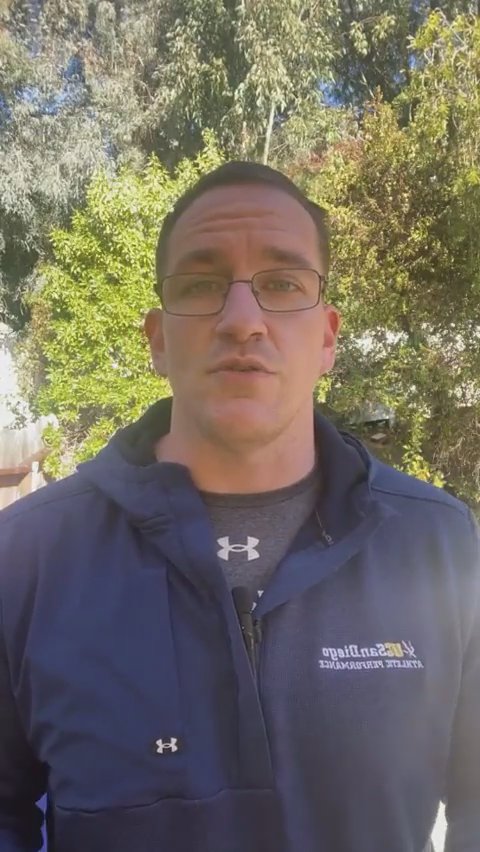
Garrett Westwelly is your residential sport and performance psychology expert. He shares a tool called the WBL framework, which stands for well better learn. The framework can be used on a macro or micro level to promote growth and development.
Hello, Cadre. Happy Monday. Welcoming you to another edition of Mental Skills Monday with myself, Garrett Westwelly, your residential sport and performance psychology expert. Again, happy Monday. Hopefully it's good starts of the week here. We're about one week into the year of 2024, and I think because of that, it's easy to keep looking ahead and sometimes go through the motions of daily life. I think we're all kind of guilty of that, so to speak. But I think a really powerful tool to counteract that and promote growth and development and learning is the skill of reflection.
And we all need feedback in our lives, and that could be done through a coach, a friend, a family member, someone that we trust, maybe a manager, a supervisor, but also ourselves can be a great source of feedback, and that is usually through reflection. So I want to offer you all a tool today, something that I hold near and dear to my heart, that is considered one of my most important things that I love to talk about with athletes and performers and groups and teams, and that is something called the WBL framework, which stands for well better learn.
So WBL, well better learn. And I'll talk about it in more detail here, but I think reflection is a really good skill to have. And like I said, I'm going to do another full fledged video on this with more content, more detail behind it. So stay tuned if this catches your interest. But the well better learned framework is just a better way to reflect. That's all it is. If we reflect, we sometimes don't do it in the most nuanced way. Sometimes, for example, we might be asked, how was your day? It was good.
It was good? Okay, like, what is that? What does that mean? That doesn't really give me much context, and that is for both positive and negative as well. Like, how was your day? It was all right. Or it was bad. Again, not really much to go with there, not really much context. If it was bad or if it was good, how do we replicate that or how do we improve that? You need to have more direction and context. So the well better learn framework goes like this. Instead of that simplistic or binary reflection, it's just a way to add detail.
So it is simply one thing you did well, one thing that you could do better at, and one thing you learned. This could be done on a macro level. For example, the year of 2023, it's behind us, right. But it's still good to reflect on it. What are some things you did well? What are some things that you could do better or improve on? And what are some things that you learned from that year can also be done on the more micro level, such as the monthly reflection, the weekly reflection, the daily reflection.
You can even do it for meetings. Like for me, I like to do it after I do a session with, with an athlete, performer, or a team or a group, is try to reflect on rather than simply how did that session go? And went all right, you know, this happened. This happened. What could I have done better? What could I have done better to facilitate the session? What could I have done better to, you know, maybe structure it? What did I learn from the session? Because you don't learn from experience, you learn from reflection.
And this is a way more systematic way to reflect and help you with learning and improvement and facilitate that growth and development process. It's also good just to reflect on it in a way that, again, is much more balanced. Rather than just looking at the positives and negatives, you're jumping from that. From that mindset of sometimes we immediately jump to the negative part of if we had a meeting, we might jump to, ah, I didn't do this well, or I sucked at this and our mind immediately jumps to that negative.
So that's why the WBL framework starts with, well, it starts with what did you do well? So it shifts that sometimes negative mindset or negative memory into facilitating more positive positivity in that moment. And that's why it's structured that way. And then, of course, at the end is that learn. So it's trying to facilitate learning, growth and development. So feel free to use that, the WBL framework. It's an easy one to remember just, well, better learn. You can use it in so many different ways, which I'll make a full fledged video for you all to talk more about this.
So definitely check that out if you're interested in it. And try to use this tool however you see fit. It can be used again on a macro level, like a yearly review, or on a micro level, from day to day, from minute to minute, hour to hour, all those different things. So that's what I have to offer you on this Monday. As always, spreading love positivity to you all on this Monday. Go have a great rest of your week and go crush the mental skills that we talk about in these sessions. Appreciate you all for listening, and we'll see you next time.
Thank you.
Reactions and comments are for members. Joining is free and takes a minute.