Join me as I’ll discuss examples of how I’ve encountered – personally, clients in my private practice, or athletes in the media – the usage of mental skills and sport psychology
Garrett Westwell is your sport and performance psychology expert. Recently he was working with a high school shot putter. He was struggling with over focusing on the distance he was going to hit. What I tried to harp to him was that you can only control the process. Because the distance will take care of itself.
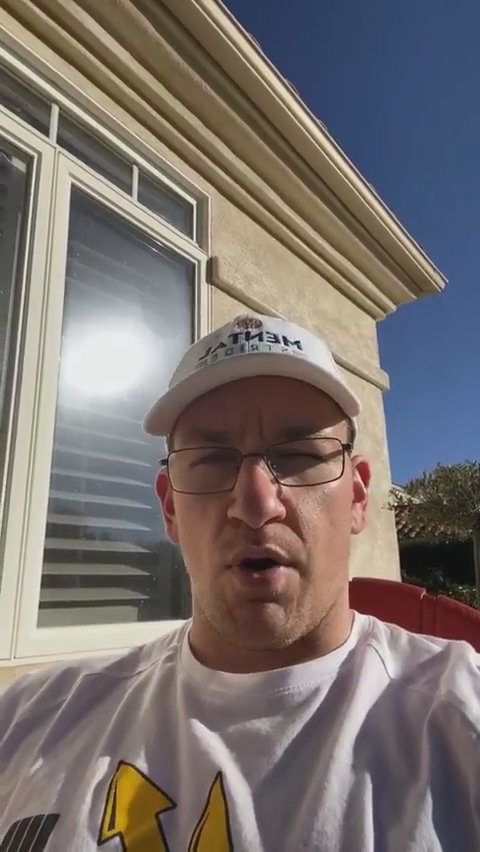
Hello, Cadre. Happy Monday. My name is Garrett Westwell here, your sport and performance psychology expert, coming at you as usual, from southern California, where it's nice and sunny. So that's nice. I know back home from in Wisconsin, it's, I think, in the mid thirties or forties right now. So never trying to make anybody envious or jealous with these videos by shooting them outside. I just. I just love being outside. So regardless, what I want to talk about today is something that I think is important, something I've mentioned plenty of times here, and it kind of goes or manifests in a bunch of different phrases such as control the controllables, trust the process, things like that.
But as some of you already know, I run my own business, a sports psychology consulting business where I work with athletes and performers. It's called mental stride performance. That's why I always wear this lovely hat that says mental stride on it. And recently I was working with a client. He is a high school shot putter, and he was struggling with over focusing on the distance he was going to hit. In a sport like that. That's very common. It's very objective in terms of how you're scored. You're out there on an island, it's just you and yourself.
So if he's trying to throw, let's say, 50ft, that's his focus, and his focus is only on the distance. In other words, it's focused on the. The outcome that he's trying to achieve. Hello, speak wonder. Happy Monday to you. Thank you for joining. So, in that client example, what we were working on most recently is that he's overly focused on the outcome and not enough focus on the process to get to that outcome. Now, when we look at an outcome or something down the road, what I like to call a telescope goal, it's really distant.
That can be great for motivation and give us the direction of where we want to go. However, what I tried to harp to him was that you can only control the process, you can only control the present moment. And the phrase that we kept echoing is that the distance will take care of itself. Now, that's true. In shot put, you focus on your cues, you focus on your mechanics of your movement, and the distance will literally take care of itself. But I think that's applicable to all of us in that we all have goals, we all have outcomes we want to achieve.
We're all. That's just human nature. We want to strive to do something. And when we focus on that, the proverbial distance that we're trying to achieve the outcome that we're trying to get. Sometimes we just need to take a step back, focus where our feet are, be in the present moment, focus on what we can control, and let the distance take care of itself. So I would ask you, for anybody else who's listening is what are you doing in your life right now that you're overly focused on the outcome rather than the process to get there.
Because again, the distance will take care of itself. So that's all I got for you all today. Hope you have a great rest of your Monday and we will see you all soon.
Reactions and comments are for members. Joining is free and takes a minute.