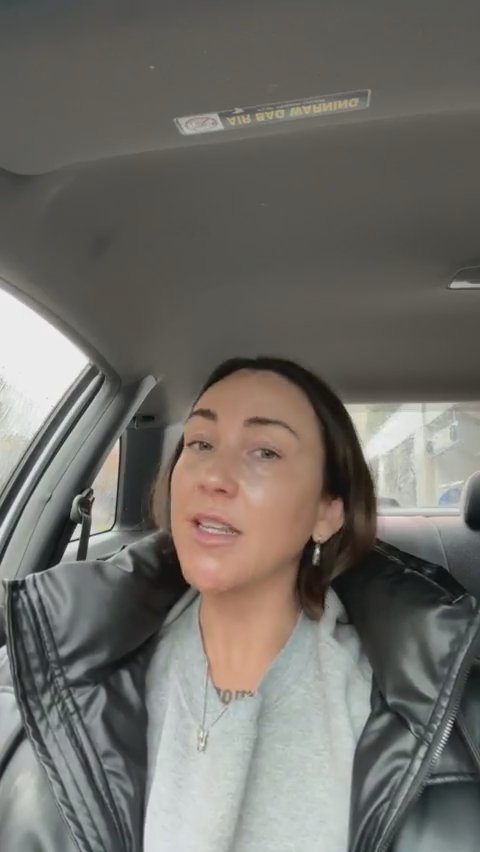
Rachel sits in her car and explores feelings of hopelessness tied to seasonal depression, inviting a shift from expecting hope to opening to possibility and grounding in the present, plus a simple gratitude practice.
Happy Wednesday, Cadre fam. It is a very rainy day in Seattle. So we are going to chat on the road, and hopefully we don't have any issues technically today. Maybe this will be a way for us to find out if it's my Wi Fi or my data.
This time of year often brings about seasonal depression. Instead of trying to focus on hope, instead create a bridge for yourself by focusing on possibility. How do we treat anxiety? We bring ourselves back to the present moment.
Rachel: It's so hard to focus on the here and now sometimes. I'm gonna go beauty hunting today. Finding three things to be thankful for helps me. If there's anything you want me to talk about, please drop it in the comments.
Happy Wednesday, Cadre fam. I am sitting in my car today. It is a very rainy day in Seattle. I am very much on the go today. So we are going to chat on the road, and hopefully we don't have any issues technically today. Maybe this will be a way for us to find out if it's my Wi Fi or my data or if it's something else. So I wanted to share today some. I wanted to talk today a little bit about hopelessness. And part of the reason for that is this time of year often brings about seasonal depression.
And as someone who has struggled with depression, major depression, seasonal depression, for many, many, many years, I'm very aware of that feeling of hopelessness and how much that is intertwined in the experience of depression. And so I wanted to chat a little bit today about this idea of hopelessness and ways for us to reframe or re examine hopelessness, maybe in hopes of experiencing a little bit less. Hi, Luke. So the first, there's kind of two ways that I. Hi. Speak wonder. There's two ways that I kind of navigate hopelessness.
So maybe one will resonate, maybe both will. And if neither do, that's okay. Let me know. I think it's wonderful that we all experience life differently and we cope with things differently. Hi, Lynn. And I think it's good for us to have dialogue about what's effective and what's not, because not everything is going to work for everyone. So. So hopelessness. Hopelessness. It's so much the belief that nothing will get better. Right. It's the belief that there's no chance of change in the sense of improvement.
And so one thing that I really like to think about when it comes to hopelessness, when we're in a season of maybe depression or low mood or feeling hopeless, it can be really hard to believe in this concept that's so far away from where we are. Right. So the idea of having hope is tethered to something good. Right. Hope is about something positive happening, about something better happening, about something changing for the better. And when we're in a really low space, it can be really hard to connect with that idea.
It can be really hard to have belief in that. So I like to invite folks to, instead of focusing on, hopefully focus on possibility, because possibility is a little more neutral, possibility is a little less biased, it's a little bit more gray and in the middle, and it allows us to sort of think about, okay, I might not be able to connect with this idea of hope or this idea that things will get better. But maybe I can connect with the idea of possibility that things will change, right? That things might be different, that things might not always be this way, and that feels a little bit closer, that feels like something I have access to.
And so possibility is a way for us to start to move just a little bit more towards hope. So if we're in a state of hopelessness, I'm going to invite you to, instead of trying, focusing on hope, which is such a far distance for us to start, to instead create a bridge for yourself by focusing on possibility. So that's the first thing that I like to do when I experience hopelessness. The second thing I like to do is I like to sort of conceptualize hopelessness the same way I conceptualize anxiety. Bear with me.
So hopelessness is about the future, right? It's about a future that will not be, a future that will not come, things improving or changing in the future, right? And anxiety is about fears of what might happen, fear of what could be, not knowing what might happen in the future. Anxiety is inherently a fear of the future in some capacity. What will be or what won't be. So how do we treat anxiety? We bring ourselves back to our body. We bring ourselves back to the present moment. We focus on bringing ourselves out of the future and back to what is here and what is true.
So what if we treated hopelessness in the same way? Right? What if instead of trying to find something out in the future to hold onto with hope or imagine or visualize something in the future that maybe could be good, which might only distress us further because we're already in a state of hopelessness? So to try and create or imagine something positive in the future when we already don't think something positive is going to happen can probably exacerbate that hopelessness. So what if instead of trying to create something in the future that we can have hope for, we return to the present moment?
We focus on our physical body. We focus on what we're feeling in the moment and honoring that. We focus on what's right in front of us. Like right now, it's. I'm sitting in my car and it's raining. There's a red light in front of me. I'm next to a QFC. I'm talking to all of you on this beautiful app. That's what's true, right? So if we can focus on what's true and in front of us, naming facts, naming our senses, right, without adding stories or adding anything to it, we can start to get a little bit more grounded.
And sometimes that supports us when we get grounded and then maybe using other coping skills, right? Because oftentimes, if we're feeling the hopelessness or thinking about a future or trying to think about something getting better, and we can't, that dysregulates us. So we get upset, we lose touch with our body. Maybe we start to have a fight or flight response, right? Create that same sensation that we have when we feel anxiety. It can create panic. So to bring us back to the present moment, we focus on our physical senses.
We focus on what we can see, hear, touch, taste, smell. We focus on what's right in front of us, and we ground. And then from that grounded space where we're regulated, then maybe we can start to move in a direction of other coping mechanisms to cope with our depression. So these are my two ways of coping with hopelessness. I hope that they were helpful. Let me know in the comments if either one resonated. If one resonated more than the other, let me know. And as always, if there's something that you want me to talk about on lives or in my videos, please let me know in the comments.
I'm super receptive to that. And I would also love to hear how you cope with hopelessness. What's something that you do? Leave a comment and let us know, because someone else might read what you do and think that that's really helpful and much more helpful than whatever I just said in the last five minutes. Lynn says, yes, you've definitely helped me to pause, breathe, and, in fact, find around me. I'm so. I'm so glad. Yeah. Speak wonder says, I like hanging on to possibility. Okay, great. Good to know.
Luke says, beautiful. Thank you. Still struggle on focus, though, here. Yeah, it's difficult. It's so hard to focus on the here and now sometimes, especially when we have so many things going on, so many responsibilities to attend to, and also, like, so many things that we care about and want to attend to, it can be really difficult to pause and just focus on what's in front of us. So it's. It's not an easy task, and it can happen in these micro moments. Right. Like sitting in my car, like, with all of you for five minutes.
That's not a very long time in our day. And, like, I feel grounded right now because I intentionally, while I was talking to you, pointed out what I could see around me. Right. So Rachel says it definitely helps me to find beauty in things around me right then and there. Yes. Oh, I love that song much. Yeah. Like really focusing on, like, what's actually what is beautiful around me. Right. Like, or how can I start to see beauty in something that maybe I didn't otherwise see beauty in? Like, how can I see beauty in this rain, which I ordinarily might call disgusting or be really upset about.
Right. But maybe I can see beauty in it because it's providing our trees and our grass with the much needed water that they have not been getting. We've been having a really dry winter, and that means that our spring is going to be more beautiful because this year, rain is here. And so how wonderful is it that this is a time and a place when greenery and flowers are being born, right? Speak. Wonder says. Finding three things to be thankful for helps me. Ooh, I like that. Yeah. So practicing gratitude.
Yeah. So gratitude is a really wonderful way to battle hopelessness. And it also brings us back to the present moment because we're focusing on what is right. We're focusing on being grateful for what already is or has already happened. So that takes us out of the future again and brings us back into the present moment. So gratitude is a wonderful, wonderful practice. I love that you brought that up. Yeah. Beauty hunting is what I call it. Cute. Oh, my God. Beauty hunting. I am so using that. I love that so much.
Oh, my gosh. Rachel. Beauty hunting, y'all. I'm gonna go beauty hunting today because I need it really bad. I woke up in a funk, and I was feeling really overwhelmed and just, like, in low mood. So y'all have helped me today. I'm gonna do some beauty hunting today. I'm gonna find three things to be grateful for. I love that. That's incredible. Rachel says I didn't come up with it. Wait, okay, where is it from then? Also, clearly, my car is the much more effective place to go live because we're not having any glitches.
So you have excellent service in my vehicle. I don't know. Luke says this was beautiful. I'm so glad, Luke. So glad to chat with you and see you here. Lynn says we have that now with Rachel. Yay. That makes me happy. All right, my loves, I will see you. Oh. Rachel says it's by Jen Paslov. Okay, I'll have to look that up. That's awesome. m.. PST. If there's anything you want me to talk about, please drop it in the comments. Once this has ended, it'll be recorded on my profile, so you can still leave a comment after I log off.
So if there's anything you think of that you would love to hear me talk about, then just let me know in the comments and I will happily do a live on that. Wishing you a beautiful rest of your Wednesday. Happy beauty hunting, happy gratitude, finding happy possibility, and I will see you next week. Bye.
Reactions and comments are for members. Joining is free and takes a minute.