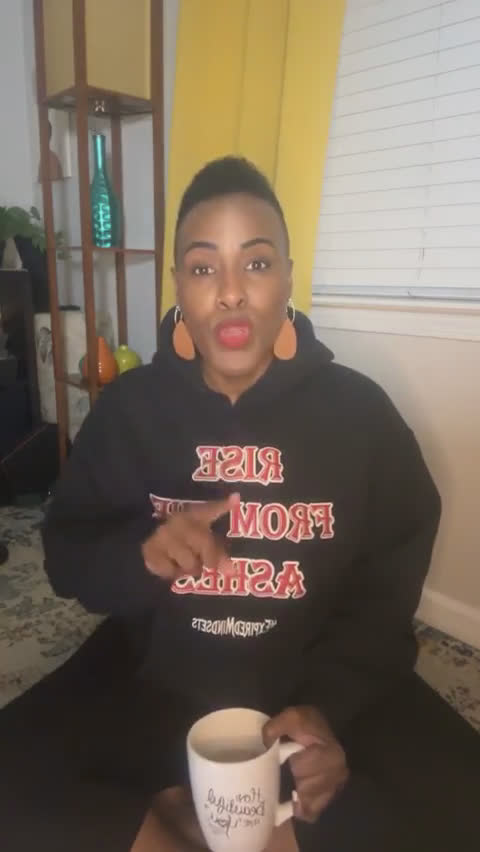
Dr. Charryse Johnson explores how pain can signal a call to heal, links enoughness with acknowledging wins, offers guidance on holding boundaries when supporting others, and leads a breath practice for pain awareness.
Doctor Charryse Johnson is a licensed clinical mental health therapist, mindfulness practitioner, and author. She wants to help you focus on your mental wellbeing. What does it mean to experience both peace and harmony if you do the work?
Cadre: Along with a winner, I want you to start considering something else. JC Lepold talked about the concept of enoughness and knowing that you're enough. When you acknowledge your wins, that is a practice in enough.
Pain has multiple sides. I'm going to focus on the two sides of pain and their impact on our well being. The one side of pain that I want to highlight is that pain has purpose in our lives. And the purpose of that pain is to push you to heal, both mentally and physically.
Pain has purpose in our lives. Physical, mental pain. And it's important for us to listen, to acknowledge, to recognize it, and to address it. But there's a way to support other people that does not mean you take it on.
When someone is in pain, the choices that they make are directed toward you, but aren't about you. A healthy individual will appreciate your presence, but not expect it. Don't be in a situation where we're taking on the pain of other people in unhealthy ways.
As you breathe, send breath to whatever pain points exist in your body. Is there any pain that you are carrying in this moment? And how can you loosen your grip? Please share this message back to those who are sending them with someone who may be in need.
Hello, friend. I'm so glad that you're here. You might be saying, are we friends? Of course we are. And if we're not, we will be by the time this is over. But if it's your first time in this space, welcome. I'm Doctor Charryse Johnson, a licensed clinical mental health therapist, mindfulness practitioner, and author. And I come into this space, one because I love it and it's an amazing space. But ultimately to help you focus on your mental wellbeing. And what does it mean to experience both peace and harmony if you do the work?
Good morning to all those who are here. I'm gonna slow down and give everyone a minute to find us to join. I know we have some new individuals that are coming on. I always ask you two questions, where are you? That's helpful for others and just gives me an idea of where everyone is coming from. So whether you're doing this live or on the replay, and what's your win this week? And I even want to maybe let's shift this for a moment. If you're familiar with JC Lepold, who is another creator here on Cadre, I had the incredible honor of meeting Kim and Luke Winlant and Rachel Havocas and Doctor Leslie Davis this weekend at recalibrate.
If you're one of my recalibrate peeps and you were there, I miss you already. And so he talked about the concept of enoughness, and this isn't my live, but I don't know. It might be, but it's a good way to start us off. So along with a winner, I want you to start considering something else. So I'm going to give you two options each time we meet. So he talked about the concept of enoughness and knowing that you're enough and took us through some various exercises to really deepen that thought. And then a client of mine and I, in session, actually talked about what would an enoughness practice look like?
Because essentially I was kind of helping her consider, well, when you're in the place that you believe that you're enough, and this is for you, too, what does that look like? Right? What do you do? What boundaries are in place? What do your attachments look like? How are you talking to yourself so that you recognize, oh, I'm absolutely enough. So when we acknowledge our wins, and I love seeing them, everything from a birthday donut to making sure you get adequate rest, not giving up, considering setbacks, that's a big one.
When you acknowledge your wins, that is a practice in enough, it's saying that regardless of all the spaces and places in my life that I may feel like I'm not doing what I want when I acknowledge my wins, when we acknowledge our wins, it is a reminder that we are more than enough, even without the winds, just for the fact that you're human. But it just helps you shift perspective. So I really want you to think hard and the winds are not optional. If you're in this space, I want you to draw those out and I want you to also get comfortable with sharing them.
Because there's also parts of us that really enjoy what we do for other people, but really struggle to acknowledge that we're doing well. I was not going to let me come on this live without coffee. So that's kind of your mini practice. Is thinking about that enough? I want to focus today on the two sides of pain. Pain has multiple sides. I'm going to focus on the two sides of pain and their impact on our well being. So I want you to consider this. I have a close friend of mine and she is going through a significant amount of pain.
Ironically, I have a few people in my life. I'm surrounded by people, you may be also that are experiencing pain, but in particular, I have a few people who are recovering from some physical things and their process of healing is painful. First key point, the healing process includes pain. And that's something that we don't like to consider. So the one side of pain that I want to highlight and really bring to mind, even when it comes to being well and well being, is that pain has purpose. It has purpose in our lives.
So if we go through life and our goal is, I want everything to be wonderful and positive, and I don't ever want to experience pain, we're not going to be prepared when it comes, and it doesn't work that way. So let's take physical, for example. There are physical dynamics that happen in our body that let us know something's wrong. The brain has a reward center and a pain center. And although we really spend time going back and forth between the two, those signals are a neurobiological dynamic that is extremely important to making sure.
Congratulations, Beth Schofield. Schofield. That is amazing. Sorry, inside joke there. I just saw that she earned her senior fitness specialist certification this week. So that's amazing. Physical pain activates in our body and lets us know something's not right, something needs to be addressed. There's also a psychological to physical dynamic where you may have psychological emotional pain that shows up in physical ways. And I want to pause here. If you're taking notes, stop for a moment, put your hands down, and I want you to pretend that there's a bright light that's going to scope all the way down the top of your head to the bottom of your feet.
And I want you to notice, is there any tenseness, tightness or pain that is currently existing in your body at this moment, in any capacity? And then if you notice something, because you may not, I want you to ask yourself, how long has that pain been there and what might it be trying to tell me? And if you're comfortable, you can put in the chat what you noticed when I asked you to track your pain. You don't have to tell me how long it's been there and what it might be trying to tell you. That's your personal work.
But I do want you to acknowledge, yeah, my head has been killing me all week and I've been trying to ignore it. Yes, my back and my shoulders are super tight, and not because I've done anything physical, because pain has its purpose in moving us to a place that allows us to stay whole and to continue to be whole. And if we ignore that pain, then it escalates and it intensifies and it will push us to deal with it. So it's important not to see it as an inconvenience, even though it may feel like it is.
But it's important to recognize that pain has purpose. And the purpose of that pain is to push you to heal, both mentally and physically. And physical pain always impacts our mindset, because it's really easy, right, to have a great and positive mindset when everything is going well. But when we are struggling and we feel like things are limited and then our physical effort is limited, it impacts us here. And so part of being well is also learning how can you continue to be compassionate and kind to yourself even as you're working through your physical, mental pain that might be connected or might be separate?
That little practice we did, we did for 20 seconds. That's an actual check in practice that I would encourage you to intentionally place in your life. So the side of pain that we just focused on is the one that talks about pain having purpose in our lives and the importance of us recognizing it, noticing it, listening to it, and of course, addressing it. I'm going to take a sip before I go to the other side. I would suggest you do the same. The other side of pain is quite. What's the word that I want to say?
Let me describe it, because there's not one word I want to say. The other part of pain that I want to talk about is how we manage when the people around us are in pain. Pain has purpose in our lives, but it also has pain. Purpose has pain in the lives of others. Here's where this part of pain is coming from. Let me tell you a quick story. So I was talking to a young lady, and she was in a situation where she's abroad with a friend, and her friend is going through pain and going through a hard time.
And she was like, I'm really worried about her. I'm worried about her to the point that I cannot sleep. She is struggling. She's anxious. She wants to make it better, and it's causing her distress. So there's also moments in life where you have additional pain because you are taking on the pain of other people. If that's you out yourself, if you're the person that you're like, why you have to call me out this morning? That is me. If people that I love are not okay, I take it on. And I want to give you a few caveats with what take it on looks like take it on means you determine that you need to make it better.
You start overcompensating and doing things for them. You're really close to them and get even closer and encourage them. You're working really hard to do all the things in their life. I know. I knew you all were here, right? Because you're like, I need to make it better for them. But in the process of doing that too much, here's what's happening. You are stepping into a place that could disrupt them from learning how to manage and deal with their own pain. So, in essence, even out of the goodness of your heart and your anxiety, you're enabling them.
You could potentially be reinforcing to them a message that says, I don't trust, or I'm afraid to trust you to do this on your own. So let me step in and help you, because I'm better at it. I'm gonna take a sip. But the other thing to consider, this may not feel great, but, you know, I'm here to illuminate truth in your life to consider, is that when someone else is going through pain and I step in, am I stepping in to make them feel better or to make me feel better? And could that be selfish? Now, don't take this to the extreme of, well, I thought we're supposed to be there to help other people.
Of course we are. But there's a way to support other people that does not mean you take it on. You determine to fix it. You make all their favorite meals, you start picking out their clothes, you purchase things. Let's go here. Let's do this. Because there is an element of that where you're managing your own mental well being because of some core fear or some core archetype, meaning this is the role that you took on in your family. So now you think, oh, when anything is wrong, it's up to me to fix it and make it better.
You could even be in a vocational role, especially those of you that might be the pastors or ministers, where you feel like, well, that's what I'm supposed to do actually. No. Recap two sides of pain. Pain has purpose in our lives. Physical, mental pain. And it's important for us to listen, to acknowledge, to recognize it, and to address it. Pain has purpose in the lives of other people. And it's important for us to notice when we're taking on additional pain because we believe that it's up to us to fix it.
And as a result of that, we are not trusting that other person to navigate their own pain, even if they have proven that they can't. Some of that may be because you were always there, you always stepped in because you needed to manage your own distress. One of the most key aspects to our well being is knowing the balance and knowing the line between our work and theirs, and letting people do their work, even when it makes us extremely uncomfortable. Because if we don't, that's when we go into high gear, that's when we overcompensate.
That's when we layer on their pain with ours, sending stress to the brain, firing off the limbic system that says everything is an issue. And then it pours down into our digestive system and sends us to a line of cravings that we're trying to soothe. So sometimes, even when it comes to the whole dynamic of your own health and how you're nourishing yourself, you are trying to comfort yourself from the complex layers of pain. But I want you to really take inventory and ask yourself, well, how much of my pain is my own, or how much of my pain is, is what I am choosing to take on for other people because I'm afraid of what might happen.
I'm afraid of how it might impact them and how that's going to impact me. And I don't know what to do. I hear that all the time. Well, what do I do when someone is struggling? Nothing other than exercise the power of your presence. We underestimate that. Just being present and sitting with someone in silence and not interrupting with our words and our antidotes is a powerful way to say, I am here with you in this and not take it on. So how do you move this from thought to action? What do you do with what we just talked about?
You've got part one down pretty well. And then I want you to begin the process as you go through this week and the weeks to come of evaluating. Hmm. How am I handling other people's pain? Am I patty positive? And it's up to me to always lift them and make things great. And I don't want other people to be down. And when they're down, I force them to come over to my positivity because that feels better. Guess what? That's actually selfish. You're having a hard time, but it makes me uncomfortable. So I'm going to come over to you, and I'm going to be great, and you're going to fall.
Wow. Is that about them, or is that about you? The power of presence. It is one of the most valuable ways to support someone and simply. Then, if you want another tip, ask them. As you walk through this, let me know how I can support you. You're speaking confidence into them, letting them know that they're going to be walking through it, but your presence will be there, and you are waiting for them to come and to let you know. So it allows them to maintain their responsibility around their part, because this is a whole nother live.
I'm gonna try and wrap this up here. When you are the person who constantly steps in to help others people with their pain, you also get punished by their pain when things don't go well. Well, you told me to do this, and I listened to what you said, and now see what happened. So you put yourself in the position for their anger and their frustration and their lack of skills to be projected on you, because you put yourself in the middle of something that you were not designed to be through, the power of presence.
Okay. So as you go through the week, I want you to notice your own responses to pain and then being able to ask yourself what that looks like. So I want to address Mimi. That's a really great share for those of you that might see it. She's talking about the one time she didn't help someone with their pain, they were lost. And that is typically a fear. This is a really hard truth. And hear my heart when I say this. When someone is in that level of pain, the choices that they make are directed toward you, but aren't about you.
So that means if someone is holding you to a standard that is so high that they expect that when they're not okay, you're supposed to be there, that's a red flag. A healthy individual will appreciate your presence, but not expect it. And so while those moments hurt, know that those are also often people who have personal dependency issues and attachment issues and may have cut you out of their life. I don't know the whole dynamic. Primarily because you no longer were their fix and that's a clear sign that they're not healthy.
Let me say this one other thing. The other reason why we don't want to be in a situation where we're taking on the pain of other people in unhealthy ways is because there's going to be seasons in your life where you're not always going to be able to give that right. There's going to be moments in your life where you have so much pain going on that you don't have the time, you don't have the capacity to be that for someone else. So you don't want to position yourself to being someone else's everything.
That's not your goal. This was a little heavy today, but it was important. And if you know me, you know that's how I float. But let's end with a few moments of mindful breath. Let me know if the music is too loud or not. Come to a comfortable space. If you're comfortable, one hand over your heart, one hand on your belly, in through your nose and out through your mouth. And truthfully, there is a skill, what we call tip temperature. So if you have a warm cup, another option is literally to wrap your hands around the warmth of the cup.
Allow that warmth to penetrate all throughout your body. And I want you to visualize that as you breathe, just for the next 30 to 60 seconds, that you are sending breath to whatever pain points exist in your body. Maybe that's your head, maybe that's your neck, maybe that's your shoulders, maybe that's your gut, your hips, your knees. It could be anywhere in your body. And while you're here, I also want you to consider, is there any pain that you are carrying in this moment? And how can you loosen your grip?
Maybe you're not ready to let it completely go. It can be complicated, but can you loosen your grip? If you feel like it's an area where you're holding, holding on tight, I want you to squeeze one of your fists together. Progressive relaxation as tight as you can. Tight, tight, tight. Imagining that pain that you're holding onto and then slowly release part of it and open your hand and lay it down. If your eyes are closed, then open them back up and bring them back to center here with me. Look into my eyes as I give you these final words and remind you that you are enough, you are doing enough and it is okay for you to center your needs, your health and your well being and then operate from the overflow of that versus walking around and feeling depleted.
Please share this message hearts back to those who are sending them with someone who may be in need. Our heart is to bring those that cannot access coaching or counseling or therapy or just don't even believe in it into this space. So as you feel comfortable, share this with others and I will see you next week. Oh yeah, it'll be next week. But also stay tuned because I may bump this time a little bit later to eight and I'm gonna pop into Mondays starting soon. Have a good one. Oh.
Reactions and comments are for members. Joining is free and takes a minute.