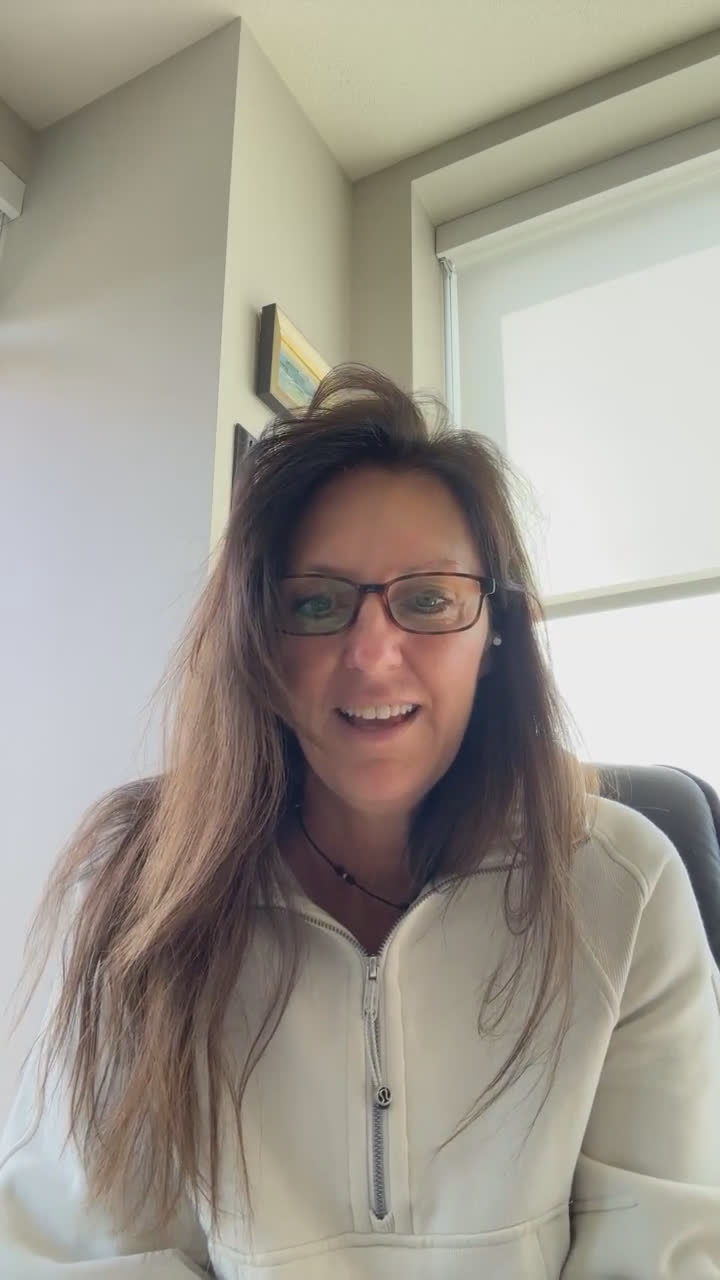
During this time, Jean Nitchals, Certified Coach and Business Consultant, will discuss how to lean into your strengths at work to grow into your authentic self as a team member, leader, and as a human.
Jean Nichols: Happy Monday. Did you have a nice weekend and where are you located? Today for our hot topic for how to be bold in the workplace, I'm going to talk about investing in yourself.
The seeds that we plant today are the investments for what we grow tomorrow. Investing in yourself is an investment in your future self. When you're naturally curious about a topic, your retention rate will increase.
Mel Myers: Have you invested in any trainings recently or are you thinking about trainings that you would like to do this year? Letting them know that you are curious about other things to develop may also open up a dialogue with your manager.
Mel says she enrolled in, they enrolled in a course to learn about investing. Sometimes when we invest in ourselves, we really can find a new passion. When we invest into our passions, it can actually grow into something. Being bold and authentic in the workplace means bringing our natural curiosities to life.
I'm here on Sundays at 1230 for some me time. Mondays for professional development. These might be your opportunities to invest and learn, which is a really great investment. I hope you have a great Monday and I'll see you soon.
Good morning, everybody. Happy Monday. I am Jean Mitchells. I'm here for the art of being bold at work today. It's a beautiful Monday here in Minneapolis. It was seventies over the weekend. I'm excited for another beautiful Monday to start. Good morning. Good morning. Hello, Mel. How are you today? I think someone else popped in live as well. My name is Jean Nichols. I'm really excited to be here with you today on this beautiful Monday. Just holding space to see if others pop in. Did you have a nice weekend and where are you located?
If you are dialed in live or even on replay later, I would love to start to learn where everybody is located, where you're from. Wonderful. Oh, what a great response. How often do we get the response, I'm okay or I'm doing well. Thank you for shaking it up and giving. Wonderful. Actually, I'm doing fantastic today. I have been really busy this morning completing some things on my list. Oh, New York. Amazing. I ran the New York marathon this past fall. It was beautiful. I love New York. So today for our hot topic for how to be bold in the workplace, I'm going to talk about investing in yourself.
So we've spent a lot of time, if you've watched any of my chats on replay around strengths. So I'm a certified coach. I do consulting work. I design business strategies, changing communication strategies. And I love working with individuals and leaders to help them grow and identify ways that are going to be natural ways for them to really grow into their careers, grow into what is the next level for them, whether it's hierarchy level or just finding a new job, maybe jumping ship and starting something new altogether.
So I'm really grateful that when I get to work with all different types of people through that transition, and today, what I wanted to talk about is investing in yourself as it relates to trainings that you might consider joining or logging into. It's tax day today, so I don't know how we all feel about that. I have been working ferociously with my accountant to finish out my taxes this year. And it's fascinating because in my conversation with him, he was like, gene, what happened this year? And I was taken aback by the question because it was a good year.
And he's like, your expenses for education are down significantly from last year to this year. What's going on? And so we had a conversation about that and I thought it was really interesting as a reminder of, you know, investing in ourselves. So when I worked in corporate America, I have a finance and technology background. I worked in corporate finance for a long time. And one of the reasons I started my own company is I wanted to be able to choose what classes I invested in. I'm a constant learner, and I was getting a lot of pressure in a really great way from my mentors, not in a negative way to get my masters, but when I kept trying to apply and get the momentum to get a master's or any kind of degree, it really doesn't matter whether you're, you know, getting your first degree, going to college, whether you're completing high school credits.
It really doesn't matter what the education is, doesn't matter what the investment is, as long as you're investing in yourselves, in something that will help you work into your future, the future vision of who you want to become. I say this a lot with my clients. I also teach a lot of spin classes, so I'll say this in my spin classes as well. The seeds that we plant today are the investments for what we grow tomorrow. We're investing in our future self, the seeds that we plant today. And when I think about that, the minutes that I invest today and what the impact might be a week from now, six months from now, a year from now, it changes a little bit of my perspective on what I might choose to invest in.
Sometimes that can be mental health. So making the new habits of joining Cadre live streams or listening to them on repeats is an investment in yourself. You're investing time in your day, in yourself, to learn, to process, to find new tools, new resources, maybe even a community of people who might be growing and learning or struggling and processing same or similar to you. And in my conversation with my accountant, he was right. I didn't really invest that much in the last year in my own professional development, which is abnormal.
But I'd spent a lot of time teaching other people this year, which was really, really equally motivational. And I also learn a lot when I teach because I get other people's perspectives with me. So when I think about that being bold at work and why I chose to leave corporate America, there is many reasons. It was time for me to fly on my own and see what could happen. And in those conversations about getting my masters when I worked in corporate America, there was a lot of pressure, I'm gonna say pressure with an air quote, to get more education.
And because I worked in finance, they wanted me to get a finance masters, and that just didn't work for me. And it was almost like I had to do that to get promoted, and. And I decided that that didn't feel right for me. So I took a pause. I took a time out. I plot twisted. I got certified in some other things that I was really passionate about. Some of them are coaching tools so I can do personality inventories to help coach leaders and teams. I invested in a couple of other little certifications that I really found that fit with me and what I wanted to accomplish next better.
And I find that when I'm diving into something I'm really curious about, I retain a lot more. So from a strengths based perspective, if you are naturally curious about a topic, your retention rate will increase. The information that you then pay forward to other people. Maybe you educate or train other people. That increases. If you educate yourself or find a certification, even that you really, really like, or a book or maybe a community education class. It doesn't have to be grandiose. It really is something that you're naturally curious about.
You invest that time, the rate of return that you get back on yourself goes up significantly. And so as I'm planning forward my year, I know that we're already into April, but I think about my future investments. I went out over the weekend and I looked at a few things that I was curious about or that I've had on a short list of things that I wanted to explore more and I picked one and I just submitted to get an inquiry for more information and I will look at that information over the next day or two.
I'm a very spontaneous person, so I don't need to look at information for very long. And I have signed up for certifications that I was like, oh, this was bigger than I thought it was going to be, meaning more time intensive and you figure it out. It works out okay. So if you are someone that likes to analyze a little bit more, my challenge for you is how to stay out of analysis paralysis before choosing to invest in yourself and whether your company reimburses you or not. You might be surprised.
There are a lot of organizations or companies that you might work for that have some internal trainings that might be really good that you can go through. One of the clients I'm working at right now has a long list of online modules people can go through. But I've also found or discovered that if you come up with a business case for why a training might be valuable to you and you present that business case to your manager or supervisor, they might be able to find some budget to be able to either pay for the whole thing depending on what the expense is, or at least pay for part of it.
So even if you can get a little bit of a reimbursement from your company, if that's available, that's great. I've also found that there are a number of organizations now that recognize that there are a lot of people that might want to go through their trainings but may not be able to afford to right away, and they have payment plans. So finding what is going to work for you? But the first thing that I always, always invite people to do is make a list of all the things you're the most curious about.
Because when you are the most curious, the most inquisitive about a topic, you are going to learn the most, it's going to stick with you. If you find that you are energized about the topic versus drained by the topic, you will get more out of that learning. You apply more, you will educate more people, and you will plant a taller seed, a seed that will definitely grow more in the future version of yourself, professionally and personally. Now in our jobs, we might have certain trainings that we need to go through because that's what our company or organization says that they mandate or they have maybe a smaller list than maybe what all of your curiosities are.
You will still learn something from those. Maybe you need to go through a recertification to stay qualified to do your current job. You will always learn something new, the amount of what you might learn or the amount that you might retain. Because if you're not excited about it, you're not going to invest all of you into that training or learning. So, Mel Myers, I see you on the call here. Have you invested in any trainings recently or have you started to think about any trainings that you would like to do this year?
If yes, I'd love to hear in the chat what you're considering and if it's something that brings you joy that you're naturally curious about or something you feel like you have to do for your job. Now, again, there are going to be many times where we need to go through trainings because it's what we need to do first, our current job. And when we think about being bold and authentic in the workplace, having those conversations with our supervisor, our manager, letting them know, oh, good. Thank you, Mel.
Letting them know that you are curious about other things to develop may also open up a dialogue with your manager to have them actively be a part of what that future career journey might look like for you. So, as I mentioned, I worked in corporate finance for a long time, but my sweet spot was really learning new technologies and building business models. And so when I got to understand better what really energized me about my work, I could have a better conversation with my manager to say, okay, when I go to trainings this year, or I found these trainings for free through some technology companies, I got permission to be able to go through those trainings, either paid for by work or I got the time off from work to be able to attend the trainings.
Because what I brought back to my job was more curiosity, more energy, and more ideas and solutions to be able to build other business models for other business teams within my, my company. So it actually worked out to help me learn more about myself. I could apply it into my job, and I also got more RecOgnition from my manager and my manager's boss so that they could start to put me on more special projects. Mel says she enrolled in, they enrolled in a course to learn about investing. Definitely totally not in your career, but something you're curious about.
Did you enjoy the course? Did you find that you learned a lot? And maybe an additional question, did you start doing this on the side as a hobby? Sometimes when we invest in ourselves, we really can find a new passion. And there are times where when we invest into our passions, it can actually grow into something that maybe can become a career or a career change. My example, a couple of examples. One, I became really curious around sound baths. It's one of the hats that I wear. It's something that I started doing in my personal time, using crystal bowls or varying instruments to do meditation with sound.
I find that for me, I can find greater impacts meditation when I use sound of a particular style or type. And then what I did is I started investing and going to some classes because I was really curious about it. And about two and a half or three years later, I now do sound bass publicly. And so my passion that became something for me has also turned into a work or a career opportunity that I'm able to do in our community. And I do. Well, I have one tonight, but I do them at least one or two a week, sometimes three or four in a week in my extra time, because it's something that I love to do.
It helps me because it helps me to learn how to meditate and be more present, and I also get to help other people. So a passion that also turned into a little career, a side career, a little side hustle. So when we look at what it is that we're curious about over the next week, the next month, the next year, how might we choose to invest in ourselves, whether we need to financially invest or time wise invest so that we can plant the future seeds of our future self today and invest and grow into that.
Because when we plant those seeds, we need to water them, we need to have the right soil, we need to pull the weeds right, we need to feed it food, plant food. So there are all these things that we need to do to have a beautiful garden, but we are that garden. And so we get to plant some of the seeds. We might find 50 different things that we're curious about and we try to learn about all 50. Eventually 46 of them are going to fall behind. Only 3123, maybe four will stay. Something that we continue with and those are going to be what flourish into something new.
So being bold and authentic in the workplace means we're bringing our natural curiosities to life. We're identifying opportunities that we can invest in to learn, investing in a conversation with our managers or supervisors. If you are someone who is independently employed, then finding those opportunities are even more important because it can help you network, it can help you grow, it can help you create maybe a new opportunity that you can offer up to your customers, whatever customer or customer type that might be.
So thank you for dialing in today. If you're listening on LEET replay, tell me what kind of educational opportunities you're choosing to invest in for yourself and how that is going for you. I look forward to talking to you again. I'm here on Sundays at 1230 for some me time. Mondays for professional development. There's some really great content that'll come up later today as well. So if you have time, dial in. These might be your opportunities to invest and learn, which is a really great investment.
I hope you have a great Monday and I'll see you soon. Bye.
Reactions and comments are for members. Joining is free and takes a minute.