Rachel reflects on coping ahead and radical acceptance from DBT, shares personal stories about anxiety around planning and control, and discusses using flexible strategies to manage uncertainty and prepare for everyday needs.
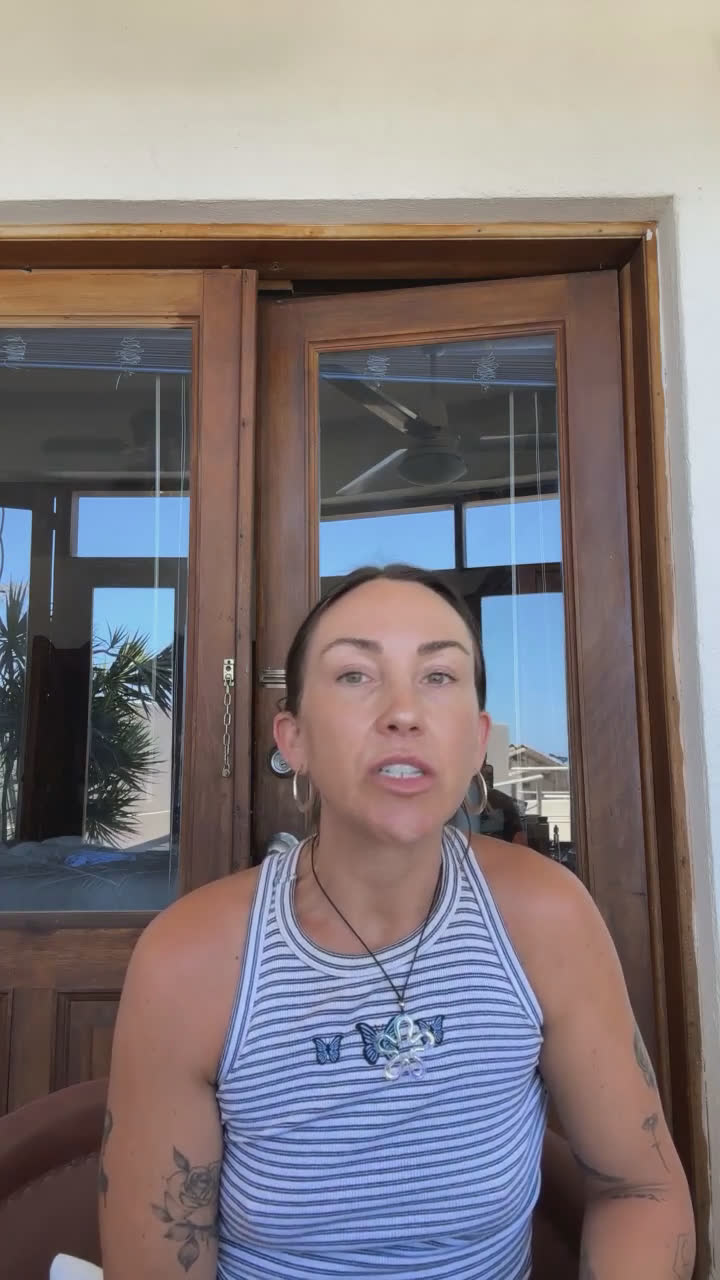
Mitadia. Hola from Mexico again. This is Rachel's room today, a little sunroom. Here's the soul. I'm glad you're all here.
When I was in eating disorder treatment, something that really helped me was a dialectical behavior skill called coping ahead. What I've learned as an adult is that I cannot predict the future. But I can ease that uncertainty by having an idea of what I want to happen.
The other one is radical acceptance. How can I radically accept that things might, they might go wrong. Being able to be flexible and fluid and go with the flow and let go of our desire to control outcomes can allow us to enjoy the moment.
I am partnering with a documentary right now called moving America Soul and Suicide. I've made it my mission for the month of April to help them try and triple their views on YouTube. I would love any and all of y'all's support and help with that.
Mitadia. Hola from Mexico again. I'm gonna give you all a couple minutes to enter the room. The room we are in today is. It's a sunroom, one might say. So right now, I'm looking out over the patio, and then there's a little kitchenette here. And then behind me is, like, the bedroom I'm staying in, so. Hi, Russell. Hello. Hello. So happy you're here. As folks kind of trickle in, I'm just presenting my. This is Rachel's room today, a little sunroom, so. Hi, Rachel. Hello. Hi. Speak wonder. Hi, Ark.
Here's the soul. I'm glad you're all here. I don't have a topic planned today, which is unusual for me. Hi, Mimo. Usually I have something planned, and today we are winging it a little bit. And I think that that's probably a perfect opportunity to talk about anxiety around not having a plan, because this is something that I've struggled with for a very, very long time. I don't know if any of you are Uber planners or identify as type a or liking to have things in control or maybe get anxious about not knowing what's gonna happen next or not knowing what's gonna come.
This is something that I had immense anxiety about as a kid. I remember anytime we would do anything as a family. So for me, growing up, my family was, oh, God, I just got my hair tie stuck in my ring. My family was my mom, my dad, and my younger brother. And anytime we did anything together, whether it was like a hike or a vacation or a long drive, I was very, very fixated on needing to know when we were gonna get somewhere, how much longer it was gonna be, how much further things were gonna be.
I needed to know when we were gonna eat. I needed to know when I was going to be able to go to the bathroom. And my dad relentlessly would respond in ways that made me have more anxiety. So I remember, like, I would ask him, dad, you know, how much longer is the walk? And he would. He would turn around to me, and he would say, rachel, be here now. I'd be like, dad, that's not. That's infuriating. I am here right now. But what I want to know is where we're going to be in, like, ten minutes, and am I going to be able to pee, and when am I going to eat?
Like, I was so fixated on what was coming next, and so I could prepare mentally for what was to come, I somehow thought that if I knew exactly what was going to happen later, I would be more comfortable in the present moment. And what I've learned as an adult is that I cannot predict the future. The future will always be uncertain. I can do things to ease that uncertainty by having an idea of what I want to happen and then based on my experience as a human being, knowing what the building blocks are to make that thing happen, right?
So, for example, I've learned how to feed myself as a human. I know that in a few hours, I will experience hunger. And in order to manage that hunger, I know how to cook my meal, I know how long it's gonna take, or I know how long it's gonna take me to go to a restaurant and get food, right? So this is sort of like a habitual, innate, now I have these experiences to plan for the future, even though the future is undetermined, right? I can't actually know in 2 hours if it's gonna, you know, exactly what's gonna happen.
And I can predict that I'm gonna be hungry and I'm gonna have a meal. That being said, there's so much of a degree of things that are going to happen in my life that I cannot predict, that are not. Things like I'm going to be hungry, or things like it's going to be time for sleep and I'm going to need to go to bed. And these are things that I used to try and hyper prepare for. I would try and prepare for all potential outcomes. And I'm going to make a caveat, which is that when I was in eating disorder treatment, something that really helped me was a dialectical behavior skill called coping ahead.
And this was a really effective tool when I was managing symptoms of my mental illness, because I was able to cope ahead for situations that I knew might trigger symptoms or pathology. So, for example, if I knew I was going to be going to an event that might trigger a desire to restrict food or to binge eat or to check to body check, I could cope ahead for that situation and think about what tools do I have in my toolbox that I can bring with me to this experience or event so that I can prevent or try and mitigate potential symptoms of my mental illness?
So in a lot of ways, this skill of coping ahead, it exuded that sort of planning I'm preparing for, but in a way, that was protective of my mental health, right? So that's, I think, a skill that's important to have when we're managing mental illness or physical illness or, you know, those kinds of things. And when it comes to day to day anxiety around wanting to control every single outcome of every single scenario. I've had to learn to really, really let go and to accept what I cannot control and to find a little bit more not complete comfort, but a little bit more comfort in the uncertainty.
And a lot of that starts to look like self trust. Right. So, for example, like I, like I was saying earlier, I didn't have a plan for this live that in the past would have spun me into a spiral because I would have thought to myself, oh, my God, I can't do that. I'm going to show up and I'm not going to know what to talk about, and I'm going to freak out and black out, and I'm going to look stupid. I don't believe in myself enough to trust that I'm going to be able to handle not having a plan. So sometimes being able to cope with uncertainty, it looks like self trust, it looks like trusting yourself, it looks like confidence.
Believing in yourself. Right. And believing in, I'm able to do this thing without a plan. So self trust, I think, has really helped me a lot with uncertainty and not having a plan and not being able to control things or outcomes. The other one is radical acceptance. So I think I've done a live on radical acceptance before. So if you look back through my lives, I'm pretty sure there's one on that radical acceptance. So this concept of how can I radically accept that whatever is going to be is going to be, I might, it might not be perfect, it might not even be good, and I'm not gonna die, right?
I mean, maybe I'll die. I actually can't control that either, right? And the likelihood that I'm gonna die while I'm doing my live because I'm not doing a good job is pretty low. I don't think that there's any reason anybody would say that that could. I mean, it's just the probability is low. And now I'm, like, looking around me like, okay, am I okay? And y'all caught me in a silly mood today, too, so. And, you know, so, like, how can I radically accept that things might, they might go wrong, they might not go well, and, like, I'm gonna be okay, right?
So having the ability to sort of radically accept any and all outcomes and, you know, I think, like, I think that there's a lot of. A lot of opportunity in life for us to. To lean into this idea of not having a plan. And, like, I think it was Jules who said, jules said, I'm a scheduler. But I am spontaneous once in a while, right? So, like, finding a balance of that. Right? Speak. Wonder said, I'm not a planner. I like being spontaneous. And so I think it's really lovely for us to be able to find a balance of both so that we can.
So that we can make plans, right. Because that's how we cultivate experiences with people, right? Like, if I want to make a meaningful memory with a friend and they want to have a meal with me, and I refuse to make a plan with them, the odds of me making that memory and meal with them are pretty low, right? So being. Having capacity to plan and prepare is a valuable skill. And being able to be flexible and fluid and go with the flow and let go of our desire to control outcomes or the way things go can allow us to enjoy the moment and maybe enjoy something that we wouldn't have expected.
Right? So sometimes by going with the flow, we are presented with opportunities and experiences that we might not have otherwise engaged in because they were in our control. So this is a skill that I'm still practicing. So this was good practice for me today. Thank you for joining me in my practice of not planning and. Yeah, so that's my stuff today. I hope that you are all having a beautiful day and resting and taking care of yourself. This is something really important to me. I'm gonna share this.
I am partnering with a documentary right now called moving America Soul and Suicide. So I've made it my mission for the month of April to help them try and triple their views on YouTube. So I would love your support in that. If you just go to YouTube and search moving America soul on suicide just by watching and liking it and then sharing it with anyone that you want to really, really helps kind of get that, you know, that message out and helps destigmatize this topic, which is super, super important to me.
And I would love any and all of y'all's support and help with that. So I appreciate you all being here. I'm thankful for you. Thank you. Art cures of soul I'm so glad you're here. And. And if you. If y'all do decide to watch the film, it is hard to watch. So, like, make sure you have a friend with you or snacks, and you can take it slow. You can watch it. And I suggest watching it in two chunks because it's fairly long, so giving yourself a little intermission. But it's. It's a very powerful film.
It's very moving. It's very inspiring. And as a suicide survivor, I can vouch that it is. I think it's a really powerful and beneficial, beneficial message. I think they did a brilliant job. So. So Rachel says, I'm so tan. I. Yes. I've been outside a lot, and I'm gonna go outside now because it's a beautiful day, and I'm gonna have to go back to Seattle soon, and it will not be like this. I'm gonna go. I'm gonna go be spontaneous and enjoy the sunshine. I'm so grateful for you all. Thank you for being here.
Without you existing on the other side of this screen, it doesn't matter if I. What I have to say. So you. You make it all the while. So I appreciate very much, and I'll see you next week. Adios.
Reactions and comments are for members. Joining is free and takes a minute.