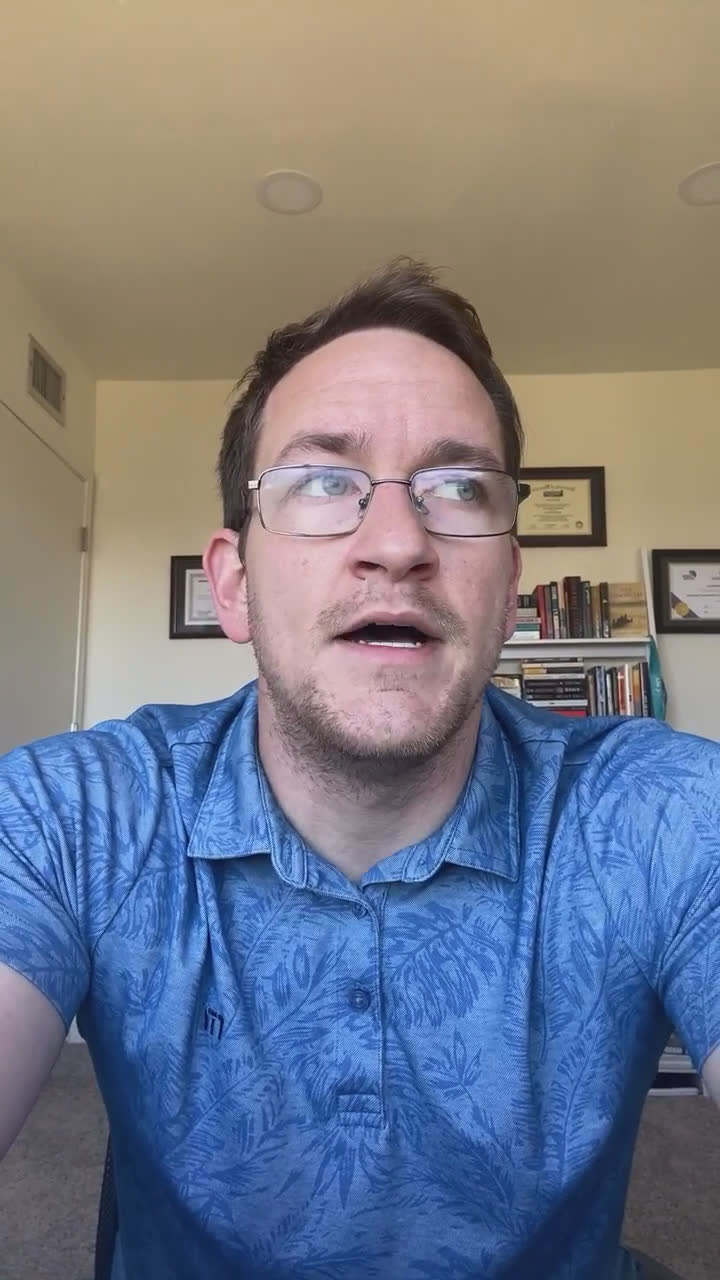
Join me as I’ll discuss examples of how I’ve encountered – personally, clients in my private practice, or athletes in the media – the usage of mental skills and sport psychology
Garrett Westerwelly: This is another edition of Sports Psych Saturdays. He says what sets Caitlin Clark apart is her mental fortitude and her mental basketball iq. Embrace your strengths, find your values, and embrace challenges, he says.
How can you be grateful for what's going on in life? In my work with the military right now, we have a saying of hunt the good stuff. Find your strengths, your values, and find gratitude in your daily life. Those three things will help you be more resilient.
Hello, Cadre. Welcome. Happy Saturday. This is another edition of Sports Psych Saturdays. With myself, Garrett Westerwelly. I'm your residential expert in sport and performance psychology, trying to help you just make your, your minds a little bit more resilient and strong in the face of challenges and adversity and all that good stuff. Just like I work with athletes, everybody can be a little bit of a performer and benefit from some mental training in that regard. So on this lovely Saturday, I'm here from good old Sierra Vista, Arizona, where it's nice and sunny.
I just finished a lovely hour long walk, and I was just thinking about what, just other stuff, kind of what I think the message would be for today. And I think what was, I want to use an example from just a popular athlete in the media, and I'm sure many of you have heard of her. She's really revolutionizing women's sports, which is really cool to see the numbers and the viewership data on what she's doing for women's sports and women's college basketball specifically. And that is Caitlin Clark.
If you haven't heard of her, look her up, especially. This is a great time. She just won, beat UConn in a thriller. She's a basketball player at the University of Iowa, and they play in the national championship tomorrow night, Sunday or tomorrow afternoon, I believe it's 03:00 Eastern. So check that out. If you've never watched women's basketball in your life, that would be a good time to watch that, see her face, undefeated South Carolina. So that'll be a good game. See a few people join. Hi, Alec.
Thank you for the wave there. So I think there was a recent interview of someone talking about Caitlin Clark, and I just thought it was, it was awesome. Talking about what separates her. So if you don't know much about her, she's the all time leading scorer in all of college basketball, men's and women's. She is an electric player. She currently leads the entire country in points and assists. And she's just a phenomenal athlete. Again, look her up if you haven't. And I don't need to speak too much about her accomplishments because they're pretty great.
But one WNBA player, Diana Taurasi, was talking about what sets her apart. And yes, she has physical skills. Yes, she works her b*** off and she puts up shots throughout the summer. But what sets her apart is her mental fortitude and her mental basketball iq. So her mind is what sets her apart. And they had a quote of, Diana had a quote about her of it's not. It's not if you fail, but when you fail. And I really like that, that quote. And she talked about how it's not if Caitlin Clark will go through struggles because she's dominated college sports for four years.
It's not if she fails or if she faces adversity when she enters the WNBA, but when she does. Hello. Speak wonder. Thank you for joining and from Pennsylvania. It's a lovely place. We've talked a lot about Pennsylvania. So with Caitlin Clark, what sets her apart is that resilience of it's not whether she's going to face adversity, but she's prepared to do that. And I think that's a good message for us all because it's all human. We're all going to face adversity, right? We're all going to face challenges.
It's not if, but when you do and how you're going to react to that. That's what sets apart a lot of different people in their personal development of how they react to stress, how they react to pressure, how they react to challenges. And I think that's the biggest thing that sports psychology does for athletes and for people. And what I'm trying to do for you all is just speak some wisdom on it. And a lot of people just think sports psych is just mental health or counseling for athletes. Yes, we support mental health, but the biggest part of it is doing just that.
Embrace your strengths, find your values, trust your support system. Figure out ways to make your mind work for you rather than against you in times of challenges. So I think from thinking about resilience and how to embrace challenges, there's three things that I would tell you all, and what I usually tell athletes is the three main kind of concepts that you want to embrace when you're facing resilience inevitably, and to set you up for success when you face challenges, stress, pressure, all those different things.
And that is, number one, find your strengths and figure out ways to incorporate your strengths as a human being into your daily life. If you have a love for. I just did a strengths assessment for work the other day, and one of my top strengths is love for learning. That was my top one. How can I incorporate that in my daily life? I read often, I look up podcasts often, I'm constantly trying to ask good questions and learn. So that's a strength that I know of and that helps me just be a better person and grow in the face of adversity is how can I learn about this situation?
Another one for me is humor. I love humor. I love watching stand up. My dad is a funny guy, so I feel like I got a lot of humor from him. But how can I incorporate that strength on a daily basis? So, number one is just finding your strengths and figuring out ways to incorporate those in daily life. And then number two is kind of similar. Find your values and figure out how to incorporate those in daily life. A lot of people love goals, and I've talked about this on Cadre before, but a lot of people love goals, and goals can be checked off as, all right, I got that done.
And then what do you do with the next goal? You can go and chase the next one, and it's just kind of like a game of chess. You're constantly chasing the next goal, you're constantly moving pieces, and you never truly, when you never feel satisfied, fulfilled, because you're always chasing the next thing. As opposed to a goal. A goal driven life, as opposed to what I call a values driven life, is having clear values and living those daily. Those can't be checked off like a goal can. Those can be practiced daily.
If you have a. If you have a value, you value humility. How can you be humble on this day, in this moment? If you value your relationships, can you reach out to a friend? Can you utilize your support system, all those different things? So, in addition to finding your strengths, find your values and figure out how you can incorporate those, those two things in your daily life. And then number three is kind of like what I just said with your support system, but more all encompassing is gratitude. How can you be grateful for what's going on in life?
In my work with the military right now, we have a saying of hunt the good stuff. And that just means be intentional with your focus of trying to hunt the good stuff and try to locate what's going good in your life, because no matter how. What you're going through, no matter how many challenges there are in your life, I guarantee you there's certain things that are going good in that life of yours. And that's not to say you're diminishing the struggles in your life, but once you hunt the good stuff and find gratitude and all the good in your life, whether it be people, whether it be your characteristics, whether it be events, or just.
Just life stuff, it can be material items, it can just be anything in your life. And you start to think about why you're grateful for those things, and you hunt the good stuff, and eventually, it's just a cycle. You hunt the good stuff, you start to notice it more. And guess what? Your mood starts to lift up. Your meaning in life starts to lift up. I'll do that with my phone here. Lifting up, right? Because when you find and you hunt the good stuff, those emotions, that meaning, that sense of purpose goes up just like I just did.
And so just to wrap that all up, find your strengths and how to incorporate those in daily life. Same thing with your values. Find your values and incorporate that in your daily life. And find gratitude. Hunt the good stuff in your daily life. Those three things are going to help you be more resilient. And just like I said at the beginning with talking about Caitlin Clark, it's not if she's going to fail, it's when she's going to fail. And for you all, it's not maybe not necessarily failure, because that, I think that can be a tricky word.
Failure is the real f word. If I'm being honest in my work with athletes, I think it has a certain connotation to it. So it's not if you face adversity or challenges, it's when you do. And how you can be resilient is utilizing those three things. Find your strengths, your values, and find gratitude in your daily life. So go out there, even if you're just relaxing on the Saturday, but, and you have no challenges. Hopefully it's a stress free day. But eventually that stress and that challenge is going to come.
So figure out a way to be resilient. And I appreciate you all joining on this lovely Saturday and enjoy.
Reactions and comments are for members. Joining is free and takes a minute.