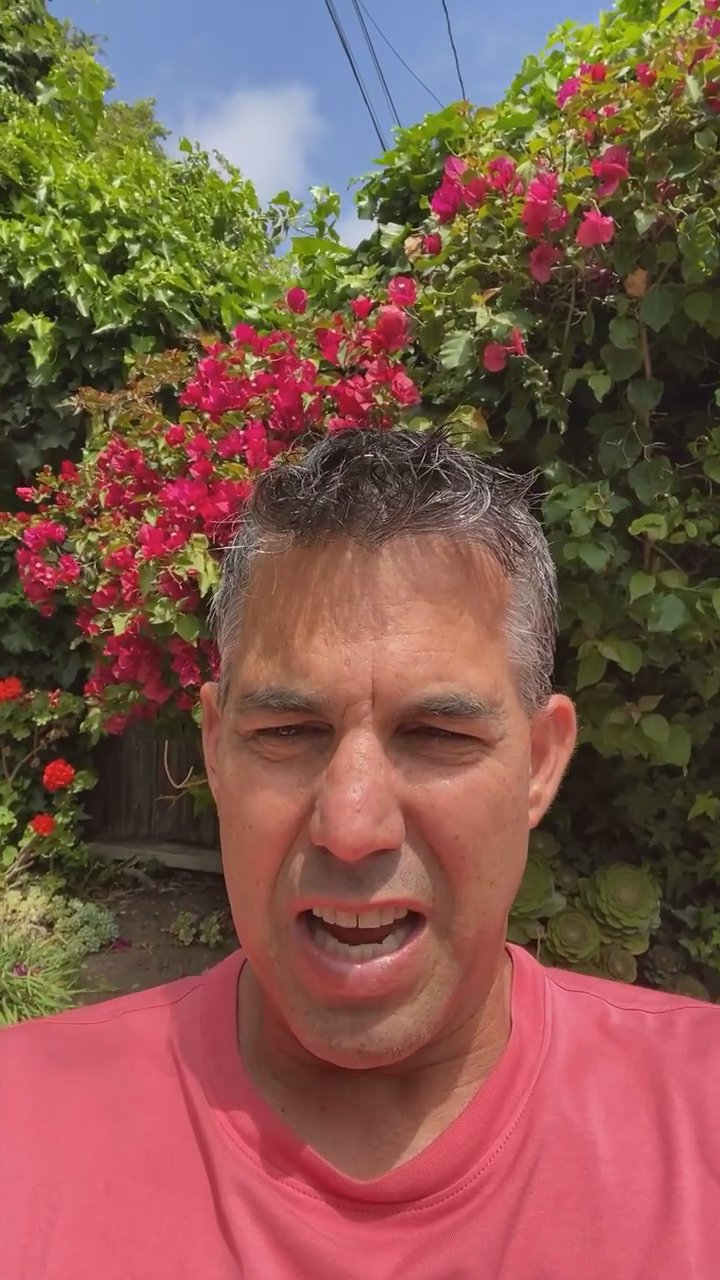
This is my first Cadre livestream. In it I’d like to share a little about my own journey and why and how I believe I can be helpful to you.
Dan Griffin is a member of the Cadre community. He got sober in 1994, almost 30 years ago. This month, he's focusing on introducing himself to the community. The live stream is called Meet Dan Griffin and my journey.
But it's limited. I love trauma, trauma, informed care, all that stuff. But it alone is not the only lens through which I want to look at my life. And so emotional sobriety has really been about that emotional awareness.
I love playing volleyball and tennis. I'm in a band, and I love playing music. I enjoy shooting pool and also playing poker. I think it's so important to celebrate life.
"The stuff that doesn't make me look good " is my struggles with anger and rage and even violence over the years. Violence is no longer a part of my story, but it was long into my sobriety and rage. My mental health and taking care of my mental health has been a powerful journey.
The dark past is the greatest possession. With it, you can avert death and misery for others. So long as I've done the work to heal through the darkest things that have happened to me, that I can help others. I'm looking forward to this journey, and I'll see you next Saturday.
All right, well, greetings, Cadre community and fellow folks on a journey to being better human beings. My name is Dan Griffin, and very happy to be here and be a part of the Cadre community. And this month of May, I'm really just going to be focusing on this idea of meeting me, introducing myself to the community, to those of you watching, and to those of you even watching in the future as an opportunity to get to know me as you step into any of the material content that I provide. So for watching now or watching in the future, this particular live stream is called Meet Dan Griffin and my journey.
So this is a little bit about, like, who I am, right? So I was born in Maryland in 1972, and so that makes me 51, almost 52. And I had an interesting upbringing, maybe like a lot of us, I grew up in the suburbs of Maryland, and I certainly had a privileged lifestyle. I certainly had a privileged experience growing up, and at the same time, I lived in a violent, alcoholic home. So I can promise you that's not much of a privilege. And so, you know, it was fairly contradictory. I mean, we were upper middle class, and we always joked that we were the poor people in the rich neighborhood, and so we weren't poor by any means.
And in that, I kind of got different ideas about life and about the world. Probably most significantly, I would say I got sober in Virginia. I went to James Madison University, and I was able to graduate in four years. And I'm very, very proud of myself for that. I actually even graduated c** laude. But alcohol and other drugs definitely were the core part of my experience. So I got sober May 21 of 1994. So if you're doing the math, depending on, again when you're watching this, I'm coming up on 30 years of sobriety.
And that's a huge, huge part of my life. It's the only reason I do what I do professionally, but it's also the only reason I have a family and the kind of relationships that I have today, especially with my wife and my daughter. But even with my mom and others close to me, I got sober. I focused on my sobriety, and then I went to grad school in Kansas. And in Kansas, it was an interesting experience for me, again, newly sober. That is when a month, I think a month after I moved out there, my father died of alcoholism.
He literally drank himself to death at the age of 54. So I'm almost 52. So to think, like, I don't know if I thought of him as old at that time, but, like, wow, you know, I certainly don't think of myself as old right now. So he died a long time ago. It was a very tragic death, and quite honestly, it was a tragic life. He just did not live right. We talk about that idea of those who die with the song still in them, and there's no question my father had the song still in him when he died from graduate school.
What I will say about graduate school as it relates to, you know, what I'm going to be doing here on Cadre, I would just say I did my master's research on the social construction of masculinity and the culture of alcoholics Anonymous. And in that regard, it was the first qualitative research of its kind, looking at gender conditioning and kind of as it relates to the recovery process. And it certainly has informed my work of the last ten, almost 15 years, which I'll talk more about, especially in my shameless plugs episode in two weeks.
And then I moved from Kansas to Minnesota to work at Hazelden, and I trained there at Hazelden, but the idea was that I would work there as well. So I was there for a year and I wasn't sure what I was going to do, but I actually ended up staying in Minnesota for 18 years. It's where I met and fell in love with my wife. We had, our daughter was part of an amazing twelve step sober community. So many wonderful things really happened for me in that space. I'm going to be brief about things just because I want to respect the time of these live streams and everybody else's time.
Who has joined or is going to be watching this. Eight years ago, almost eight years ago, we moved from Minnesota to Los Angeles. And so that's where I'm coming from. You now, with these beautiful flowers behind me and Bougainvillea, I believe, if you get credits for that. But we moved to Los Angeles almost eight years ago. We pulled in on Father's Day. My daughter and I took the trip to drive out here. My wife was already out here. We moved out here for her work. She works for the LA Superior Court.
And, you know, the, the experience of moving to Los Angeles has been incredibly powerful. I'm sure I'll talk about it more, but it's been in, in Los Angeles in the last eight years where I have truly discovered who I am. Long into my sobriety. Long into my sobriety. Because again, I'm about to have 30 years. I've only been here eight years, so 22 years of sobriety and I'll talk, you know, more about that. But LA has just been an amazing, amazing home for us. And just these last eight years have been a wonderful part of my journey.
So I'm a spouse of 20 years. I've been married 20 years. I'm a father of an amazing 14 year old, almost 15. We were both born in July. I love my daughter. I love being with my daughter, spending time with her, laughing with her, having her call me on my stuff, which she's very comfortable doing, which says so much to me about the trust and safety in our relationship. And that's something I'll be talking a lot more about as well. And then, you know, something that's also very important to me is in the twelve step community.
I'm a sponsor, and I sponsor a lot of guys because I have found how incredibly important it is for me to stay grounded, stay humble, and to give freely what I have been given. Especially because the work I do, I get paid to do. And it overlaps a lot with my recovery. So I've got a story about addiction. I've got a story about mental health and bipolar. I've got a story about trauma. I've got a story about shame. All four of those things which I refer to as the four horsemen, I'll be talking a lot more about.
But the four of those and working on those and looking at those constantly throughout my life, that's been a big part of my emotional sobriety. And, you know, I. I'll focus on sobriety. I'll focus on recovery. I'll be talking about twelve step recovery. But it's not the only thing that I talk about. But every human being, every single human being has experience with at least one of those four horsemen. Most of us. A lot of us have all four. We just don't see it. We don't know it, right? And when you're only looking at life through an addiction lens, you only see so much.
When you're only looking at it through a mental health lens, you only see so much when you're only looking at it through a trauma lens, which is the new thing that everybody wants to focus on these days. It's wonderful. It's great. But it's limited. And I'll read. I'll talk much more about that. I love trauma, trauma, informed care, all that stuff. I talk about it a lot, but it alone is not, for me personally, the only lens through which I want to look at my life. And then shame, you know, shame is just like the kind of nasty glue that keeps all this stuff together.
And so emotional sobriety has really been about that emotional awareness, that conscious life. So, again, I want to be mindful of the time. So I just want to share a couple of other things, and then I'm going to go ahead and stop this stream. But you know what? I also want to share about myself with all of you is, like. Like, what's important to me. I love playing volleyball. Like, this morning, I was playing volleyball. My daughter and I were taking a beach volleyball lesson together, and we're talking about playing tournaments together.
How cool is that? Like, that's amazing. I never had anything like that with my father. I love playing tennis. I've played tennis since I was a little kid, and it's fun to continue to play that. I'm in a band, and I love playing music, writing music, creating music, performing music, being able to take a song, that's an idea in my head, and then have it become this amazing work of art that, you know, we're able to perform. We performed last night here in Los Angeles at a place called Molly Malone's.
We had a standing room only, you know, turnout of friends and family. My mom got to hear me for the first time. It was just really special. But, like, that's what brings joy to my life. And I think it's so important to celebrate life and to celebrate the joy we have in our lives. And I enjoy shooting pool and also playing poker. All right, so the last things I'm gonna end with, and thank you to those of you who have joined in, but I'm gonna end with this. It's what I don't wanna tell you about me.
The stuff that doesn't make me look good. The stuff that really just reinforces how incredibly imperfect I am, and that is my struggles with anger and rage and even violence over the years. I'm happy to say that violence is no longer a part of my story, but it was long into my sobriety and rage. Rage, not really a part of my story anymore either, but anger. I really have to watch that reactivity. My mental health and taking care of my mental health and fully, fully accepting the fact, make sure nobody's listening.
Just kidding. That I'm bipolar. I just could not accept that. I didn't want to accept that. I fought it and fought it and fought it. I took medication, even while just not truly believing that I was bipolar. And that's been a very, very powerful and interesting journey. You know, I have my insecurities. I have my need to sometimes look better than I am. The stuff that I don't want to talk about here's what I've learned, and this is a beautiful quote from the twelve step community that I want to read.
It says this right? I would say this is probably the quote that will guide my time here on Cadre. Cling to the thought that in God's hands, the dark past is the greatest possession. You have, the key to life and happiness for others. With it, you can avert death and misery for them. And so what I know is, so long as I've done the work to heal through the darkest things that have happened to me, all the times I've been fired, being let go as a senior fellow from a very prestigious organization, being fired from an organization and losing a ton of money, all of that stuff, so long as I've done the healing work to truly kind of let go of the shame that that has on me, that I can help others and share that truth and maybe create a space for them to share some of the truths that are keeping them down and holding them back from having the best life they can have.
So, Cadre community, thank you for having me. I'm looking forward to this journey, and I'll see you next Saturday.
Reactions and comments are for members. Joining is free and takes a minute.