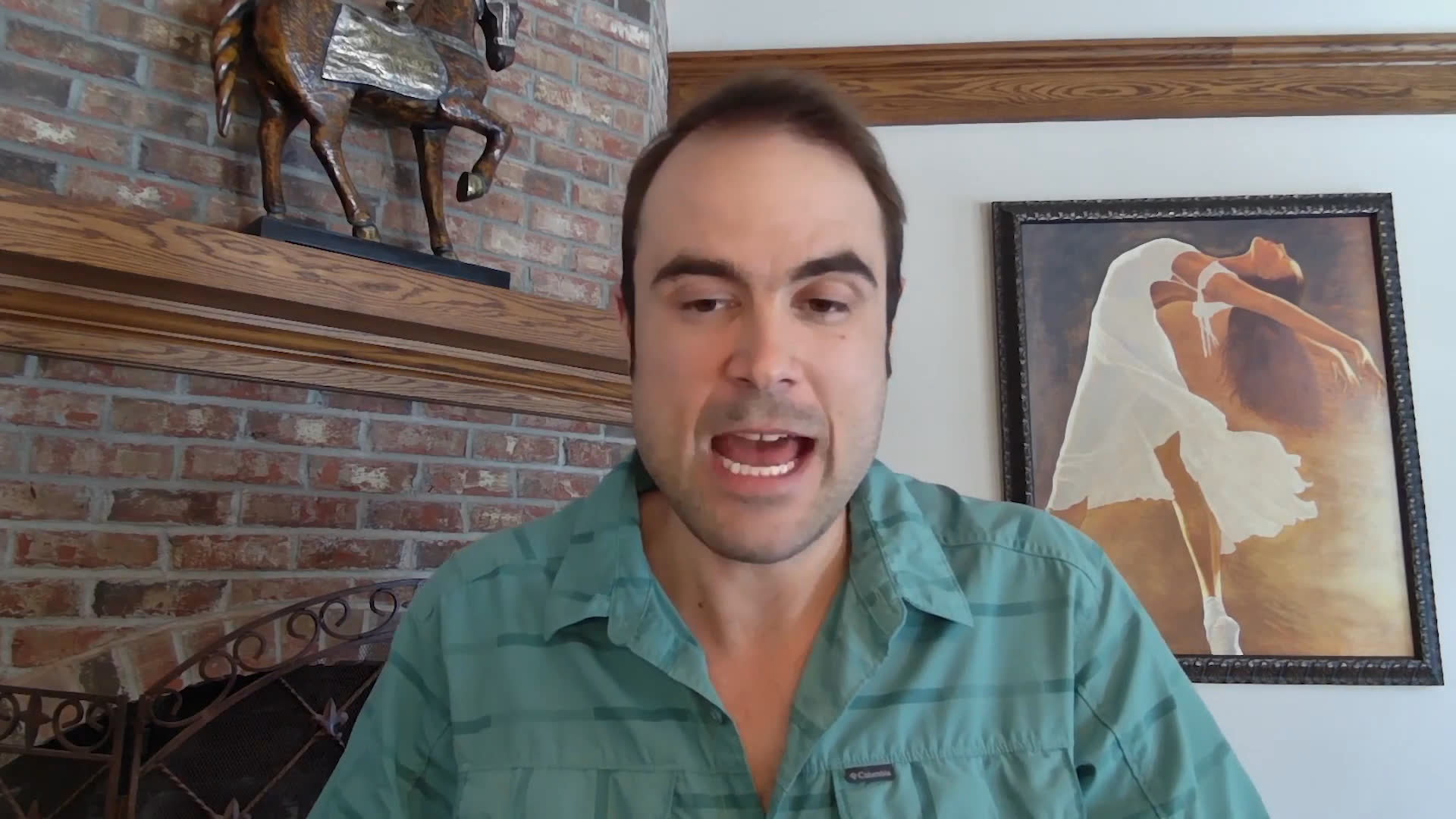
Before beginning our recovery journey, we oftentimes try to go it alone. Soon, after beginning recovery, we discover we do not have to do it alone! We are in this together and the power of connection is healing! Nick The Poet shares stories from his recovery journey that you will be able to relate to!
Nick Hanson talks about mental health diagnoses and addiction. Says one of the great blessings of being a part of a recovery community is realizing I don't have to do anything on my own. Says just being open to a new experience could be your higher power.
I struggled for a long time with, am I bipolar? Am I an addict? What is going on here? Eventually I accepted, like, I need help. And through surrendering like that, I have gotten so much help. No man or woman is an island. We're all doing this together.
Hey, Cadre fam. Nick Hanson going live here on the platform. And today I just wanted to talk about mental health diagnoses and addiction and just some stories from my past so that if you're going through trying to figure out if you have a substance abuse problem or if you have a mental health problem, a little bit about my story and some things that might help you and. Yeah, so, you know, I think part of it, too. I was just on a call. We were discussing the difference between you and we in relation to, you know, doing videos like this.
And I think, you know, one thing about the we, not about a video, but just about their recovery process is huge. So the first step of a twelve step program is we admitted that we were powerless over whatever substance or whatever thing, and our lives had become unmanageable. And so before I entered the recovery community, it was just me. I had friends and I had family, but I had somehow separated myself in a way that I thought I had to do everything on my own. And it became all stuck in my mind and it was just me against the world, so to speak.
And one of the great blessings of being a part of a recovery community, be that a twelve step fellowship, support group, friends, family, whatever it is, is I realized I don't have to do anything on my own. And if I work my higher power into that equation, I also have the help of this beneficent force, this universal force that wants to help me, that wants good in my life. That's what I believe. And I don't think that's a prerequisite, though, to make recovery. I think the higher power can show up in many different forms and it can also just be something they say in the twelve step program is good, orderly direction.
You know, the word God has a lot of connotations for people. I don't think it's anything to get hung up on. I think just being open to a new experience, really, you know, that that alone could be your higher power. So, yeah, going back a little bit to the, you know, the first days of this, this mental health addiction. And it was in college, you know, for the first time, where the term bipolar came out of a therapist's mouth in regards to me. And I recently tried to drop out of college, and I left my college in the middle of the night and was trying to go watch some teammates play in a tennis tournament.
And that turned into, I was going to follow the Obama McCain election across the country and be like, you know, a collegiate reporter on that. And I had this, this flight of ideas, this grandiosity. And they were at heart, which is a lot of times what happens with manic decisions or even decisions when you're drunk or high. I wanted to see my friends playing and my teammates play tennis. That's a good thing. I wanted to do this cool project where I was following the election and creating content, which is something that I've always enjoyed doing, but I was not really in the right frame of mind to do any of that.
I was, you know, smoking a lot of marijuana. I was having this, this, you know, wild thoughts that was, you know, really out of control. And so that was the first time that bipolar, you know, was. Was thrown around. And there were, you know, friends and family members at that time who were concerned about my drinking and my using. I had a girlfriend in college. She was very concerned about it, but this didn't stop me from drinking or using or anything like that. Fast forward a few years later. I've graduated from college.
My drinking and using has intensified. I've gotten a DUI. You know, all these different things are happening. I'm smoking a ton of marijuana. I'm having basically a manic episode at a studio in Minneapolis and thinking that I'm forming, like, a multi million dollar company and calling all my friends about it. And eventually this prompted my family and friends to have an intervention. And this was a really key turning point. This is when it turned from me to we. I can look back and see that now because I was really just doing my own thing.
I was in my own world, and I wasn't concerned about the consequences or how my life was affecting anybody else's. I was, as they say in a twelve step book, I was in full flight from reality. I was in outright, you know, full, frightful, full flight from reality. And, you know, when they first got there for the intervention, I ran away. And then I came back and, you know, and then I was not willing to accept. And then eventually I started, you know, crying. And I had a friend there who somehow his presence broke through and he just hugged me and said, you know, nick, it's going to be okay.
And I get goosebumps even thinking about it now. All of my defenses dropped at that point, you know, and I just said, okay. I, you know, because when you're like that, I didn't want to do that. It was. I was. It was. It was terrifying. It was terrible. It was exciting at times as well. It was. It was all these different things, but I just. I couldn't keep. Keep it going any longer. And, you know, and that's when I, uh, was admitted to a psych hospital and, um, met a lot of amazing people, uh, fellow patients, uh, staff.
And I came into the. We there, you know, and then I was in a mental illness, chemical dependency, uh, outpatient program. And I was feeling really not good. You know, I had just been kind of on this big high, and now I'm coming down from it and I'm trying to get sober for the first time time on my life, in my life. I'm on a kind of a serious medication for the first time, lithium. And I don't know, you know, I'm in a whole new system. And so you may find yourself in that right now, and it's. It's a scary place to be, but it's so much better than being out on your own.
You know, let's. The people around you help you participate in it as much as you possibly can. And, you know, for me, recovery, especially in the. In the early days, was a yo yo of up and down. I started going to twelve step program, helped tremendously, but then I would keep relapsing with marijuana. You know, I. And when I was taking lithium and marijuana at the same time, it was like, terrible. I would get super high for 15 minutes, and then my camera's kind of falling back. I would get super high for 15 minutes and then some.
With some kind of interaction with the lithium, it, like, put me in a catatonic state. I'm lying in my bed, I can't get up, but I'm, like, hallucinating. And I kept doing this. It's, you know, it's insanity to keep doing the same thing, but I kept, you know, coming back to the twelve step meetings, and I started growing a fellowship in a community. I started thinking of my problems as less unique. And seeing myself more was just another guy, another human, another person, you know, trying to get well.
And that helps so much. Like, I thought I was the only. I used to call myself a bipolar maniac hack who was mentally cool, not mentally ill, because the term mentally ill really bothered me. And I still think it's not a good term. And I end beginning to use mental health instead. Right, but I thought I was the only person like this. But I met three other friends in one of my first meetings who had similar diagnoses, and I became part of this community instead of off of my own tangent. And I struggled for a long time with, am I bipolar?
Am I an addict, am I an alcoholic? What is going on here? So much struggle uh, with that, and eventually I just accepted, like, I need help. And, you know, the third tradition of, um, the AA program is had a desire to stop drinking today. And that's it. And I don't have to think beyond that, right? Um, I do oftentimes, but really, it's just about today. I don't want to drink today. I don't want to use drugs today. Um, I want to be a part of sobriety, a part of community, a part of the we right today.
And so when I was able to eventually make that shift after some really, you know, bad stuff, I eventually relapsed, started drinking again, got hospitalized a couple of times in the same month, ended up in detox. And it could have been way worse. I could have been. Ended up, you know, dead or in jail or who knows? You know, when you're. When I'm in those drinking and using states and those crisis mental health states, you know, it's not a good place to be. But luckily, by the grace of, you know, my higher power or whatever it is, I came out of that okay.
And I'm like, okay. I just. I surrendered, and I quit questioning too much. Am I an alcoholic? Am I an addict? Am I. Should I do the twelve steps? Should I go to therapy? Should I go and see my psychiatrist? And I just kind of surrendered to the process. And through surrendering like that, I have gotten so much help. You know, no man or woman is an island. We're all doing this together. And so if you're going through a mental health crisis right now or you're just getting into recovery or you're coming back to recovery or whatever it is, I just think it's so.
And just in these pandemic times, you know, if you have no mental health history, you have no addiction. Like, just being a human, we are. You know, it's. It's tough out there, right? And so we've got to stick together. And there's so much support and mental health and addiction is becoming so much easier to talk about. So let's keep the conversation going. Let's be the we. And that's my message today. I hope this helped you. And if you're feeling a certain way, reach out to someone. That phone can feel like it's a million pounds, but just do something.
Reach out. Take some kind of action, you know, because you're worth it. You are 100% worth it. And you probably don't always feel that way. I don't always feel that way. But you are. You absolutely are. And so am I and we together are. So that's my message today. Have a good one. I will talk to you later.
Reactions and comments are for members. Joining is free and takes a minute.