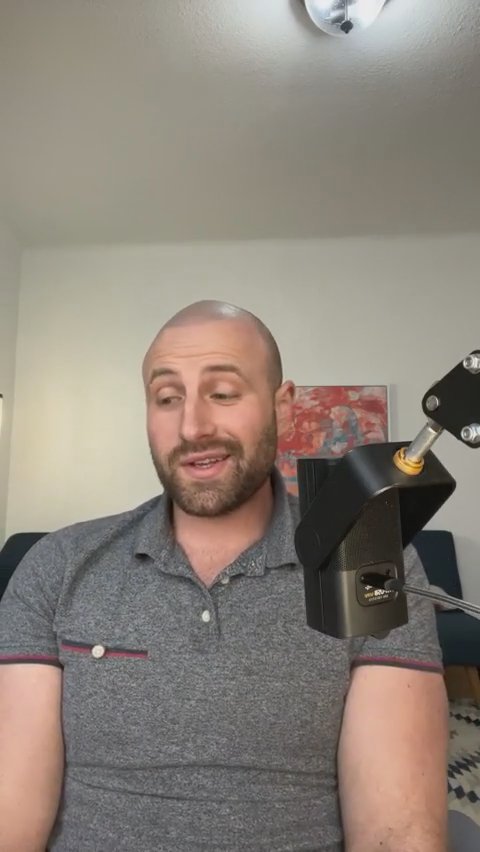
Evan outlines five rules of imposition about imposter syndrome, explains why it arises and how luck and privilege factor in. He offers perspectives on outgrowing core self-beliefs that sustain imposter feelings.
Evan: I've been wanting to talk about this for quite a while. It comes up so often, and it doesn't get talked about enough. I've never really done a post on this, but it's been in my head.
Many people experience imposter syndrome. Here are the five rules of imposition to keep in mind when dealing with it. Success results from a mix of luck, hard work, and talent. If you're questioning if you're a true imposter, you probably aren't one.
Under this feeling of imposter syndrome, are these beliefs that we have. These core beliefs come from significant life experiences, impactful experiences that shape who we are. The more you internalize the feelings of not being an impostor, that's like plucking the weeds.
Don't get hung up on luck, because everyone who's successful has had some circumstances of luck. Even if you've had a lot of, let's say, privilege, that doesn't necessarily mean that your talent and hard work should be discounted.
How did you outgrow your imposter syndrome, Alec? Even if you haven't accomplished anything you want to, are you working towards that? Sometimes it's lonely at the pinnacle of success.
All right, folks, welcome to another live stream. I'm Evan, your local therapist here at Cadre, and I brought a topic that I am extremely excited to talk about, and I've been wanting to talk about this for quite a while. I've never really done a post on this, but it's been in my head because it comes up so much, whether I'm interacting with the public or just with my clients, it comes up so often, and it doesn't get talked about enough. And at this point, you're like, all right, spit it out, dude.
What is this? All right, so today I'm going to talk about imposter syndrome. That's right. And I bet a lot of your stomachs just dropped right now because so many people experience that and often feel that way, like they're an imposter. And my guess is that a lot of you who are on this app are going to be able to relate, and I'll tell you why. And it's not necessarily a bad thing. So, again, so many people experience this imposter syndrome, and there's quite a few reasons why. And when I have clients who experience imposter syndrome, I mean, there are a few different things that I like to bring up, a few things I like to point out as we're working through this issue.
And so these have been bouncing around my head for a while about why people experience it and kind of breaking down some of the thought errors that can come when you're experiencing imposter syndrome. So I'm excited because I actually took a minute to write these down. So just, like, get them out of my head and write down almost, like, these topics, or if you want to call them rules. So I put a name to this list here, and I call it the rules of imposition. So here are the five rules of imposition to keep in mind when dealing with imposter syndrome.
And you could write these down and, you know, read them, but I'll talk about that later about how you could use this list. So I'm going to read off my five rules of imposition when it comes to imposter syndrome. Rule one, to have imposter syndrome, there must be something to which you have imposed upon. So, meaning, if you're doing anything, like, meaningful, noteworthy, you probably wouldn't be feeling this way if you hadn't done something significant, right? So if you're feeling this way, you know, if you're doing something that's, like, mediocre, you're probably not feeling like an imposter.
So something must have happened. So keep that in mind. Something must have happened for you to get to this place. So that's a basis of rule one. And so this is good. I want you to kind of test your thoughts, your thinking, to these five rules. Rule two. True imposters are aware they're being deceitful, and they do it on purpose. So if you're questioning if you're a true impostor, you probably aren't one, right? Because you would know it for sure. And if you're really at that place where you think you know it for sure, we're going to keep going, and we'll see if it meets the other criteria here.
Number three, true imposters don't care or feel bad that you're imposing. So if you're feeling guilt or shame, maybe that's another sign that you're not an imposter. Right. So if you're not purposely being deceitful, if you're feeling guilt or shame about it, that's a good sign that you're probably not a true impostor, whatever that means. A grifter or a charlatan, if you will. So, rule number four, those who experience imposter syndrome are generally harder on themselves and more perfectionistic.
So, for better or worse, this may drive you to success. So this feeling, in and of itself, is a sign that you're probably not a true impostor. The fact that you are hard on yourself. And another way to look at that is someone who is self reflective, someone who wants to do better, someone who wants to be better, who holds themselves to a high standard, that's probably another indication, perhaps you're not an imposter. So, the last one, this one's interesting. And so all success results from a mix of luck, hard work, and talent.
So to get to this place where you're at, where you feel like impostor. So success in general. Right. Luck, hard work, and talent. And pretty much all three of these have to be in place. So I tell folks, don't obsess about the luck you've had. Be grateful for it, and focus on the skills and the hard work that you've done. And I think that's one of the main narratives that goes on in people's heads when they're feeling like an imposter. It's like, this is all based on luck. All right, so those are the five, my five rules on what it means to be an imposter, or, frankly, not being an actual impostor.
Right? So, hopefully, you hear these things and you feel a little better, but it's easy to ruminate. And I find that even when we get to this place where even after reading those five rules, you're like, okay, hey, I feel a little bit better, but, you know, it may crop up again, right. These thoughts kind of like weeds, right. You could kind of hit them, you could pull them, but sometimes they crop back. But the more that you challenge these thoughts. Thoughts. And the more you internalize the feelings of not being an impostor, that's like plucking the weeds.
Right. And usually when you do that, they tend to come back not quite as intensely. And you can kind of stay on top of that eventually to the point where the weeds no longer have roots. Right. So it's like, the more you work on this issue and this idea of an impostor, this is something we make up, right? It's a moral judgment. And so I think there's no point in getting hung up on it because this is like a moral judgment, something we make up. And there's not really, like, this direct scientific criteria for what an imposter is, right.
That's something we can make up in our minds. So that's something to keep in mind as well. So often those of imposter syndrome, I find there's this emotional component, and this is why I surmised that if you're watching this, there's a good chance that you have it, right. Because you're on this app. If you're on this app, you probably want better for yourself, right? You want to improve, you want to be a better person. You want to feel better. You're willing to do the work. You open the app, you're watching this right now.
You want something better for yourself. Right? And so under this feeling of imposter syndrome, are these beliefs that we have. These core beliefs that we have about ourself, right, and the core beliefs we have about ourself, the core beliefs we have about the world, come from significant life experiences, impactful experiences that shape who we are. And a lot of times, those are negative experiences, right? Like trauma. Trauma is on a spectrum, and it doesn't have to be full on PTSD, but it could be these little things that have been really impactful.
Like, for example, clients, they've said, look, I've failed a test in third grade. And from that point on, I felt like I was stupid. I felt like I was not good enough. And sometimes it's these more surface things that. Right, like failing a test or you're being put into the special class for reading as a kid separated from your peers, that's another one that people have experienced. But sometimes it's even deeper than that. Let's say if you had an abusive childhood or even if your parents were well intentioned, but for some reason they made you feel like you as a person were not good enough.
So that's even deeper. So it's like, what can you do about this? Well, I talked a little bit earlier about even just internalizing what that means to be an imposter and looking at some of the reasons based on my rules, if they make sense to you, like trying to internalize that, continuing to read those rules, if you write down the reasons why you're not, if you write down the reasons why, the evidence as to how you're a hard working person, to how you have skills to look at it more objectively, often I'll have clients interview their friends or family and ask them these questions like, what am I good at?
You know, what skills do I have? Asking your coworkers, you know, like, you know, ones that, you know, you have a good relationship with. You know, what are things positive that I do? And that really helps to internalize and shift that paradigm from you having these negative beliefs about yourself to strengthening the positive. Right? So if challenging the negative is pulling the weeds, instilling the positive is like feeding the grass around it of what you want that nice lawn, so to speak. So, you know, those are two of the things I work with on Klein.
So, yeah, so, I mean, these things really do drive our behavior. These core beliefs, negative and positive drive our behavior. They come from our life experiences. And look, some people are just more prone to having some of these thoughts than others. Some people are just, whether it's from experiences, their upbringing, their parents or not, you know, we're all basically born with personalities. Like, our personalities are surprisingly ingrained. And I give the example of, like, do you have a dog?
Have you had more than one dog? Right. And you'll know if you've had that or if you've had multiple children. Right. You start to notice their personalities from a very young age, and it has a great deal of that has nothing to do with you and how you raise them. I sometimes tell parents, like, the best thing you can do as a parent is just, like, not f*** up. Like, you know, like, just don't get in the way. And of course, like, what you do, what you parent matters. But a lot of it is just, like, getting out of the way and trying to nurture that child and their strengths and being there and being supportive and providing rules, discipline.
We're getting off on a little bit of a tangent here, but all I'm trying to say is that sometimes we're just more prone in our personalities to being harder on ourselves. And mental health plays a significant portion in that as well, whether it's depression, because if I'm more prone to depression, I'm in a state of depression or even anxiety, I'm going to have a more negative outlook, more negative outlook on myself or the world. It could depend on a lot of different factors, but the more negative we are, the more likely we are to internalize those negative messages.
Now, one of the positive spins you could take on this, right? And I was starting to allude to that is that imposter syndrome, that perfectionism, being overly critical of yourself can be traits can be factors in driving your success, right? So a lot of people, you know, become successful, right, for those reasons. Well, they're a perfectionist and they're scared. They're driven by fear because they're afraid of what that means to not succeed and what that means about themselves. Now, that's maybe not the best way to go about it because I think that is a recipe for imposter syndrome.
If you're super hard on yourself and you're driven, and then you find yourself in a place where you've obtained some level of success and then question yourself, however, so now there's an alternative to that, right? And being, that's being driven to reach your potential from a positive place. And now that could take you to the same destination of whatever your definition of success is. However, if you do it from that more positive angle, then, well, you're just going to enjoy your life a little bit more.
Don't get hung up on luck, because we all, wherever we got, everyone who's successful has had some circumstances of luck. And even if it's just the luck of being born in the time that you are, there's no need to focus on that because those are things that were outside of your control, is the luck. And so don't weigh too heavily on that. And I'll give an example, and it may be, like, a little controversial, but it's kind of relevant. So I'll give the example of Kim Kardashian. Okay. And she was in the news recently because I don't know if it was in the news, but she was getting a lot of flack because she said, she said that, like, my advice for young women entrepreneurs is just like, I'm paraphrasing is, like, get off your a**.
And that rubbed a lot of people the wrong way. And admittedly, it was quite tone deaf because, you know, of where she's at, right? And how much, like, privilege that she's had, you know, and people use the example of, like, okay, you were born into wealth. Your stepdad is like this, you know, we'll stay. Stepmother is, you know, this famous olympian iconic character. Your father was a, you know, a famous lawyer, right? So you had all these advantages, right? And so let's say, like, Kim Kardashian came to me, and she said, evan, I'm struggling with imposter syndrome.
I've had all these privileges and advantages. You know what I'd say to that is, like, look, plenty of other people have had that, as well, right? Like, Kim Kardashian is a driven, motivated, like, legitimately hardworking person, right? And who's accomplished a lot. So, like, if it might be like Kim, if you compared yourself to other people, there's plenty of other people who have had famous parents and, you know, all the advantages in the world, but very few of them could say that they've succeeded to your level, right?
So it's all relative, right? So even if you've had a lot of, let's say, privilege, if you've had a lot of, you know, breaks in life, that doesn't necessarily mean that your talent and hard work should be discounted, right? So it's all about putting things into perspective. So whether you're a fan of Kim K or not, I think it's irrelevant. You know, there's a lot to criticize there. But. But that's just something. That's just an example of how you could take this extreme privilege and luck and how you can reframe that thought, because, again, that's something that you didn't necessarily ask for.
That's not something that you really had control over. All right, we got a question here from the audience. How did you outgrow your imposter syndrome, Alec? Who said I had it? I'm just talking about everyone else but me. But, no, I kid. But just like what I just described, I just have needed. In the deep therapy work that I've done is, again, looking at the root, which is those negative core beliefs about myself and looking at the motivations that I've had to find the success that I've had and trying to.
Again, another thing maybe that I didn't mention is that we have this culture of it's not good enough. I'm not good enough, right? So, like, you could be Jeff Bezos and be like, well, my goal is to be a trillionaire and I'm only at the hundreds of billions, right? And I'm a loser or I'm not as good. So again, it's all relative. So being mindful, being appreciative, being. These aren't the right words, but being kind to yourself and truly recognizing the accomplishments you have done and realizing that they are, in fact, accomplishments, even if you're not where you are, where you want to be.
Right. And it's okay. I mean, I think it's good to be goal driven. I think it's good to have your eye on the prize and want to reach, you know, if you have a lot of ambition, right? People who have a lot of ambition, that's another factor in imposter syndrome. But, you know, being okay with the journey and saying, look, I am exactly where I need to be right now, and I'm just going to focus on the process and not the outcome. So even if you haven't accomplished anything you want to, then I'd say the question is, are you working towards that?
It's like, let's say for me, if I'm looking years ago, I'm like, well, I don't have my therapy license and I haven't accomplished that, and I'm not going to be good enough until I finish school. Well, it's like, can I have some pride and self esteem in the fact that I'm waking up every day and I'm going to school and I'm working towards that. That. So how do I enjoy my life now even though I'm not in this grand place? Because at the end of the day, you're not going to be happy when you reach that place.
Now, you might be, but you're not going to be happy solely because you just reached that goal. And if you ask anybody who has reached the pinnacle of success, they will all tell you that sometimes it's lonely at the top, right? I mean, we're talking the pinnacles of success. You reach the top of the mountain and there's, there's not many other people there, and you're still stuck with you. And sometimes that actually becomes a problem, right? And that actually can make you less happy when you reach that ultimate goal, because one of the main things in life is having purpose.
And if you already accomplish your goals, then what? So if you just spend all these years tirelessly trying to work yourself to the bone and, you know, put every ounce of effort into reaching these goals and you finally get there, guess what? It's going to feel really d*** good, but that's going to be short lived. It could even be like a day. I'll give you, I'll give you a really good example of that. There's a boxer, I don't know if any of you follow boxing, but there's a boxer named Tyson Fury.
He's an interesting character by every stretch of imagination. So Tyson Fury is the current heavyweight champion. He has most of the belts right now. And he, again, character from England. He comes, he comes from a gypsy culture. Been fighting his whole life. Father was a boxer. That's why his name is Tyson. He was named after Mike Tyson. And his goal, I mean, this is a driven guy. His goal was to be the heavyweight champion of the world. And he first won the title from a guy named Wladimir Klitschko.
And him and his brother, Vitaly Klitschko, were, like, dominated the early two thousands, I mean, dominated the heavyweight division. They were, like, unbeatable, had the heavyweight titles undefeated. And he eventually got a fight with the champion, one of the Klitschko brothers. And he was such an underdog, like, nobody thought he could do it. And he had this just fiery belief. He's like, I am going to embarrass him. And everyone's like, okay, just all talk. Fighters are always talking themselves up.
But sure enough, he went in there and embarrassed him and he did exactly what he said he was going to do. And he accomplished this incredible thing, beating this unbeatable heavyweight champion as the underdog. And he accomplished the greatest goal he had since he was a child. Everything that he had ever worked towards, he accomplished, right? And he felt great on top of the world. So then what happened was he completely lost all sense of purpose and he completely self destructed. He gained, like, a couple hundred pounds in, like, a few months, drank like crazy, was doing drugs and was on the verge of death, like he was on the verge of suicide, like, he was driving in his Lamborghini, like, ready to crash it.
And for whatever reason, something clicked in his mind and it then became his purpose to come back from this. I mean, he got his title stripped because he couldn't defend it, because he wasn't fighting. And he found spirituality and really needed to find a new sense of purpose, something else to work towards. And for him, it was educating people about mental health and helping other people and showing that you can do it. And then he went back, went back to the gym and he went and he won his titles back, and no one gave him a shot at doing that as well.
Right. So that's just another example of being aware that it's not the outcome, because once you receive the outcome, that is no guarantee of happiness. In fact, that may be a risk factor for not being happy is achieving everything you ever wanted. So always having a goal, always having a purpose, and remembering why you got to the place of where you are, you know, and appreciating the moment and really being realistic, too, you know, be realistic about your accomplishments, because you wouldn't judge someone else in your spot in that harsh way that you do yourself.
Right? We're just, for whatever reason, our minds are biased towards the negative. So really, when you look at these situations in a more positive way, you're not being like Pollyanna or, you know, puppy dogs and rainbows. Like, you're probably being more accurate. Like, if we're trying to look, like, factually at who you are, what you've accomplished, you know, who you are as a person, it's not always material, it's not always career, but who you are as a person. There's a lot of ways to feel like an imposter, but when you try to reframe things and look at them more real, it.
It really is more realistic than the negative skew that you have. I call it like wearing the dark goggles. Everything is a shade of gray. Everything looks bleak, right. The reality is what it looks like when you have those goggles off, right. That is not the reality. And so, kind of the last thing I was going to say is, I may be biased, but therapy is a great place to start, to start working through these issues, start digging deeper, start to change those core beliefs, start to remove the negative, start to instill the positive so you can move forward, have a different way of thinking, a different narrative, so that you could continue to be driven, but not necessarily driven by fear and not trying to just repair a fragile ego, you know, and have everything be about accomplishment.
You could still have that drive, but have it from a more positive place and be able to enjoy it, and then you're more likely to be able to enjoy it when you reach the goals and the outcomes that you want for yourself. Anyway, I appreciate you all, and I've enjoyed talking about this, and I appreciate the engagement. Alec, great question. And until next time, take care of yourselves, and we'll see you later. Oh, I got a five second countdown. Just finishing two.
Reactions and comments are for members. Joining is free and takes a minute.