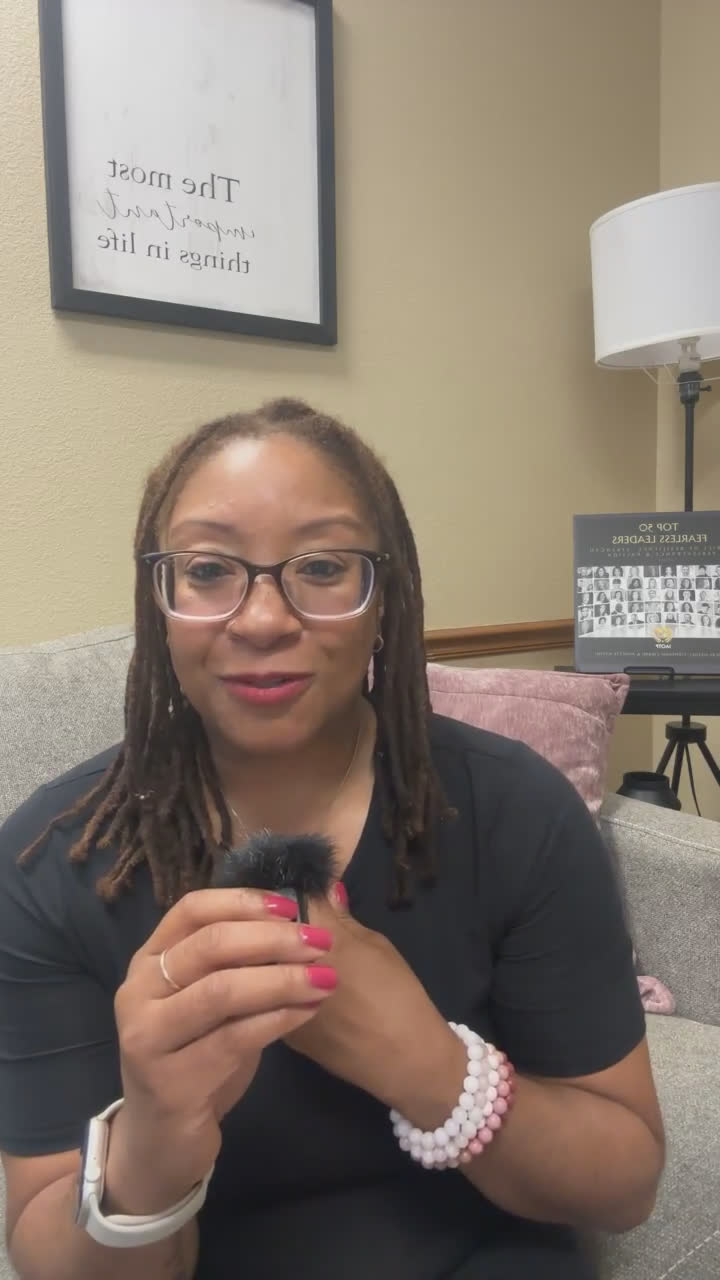
You might be surprised how many of us struggle with Imposter Syndrome. Let’s talk about it.
I don't like to be strict about being on time, but I do think it's important to be on time. I don't want anyone to be waiting on me. I'm laughing because I felt like I was rushing to start this video.
Lukewarm coffee chat. Luke: I got to talk about imposter syndrome last weekend. He says we are telling ourselves messages that we're not good enough. Luke says the perfectionist side of himself shows up in different ways.
And then from that moment, I remember it was like a shift. It was a shift in my heart where I had to stop believing that lie that I was telling myself about myself. So I want to encourage you. Speak wonder. Pleaser your toxicities. And reframe it into something positive.
Hey, Condrey. What's up? I'm laughing because I felt like I was rushing to start this video. So I'm. I don't like to be strict about being on time, but I do think it's important to be on time, and I don't want anyone to be waiting on me. So even though nobody's here right now, I'm here. So welcome to my coffee chat. And today I'm going to recap part of my weekend. It was last Friday night. I got to speak to a room full of, like, really high speak wonder, really amazing women at this place called women's collective in my area, and it was hosted by two sisters or sister in laws that own businesses.
Hi, Luke. And they wanted to host opportunities for other women in the community to highlight their own businesses, and they invited me out. And I got to talk about imposter syndrome. And so I'm going to share some of that with you today, because the way I look at imposter syndrome, I've sat with this for a good year and a half, and I don't talk about it often, which is part of the imposter syndrome. We don't talk about what we're going through. But if you've ever. Hi, Jules. If you've ever thought about imposter syndrome, like, we hear it in social media and we see articles about it, and it's basically feeling like a fraud.
Like you're not qualified to do the things that you do or you're not qualified to be in a position that you're in. And I think this applies not just in professional ways, but just in everyday life. Like, sometimes I feel like a fraud being a mom. You know, like, I'm not the best mom or I'm a fraud being a friend or, you know, whatever comes to mind. But the way that I started to think about imposter syndrome was really having a toxic relationship with yourself. That sounds bad, right? It sounds pretty harsh being in a toxic relationship with yourself.
Right? We don't like to think of ourselves as toxic. But if you think about imposter syndrome, we are telling ourselves messages that we're not good enough, that we're not qualified, that we could always be doing better, that no one likes us, that, you know, all these negative thoughts we have, and it's not just a thought because we embody it sometimes. And we don't show up as our best selves because we're believing a lie that we're telling ourselves about ourselves. That's the toxic part. And so we feel like imposters.
And I want to share, you know, how my imposter syndrome shows up sometimes. So I am. There's a type of imposter syndrome called the perfectionist. That's me. I don't like to see myself as a perfectionist, but it shows up in different ways where, for one, like I just said earlier, I like to show up on time. You know, that's the perfectionist side of me, because I don't want anyone to say anything negative about she was late or she's irresponsible or whatever, even if people are not even thinking that.
But I don't want to perceive or be that way to others. Right. My perfectionism shows up in my writing. You know, I shared at the speaking engagement that, you know, if I'm writing a discussion board, if you guys have been in college lately, there's these things called discussion boards, where you have to write just a few sentences about whatever topic it is for the week. And the point of it is to share your insights, share your perspective on the topic, and then engage in conversation through messaging with your classmates.
And I remember my first assignment in my PhD program, the discussion board post. Three sentences. Took me 2 hours to write. It's ridiculous. The reason why is because I fell into this perfectionist side of myself, and I know where it comes from. You know, when I look back in my childhood, my mom was always the one to tell me, you can do better. You can do better. Is that your best? Like, making me question myself, is that your best? Right? Can you do more? And I would have to pause and think about that.
Yes, I can. Why am I not, why am I not doing more? Why am I not doing better? Why did I not give my best? And I internalized that over the years. And so now there are places that I show up where I question, did I give my best? That's where the imposter syndrome pops up for me. And that's toxic. You know, there are years, and I remember probably in my twenties and early thirties where my friends and my family and other people that knew me, they would tell me all the time, you're so great. You're so beautiful, you're so loving, you're so.
All these great things, right? And I would hear it, and I would think, they're lying. They're lying to me. They're just saying that. They're saying that to encourage me. They don't really believe that because I didn't believe it in myself. That's that toxic relationship I had with myself. There are messages. I told myself, no one loves you. You don't even love yourself. And it was true. It was true until I worked on that. And so I want to challenge you all to think about that toxic message that you tell yourselves.
You don't say it out loud. That's one thing that you have to realize. You're probably never going to say it to someone else. You just keep it in your mind, you keep it in your heart, and it sticks with you, and you hold on to that. And that's where that toxicity starts to stir, because you're telling yourself something that's not the truth about who you are. So a challenge for you is to choose someone that you feel connected to, that you trust, that's going to tell you the truth. And I want you to share that message about yourself and say it to that other person.
But say to them as if you're telling them that that's what they are. So if you believe about yourself that no one likes you, say it to your partner, no one likes you, and then assess. How does that feel? So when I did this, I did this as an exercise at, it was the powerhouse women's conference last year. And having to think about, you know, we only had a few minutes, but I had to think about, what is that negative message? I tell myself about myself, and I was, you know, even in my imposter syndrome, I skated over that.
I was like, I don't say anything negative to myself. Nope. I think I'm great. But when I sat still for a minute, there is a negative message that came up, and then I had to say it to the person that was a stranger. I had to say it to them. And it hurt me to say it to somebody else, to say that message about myself to them, believing that it was about them. So the challenge for me was, if I can't say it to someone else, why am I telling myself this negative message? Why am I putting myself down where no one else sees it, no one else knows that I'm doing it.
So I had to stop. I had to reframe that into something different, into something powerful and useful. And I held on to that new message. And then from that moment, I remember it was like a shift. It was a shift in my heart where I had to stop believing that lie that I was telling myself about myself. And I had to believe the truth. I had to believe that, yes, I am a great person. Yes, I am intelligent. Yes, I am beautiful. Yes, I am kind and sweet and loving. I'm all these things, and I can be more than one of those good things all at the same time.
And that was one of the lies I told myself, that I can't be all of these things. There's no way I can do it all. But you can, and I can. So I want to encourage you. Speak wonder. It says you are recovering people. Pleaser your toxicities and feeling as though you're not liked by 100% of everyone. There is something. I'm gonna. I'm gonna think about it. Give me a second, because there's an article. Oh, here it is. There's a term called the liking gap. You might want to look into that. I have a client that has been working on this idea, and I came across the liking gap.
So check that out and let me know what you think about that. But I just want to encourage you all today to really sit with that negative message. You tell yourself whether you feel like an imposter or not and reframe it into something positive and start to speak that to yourself. And I don't want you to sit in the mirror. There are some people say, look yourself in the mirror. I think that's cheesy. It doesn't work for me. But if you can say that positive message to someone else and you can believe that about them, choose to believe the same thing for yourself.
Okay, that's all I got. I hope you all have a wonderful day. Bye.
Reactions and comments are for members. Joining is free and takes a minute.