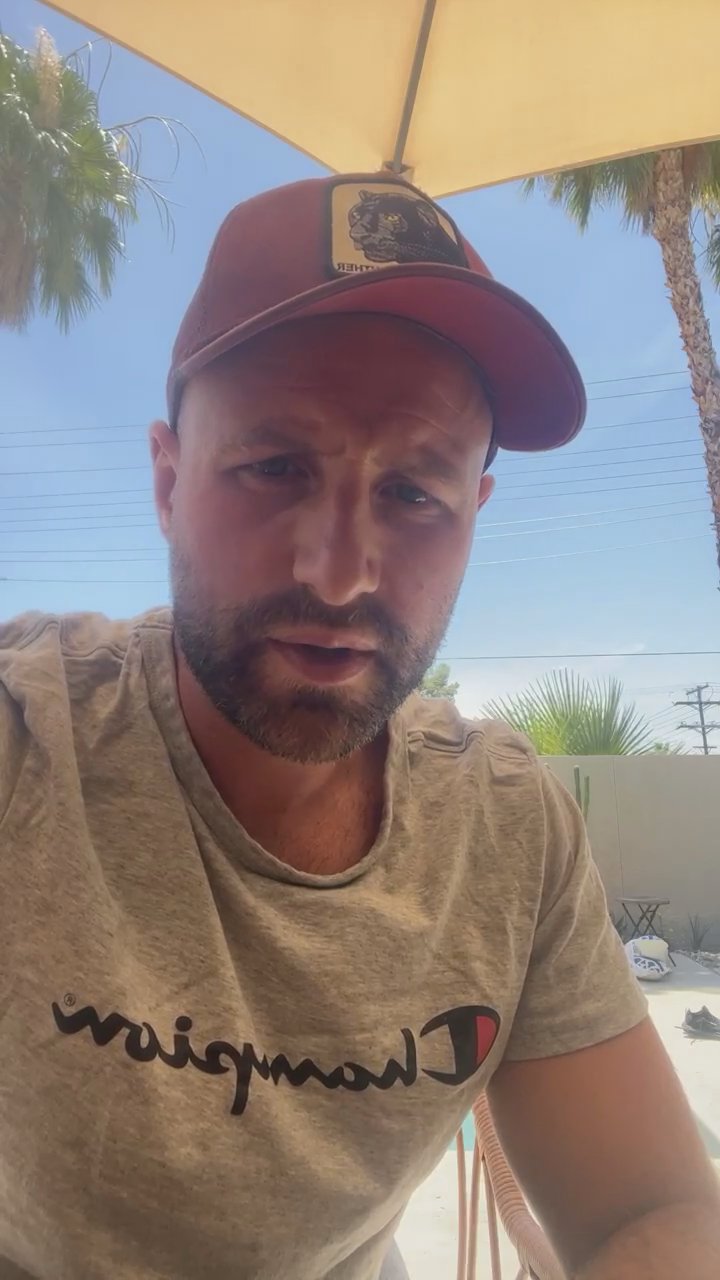
In this episode of Mental Health Matters, we cover a very common theme in therapy, which is self-compassion. We all have narratives and dialogue in our mind that dictate how we feel about ourselves, our mood, and our anxiety. So come join as we talk about some strategies for improving in this area.
Evan is your resident mental health and addiction therapist. We will discuss matters around mental health, addiction, answering any of the questions you bring this time. Every other week we do a ask me anything. At any point, if you have any questions, I will absolutely answer them.
So we are live in Palm Springs. It is 96 degrees, sunny, staying at a friend's place by a pool. We got Jocelyn here joining the party. If you all have any questions, mental health addiction, let me know.
The golden rule is to treat yourself like you want to be treated. Depending on the emotional weather, that forms our narratives, just like our narratives of Minnesota or wherever you live, change. We have these negative core beliefs that drive our thoughts, which drive our behaviors and feelings.
Treating myself like I would treat others is the opposite golden rule. It's like forming an abusive relationship with yourself through your words and narratives in your mind. Sometimes those two sides could be quite abusive to each other. It works counter to your goals when you're that hard on yourself.
What up, folks? Welcome to another episode of Mental Health Matters. I'm Evan, your resident mental health and addiction therapist, and we are going to be discussing matters around mental health, addiction, answering any of the questions you bring this time. I did bring a topic. Every other week we do a ask me anything. And so that'll be next week. But at any point, if you have any questions and you pop into the live, I will absolutely answer them. So we are here. We are live in Palm Springs. It is 96 degrees, sunny, staying at a friend's place by a pool.
We got Jocelyn here joining the party. Welcome, Jocelyn. Welcome to Palm Springs. This is perfect. I got a palm tree. I got a cat. Where's the cactus? It's a cactus. Oh, there's the cactus. Maybe we got to move this way. Get that cactus. Cactus in there. There we go. Palm tree, palm tree, cactus. Perfect. We got it. We got to set the background. Jules is here, one of our regulars. Jocelyn, what are you up to today? Where are you coming from? But anywho, here we are. New background. I am out of Australia.
My trip is finally over, and I'm making my way back to Minneapolis. Eventually by Friday. But anyway, if you all have any questions, mental health addiction, let me know. Otherwise, I'm bringing the topic. I was trying to think of what I would call this. Now, one name for this phenomenon. I call it the therapist dirty trick of South Carolina at work. Awesome. Well, take a little lunch break. Although there it's like 330. What's up, jewels? Thunderstorms? Alright, here, we're gonna send some sun vibes, get to Minnesota and South Carolina.
I don't know what the weather. What's the weather like in South Carolina? If I need to send some heat, actually be good to send some sun because it's 97 and quite hot, so. Yeah, but anyway, I call this the therapist dirty trick, but for the purposes of this, I call it the golden rule for yourself. And so I'll explain why I call it these things. So essentially, you know, we all have 85 and rainy. All right, so I guess, yeah, I gotta send sun both ways. All right, here we go. There's plenty, plenty to give, but it is 85.
We need to get that rain to go away, but, yeah. So when it comes to us in general, for everybody, you know, we have these narratives that go through our mind, you know, our self talk, if you will. And the self talk is influenced by just about everything, every experience that we've had. Working hard. All right, we'll go with that. But we'll consider this productive because maybe it'll be helpful in general as it applies to just about anything. So we've had all these experiences in our life that forms our views of ourself in the world.
We call those core beliefs, and that could be anything from positive or negative. Be like, I'm a good person. I'm a kind person. I'm a hard worker to have something negative of, you know, especially when you've been through a lot of trauma of, like, I'm worthless. I'm a piece of s***. But, I mean, it could be both of those things, right? We hold both sides of the same coin, and it just depends sometimes on our mood, what's going on during the day. Are we tired? Are we sad? Are we triggered by something?
Are those core beliefs triggered? Is the trauma, whatever, or just adverse experiences, if you will, and that can affect how we feel in a given. Think of it like the weather. Sometimes in South Carolina, it can be nice and sunny, but sometimes you have that rain and, you know, has its downsides. All South Carolina probably has some of the best weather. Minnesota may be a better example with more seasons where, you know, when it's summer in Minnesota, you're like, man, I love it here. It's beautiful.
We got the bike trails. We got the river, we got the lakes. Drive up north to the woods for even more lakes. And, man, I love it here. All of a sudden, winter comes around, and you're like, why the h*** am I here? I hate it. I can't stand this place. I need to get out. I need to move. I can't take this, right. So, kind of the same goes for us in our emotional weather and depending on the emotional weather, right, that forms our narratives, just like our narratives of Minnesota or wherever you live, change.
It's a good way of looking at it. I don't think I've ever looked at it that way. Anyways, we'll note that for another time. So, we have these negative core beliefs that drive our thoughts, which drive our behaviors and our feelings, right? So all these things are connected and that forms. Right. Our narratives about ourself, about the world. And the thing is, so, like, when we have. When we're in that negative weather pattern, when it's that Minnesota winter, whether it's that, you know, stormy South Carolina summer day, then we can start feeling bad about ourselves, just like we feel bad about where we're at.
And then those negative core beliefs come out. And typically, when you are in that state where you have those negative core beliefs, you're not going easy. On yourself. So that's kind of what the golden rule is, is to treat yourself like you would treat others versus the opposite of treat others how you want to be treated. So that's the, I guess the opposite golden rule. But also just as important, because the truth is treat others like how I want to be treated. Well, sometimes I have clients who've been through a lot of trauma who don't necessarily want to be treated well or they don't feel comfortable being treated well.
So that can be really, you know, difficult for them in some of these extreme cases. So that's why we got to apply that opposite golden rule, treating myself like I would treat others. Because typically, most people, especially go work with their good people. They would give the shirt off their back to anybody. They would help anybody. But then when you really dig down and you ask them how they treat themselves, sometimes they're not even aware of how bad that is. So that's where you frame it. This is what I call the therapist dirty trick.
Because, you know, when someone's really being hard on themselves in a session, the therapist's line then is like, okay, if it'd be something like, you know, would you treat your daughter or a friend who's been in the same situation? Would you treat them the same way you treat yourself? And they'll be like, no, all right. And sometimes there's a light bulb moment with that. It almost always works, you know, but sometimes constant, still be resistance, yet, but that's them, not me. So, literally, every other person you would treat.
Now, imagine if, you know, your friend was in the same, like, shoes, same situation, same kind of person you are, had the same flaws, right? Object, you know, looking more objectively. What would you think of them? What would you feel? Would you judge them? Would you be mean to them? Would you treat them like he would treat you? Answer is almost invariably not so. Then clients kind of get mad. That's why I laugh at the dirty tricks. They're like, ugh. Checkmate, Lieberman. You got me. Because it's true.
I mean, it's so true. I mean, this is, I think everybody, I mean, we're programmed to be harder on ourselves. Because if you think about it, if we weren't, if we were, like, too easy and we never challenged ourselves or pushed ourselves and we get too complacent or we just allow ourselves to do unethical things, things against our values, whatever, that's not a good place to be either. But I think it's just a matter of balancing being able to be self reflective, maybe at times critical, but then taking it way too far.
Essentially, it's like forming an abusive relationship with yourself through your words and the narratives in your mind. And then those things are so automatic that most of the time, people don't even realize. They don't even realize they're doing it. They don't realize how bad they're being to themselves. And they don't really think of it that way. They don't think, this is how I'm treating someone else. But really, in many ways, you know, we're not just one thing. We're not just one. You know, we have different parts of ourselves.
And one part makes you not necessarily don't have to have dissociative identity disorder, multiple personalities. It's just how our minds work, you know, how we debate things in our own mind, how we have different. You know, part of me wants to do this, part of me wants to do that. Being in a state of ambivalence, that's really common. But sometimes those two sides could be quite abusive to each other, and that's not going to lead to you being as happy or productive as you can be. In fact, it works counter to your goals.
It works counter to your values when you're that hard on yourself. It was interesting, I did an interview with Garrett, who some of you know on here, he's a sports and performance coach. We had a long conversation. We're going to record it and upload it here. And it was really fascinating because we're talking about in athletics how some high performers, how they talk to themselves in that inner dialogue. And, I mean, he was saying that in some cases, it's okay that certain athletes are harder on themselves as long as they're able to use that positively and as long as they don't take that outside of the court.
Right. So maybe that would be, like, for an example, if, you know, you have a hobby of weightlifting or, you know, anything, any kind of hobby, run, you know, running a marathon, playing basketball. You're learning any skill, right. Maybe in that instance, pushing yourself a bit harder, you know, as long as it doesn't dig deeper to your core. So it's actually surprised he said that. I didn't think in any situation that would be. But he said, look, people are different, and some people respond better to that, and it's okay and others don't, you know?
So really, at the end of the day, it's like, how do you be your own coach? How do you be as effective as possible? And another way of looking at it is like being a parent to yourself. You know, like, what's the most effective way to be a parent? Typically, it's what they would call authoritative, which is, you know, having. Holding your kid to a high standard, but also with a lot of love and support and affection. Having that balance versus being too permissive on one end or being authoritarian, do as I say, not as I do.
And using punishment as a tool typically does not yield the best outcome. And the same goes for yourself. So trying to find that balance of being. Holding yourself to a standard and also being kind and patient with yourself as well. And again, sometimes, you know, one of the important things we do in therapy is identifying where those come from. So the thoughts are coming from the back of your mind. You can't even see where they're coming from. And so being able to understand, okay, what are these voices that typically say these things?
What do they represent in that way? You kind of shine a light on it and you're able to challenge them as you grow and have a better understanding of it. So it's something I'd encourage you all to do to try. So, folks, before I head out, let me know if you have any questions. And then, now that I'm back in the US, I'm gonna get on a new schedule and I'll let you all know when I get back. It'll probably be during the day, during lunch breaks for you all, and we'll get together, hang out as we always do.
Well, alright folks, check out some of the videos we have. Go ahead, comment on them, ask questions there on the community feed. Reach out directly and we'll bring those to next week's Ama. Alright folks, it's been real again. Sending sun your way and hope that rain stops soon. Bye.
Reactions and comments are for members. Joining is free and takes a minute.