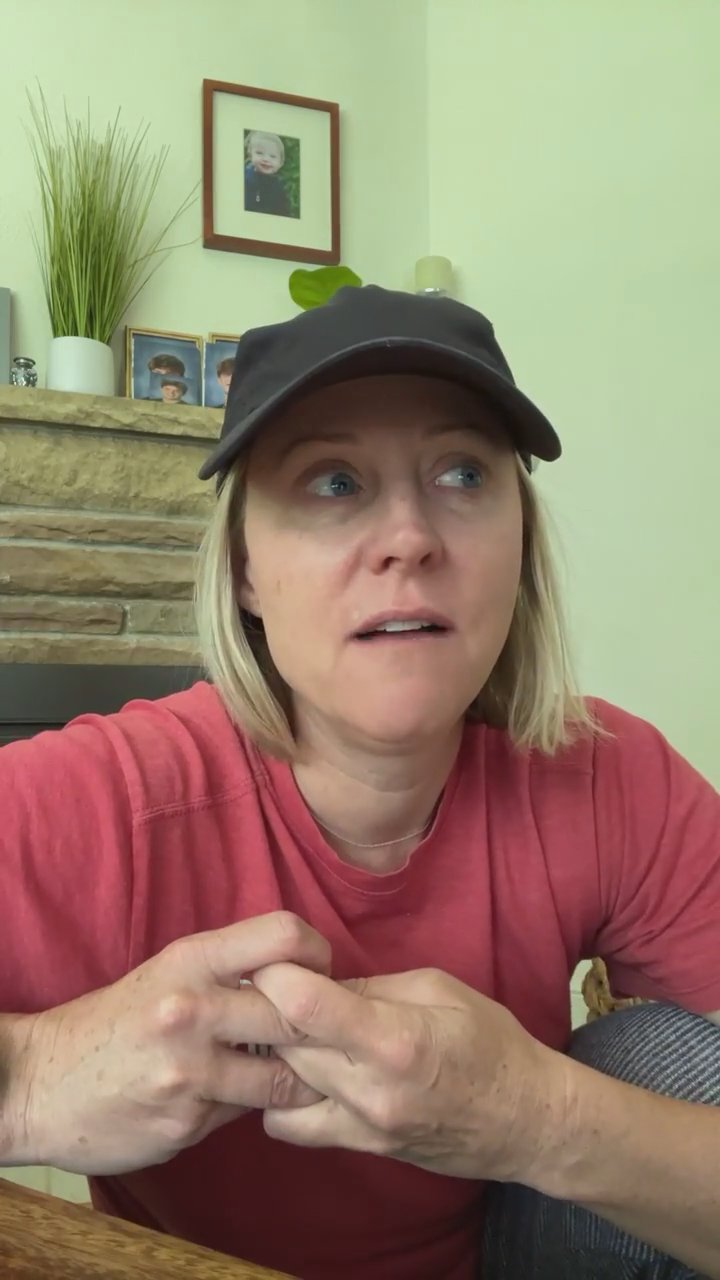
Shannon speaks from lived caregiver experience about a recent conversation with Minnesota Autism Center and a parent group, exploring caregivers' needs, peer support, and how Cadre can connect and help across different caregiving roles.
Shannon: Happy Thursday. I'm here today in real caregiver mode, which means full transparency. So I'm in my NFL flag coach pajama shirt, unshowered, because I had the luxury of sleeping in today a little bit.
It is caregiver day here on Cadre. Jules joined a call with a corporate partner, Minnesota Autism Center. The goal was to talk about how we could use Cadre to help caregivers. What do you need as a caregiver?
Jules says, some days I just need a thank you and a hug. Steph Irwin says yes. You're thankful. You want to know you're not alone. Tune in to speak wonder later this afternoon.
All right, friends, I have to go because I have therapy. Colleen Lindstrom is on in just, I think half an hour. There's just a whole bunch of people coming up today, so please stay tuned. Have a great day.
Cadre, good morning. Hello, friends. It is Thursday morning. It is Shannon here from the Cadre team. Please forgive my casual attire oftentimes. If you don't know me, I am. Well, first of all, I am not a clinician. I am not a mental health professional. I am a human with the lived experience of being a caregiver. And so I'm here today in real caregiver mode, which means full transparency. I don't have my kids today. They're with their father. So I'm in my. I'm in my NFL flag coach pajama shirt, unshowered, because I had the luxury, as a caregiver of sleeping in today a little bit.
So I did. And I know that you, all you caregivers out there are gonna sleep in if you can, right? So what? Welcome, welcome, welcome. Happy Thursday. It is caregiver day here on Cadre, and today I'm going to go a little bit of a different route coming off of a really amazing conversation I had yesterday with one of our corporate partners here at Cadre, which is Minnesota Autism Center. Jules. Good morning. Good morning, friends. So I'm going to talk about a fantastic conversation I had yesterday with some caregivers.
Like me, like you. And this can be applied to anything. Right? So I want to say, in my particular case, we're definitely talking about caregivers of, in my case, again, a person with autism. And that's what I'm talking about. But you can still think about the same thing for no matter what kind of caregiver you are. Right? So if you are, I know some of the folks on here are taking care of parents with dementia. I know that there could be people in here on, obviously, who are taking care of folks with medical conditions that are ongoing.
So yesterday, I was so happy and fortunate to join a call with our corporate partner, Minnesota Autism center. They are obviously here in Minnesota. Their clinicians are on Cadre every Thursday at noon. And one of the things we did yesterday was we met with their parent group, right? So other people like me, what's so cool about it is caregivers. Caregivers like, we wanna help each other. Right? Speakwonder said, caregivers are our quiet comrades. 100%. Right. So I get on this call, and I'm there to talk about Cadre.
I'm there to talk about what we're doing. And honestly, these Matt clinicians have become my friends. They've become Colleen, Colleen's friends here on Cadre. So we got on this call, and the function of this meeting was for us to talk about how we could use Cadre to help caregivers, it was really asking parents like, hey, what do you need? And so, first of all, what a beautiful question, right? Because not that many people ask us what we need. That's okay, right? We can ask each other what we need, and that's why Khadra exists.
But sitting together with these other parents who are in a similar situation as I am and thinking about you guys who are, I mean, I know I can make some connections on here. I know there's folks on this call right now who are both caregiving people who have dementia or people who have other, you know, Alzheimer's, things like that. So I got on this call with the mat clinicians. We talked to these parents, and we're like, hey, listen, we have this tool Cadre, where we bring people together to help each other.
What do you want help with? Do you want help with practical stuff? Do you want help with, hey, how do I find the organization in my city that does x? Do you want help with, what should I expect with this thing, right? Do you want help with, what do I do when I'm feeling really depressed or it's a hard day? So today, my question to all of you, whether you're watching this now in real life, as I know some of you are, or if you're coming back to watch the replay, what do you need? What do you need as a caregiver?
We are so fortunate to have this platform, Cadre, to, you know, get information out to the world. What do you need to know? What do you want to know as caregivers? What do you wish was different as caregivers? You know, some of you know I'm part of the Cadre team, right? So I work for Cadre full time. So part of our job is to make sure that this platform gets you what you need. So what do you need? Do you want more professionals who are talking to you about things that you don't get to talk about when you're in the room with them because there's a ten minute window to chat?
Do you want more spaces to connect with each other like this and maybe more of a back and forth way? I was struck, I think, in impetus for this live today. I was struck by just the connection that happens in those quick moments when you are with people who need what you need. And there were two other moms on the call who I've never met, and within ten minutes, we had emails out to each other, because I know her and I know them, and they know me, and it takes such a limited amount of time to get to that.
And so I think that's the beautiful thing, and I think that's what we have the opportunity to do here, is to connect back and forth. Speak wonder. You said I need understanding when I prioritize my mom over everything else. Yes. Yes, right. And I think sometimes it's. How do you ask for that? How do you articulate that to others? I think, for me, when I think about language, when it comes to caregiving, primarily in how I communicate it to others, is a big thing. Like, exactly what you said. Speak wonder.
How do I say to someone, like, listen, I'm so sorry. It's not about you. It's about right now. It has to be my mom. And what do you do if someone can't receive that? Right? Josh says not feeling alone is huge. Yes, Josh, it is. Right. And sometimes it does just take that quick connection. Like I said on my call yesterday, the connection was instantaneous. Immediately, because I get it. You get it. We're in. So thank you for that. You need an accountability partner to remind you when to rest. Speak wonder.
Oh, my gosh. 100%. I think oftentimes I'll speak for myself. I don't have a partner. I don't have a. You know, I don't have a husband or a partner. I'm a single human in the world. And I think a tendency when you don't have that partner to say, like, hey, take a breath, is that you just keep going. Right. I think that's human nature. And I think, too, it's hard for us to take care of ourselves again. I'll speak for myself. So speak. Warner, I'm telling you right now that you deserve a rest. And I'm also telling you that I'm looking forward to your live later today.
I love, love, love that your content is about harbors. So for everyone else on this call, tune in to speak wonder later this afternoon. Steph Irwin says yes. You're thankful. You want to know you're not alone. 100%. That's beautiful. So you're not alone, you guys. None of us are alone. Please keep thinking about what you want. Keep telling us. Jules says, some days I just need a thank you and a hug. Other days, I need other people, parents who understand. Yes. So, Jules, I'm going to be vulnerable in a way that's probably.
That's awkward for myself, not for you. Sometimes I feel the same about a hug. Right. Um, it's that physical connection and that, like, we are giving love to those that we take care of. Um, some days I want to hug so bad. Um, and that's so normal and natural. And this is the embarrassing part. If you don't have a person, uh, to hug you in the moment that you need it. I know. I have read that you can hug yourself. I struggle with it. I've tried to do it, but I think doing whatever you need to do to feel that love, I just want you to know.
I want you to know you are loved. I want you to know you're doing a great job. And if I was there, I would hug you. All right, friends, I have to go because I have therapy. I'm already crying now because of this. Live in a good way. So, you guys, thank you so much. Thank you for being here. And please continue to tell us what you need because we want to give it to you. Whether it's clinical, whether it's emotional, whether it's practical. We are all here. You guys are the best. Thank you for being here.
And yes, coming up today, Colleen Lindstrom is on in just, I think half an hour. Sandwich generation. We have speak. Wonder who Kathy joy is on the call or on the call? Has a live today. Check her out. She's amazing. Miss Shannon, Paul. There's just a whole bunch of people coming up today, so please stay tuned. Love to see everyone. I hope you have a fantastic day. And please know you are absolutely not alone. We are here for you. Have a great day.
Reactions and comments are for members. Joining is free and takes a minute.