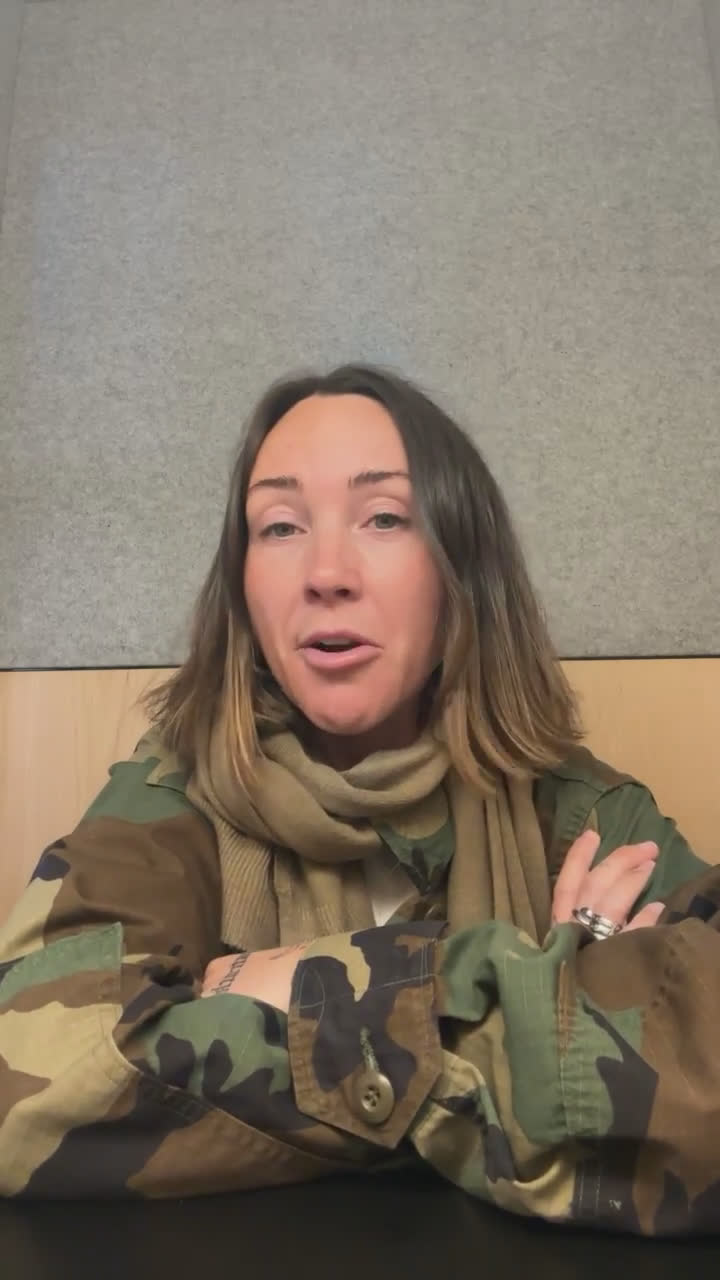
Host leads a monthly self-check-in, guiding viewers through creating a safe space, grounding practices and using tools like a feelings wheel to notice physical and emotional states and respond gently when feeling dysregulated.
Russell Peters: Take a moment to check in with yourself physically and emotionally. Peters: I like to create a physical space or an environment that feels safe and nourishing. Sometimes it's helpful to identify how we feel physically, because that can be a clue for how we're feeling emotionally.
Russell: Dysregulation is real, and a lot of things can dysregulate us. It's a sign that I'm dysregulated and I need to be really, really gentle with myself. Some of the hardest things to do are like showering, eating, drinking water. Please check in with yourself.
Hello, Cadre crew. Happy Wednesday. Welcome back. I haven't been here in a couple weeks for lives. I was overseas. I went to Amsterdam for a crisis summit to learn from legislators and people in the mental health system and advocates on how we can better support people when they're in crisis. And I had the privilege of speaking at the event as well. So that was a really incredible experience. And I decided to take a vacation to kind of bolster the trip since it's so far away. So I'm returning back today from being away for a couple weeks from my lives.
So I'm very happy to be here with you. And, hey, Russell. And just check in because it's been a bit since we've checked in. It's the beginning of a new month, so I thought it'd be nice for us to just take a moment and check in with ourselves. And this is something I did on a live last month and seems like it's something that is useful for folks to just have some accountability and support with and to just not have to do it alone, so. Hi, Katie. Hi, Rachel. And I, for one, could really use a check in.
I have been incredibly emotional today. I know that there's a lot of reasons for that, including having just traveled for a very long time, being away from home and my routine, returning into, you know, returning home, returning to work, and day to day life. And then generally, I know that when I'm away from my routine or home for a while and not with my structure, returning to that can be very triggering for my eating disorder and discombobulating. So I know that there are a lot of things contributing to how I'm feeling today.
And I know that it's definitely an opportunity and a reason for me to pause and to check in. So we're gonna check in today. So when I do check ins with myself, like personal check ins, I like to create, excuse me, create a physical space or an environment that feels safe and nourishing and where I won't be disturbed. So typically, that's going to be my home, my living room, on the couch or in my bed, maybe with some soothing music, make sure I'm comfortable in whatever I'm wearing and have some water.
And I just give myself an opportunity to get grounded, whether that's sitting cross legged or with my feet planted on the ground, taking a few deep breaths and then just asking myself how I'm feeling in this moment. So I ask myself, how am I feeling in this moment? And sometimes we don't know, right? Sometimes if we're new to identifying our feelings, it's hard for us to answer the question, how do I feel? I love to use a feelings wheel. So if you've ever heard of that, or if you haven't heard of that, there's something called a feelings wheel.
You can google it. And it's just a wheel that has different emotions. And so it's kind of helpful to see it on a piece of paper and say, I'm feeling distraught or distracted or overwhelmed. And oftentimes when we pinpoint a specific emotion that we're feeling that maybe we weren't aware of, it can actually bring up that feeling in the moment, which is why I like to be somewhere safe and nourishing in case that does happen. So asking myself, how am I feeling in this moment? And then asking myself, maybe where I'm feeling it in my body.
Maybe I'm feeling it in my chest or my stomach. Maybe I'm feeling it in my back. And again, if we can't identify our emotions, sometimes it's helpful to identify how we feel physically, because that can be a clue for how we're feeling emotionally. So maybe asking ourselves, how does my body feel? Maybe I feel tight. Maybe I feel disconnected from my body. Maybe I have stomachache. Maybe my neck feels really chokey and tight. Asking how our body feels and then giving ourselves an opportunity to breathe into the body wherever we're feeling what it is that we're feeling and just taking a moment to check in with ourselves physically and emotionally, just to see where we're at, without judgment, without shame.
Then I like to ask myself what I need. So, for example, today, I feel sad, I feel overwhelmed, I feel tender, I feel vulnerable and a little discouraged. And so when I ask myself what I need in those moments, I know I need to slow down. I know I need to talk to someone I love. I know I need to cry. Like I can feel right now. I need to cry to. I know I need to take time for myself. So disengaging from highly social environments, maybe reducing things on my plate that have to do with giving to others so I can have space to give to myself.
And doing some, like, very physically restoring things, whether that's taking a bath or making sure my personal hygiene is really good. So making sure I'm showering, brushing my teeth, drinking water, get outside, connect with something bigger than myself. And these are things that I can talk through with myself, or I can write them down, down in a journal. But either way, like giving ourselves these pauses, whether it's throughout the day or in the middle of the week or in the middle of the month or beginning of the month, whatever feels best for us.
I'm definitely like a beginning and middle and end sort of check in person. So, like, at the beginning of a month or the beginning of a day, and then midway through a month or midway through a week, that's kind of when energies really need us the most, is when things are starting halfway through some something or other, and then at the end. So, you know, taking time for yourself, it can be five minutes to sit with yourself and ask these questions and give yourself a chance to say, and what do I need?
So, yes, Russell, dysregulation is real, and a lot of things can dysregulate us. So that's why I was saying at the beginning of this live. Like, I know that today I'm feeling very emotional and tender because I'm dysregulated, and that's because a lot, there's so many variables, right? Was on a plane for 10 hours yesterday. My body is switching time zones. I've been feeding myself pretty much whatever I want to because I've been on vacation. So there's been foods in my body, in my system that my body hasn't been used to.
I just spent two full weeks away from home, away from my routine, and now suddenly I'm back in my routine, which is jarring for my system. I also just attended a two day, full on event that is dedicated to suicide prevention, which is an amazing thing. And it's emotionally and physically draining to be talking about, about suicide for two days. My body feels tired. There's all these different things that are dysregulating. And so, of course, I feel this way. It's not a sign that something, you know, that I'm broken or I've fallen off track.
It's a sign that I'm dysregulated and I need to be really, really gentle with myself. And it's still hard. I absolutely woke up this morning and had thoughts of like, oh, no, I'm falling back into this cycle. Oh, no, here I am again. And it's never going to get easier or better. And I know logically that's not true. And I know that if I'm having those thoughts, I need to take a pause and check in with myself. So I really want to invite you to give yourself grace to do the same thing and to check in with yourself and ask how you're feeling and what you need, because it's okay to need a little bit extra sometimes.
And sometimes we don't give ourselves a chance to slow down and check in and then we burn out or we break down because we haven't paused and checked in with ourselves to say, what do I need right now? Am I, am I okay? So being really gentle with yourself, too. Rachel says, why are the most normal things, like showering, so hard? Yeah. Oh, man. When I'm depressed, like, some of the hardest things to do are like, my basic, the basic things, showering, eating, drinking water. Those things feel very, very difficult.
And it's very common across the board when it comes to depression and a lot of other things that we struggle with, with our mental health. In DBT, there's like a set of skills called please skills, which is like doing the bare minimum. So it's really just a. It's an anagram. I can't remember exactly what it stands for today, but it's an anagram to remind us to just do those basic necessity things rather than trying to do these superfluous extra things on days when, when it's already hard to just do the bare minimum.
So, yes, it's good. I gave myself permission to enjoy, enjoy all the food, which was really beautiful and wonderful to be able to give myself that. So Katie says you look bundled up for the winter. I know I'm in my co working space and it was very air conditioned in here, which is great because hot this week in Seattle. And so I was bundled up and haven't unbundled, but I'm sure when I go outside soon, it's going to be an unbundled situation. So. Okay, my loves, I will see you again next week, same time.
I hope that you all have whatever kind of a day you're having and please check in with yourself. And every time you need a moment to check in, you can pause, close your eyes and just check in with yourself. Wherever you are, you have autonomy and choice in doing that, and you deserve to do that. I will talk to you next time and I hope you have a lovely rest of your day. Bye.
Reactions and comments are for members. Joining is free and takes a minute.