Garrett discusses a group training with soldiers about how they've reacted to adversity, using flip-chart small groups to map challenges and coping strategies. He highlights coping tools mentioned—exercise, sleep, social support and earlier substance use—as responses and character strengths that helped them.
Garrett: I'm back in sunny California for another edition of Sports Hike Saturday. He talks about a training he did with soldiers earlier this week about how they've reacted to adversity and challenges in the past. Garrett: What helped you survive, but thrive through it?
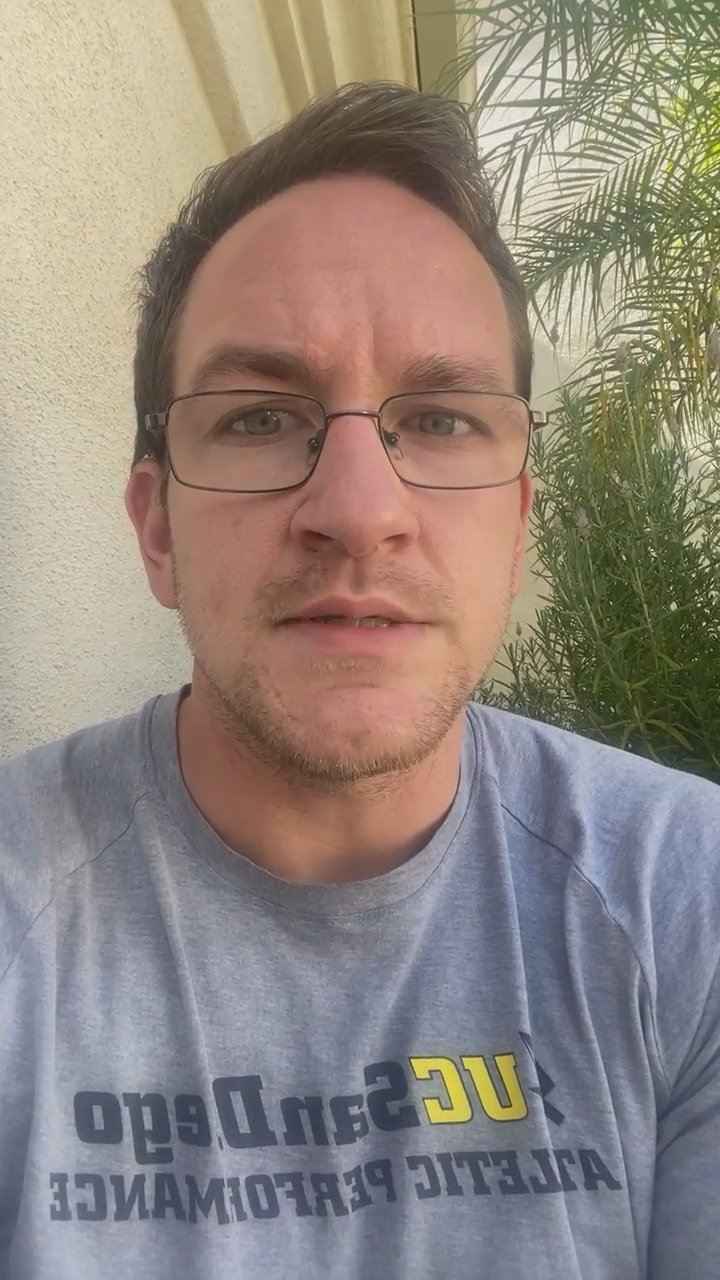
Hello, Cadre. Happy Saturday. It's Garrett here again for another edition of Sports Hike Saturday. I am back in sunny California right now. It's actually an OG spot where I started off my Cadre journey at while I was living in Southern California in Temecula near San Diego, when I was working at UC San Diego in both strength conditioning and sports psychology. I'm just back here for the weekend moving my fiance back here. We do long distance because she's in, in grad school out in California to be a school counselor.
So we spent the summer together in Arizona and now just moving her back to after making the seven and a half hour drive to Southern California. Sorry, I know there's a weed whacker in the background. So sorry if it's loud, but just wanted to talk with you all about a cool training that I did recently with some soldiers. Sorry, I know it's loud. So there was this training I did with soldiers earlier this week with basically soldiers coming off of basic training. And we did it in a group. It was one of the largest groups I've ever done it with during my job working with the army.
So there was about 100 soldiers, again, all coming off of basic training. They were doing their, what's called AIT, advanced individual training course at our base. So a lot of them are young in their military career. And the big training that we did was talking about basically how they've reacted to adversity and challenges in the past. So we have them. Good afternoon, Jules. Thanks for joining again. So we had these soldiers flip chart, basically, like a bunch of cool, like a bunch of teachers have it, like the big papers, we had them flip chart some of their responses in small groups about what challenges they faced, what adversities they faced in their life before the army, and then up to this point in their early careers within the army.
So mostly from basic training up to this date that we were doing the training. And so we talked about those adversities and challenges, also their strategies to cope and their impact on themself and others. And through this long discussion based training, the heart of it was how have you reacted to adversity and challenges in the past? What were your most effective strategies and what were your character strengths to get you through those challenges and adversities? And there was a lot of cool stuff brought up by the, those soldiers.
Yeah, I recognize that I use substances to cope with a tough family life early on before the army and then through the army or just through maturing in general. And going through these struggles, I found that working out helps me. I found that getting a good night's sleep is essential to my well being. I found that relying on my battle buddies, as they call them, relying on just your support system, it has been really helpful just calling friends and family back home, because a lot of these soldiers are in random places in the country and in the world where they feel isolated from their family.
They're not from in the same culture where they grew up in, and it can be challenging. So all those things that they realized through their adversities and challenges that built that self awareness of what they needed to be at their best. And I thought it was pretty cool, and I thought about it for myself, too. Like, how did I, or how have I navigated through those challenges? And that. That was a really profound experience for me. So I would encourage you to do the same is what's maybe one challenge you've had or multiple challenges or adversities, and what got you through it?
What helped you not just get through it, but thrive through it? So not just survive, but thrive, and that can be a healthy coping habit that can be a certain person or an overall support system that can be really anything. So just an important food for thought that I thought was cool. It was. There were some cool stories and moments shared by the soldiers then, and I know it's a pretty profound thing to think about, so just food for thought. Anyways, I'm gonna enjoy my nice sunny day in southern California, hopefully, wherever you are, it has nice weather as we wrap up the summer, and hope you have a good rest of your Saturday.
So thanks.
Reactions and comments are for members. Joining is free and takes a minute.